

Movetips Tech Files IPO Prospectus: Pioneering China's Physical Therapy Transformation Through Collaboration with Physical Therapists Association
At the time of his graduation, Che Lei, a major in Mathematics and Applied Mathematics at China University of Petroleum (East China), could hardly have imagined that he would eventually find himself intersecting with the big health industry years later.
At that time, he was on his way to Ili, Xinjiang, to serve as a volunteer in western China. A year later, he moved to Beijing and co-founded a company with six partners dedicated to writing oral memoirs for the elderly, using the written word to preserve the cherished memories of those in their eighties and nineties.
Eight years later, a friend’s experience with cancer formally connected Che Lei to the healthcare industry. After being discharged from the hospital, cancer patients often lacked guidance on how to engage in scientific recovery and exercise, and they might also encounter difficulties in their interactions with family and friends. This realization inspired Che Lei to take action, aiming to help not only his friend but also other cancer patients facing similar challenges. Thus, the MOVETIPS project was officially launched.
Subsequently, as the cancer exercise rehabilitation business expanded, Che Lei serendipitously entered the fitness industry. Consequently, MOVETIPS, a project initially dedicated to cancer exercise rehabilitation, gradually shifted its focus toward general sports rehabilitation. With further business development and deepening industry insights, Che Lei identified another, even broader market opportunity.
While this market is vast, it also presents certain awkward challenges that have increased the difficulty of starting a business in this sector. However, for Che Lei, greater difficulty implies higher returns after overcoming these hurdles. Therefore, in March of this year, Che Lei officially repositioned Muti Technology as a one-stop platform for physical therapy and formulated a detailed development plan for the company.
“At present, the primary pain point in this market is that while everyone needs physical therapy, public understanding of it remains limited. Although the broad origins of physical therapy can be traced back to ancient China, modern physical therapy began in the 20th century, and the World Confederation for Physical Therapy (WCPT), established in 1951, has long designated September 8 as World Physical Therapy Day, the general public in China still has relatively little knowledge of physical therapy, often mistaking it for conventional ‘physiotherapy’,” remarked Che Lei during the interview.
Therefore, before formally introducing the pain points faced by this industry, we must first clarify what physical therapy actually is.
According to Che Lei, physical therapy is a clinical practice that improves human function and addresses various health issues through non-invasive, non-pharmacological methods. It primarily employs approaches such as exercise fitness, sports rehabilitation, sports medicine, manual therapy, physical modalities, and health education to treat and prevent diseases. A physical therapist is defined as a healthcare professional who prevents, treats, and manages movement disorders caused by disease or injury, and can be more accurately described as an “exercise specialist,” “exercise therapist,” or “human function therapist.”
It is important to note that exercise rehabilitation is only one of the primary modalities of physical therapy, and the two cannot be equated. Therefore, strictly speaking, many existing exercise rehabilitation specialists are not physical therapists.
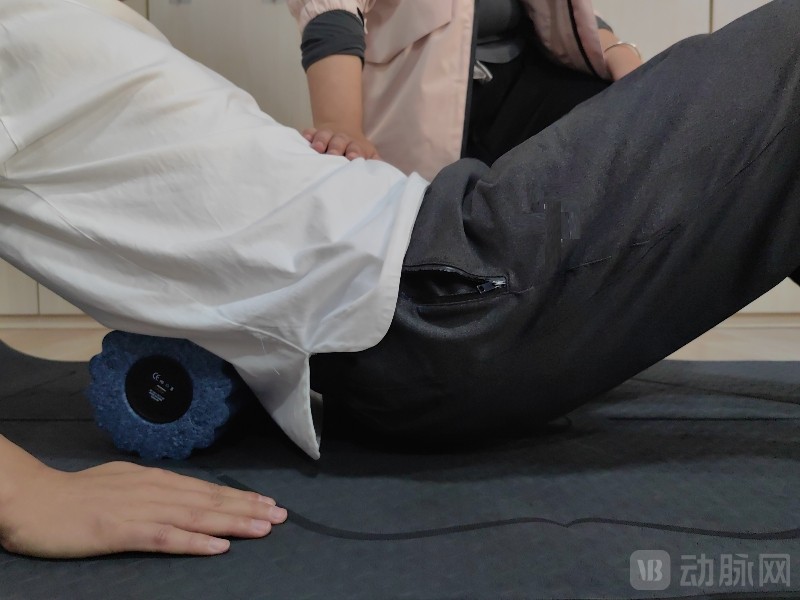
Perhaps due to historical constraints on economic development, various sectors and the public have focused more on the life-and-death stakes of treating critical illnesses, while remaining less familiar with modern physical therapy—a field with a century-long history of development.
However, ambiguous awareness does not equate to an absence of demand; on the contrary, this market demand is substantial. Theoretically, professional physical therapists are needed across a broad spectrum of areas, ranging from exercise programs to enhance independent living skills and provide emotional companionship for elderly individuals living alone, to the management of common conditions such as cervical pain, lumbar pain, and knee pain, as well as rehabilitation for sports injuries, postpartum recovery, and rehabilitation following disease- or injury-related impairments.
In the interview, Che Lei also provided an intuitive figure—the annual market size of consumer demand for physical therapy is approximately RMB 120 billion.
Such a vast market size has naturally attracted numerous institutions to enter the field. Taking sports rehabilitation as an example, Che Lei revealed that in 2018, only 100 clinics were involved in sports rehabilitation, but by the end of 2020, this number had grown to nearly 400, with a compound annual growth rate exceeding 40% over three years. Sports rehabilitation has been hailed as the next frontier in dental and aesthetic medicine.
As the economy has surged, the emergence of sports rehabilitation—a concept closely related to physical therapy—along with rapid market growth, has led to an increasing shortage of qualified professionals. As early as 2021, eight national ministries and commissions jointly issued the “Opinions on Accelerating the Development of Rehabilitation Medical Services.” This policy aims to promote the advancement of the rehabilitation healthcare sector, with a key focus being the substantial expansion of the physical therapist workforce.
However, despite the Chinese government’s continuous introduction of policies to guide and promote the development of physical therapy, the market still faces a shortage of at least 500,000 physically therapists with nationally recognized qualifications. Currently, China has only 1.4 rehabilitation professionals per 100,000 people, far below the international standard of more than 15 physical therapists and 8–10 occupational therapists per 100,000 people. In other words, the talent shortage in the field of sports rehabilitation alone is becoming increasingly apparent.
Furthermore, physical therapies such as Traditional Chinese Medicine (TCM) bone-setting and TCM massage require rigorous standards to guide clinical practice. The complexity of human pain precludes the existence of a unified treatment protocol. However, many current massage parlors and bone-setting institutions often apply identical therapeutic approaches to various types of pain. This not only risks exacerbating the condition but also fails to address the root cause of the pain. The primary reason is that these practitioners lack understanding of standardized systems for physical therapy assessment and evaluation.
Through scientific testing and assessment encompassing multiple aspects, including medical history taking, physical examination, functional assessment, and imaging studies, the root cause of pain can be more accurately identified, the patient’s pain condition comprehensively understood, and a personalized treatment plan formulated.
Unfortunately, such scientific testing and evaluation methods have not been systematically promoted or popularized, so practitioners in the field naturally have limited knowledge of them.
These are the key developmental challenges currently facing physical therapy. Yet, these very pain points hold significant appeal for a large number of rehabilitation professionals. “Currently, only 25.9% of rehabilitation therapists in China are satisfied with their compensation. However, by undergoing specialized physical therapy training and serving high-end clients, their income can at least double,” explained Che Lei.
While the potential market size is substantial, Muti Technology has also observed that, as the rehabilitation-related industry in China is still in its early stages of development, the training of rehabilitation professionals has not yet been clearly specialized. Instead, it is conducted under a unified classification of “rehabilitation therapist.” Although the National Health Commission and the Ministry of Human Resources and Social Security issue professional technical qualification certificates for “Junior Rehabilitation Therapist” and “Rehabilitation Therapist,” these credentials currently serve only as qualifications and do not constitute independent practice licenses (such as those for physical therapists).
Therefore, the training market for physical therapists remains fragmented and unstructured. Consequently, as Muti Technology ventures into the physical therapy sector, it will prioritize providing training and service support tailored to both practicing physical therapists and aspiring professionals.
Beyond strong market growth potential, Mudi Technology’s decision to prioritize physical therapist training and service support also stems from strategic considerations regarding its business model. The company aims to leverage physical therapists’ influence to precisely reach end consumers, thereby driving traffic to its consumer-facing Mudi Sports services.
However, before that, Muti Tech needs to build brand influence among physical therapists and serve each of them well. Specifically, during this phase, Muti Tech primarily provides two types of services to physical therapists and aspiring physical therapists: one is education and training services, and the other is comprehensive membership management services.
As previously mentioned, at the current stage, a large number of fitness coaches, sports rehabilitation specialists, and traditional Chinese medicine (TCM) rehabilitation practitioners have a need to “transition” into physical therapy. Unfortunately, China currently lacks a professional physical therapy training system and a certification framework for the independent practice of physical therapists. Therefore, in the service market targeting physical therapists or potential physical therapists, education and training are the top priority. This also lays a solid foundation for regulating potential irregularities that may arise in the industry in the future.
So, against the backdrop of China’s previous lack of professional standards for physical therapy education and training, along with uneven course quality, what gives Muti Technology the confidence to enter this field? The answer lies in the strong support it has received from the Physical Therapists Branch of the Sichuan Rehabilitation Therapists Association—the first such association in China led by rehabilitation therapists.
The Physical Therapist Branch of the Sichuan Rehabilitation Therapists Association,依托 West China Hospital of Sichuan University, provides support in terms of professional talent, expertise, clinical experience, industry resources, and the implementation of the latest scientific advancements. It has also initiated research on legislation for the independent practice of rehabilitation therapists. This initiative will pave the legal way for the independent practice of physical therapists, further promoting the development of the rehabilitation, sports, and elderly care industries.
Muti Technology’s Muti Manager APP provides a training management system based on the credit system for independent practice in physical therapy, offering tool support for online training. Currently, Muti Technology’s “Training Rating and Management System Based on the Credit System for Independent Practice in Physical Therapy” has applied for a national invention patent.
In addition to education and training, the Muti Steward APP launched by Muti Technology is equipped with an AI-powered intelligent system for physical therapy testing, assessment, and clinical decision support, an evidence-based practice data tracking system for physical therapy, and an intelligent referral system based on physical therapy. It not only provides physical therapists with services such as workflow management, member services, evidence-based practice support, and data tracking, but also offers their members services including the establishment of health plans, testing and assessment, formulation of exercise prescriptions and rehabilitation programs, and design of dietary plans.
“Comprehensive platform services constitute one of our core competitive advantages. By providing practitioners with professional and comprehensive services, we not only attract more physical therapists—key industry resources—to join our platform but also strengthen the stickiness between our enterprise and these professionals. Furthermore, our training system, developed in collaboration with the Physical Therapist Association, offers domestic rehabilitation therapists the opportunity to specialize in various fields of physical therapy, such as sports, neurology, orthopedics, pediatrics, geriatrics, oncology, gynecology, cardiopulmonary care, and acute care physical therapy. Through training in these specialized areas, rehabilitation therapists can transition into physical therapists and acquire more in-depth, professional knowledge and skills. This practical solution helps meet the developmental needs of rehabilitation therapists while driving progress across the entire industry,” stated Che Lei.
Accumulating physical therapist resources through education, training, and the provision of member management tools is merely Muti Tech’s primary objective at this stage. Building on this foundation, the company plans to supply physical therapy talent to gyms, nursing homes, community rehabilitation centers, and other institutions in the future, while also establishing its own referral network.
In addition, Muti Technology will also directly engage with the consumer (C-end) market. Building upon the existing features of the “Muti Sports” WeChat Mini Program—the service platform launched by Muti Technology for consumers—the company will add functionalities such as case manager service access and precise matching with physical therapists, while expanding its expert committee. It will gradually extend its business scope to cover areas including sports medicine, musculoskeletal health, neurology, pediatrics, women’s health, and oncology.
“In the future, as population aging deepens, demand for health management grows, and smart devices such as VR and robotics advance and find wider application, physical therapy will inevitably enter a phase of rapid development, characterized by community-based delivery, multidisciplinary collaboration, and data-driven practices. As the industry continues to evolve, the professional competency requirements for physical therapists will only increase. Therefore, Muti Technology will continue to promote training and education for physical therapists, and drive the establishment and implementation of standardized practice certification and professional standards, to ensure the provision of high-quality physical therapy services,” summarized Che Lei.