

NDI Files IPO Prospectus: The Hidden Champion with Over 50% R&D Staff Dominates Spatial Measurement and Tracking in Surgical Robotics

Northern Digital
Developer of Optical 3D and Electromagnetic Tracking Systems
As the domestic substitution of surgical robots gains momentum, with many contenders directly challenging the da Vinci system, one corner remains largely overlooked. This is the optical tracking camera, an indispensable core component of surgical robots.
The minimally invasive transformation of traditional surgery, along with the intelligent and precise evolution of minimally invasive procedures, represents the future trend of medicine. Among these advancements, intraoperative positioning devices are critical tools for ensuring surgical safety, precision, and efficacy. By leveraging positioning technologies such as optical tracking cameras, surgeons can accurately visualize the position of instruments relative to the surgical target and the planned surgical path on real-time 3D images, thereby making procedures more intuitive and controllable.
Northern Digital Inc. (hereinafter referred to as “NDI”), a Canadian company dedicated to the research, development, and production of medical positioning products, is a global leader in optical and electromagnetic measurement and tracking solutions.
According to relevant corporate annual reports and prospectuses, the core measurement equipment—including magnetic positioning boards and magnetic sensors from Sichuan Jinjiang Electronic Medical Instrument Technology Co., Ltd., optical tracking cameras from Beijing Tinavi Medical Technologies Co., Ltd., and magnetic coil positioning units and sensors from Shanghai MicroPort EP MedTech Co., Ltd.—are all supplied or jointly developed by NDI.
Since its founding in 1981, NDI has been dedicated to the research, development, and application of measurement systems, featuring two core technology platforms—optical tracking technology and electromagnetic tracking technology.
In 1984, NDI launched its first-generation 3D real-time optical measurement product, WATSMART. The company subsequently introduced multiple optical tracking systems. It was not until the launch of the compact, portable, and cost-effective Polaris optical tracking system in 1996 that NDI officially became the leader in optical measurement technology within the medical sector.
Polaris®There are two core product series—Polaris®Vega and Polaris® Lyra. These two series are further divided into four product models. These four models offer varying options and specifications in terms of hardware dimensions, measurement rate, latency, noise, accuracy, data connectivity, and installation, enabling customized solutions for customers.
Polaris®Vega’s three optical trackers are Polaris®Vega ST, Polaris® Vega VT, and Polaris® Vega XT.Among them, the latest generation of Polaris®Vega XT Optical Tracker, released in June 2022, delivers significant improvements over its two predecessors in performance metrics such as measurement accuracy, high-speed tracking, and low latency.
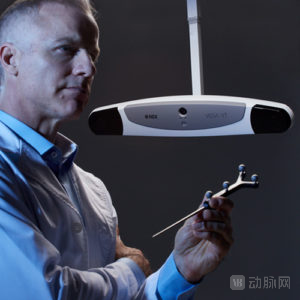
Polaris®Vega XT
Image source: NDI official website
1. Higher Accuracy:Polaris®All three Vega products achieve a volumetric measurement accuracy of 0.12 mm RMS, with a measurement accuracy of 0.20 mm at the 95% confidence interval, surpassing their predecessor, Polaris.®Twice that of Spectra.
2. Faster Measurement Rate:Vega XT also increases the frequency of collecting and processing tracking data, raising it from 60 Hz in Vega ST and Vega VT to 250 Hz. The frame rate remains constant even when tracking multiple objects simultaneously.
3. Lower Latency:Vega XT has an operational latency of less than 3 ms, representing a nearly six-fold performance improvement over the 16 ms latency of Vega ST and Vega VT. This enables rapid and efficient transmission of tracking information within the system. Even when tracking multiple surgical tools simultaneously, the frame rate and data transmission speed remain unaffected.
4. Enhanced Communication Protocol:In addition to the TCP protocol, Vega XT also introduces the UDP protocol, which is unreliable, connectionless, and offers high real-time performance. Since this protocol does not require establishing a connection prior to data transmission, it enables more efficient data transfer and provides more flexible wireless host communication for time-sensitive applications.
5. Integration of More Surgical Instruments:Vega XT includes software, source code, and API interface tools to simplify the design and development of OEM devices and accelerate integration with OEM device applications. Vega XT can simultaneously track up to 25 passive surgical instruments, with a maximum of 6 single-sided or 20 multi-sided markers per tool.
The Fourth Product: Polaris® Optical Measurement Performance of Lyra and Polaris®Similar to Vega, the Lyra system features compact and lightweight positioning sensors, allowing users to directly mount the system on patient examination tables or integrate it into other hardware systems. The integration and installation of the entire measurement system are simple and rapid.
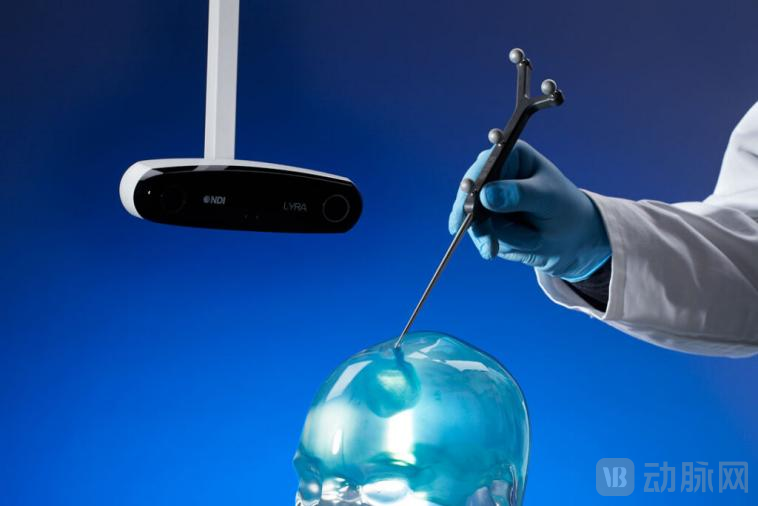
Polaris®Lyra
Image source: NDI official website
Vega’s measurement rate and volumetric accuracy are approximately twice those of Lyra (125 Hz, 0.20 mm).However, Lyra weighs only 0.8 kg, approximately half the weight of Vega XT (1.7 kg), making it an ideal solution for applications targeting a single body part and suitable for installation at any location within OEM medical systems or surgical suites.
In 2003, NDI launched the Aurora electromagnetic (EM) tracking system, expanding the company's presence in the field of spatial measurement.The Aurora electromagnetic tracking system consists of four components: a magnetic field generator, a system controller, tool interfaces, and positioning coils. This device enables precise, real-time 3D spatial measurements even when the sensors are occluded.
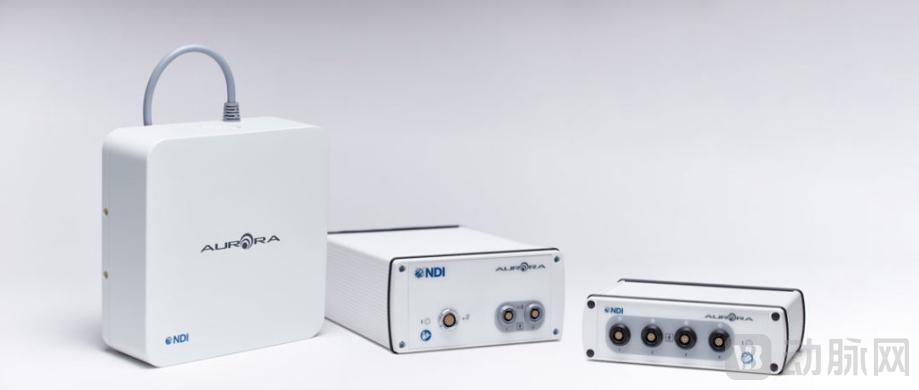
Aurora®Electromagnetic Tracking System
Image source: NDI official website
Specifically, the field generator (FG) emits a low-intensity, time-varying electromagnetic field. Miniature sensor coils, designed to detect this electromagnetic field, can be embedded into surgical instruments such as probes, biopsy needles, guidewires, catheters, and ultrasound transducers.
Subsequently, the weak current generated by the coil is transmitted to Aurora’s Sensor Interface Unit (SIU), where it undergoes digitization and amplification before being sent as a signal to the System Control Unit (SCU) to calculate the coil’s precise location, thereby achieving accurate positioning.
The advantages of the Aurora electromagnetic tracking system are mainly as follows:
Utilizes electromagnetic tracking measurement principles, offering interference resistance and no line-of-sight obstruction effects.
The magnetic field emitted by Aurora is not subject to attenuation by the human body or general objects, enabling it to operate in environments containing medical-grade metals while accurately tracking non-ferromagnetic implanted needles and maintaining measurement accuracy and range.
Nine Two-DOF Products to Meet Customization Needs of OEM Equipment
The micro-sensor coil is available in nine models, with two specifications offering five or six degrees of freedom (5DOF/6DOF).
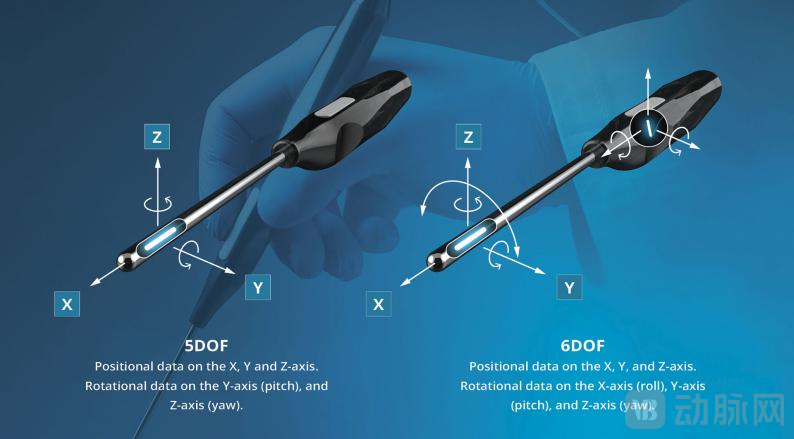
5DOF/6DOF
Image source: NDI official website
Aurora’s nine sensors vary in size and lead length to accommodate the differentiated configuration requirements of OEM medical devices, such as those used in electrophysiology interventions, endoscopic tracking, and puncture procedures, thereby providing more effective and reliable electromagnetic localization for surgical and interventional medical instruments.
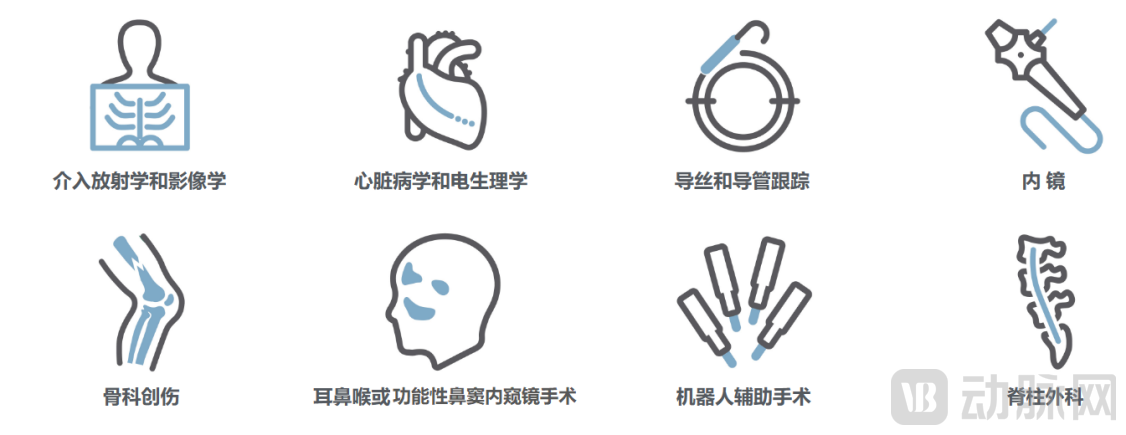
Application Scenarios
Image source: NDI official website
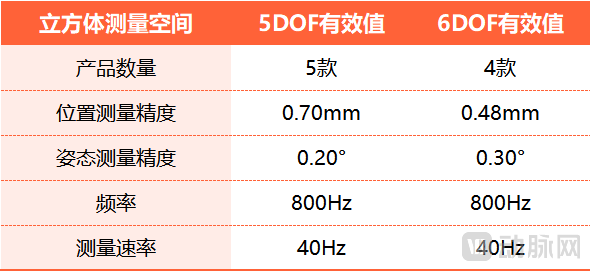
Parameters of the Micro-Sensor Coil
Source: NDI official website; graphic by VCBeat
As a customizable, all-in-one device, Aurora can simultaneously track up to 32 5DOF or 16 6DOF surgical instruments within a single magnetic measurement volume.
In 2011, NDI was acquired by the U.S.-based diversified software company Roper Technologies; the following year, Roper Technologies also acquired Ascension Technology.Ascension’s addition brings new electromagnetic tracking solutions to NDI—3D Guidance.
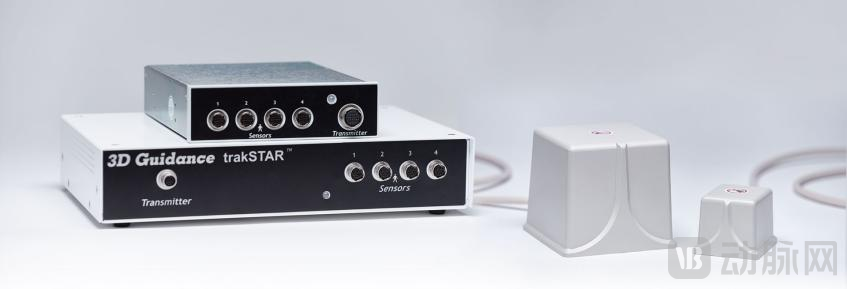
3D Guidance
Image source: NDI official website
As shown in the comparison below, 3D Guidance differs from Aurora in both performance and compatibility. However, 3D Guidance is essentially a plug-and-play component sensor, designed to help OEMs accelerate development cycles and reduce time-to-market.
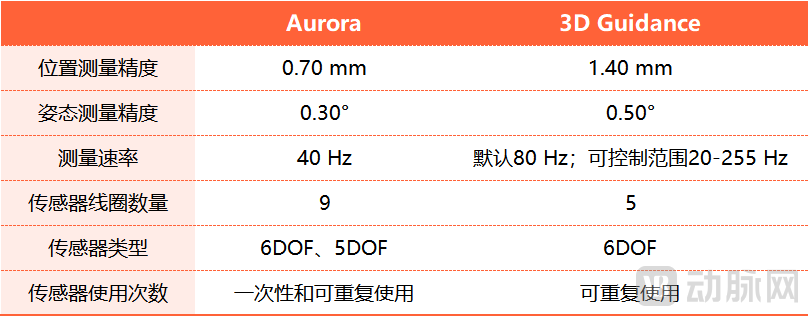
Aurora vs. 3D Guidance: Parameter Comparison
Data source: NDI official website; Graphic by VCBeat
For nearly half a century since its establishment, NDI has continuously strengthened its R&D and manufacturing advantages in medical positioning products, selling various devices to more than 30 countries and regions worldwide.
In addition to the collaborative clients mentioned above, NDI has also established long-term partnerships with many renowned universities worldwide, such as Tsinghua University, Shanghai Jiao Tong University, Fudan University, Harvard Medical School, and the University of Tokyo. Furthermore, NDI currently employs nearly 300 people globally, with more than half being R&D personnel.
Regarding the localization of NDI in China, David Xu, Head of NDI’s Asia-Pacific Headquarters, told VCBeat, “To better serve customers in the Asia-Pacific region, including China, the company established its Asia-Pacific headquarters in the Hong Kong Special Administrative Region as early as 2002. We also provide business and technical support through distributors, and we plan to establish our own localized service team in the future.”
Optical and electromagnetic tracking systems are indispensable components of surgical navigation products. According to Frost & Sullivan, the global surgical robotics market is projected to grow from USD 8.5 billion in 2022 to USD 18.4 billion in 2027, representing a compound annual growth rate (CAGR) of 16.6% from 2022 to 2027.
Positioned upstream in the industrial chain, NDI faces not only a surgical robotics market valued at tens of billions of dollars but also markets for various interventional surgical devices, including endoscopes. Taking China’s medical endoscope market as an example, although the domestic market started relatively late, data from the China Association of Medical Devices indicates that its annual average growth rate is expected to remain around 20%. Benefiting from supportive industry policies, rising downstream demand, and increased equipment penetration, the scale of China’s medical endoscope market continues to expand year by year.
Facing the promising emerging healthcare markets in China and the broader Asia-Pacific region, David Xu stated,“We regard the Asia-Pacific market, particularly the Chinese market, as a key market for the next decade, and base our corporate resource allocation planning on this consensus. We will also share cutting-edge application cases from other regions with medical device customers in the Asia-Pacific market, collaborating with them to develop new technologies and products.”
References:
1. “Orthopedics Braces for Winter Amid Centralized Procurement, While Orthopedic Robots Break Through with Surging Popularity and Capital Inflow as Hillhouse and Sequoia Make Strategic Moves,” VCBeat
2. Dominating the Global Industrial Chain: What Wealth Secrets Lie Within These Overlooked Hidden Champions? VCBeat
3. Deep Integration of Industry, Academia, and Research: AirMedi Breaks Through the Bottleneck of Domestic Surgical Navigation by Focusing on Core Component Tracking and Positioning – VCBeat