

Cullgen: Thriving Amid Industry Downturn with Major Financing, Strategic BD Deals, and Clinical Advancement in PROTAC Therapeutics
2023 was a landmark year for Cullgen, a star enterprise in the PROTAC field. This biotech company, which has focused on the R&D of novel protein degraders for five years, achieved remarkable success against the tide this year, despite the challenges facing innovative pharmaceutical companies:
In May, Ruiyue completed a $40 million Series C financing round, led by the AstraZeneca-CICC Healthcare Industry Fund;
In June, multinational pharmaceutical company Astellas announced a research collaboration and exclusive option agreement with Ruiyue to develop multiple innovative protein degraders, with the potential total transaction value exceeding $1.9 billion;
In July, Ruiyue’s first targeted protein degrader, CG001419, entered clinical development, with the initiation of human dosing in its Phase I/II clinical trial.
Ruiyue Bio’s achievements reflect the industry’s focus on PROTAC/TPD technologies. Although the history of developing new drugs using PROTAC spans only eight years, this field has frequently seen deals and collaborations exceeding $1 billion.Astellas’ transaction with Ruiyue is prominently listed., nearly all MNCs, including Pfizer, BMS, and Sanofi, have placed their bets in this area, undoubtedly endorsing the development prospects of PROTAC.
However, the current “hot” development trajectory of Ruiyue Bio stands in stark contrast to the ongoing winter in the pharmaceutical industry. This has sparked widespread curiosity: how has this company managed to buck the trend during an industry downturn?
VCBeat had the opportunity to interview both Dr. Luo Ying, CEO of Ruiyue Bio, and Dr. Xiong Yue, CSO, in an effort to uncover the company’s true core.However, when discussing the “hot” development momentum of the company, Luo Ying stated, “In the face of any emerging new technology, your first consideration should be caution rather than pursuing hype. Most people recognize the significant advantages of such disruptive new technology platforms, but overlook the challenges and difficulties that come with complex new technologies.”
As the interview progressed, we found that Ruiyue is an innovative enterprise with virtually no “weaknesses” in its key capabilities.A solid scientific foundation, a rigorous scientific approach, a stable team, mature management, a cohesive corporate culture, and prudent financial management weave a safety net for the steady development of Ruiyue.
A Startup Built on Trust
Summarizing the founding and growth of Ruiyue, Xiong Yue believes that there was nothing dramatic about it; rather, it was driven by the founders’ respect for science, their full anticipation of the challenges in new drug development, and the extreme trust within the team.
Prior to the founding of Ruiyue Biologics, Xiong Yue was among the earliest CUSBEA scholars to study abroad. After making significant contributions to the field of cell cycle regulation, he joined the University of North Carolina as a Professor in the Department of Biochemistry. His discovery of the ubiquitin ligase genes Roc1/2 in the late 1990s laid the scientific foundation for the development of the PROTAC field. In 2017, by chance during an academic conference in New York, he engaged in discussions with his former colleague from the University of North Carolina, Professor Jin Jian, who was then Director of the Center for Chemical Biology and Drug Discovery at the Icahn School of Medicine at Mount Sinai, regarding the therapeutic potential of PROTACs.After confirming the druggability of PROTACs, they realized that their potential contributions extended beyond the scope of research in two laboratories, so they hoped to jointly establish a company to continue the development of new PROTAC drugs.It is exciting to translate scientific research achievements into practical applications. However, professors who start businesses have their own areas of expertise, and company management and operations are indeed hurdles that scientists find difficult to overcome.
Naturally, Xiong Yue thought of his long-time friend Luo Ying. At the time, Luo Ying was the President and Chief Executive Officer of GNI Group, a publicly listed pharmaceutical company in Japan. Prior to this role, he had held key positions at multiple biotechnology companies in the San Francisco Bay Area. He also founded Shanghai Ruixing Gene in 2001 and successfully listed the company on the Tokyo stock exchange through mergers and acquisitions during the capital winter fifteen years ago. In Xiong Yue’s mind, Luo Ying was not only a scientist who had published nearly 40 research papers and possessed independent scientific judgment, but also an entrepreneur with extensive experience in successful IPOs and corporate management, well-versed in the entire process of new drug development, production, and sales. Therefore, he did not hesitate to call Luo Ying.
Luo Ying recalled that Xiong Yue had persuaded her in just 15 minutes over the phone,Decided to embark on the unknown journey of starting a business again.
Although GNI Group, under CEO Luo Ying’s leadership, already has multiple new drug candidates in clinical trials and has reported strong year-over-year profit growth, the company has been awaiting a new opportunity. It seeks to acquire a platform technology capable of continuously generating novel drug candidates. As an experienced CEO, Luo Ying also requires that such a platform offer controllable risks, accelerated R&D timelines, and reasonable production costs.
Luo Ying confirmed only one thing with Xiong Yue—whether this revolutionary technology platform, PROTAC, could truly be developed into a drug.After all, in the history of innovative drug development, the emergence of new technologies or platforms, while heralding opportunities, also carries risks; not all new technologies ultimately prove viable.
“Xiong Yue and I have known each other for many years. Xiong Yue is a scientist who speaks with reservation. When he said that PROTAC could succeed, I believed him,” recalled Luo Ying. He, Xiong Yue, and Jin Jian quickly reached a “three-point agreement” based on mutual trust. All three spoke candidly, putting forward their own ideas. Considering the company’s long-term development, Luo Ying hoped that Xiong Yue and Jin Jian would commit to operating only Ruiyue as their PROTAC company and not establish any additional ventures that might divert resources from new drug R&D. In turn, Xiong Yue and Jin Jian insisted that Luo Ying personally serve as CEO of Ruiyue. “I know Luo Ying well, and we trust each other. He has extensive and successful management experience. Bringing in an external CEO would make it difficult to achieve such understanding and trust in a short period.” Furthermore, Xiong Yue hoped that Luo Ying would focus more on fundraising and external operations. To enable the company to commence R&D activities as early as possible without spending excessive time on capital raising, he sought the support and assistance of GNI.
“We quickly reached a consensus and hit it off immediately. We assembled the most suitable team, with several key members from Jin Jian’s group of doctoral students and postdocs joining the company on the spot. To this day, our core team has remained virtually unchanged,” said Xiong Yue.
In early 2018, Ruiyue Bio was established. In March of the same year, Ruiyue swiftly secured a $15 million seed financing round, led by GNI.
Tackling the Toughest Challenges: BreakthroughsRROTACNew TypeE3Development of Ligases
PROTACs induce targeted protein degradation via the ubiquitin-proteasome system (UPS). Their drug molecules primarily consist of three components: a target protein ligand, an E3 ligase ligand, and a linker connecting the two ligands, thereby forming a “ternary” complex—target protein ligand–linker–E3 ligand.
Although PROTAC technology is theoretically straightforward, the practical challenges—particularly in developing first-in-class drugs—should not be underestimated. For instance, the target protein ligand serves as the warhead; different warheads and ligands confer varying target selectivity and degradation efficiency. Design requires a holistic consideration of the warhead, linker, and E3 ligase ligand.
Moreover, not every PROTAC capable of recruiting a warhead can degrade the target protein against which the warhead is directed. This is related to the spatial conformation of the E3 ubiquitin ligase complex.
However, these challenges have not hindered the development progress of Ruiyue Bio’s first new drug, CG001419.CG001419 is a globally first-in-class, highly selective, potent oral targeted protein degrader developed by Ruiyue.It is indicated for the treatment of adult patients with solid tumors, including lung cancer and other pan-cancer types harboring NTRK gene alterations. Phase I/II clinical trials involving human administration have already been initiated.
Since its establishment, Ruiyue Biologics has pursued a dual-pronged strategy. One key focus is the development of protein degrader therapeutics, while the other involves the in-depth expansion and optimization of the uSMITE™ technology platform through the development of E3 ubiquitin ligase ligands.
The development of E3 ubiquitin ligase ligands is particularly challenging. Currently, there are 632 known E3 ubiquitin ligases in human cells, but fewer than 20 have been reported to have developed ligands. Those that have publicly entered clinical trials are primarily based on the cereblon (CRBN) and von Hippel-Lindau (VHL) proteins.
CRBN is the E3 ligase used by most PROTAC companies in their new drug development. This has led to a situation where, although PROTACs hold immense potential for druggability and theoretically promise to overcome a large number of undruggable or difficult-to-drug targets, in practice,However, the field faces intense competition, with numerous companies developing new drugs based on the same E3 ligase.
Based on Xiong Yue's research accumulation on E3 ligases,Ruiyue Biologics is expanding its E3 ubiquitin ligase toolkit by developing novel E3 ubiquitin ligase ligands beyond CRBN and VHL. This strategy aims to mitigate drug toxicity and resistance associated with CRBN-based therapeutics, extend the application of PROTAC drugs to therapeutic areas beyond oncology, and strengthen Ruiyue Biologics’ intellectual property portfolio.
The development of this novel E3 ubiquitin ligase ligand was made possible by Rayue Biotech’s proprietary uSMITE™ technology platform. This platform extends the drug design paradigm beyond functional inhibitory sites, thereby enabling the selective degradation of “undruggable” proteins.Currently,Ruiyue has successfully developed several novel E3 ubiquitin ligase ligands, as well as multiple highly efficient, selective, and bioavailable targeted protein degrader compounds based on these novel E3 ubiquitin ligase ligands.The collaboration with Astellas is based on the company’s proprietary E3 ligase platform.
Xiong Yue candidly stated that Ruiyue has proceeded with caution at every step, and they have found that the development of E3 ligase ligands is far more challenging than commonly anticipated. “Developing small molecules that bind to E3 ligases is distinct from developing bioactive E3 ubiquitin ligase ligands; many small molecules identified as E3 binders have subsequently proven unsuitable for the development of protein degrader therapeutics.”
In Xiong Yue’s view,Ruiyin’s achievements are largely attributable to its professional and experienced team.Due to its early establishment and possession of high-quality elite talent, Ruiyue has even become a target for poaching by numerous PROATC companies in Shanghai. However, the reality is that Ruiyue’s core team remains stable, with very few choosing to leave.
The foundation for our cohesion lies in trust and hope. Many members of Ruiyue’s initial team were students, colleagues, and friends of founders such as Luo Ying, Xiong Yue, and Jin Jian. We knew each other well and trusted one another. Likewise, the management team’s mature governance system gave everyone confidence in the company’s prospects for success. “When leadership is confident, team members become confident,” said Xiong Yue. “Without the support and steadfast commitment of the early executives who helped establish Ruiyue, the company would not have naturally developed its current atmosphere. I suppose this is what we call corporate culture. It is both rare and rewarding to work alongside such a group of like-minded, R&D-focused talents at Ruiyue.”
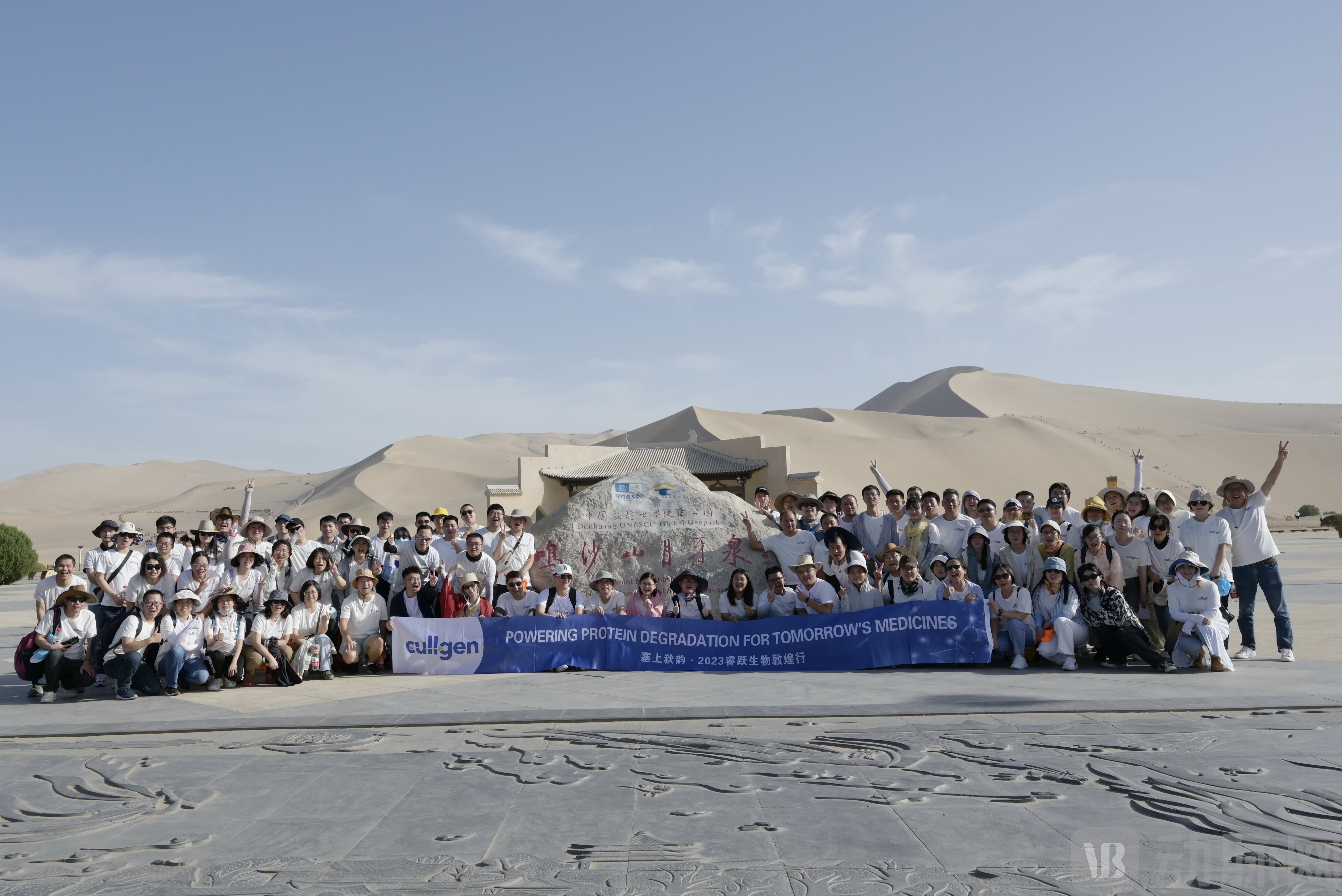
Ruiyue Bio Team / Image provided by the interviewee
Born GlobalThe company, pursuing internationalization.BD
Currently, Ruiyue Bio has over 110 employees, 22% of whom hold Ph.D. or even dual Ph.D. degrees. Four of them previously served as professors at American universities. They support Ruiyue’s operations from Shanghai, China, and San Diego, the United States, respectively.
This is a born-global company, and among the investors of Ruiyue BioIncluding multiple renowned international venture capital firms,In addition to the GNI Group, mentioned above as a major shareholder,Other investors in previous rounds included Sequoia Capital, Honghui Capital, 3E Bioventures, Heights Capital (SIG), Octagon Capital, MSQ Partners, and Central South Innovation & Venture Capital.
In May this year, Ruiyue Biology completed a $40 million Series C financing round, led by the AstraZeneca CICC Medical Industry Fund.In fact, Ruiyue’s contact with AstraZeneca began as early as 2020.At that time, AstraZeneca sought to participate in Ruiyue’s Series B financing round. However, as the AstraZeneca CICC Medical Industry Fund had not yet been formally registered and established, both parties missed the opportunity for collaboration. Three years later, with Ruiyue having matured significantly, the AstraZeneca CICC Medical Industry Fund led a $40 million investment in the company’s Series C round. In addition to existing shareholder GNI, new investors including Xinxi Capital, Wuxi Venture Capital, and Woje Capital participated in the Series C financing, officially marking the commencement of cooperation between the two parties.
"It’s not just about the internationalization of investors," Luo Ying introduced. Ruiyue is frequently invited to international academic and industry conferences, delivering over a dozen presentations each year.This level of industry activity has laid a solid foundation for Ruiyue Bio’s financing and business development (BD) collaborations.
In addition to attracting the interest of AstraZeneca, Ruiyue Bio’s collaboration with Astellas has also drawn significant attention. This is a typical partnership between a biotech firm and a big pharma company. The two companies first made contact at the 2022 J.P. Morgan Healthcare Conference; Luo Ying and Xiong Yue have lost count of how many rounds of discussions they have held with Astellas.However, the company’s robust technology ultimately withstood the scrutiny of this major pharmaceutical firm.Astellas is optimistic about Ruiyue Bio’s novel E3 ligases and new targets, and also hopes to leverage Ruiyue Bio’s technology platform to advance the R&D of its own product pipeline, thereby reaching this collaboration.
Looking ahead, Ruiyue Bio will face more tests and opportunities. They must not only advance the clinical trials of their core pipeline but also continue to promote the next phase of collaboration with Astellas. Meanwhile, optimization of the company’s technology platform cannot stop; in the future, Ruiyue aims not merely to develop a simple novel E3 ligase, but to iterate and upgrade its capabilities to develop E3 ligases with specific biological activities, thereby creating tissue-specific ubiquitin ligase ligands.
In Luo Ying’s view, Ruiyin is currently enjoying strong growth momentum and ample capital reserves, yet every step in the company’s development still requires prudent decision-making., money should not be spent recklessly, and research should not be conducted haphazardly. Such awareness is particularly crucial in the midst of a harsh winter.
“Cash is the King。”Luo Ying stated, “You must safeguard the company’s cash flow; without cash, all the foundational work previously established will be lost. I have never believed in timely rescue from external sources; survival depends entirely on our own steadfast resilience. A sense of crisis must be maintained at all times. Historically, the biopharmaceutical industry faces a major financial crisis every decade, and only by planning ahead can we achieve long-term sustainability.”
When asked about Ruiyin’s biggest achievement this year, Luo Ying stated, “In the current market environment, Ruiyin has achieved profitability.”This is what brings him the greatest comfort, as every advancement made by Ruiyue not only signifies the company’s development potential and vitality but also heralds a bright future for the PROTAC sector.