

Dr. Rong Yiping of Harbour BioMed: Driving Core Technological Innovation and Building Diverse Global Collaborations

Harbour BioMed
Antibody Drug Developer
In the first half of this year, China’s biopharmaceutical industry witnessed the successful global expansion of several leading pharmaceutical companies. For innovative biotech firms currently navigating an industry downturn, this serves as a significant encouragement and offers valuable reference experiences.
Among the numerous pharmaceutical companies that have secured overseas business development (BD) deals, Harbour BioMed has drawn significant attention. From last year to this year, Harbour BioMed has reached a global out-licensing agreement with AstraZeneca for its bispecific antibody HBM7022, and signed a licensing and collaboration agreement with Cullinan Oncology for the B7-H4 x 4-1BB bispecific antibody. Furthermore, its subsidiary, NoAb Biosciences, has achieved multiple technology outbound licenses, entering into licensing and collaboration agreements with companies such as Moderna, ExeVir Bio, and ModeX Therapeutics.
Harbour BioMed has achieved dual global expansion in both its products and technology. What is the underlying strategy? Recently, at the 8th China Pharmaceutical Innovation and Investment Conference,Dr. Yi Ping Rong, Chief Scientific Officer of Harbour BioMed, delivered a keynote speech titled “Sharing Biotech Business Development Pathways: Continuously Driving Core Technological Innovation and Strategizing Diversified Global Collaborations,” sharing the company’s strategies and experiences in business development.
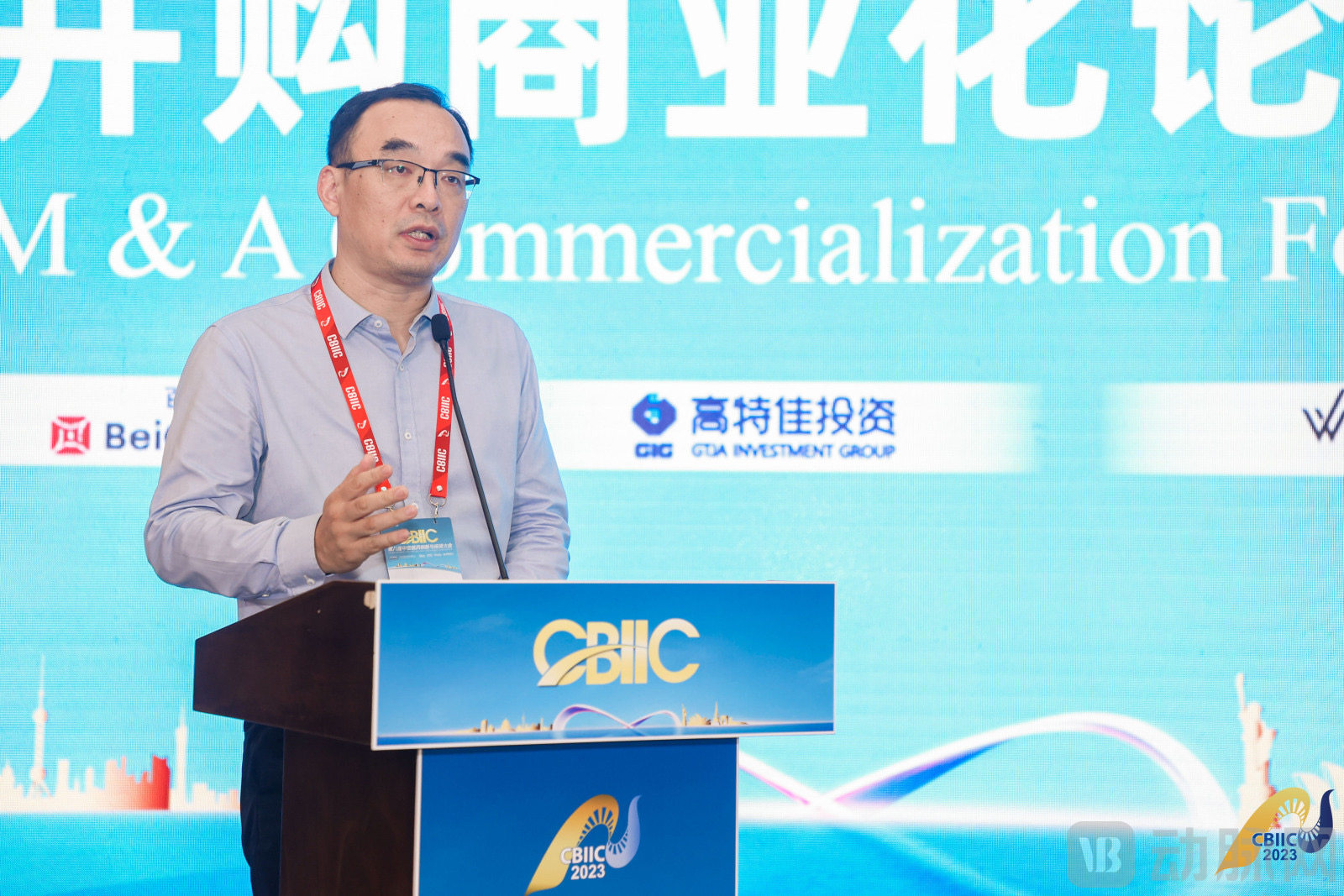
Key Points from Dr. Rong Yiping’s Speech:
In fact, everyone in the innovative drug industry knows that the success rate of innovation is very low. It is a high-risk, high-reward industry, and short-term successes or failures do not reflect the issues within this sector.
China is already a major player in the pharmaceutical industry. However, to transform from a large-scale biomedical industry into a globally competitive powerhouse, the fundamental drivers are innovation and global engagement—specifically, collaborating with international innovative enterprises rather than pursuing insular development. China’s vast unmet clinical needs provide a solid foundation for domestic innovative pharmaceutical companies, instilling the confidence necessary for Chinese biotech firms to expand into global markets.
In fact, over the past few years, Chinese biopharmaceutical companies have begun to engage with cutting-edge innovations. Taking the field of antibody-drug conjugates (ADCs) as an example, the gap between Chinese enterprises and global leaders in terms of innovative targets and therapeutic areas has been narrowing significantly. For instance, regarding tumor-associated antigen targets such as HER3 and MET, the development progress among various players is largely comparable, with most candidates in Phase I, II, or III clinical trials, indicating a very small disparity. Moreover, in the case of the CLDN18.2 target, Chinese pharmaceutical companies are already at the forefront of global innovation, prompting many multinational corporations (MNCs) to in-license these products from China.
Over the past three years, the number of Chinese cross-border licensing-out deals has remained remarkably high, with more than 30–35 transactions annually. In 2022, China accounted for 75% of the total transaction value in global licensing-out deals, making such international collaborations a standardized practice in global partnerships. Multinational pharmaceutical and corporate entities are actively seeking early- to mid-stage, and even preclinical, projects to bolster their own product pipelines. From a transactional perspective, the proportion of early-stage assets in cross-border licensing deals has been gradually increasing, with a notable rise in preclinical asset transactions.
In Chinese outbound transactions in the oncology sector during 2022 and the first half of 2023, the number of outbound licensing deals reached 27 by the first half of 2023 alone. Several representative outbound transactions have demonstrated significant progress made by Chinese enterprises in outbound licensing.
This year, global M&A activity has been robust, yet few such deals have emerged in China. Particularly when secondary market policy shifts are involved, Chinese companies face limited options for value realization. In this context, outbound licensing has become a more efficient and pragmatic primary strategy.
We have listedAmong 180 global BD deals, the proportion of licenses at the preclinical stage has reached 46%., this proportion is quite high. On one hand, it reflects the strong demand of global multinational pharmaceutical companies for innovative products, as they are eager to incorporate these innovations into their pipelines to mitigate the impact of patent cliffs. On the other hand, it highlights that global biotechnology companies lack sufficient resources and capital support to advance preclinical assets through proof-of-concept and into Phase II and III clinical trials, thereby failing to maximize their commercial value. Therefore, the capital market needs to provide more long-term, medium-to-long-range planning and support for innovative biotech firms.
Harbour BioMed's BD Strategy
Over the past year and a half, Harbour BioMed has also engaged in several international collaboration initiatives, including bispecific antibody, ADC, and mRNA projects with AstraZeneca, as well as other collaborative cases in the field of bispecific antibody-based cell therapies.
Since its inception, Harbour BioMed has been built as a global biotechnology company, driven by innovation to develop its own differentiated innovative products. Meanwhile, it continuously upgrades and iterates its technology platforms, maximizing their value through diverse business models and collaborative partnerships.
In terms of product collaborations, we have partnerships with Moderna and Cullinan, and have also established technical platform-level collaborations with top-tier global research institutions.
At its inception, Harbour BioMed acquired a Dutch technology platform company that utilizes transgenic mice to generate fully human conventional antibodies or fully human heavy-chain-only antibodies. Building on this acquisition, the company was founded in 2016 and listed on the Hong Kong Stock Exchange in 2020. Currently, it has a portfolio of product candidates advancing into clinical stages and has secured support from blue-chip institutional investors.
To maximize the value of our technology platform, we have spun off two business pillars. The first is Harbour BioMed, which focuses on its product pipeline with an R&D emphasis on tumor immunology, particularly the clinical development of bispecific antibody-based immune cell therapies. The second is Nona Biosciences, a subsidiary spun off from the technology platform, aimed at becoming a platform-oriented company through continuous innovation and iteration to provide technology licensing, collaborations, and services.
Over the past few years, these two business segments have achieved substantial growth. Since its establishment in 2016 and 2017, Harbour BioMed’s product strategy primarily focused on licensing in two overseas products. However, by last year, the company’s global innovative product pipeline had transitioned from licensed-in products to independently developed ones, currently comprising 16 innovative candidates. In terms of core technology platforms, the company has gradually expanded from its initial focus on fully human antibodies and fully human heavy-chain-only antibodies to include fully human bispecific antibodies, as well as the integration of cell therapy and mRNA-based bispecific antibody technologies.
Within Harbour BioMed’s business line, the first product entered Phase I clinical trials in 2019. Currently, nearly 10 products have entered Phase I clinical trials, and this progress has also facilitated a series of out-licensing deals for international markets.
One notable example is the global out-licensing agreement reached with AstraZeneca in April this year for the development and commercialization of HBM7022, a CLDN18.2 x CD3 bispecific antibody. Regarding international expansion, the decision was driven by a combination of factors. On one hand, it was a fortuitous alignment: Harbour BioMed’s business development strategy matched well with AstraZeneca’s. AstraZeneca was looking to strengthen its portfolio in gastrointestinal tumors, particularly gastric and pancreatic cancers, which are key focus areas for them. CLDN18.2 is a target of significant interest to AstraZeneca, with multiple product initiatives underway across various modalities, including antibody-drug conjugates (ADCs), cell therapies, and bispecific antibodies. Although the bispecific antibody space had become highly competitive, with over a dozen global programs targeting CLDN18.2 already in development, the differentiated profile of our product stood out as a key highlight. This, combined with the reliability and advanced nature of our technology platform, high-quality data, confidence in our team, and strategic alignment, collectively facilitated this successful commercial collaboration.
Another case involves our collaboration with Cullinan. Their interest in our B7-H4 x 4-1BB bispecific antibody stemmed from the fact that they had a product for gynecologic tumors entering Phase II clinical trials at the time. They urgently needed early-stage or Phase I clinical assets that could be combined with their product, potentially addressing other unmet clinical needs. This was a key factor in reaching the partnership agreement. Our collaboration with Cullinan involves licensing only the U.S. development rights, while we retain rights in China and Europe. This strategy aims to maximize the global expansion of our novel drug by fully leveraging our U.S. partner’s clinical resources to accelerate the clinical development of the B7-H4 x 4-1BB bispecific antibody.
In the future, Harbour BioMed also has a series of bispecific antibody pipelines in place, aiming to accelerate the clinical development and market launch of these products by leveraging global commercialization partnerships.
Nonna Biotech’s Global Expansion
In terms of technology platforms, the subsidiary Nona Bioscience was established.Although Harbour BioMed focuses on bispecific antibodies for tumor immunotherapy, its iterative technology platform derived from transgenic mice producing fully human antibodies is not limited to a single field but can be applied across various stages of antibody development.Therefore, through a diversified business model, we have expanded our operations overseas, unlocking the value of innovative technologies via technological innovation, licensing, and technical services.
Harbour Mice for Fully Human Antibodies® This platform is not only applicable to monoclonal antibodies, bispecific antibodies, and cell therapies, but can also be widely used in mRNA therapies, bifunctional radiopharmaceuticals, and bifunctional ADCs. Leveraging this technology platform, we have achieved collaborative results over the past few years, accumulating partnerships with more than 50 organizations and undertaking over 200 projects. To date, 183 products derived from this platform have entered clinical trial applications, fully demonstrating the reliability and maturity of our technology platform.
First, regarding the development of bispecific antibody products targeting immune cells and the nervous system for heavy-chain antibodies, NonO Biologics has established a relevant technical platform. This platform enables capabilities ranging from antibody discovery and screening to structural optimization of bispecific antibodies, including assessments of druggability and biological function characterization. By building this technical platform, we have advanced a series of product candidates into clinical stages.
Next is ADC technology. We have a fully human antibody technology platform that can significantly reduce the immunogenicity of many ADC drugs, and we also hold our own technical patents in site-specific conjugation. Leveraging this ADC antibody technology platform, Nuona has undertaken a series of expansions. Currently, this antibody technology platform can be applied to many ADC and XDC directions, with successful preclinical cases in fields such as AOC and RDC. In Kelun-Biotech’s previous successful overseas licensing deals, two of the seven products were developed using fully human antibodies generated from Harbour BioMed’s transgenic mice expressing fully human antibodies.
In addition, we have established technologically innovative collaborations in the fields of mRNA and cell therapy, while also partnering with top-tier global research institutions through our technology platforms.
Any global expansion is driven either by product innovation or by technological platform innovation,Without innovation, no one will be interested in your products. Harbour BioMed aims to differentiate our products through source innovation centered on foundational technologies, pursue global collaborations, and, on this basis, build an “Antibody+” ecosystem by integrating global resources. We hope to chart a new path through the current capital winter. Thank you all!