AI-Powered Drug Instructions: Bridging the Communication Gap Between Pharmacists and Patients
For most patients who have never worked in the healthcare industry, reading the paper version of drug package inserts often feels like taking an exam.
Regardless of the complexity of their concerns, patients must always carefully sift through medication package inserts dense with fine print. Even after locating the relevant sections, they often find that official, authoritative, and general guidelines rarely provide precise, direct answers, requiring them to draw on everyday knowledge to make further inferences.
As a medium for pharmaceutical companies to convey information to patients, the "mode of presentation" in traditional package inserts clearly fails to meet patients' practical needs. An ideal package insert should possess the following three capabilities.
First, drug package inserts must be legible and easy to read.In practice, traditional drug package inserts often suffer from a common issue: to prevent the insert from occupying excessive space on the packaging and driving up production costs, a large amount of lengthy and specialized information is crammed onto a palm-sized sheet of paper in small font. Faced with such an insert,Young patients rarely have the patience to read word for word, while elderly patients are often unable to read.
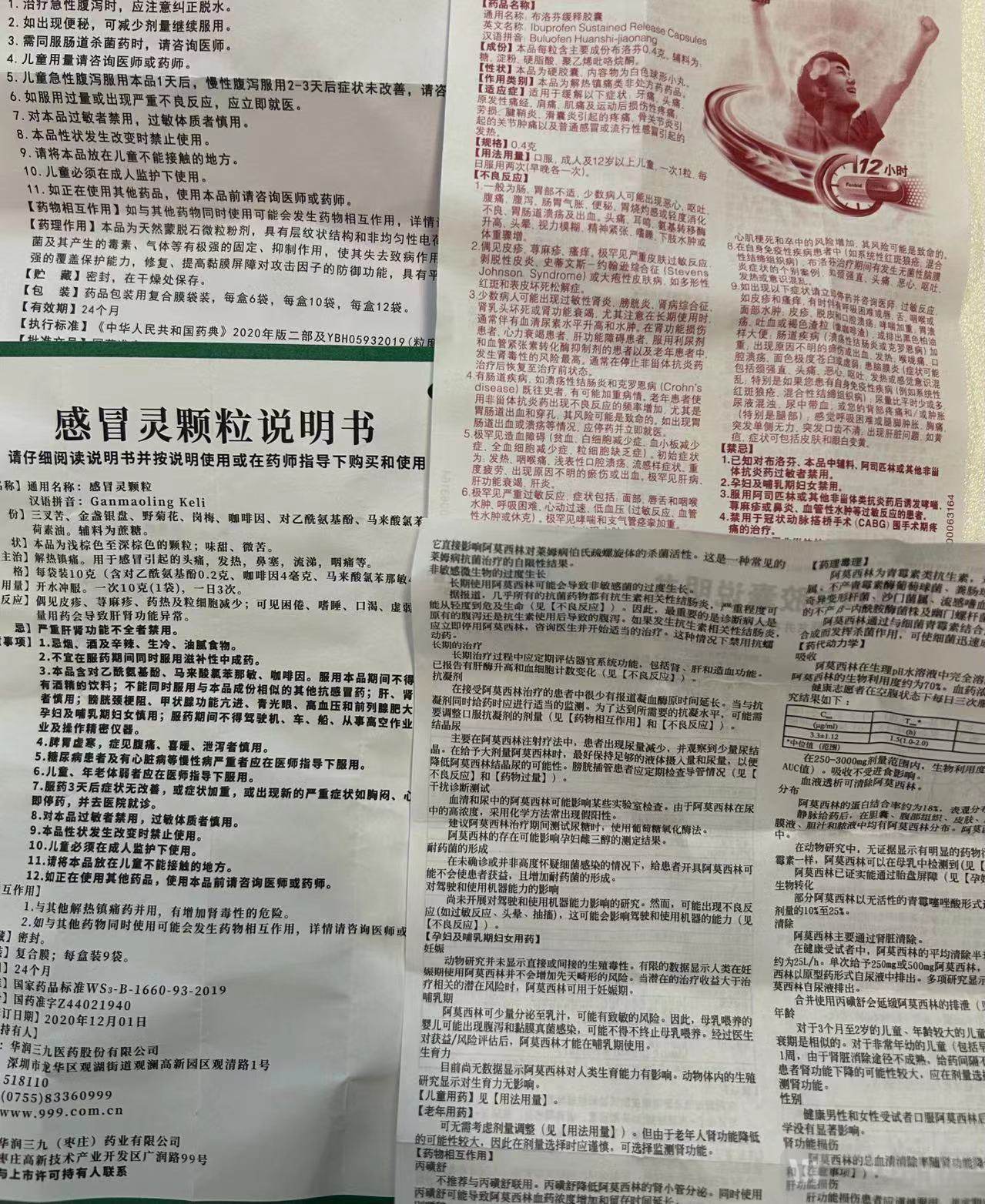
Secondly,Drug package inserts should address patients’ questions regarding medication use. However, many inserts provide abstract and formulaic explanations of drug administration methods and contraindications, whereas the issues faced by patients are highly specific and diverse. In many cases, even if patients carefully read all sections of the package insert, they still fail to obtain comprehensive and effective answers.
Finally,Medication package inserts should be readily accessible at all times. Traditional package inserts, provided as separate sheets within the medication box, are frequently lost or mixed up by patients. This issue is particularly pronounced when patients resume medication after a period of discontinuation; unable to locate the insert, they may struggle to administer the drug correctly, ultimately leading to the disposal of the remaining medication.
Is there a tool that can truly realize the value of drug package inserts? A newly released application called “AI Drug Package Insert” at Baidu World 2023 may leverage the capabilities of large language models to transform the current predicament surrounding drug package inserts.
According to Baidu Health, the AI Drug Insert is a large-model AI application accessed via a mini-program. After obtaining the medication, users can access the AI-generated drug insert by photographing the medicine box through the Baidu App, scanning the QR code on the packaging, or searching for the drug name.
Unlike traditional paper package inserts, AI-powered drug labels not only allow patients to read medication information but also enable them to ask questions via text or voice. Powered by large language models, the AI drug label automatically generates responses based on patient inputs and provides assisted answers through virtual avatars of pharmacists or physicians.
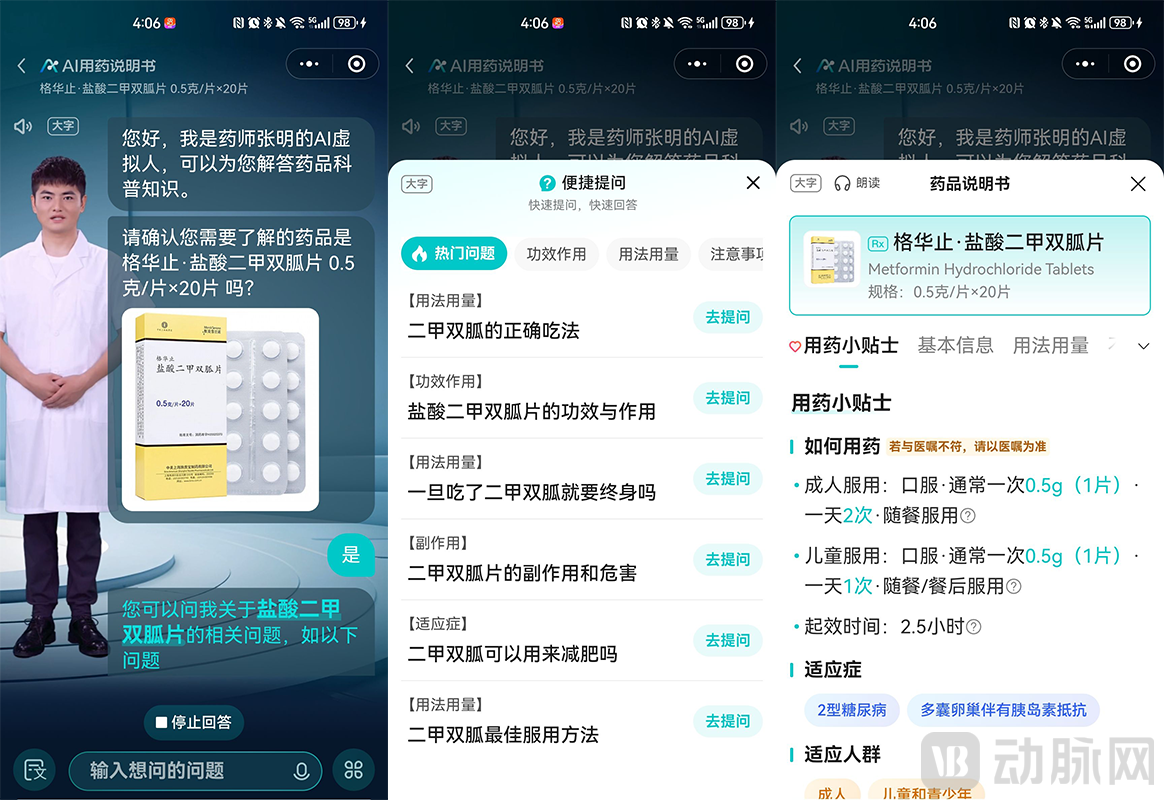
Through this innovative approach, Baidu Health primarily addresses the needs of age-friendly adaptation. The “Work Plan for the Pilot Reform of Age-Friendly Drug Package Inserts (Draft for Comments),” released by the National Medical Products Administration (NMPA) in July this year, stated that simplified and large-print versions of drug package inserts should be promoted, and services such as audio narration and Braille touch interfaces should be provided to facilitate accurate access to key information in drug package inserts for the elderly and special populations.
The emergence of voice input for AI-powered drug leaflets effectively bypasses the need for reading. Even illiterate patients can use voice input to ask questions and obtain comprehensive explanations of medication knowledge from AI-driven drug leaflets, clearly understanding various precautions during medication use, thereby making drug leaflets “user-friendly and easy to understand.”
Worth highlighting is the interactive experience. Powered by large language models, users no longer need to search for answers within dense textual descriptions. Any medication-related questions can be directed straight to the AI-powered drug package insert. This approach not only saves patients time spent reading materials but also enables them to obtain accurate information from the package insert directly, which is particularly beneficial for elderly individuals who have difficulty reading printed documents.
Furthermore, as AI-generated drug package inserts are integrated with medication packaging recognition, barcode scanning, and even drug name searches, users can access and edit AI-driven drug information at any time. Consequently, common issues of the past, such as loss of information and misuse, are effectively eliminated.
At first glance, Baidu Health merely transforms paper-based drug package inserts into an AI-powered version. However, the core technologies underpinning this transformation, along with the pivotal value emerging from such technological shifts, actually span two distinct eras.
Prior to the launch of AI-powered drug package inserts, researchers had already achieved audio-enabled versions by recording video explanations from physicians, thereby completing the iteration from paper-based to electronic formats and, to some extent, addressing readability challenges.
However, due to the lack of interactivity, lengthy videos have failed to simplify the content of package inserts, and thus cannot quickly and accurately address patients’ diverse medication-related questions. Consequently, although video-based package inserts are available in the market, they have not achieved widespread adoption.
In contrast, AI-powered drug labels have not only made the leap from paper to digital but also integrate two key functions: information delivery and human-computer interaction. This means that the audience for next-generation drug labels is no longer limited to specific groups; any individual with a mobile phone can quickly access medication information by interacting with the label through conversational interfaces.
According to Baidu, the AI drug label is powered by Baidu’s self-developed general-purpose large language model.ERNIE Large Language ModelWith Large Language Models in the Healthcare IndustryLingyi Large ModelJoint support.
Baidu’s Wenxin large language model leverages a globally leading knowledge graph developed by Baidu. This extensive, long-accumulated knowledge base endows Wenxin with unique Chinese text reasoning and comprehension capabilities, enabling it to outperform the vast majority of large language models on complex tasks.
In practical applications, this model not only answers various patient inquiries regarding drug package inserts but also supports queries in diverse dialects, thereby providing pharmaceutical knowledge to patients as broadly as possible.
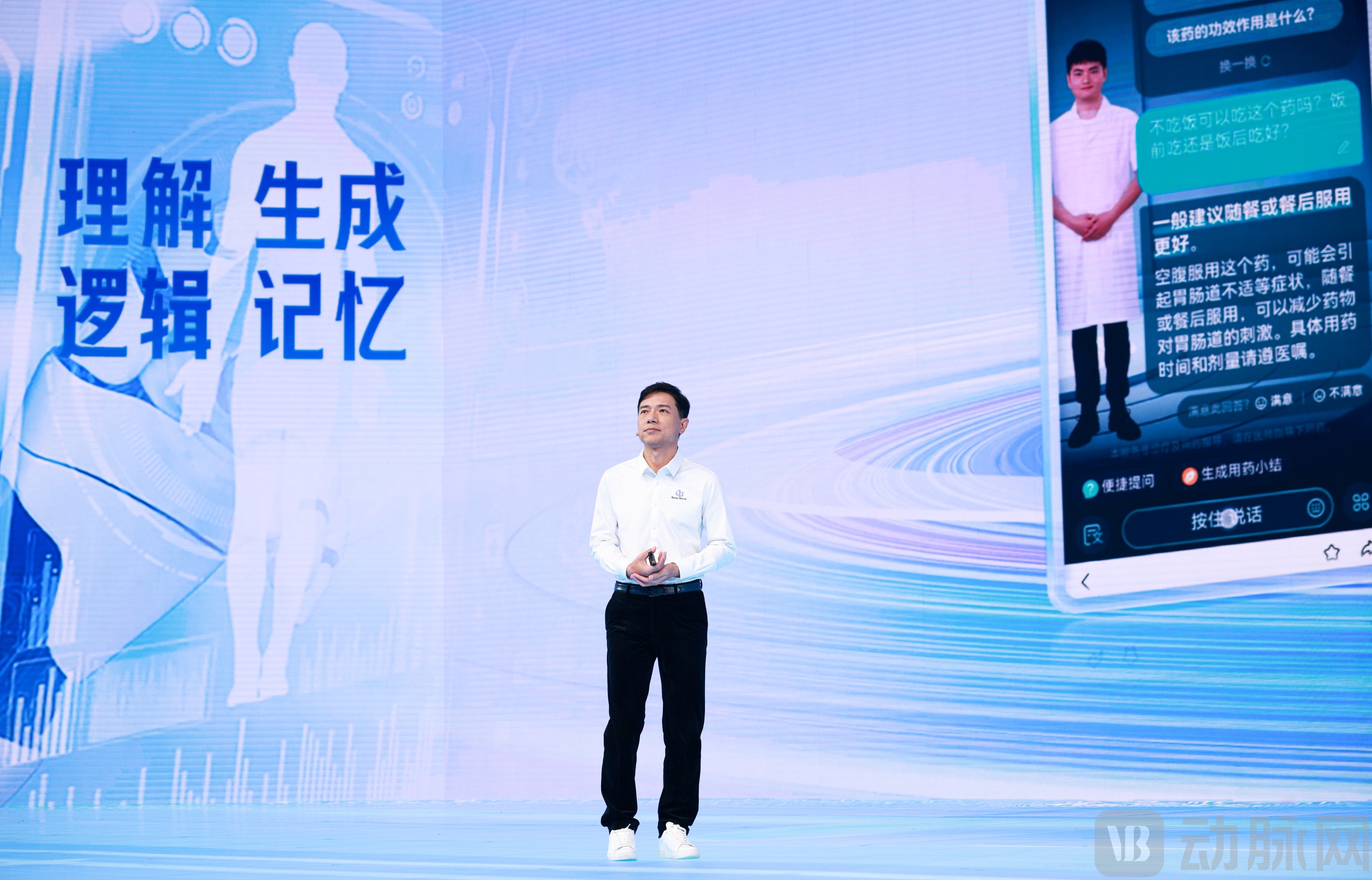
Meanwhile, Baidu Health must ensure that every response is accurate and effective. To this end, Baidu Health has established strategic partnerships with multiple authoritative medical knowledge bases in the industry to guarantee that the medical knowledge accessed by its models is robust and reliable. Furthermore, it has assembled a review and annotation team composed entirely of senior professional pharmacists to continuously verify the quality of answers provided by AI-generated drug inserts when responding to user inquiries, thereby constantly improving the precision of its responses.
As of Baidu World 2023, AI-powered drug labels have covered thousands of common medications. According to a representative from Baidu Health, this figure is expected to surpass 10,000 by the end of the year, achieving coverage for over 90% of common drugs.
Internal testing data from Baidu Health shows that the accuracy rate of responses generated by AI-powered drug package inserts has exceeded 98%. As the number of model invocations increases, the accuracy of large language models will continue to improve, steadily approaching a perfect score of “1”.
Although the advent of large language models has propelled drug package inserts into a new era, Baidu Health envisions that the value of this product extends beyond merely conveying medication information.
Once patients become accustomed to using the mini-program to learn about medication instructions, Baidu Health can continue to enhance its AI-powered drug labels by adding features such as medication reminders and integrating internet healthcare services like online consultations and follow-up visits through APIs, thereby further leveraging Baidu Health’s capabilities in internet healthcare.
More importantly, as AI-powered drug package inserts serve as a critical communication channel between pharmaceutical companies and patients, Baidu can expand the variety of information circulated during this process. For instance, Baidu can help pharmaceutical companies obtain data on the usage, dosage, and contraindications of existing drugs, thereby guiding the development of future medications.
However, the transformation sparked by AI-powered drug package inserts is still in its infancy. Currently, Baidu Health aims to collaborate with more pharmaceutical companies to further expand the range of covered medications. Once AI-driven drug package inserts achieve large-scale implementation, this emerging interface could unlock new possibilities for pharmaceutical enterprises.
Scan the QR code below to experience itAI Drug Package Insert.