

From Bankruptcy to Breakthrough: Apple-Backed Rockley Photonics Advances Non-Invasive Glucose Monitoring

Apple
Designers, manufacturers, and sellers of electronic products such as personal computers and software

Know Labs
Wearable Device Manufacturer

Rockley Photonics
Manufacturer of Photonic Chips and Custom Integrated Packaging Products
Earlier this year, Rockley Photonics (hereinafter referred to as “Rockley”), a former Apple partner and supplier of wearable sensors, filed for bankruptcy protection due to sluggish R&D progress, a declining stock price, and deteriorating financial conditions.
This innovative enterprise, founded just a decade ago, partnered with Apple due to its technical expertise in silicon photonic integrated chips and modules, and was once regarded as one of the global leaders in silicon photonics-based health monitoring and communication solutions. However, delays in product development and challenges in commercialization led to a continuous deterioration in Rockley’s operational performance, causing its stock price to plummet to $0.20 and ultimately resulting in its delisting.
Just as many assumed Rockley would become a cautionary tale, joining the ranks of promising startups that failed to survive, it successfully completed its bankruptcy restructuring and continued project development. The company achieved positive results in two human studies approved by Institutional Review Boards (IRBs), dispelling previous doubts about its ability to commercialize its technology. Meanwhile, Rockley’s experience offers valuable lessons for other startups.
Rockley’s recent failure is a microcosm of the development journey of many innovative enterprises.
Rockley Photonics, founded in the UK in 2013, is a company specializing in silicon photonics sensing technology. Its early business primarily focused on developing highly integrated silicon photonics products for data communications, before shifting its strategic focus to healthcare and commencing the development of silicon-photonics-based wearable healthcare applications.
Rockley’s pivot to the consumer electronics market was also driven by its recognition of the sustained growth in demand for personal health and fitness monitoring in recent years, along with the proliferation of diverse digital applications.
Rockley’s silicon photonics sensing platform enables continuous, non-invasive monitoring of multiple physiological biomarkers, including lactate, glucose, hydration levels, blood pressure, and body temperature. This non-invasive sensor module, built on spectroscopic technology, is referred to by Rockley as the “Clinic-on-the-Wrist.”
In 2021, Rockley entered into a merger agreement with SC Health and successfully listed on the New York Stock Exchange. Through this transaction, Rockley planned to accelerate the commercialization of its Clinic-on-the-Wrist business.
Rockley’s path to commercialization has been fraught with challenges. Despite Rockley’s continuous promotion of major technological breakthroughs for its “clinic on the wrist,” including collaborations with the California Institute of Technology and the development of features such as hydration monitoring and non-invasive blood glucose measurement, the progress in product commercialization has been slow, with only one product, the Bioptx Baseline smartband, released during this period.
In August 2022, Rockley announced that it had received its first commercial purchase order; however, this did not alleviate Rockley’s deteriorating financial condition.
According to documents filed by Rockley with the SEC, as of September 2022, the company reported a net loss of $152 million, revenue of $3 million, and total liabilities amounting to $120.7 million. Confidence in Rockley among secondary market investors gradually eroded, with its stock price plummeting from an initial $10 to $0.20 by December 2022, ultimately leading to its delisting. In January 2023, Rockley formally filed for bankruptcy protection.
Rockley’s first half mirrored that of many innovative startups: although the importance of a dual-engine drive combining “technology and business” was clearly recognized, the reality was a severe lag in R&D progress. Advanced technologies failed to materialize into competitive products. Rather than forming a mutually reinforcing relationship, the gap between technological R&D and commercial implementation hindered business commercialization, let alone enabling diversified expansion of application scenarios, market feedback, and continuous product iteration.
Especially in the current environment, the companies that survive are not necessarily those with profound technical expertise, but certainly those capable of adapting flexibly. Whether through cost-cutting and efficiency improvements or by discontinuing projects with distant profitability horizons, stronger cash flow is essential to sustain long-term corporate growth. Rockley Photonics’ first chapter ended in substantial losses.
Following its restructuring, Rockley has adopted a more pragmatic approach, selecting market segments with greater potential for breakthroughs to validate its technology.
In August 2023, Rockley announced that its prototype of a laser-based, non-invasive, cuffless blood pressure monitor achieved positive results in two IRB-approved human studies.
The first study enrolled 30 volunteers and compared readings from Rockley sensors with those obtained via invasive arterial catheterization, the gold standard for continuous blood pressure monitoring. Notably, Rockley’s device employs laser technology and features only a single data acquisition point.
During the testing period, volunteers performed leg press exercises to induce blood pressure variations. The test results demonstrated that monitoring of blood pressure changes within a specified range met the target accuracy requirements of the FDA-recognized consensus standards ISO 81060-2 and IEEE 1708. In the future, Rockley will continue to expand its measurement range.
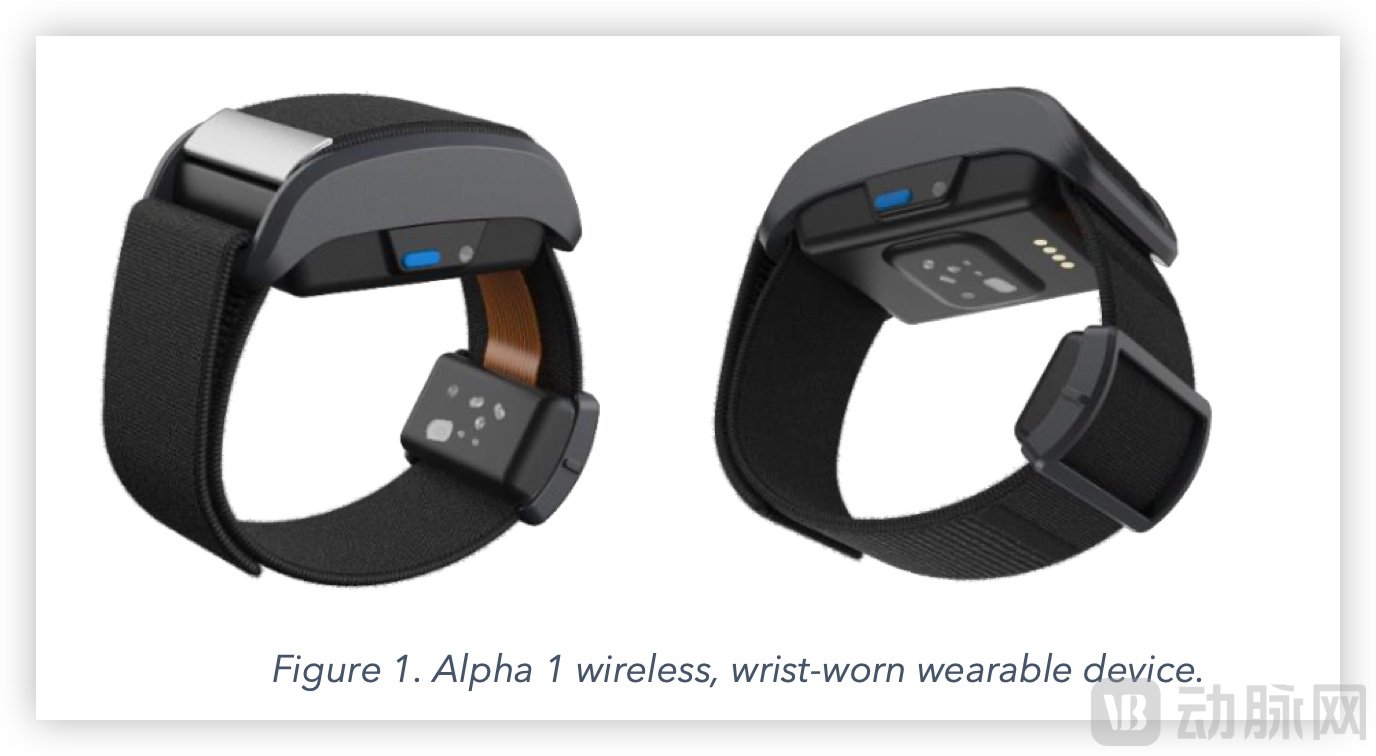
Rockley’s Latest Non-Invasive, Cuffless Blood Pressure Monitor Prototype. Image source: official website
The second study tracked volunteers who underwent repeated blood pressure measurements over a 34-day period following device calibration, comparing the Rockley sensor’s readings with those obtained using traditional cuff-based auscultatory methods. The overall measurement accuracy fell within the ranges specified by ISO 81060-2 and IEEE 1708 standards. Notably, the sensor’s measurement error did not exhibit progressive drift over time but remained within a controlled range.
Rockley stated that there are many uncontrollable factors in actual human use, such as rapid changes in device position and environmental factors. Moving forward, Rockley plans to collaborate with the FDA through the Q-submission process over the coming months to obtain feedback on future clinical study design and data analysis, thereby ensuring smooth regulatory approval of its products in the future.
“Richard Kuntz, MD, Scientific Advisor to Rockley and former Senior Vice President and Chief Medical and Scientific Officer at Medtronic, stated, ‘For patients requiring management of various cardiovascular conditions, continuous and reliable access to blood pressure readings is key to controlling their disease. Rockley’s device demonstrates the accuracy expected of traditional medical devices, which can significantly improve patient adherence and overall case management.’”
Dr. Zahi Fayad of the BioMedical Engineering and Imaging Institute at the Icahn School of Medicine at Mount Sinai stated, “Measuring blood pressure using wearable devices has long been a challenge. It is very exciting to see this cuffless technology become available, as it enables frequent measurements and provides a seamless and simple experience for both practitioners and patients. Rockley’s current findings demonstrate blood pressure values within an acceptable range compared to the gold standard. I look forward to seeing the continuation of this program to generalize these findings.”
Rockley is renowned worldwide for its cutting-edge technology, as evidenced by its 236 granted patents and an additional 311 patent applications pending. However, the inability to translate this technological prowess into commercialized products and generate cash flow was a major factor contributing to its previous bankruptcy protection filing.
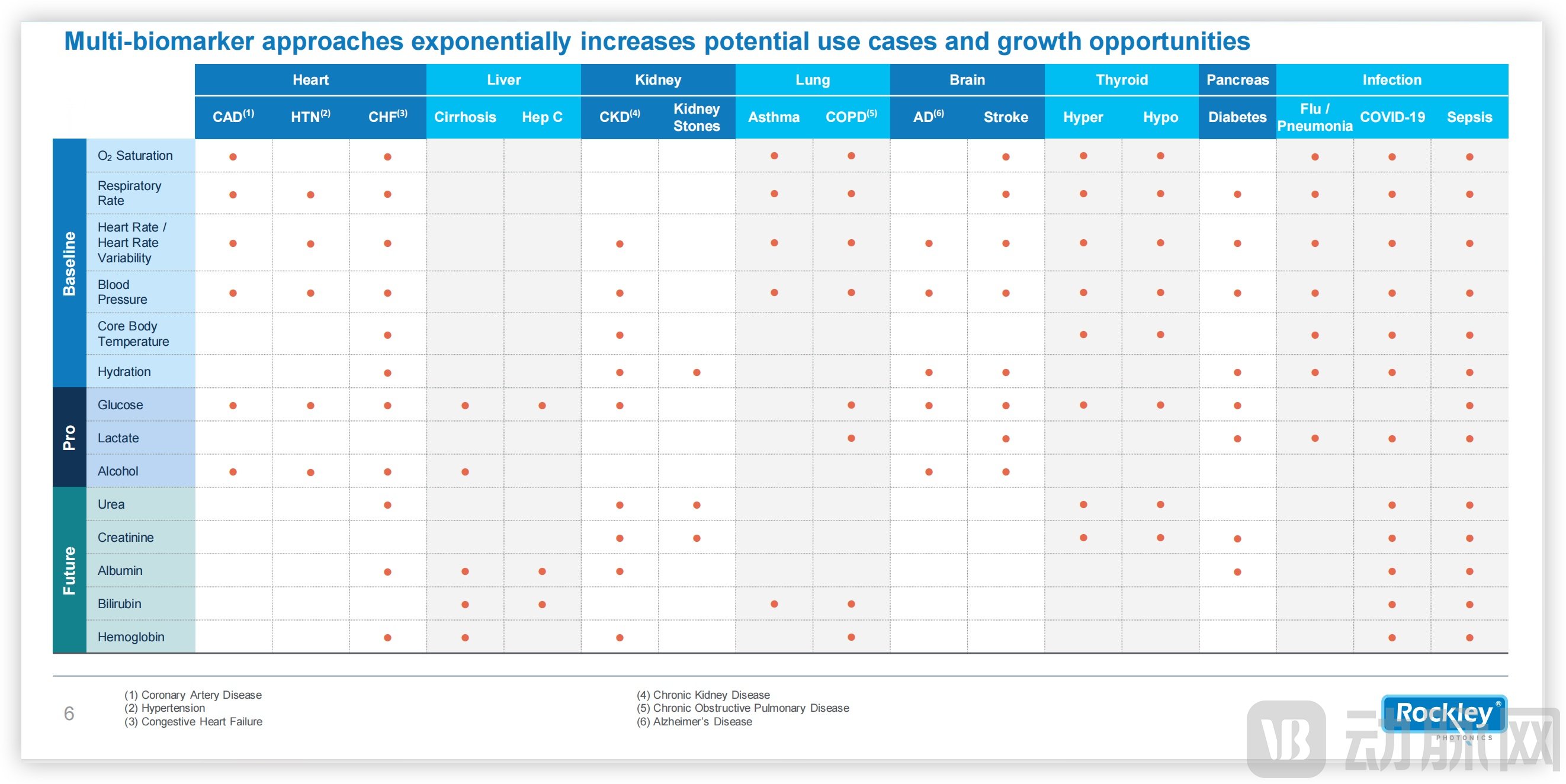
Rockley previously aimed to achieve breakthroughs in monitoring multiple biomarkers. Image source: official website
In the past, Rockley aimed to achieve breakthroughs in monitoring a wide range of biomarkers, including oxygen saturation, respiratory rate, heart rate variability, blood pressure, body temperature, hydration levels, glucose concentration, lactate, alcohol, urea, creatinine, albumin, and hemoglobin. However, biting off more than it could chew, Rockley’s roadmap, as disclosed at previous investor conferences, indicated that many of these monitoring features were not expected to launch until 2024 or even 2025. Subsequent developments proved that time was not on Rockley’s side.
Following its return, Rockley has adopted a more pragmatic approach by focusing on blood pressure monitoring, an area with greater potential for breakthroughs, and its prototype is close to mass-production specifications. Furthermore, ongoing collaborations with companies such as Medtronic continue; if commercialization proceeds smoothly, it could provide crucial financial support to its non-invasive glucose monitoring project.
Rockley is also continuing to advance its non-invasive blood glucose monitoring, which has brought it widespread recognition.
Following the positive results in blood pressure measurement, Rockley announced its progress in non-invasive glucose monitoring at the end of September. In this IRB-approved study, Rockley utilized its proprietary silicon photonics platform to perform non-invasive biomarker measurements on the human body using short-wave infrared spectroscopy. Favorable outcomes were achieved in both simulated human skin testing and actual human subject evaluations.
According to information released by Rockley, photonic integrated circuit (PIC) chip technology was tested in simulated human tissue models. The results demonstrated that its biosensor achieves a glucose measurement accuracy of 5 mg/dL; such higher precision can provide patients with more accurate medication guidance. Currently, ISO standards require that over 95% of continuous glucose monitoring (CGM) measurements fall within 15 mg/dL of the actual blood glucose level, while the FDA permits a CGM measurement error margin of approximately 20 mg/dL.
Meanwhile, Rockley also conducted another 10-week study involving 40 patients with type 1 or type 2 diabetes to evaluate this technology. Although Rockley did not provide detailed information about the study, it reported that the results “indicate significant progress in the development of non-invasive wearable glucose monitors.”
For Rockley, non-invasive glucose monitoring is the key metric of its success, yet the field is becoming increasingly crowded.
Know Labs has been committed to expanding its Bio-RFID technology platform into the field of non-invasive glucose monitoring. Previously, the company collaborated with Mayo Clinic to validate its Bio-RFID technology. In July this year, Know Labs announced its latest research results, showing a Mean Absolute Relative Difference (MARD) value of approximately 11.3%, marking significant improvement compared to 20% last year and 12.9% in the first half of this year.
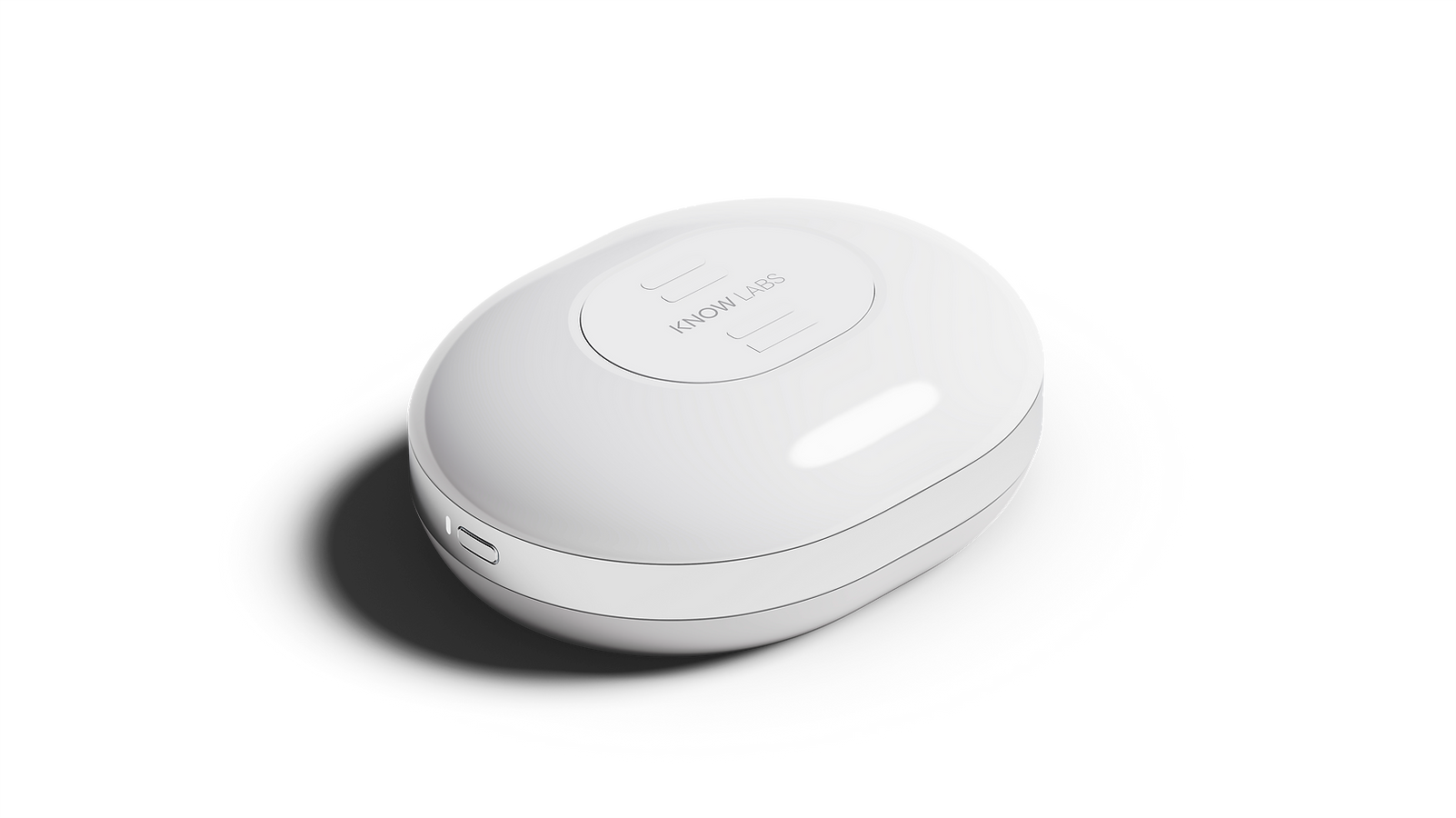
Know Labs Non-Invasive Blood Glucose Prototype, Image Source: Official Website
Furthermore, Know Labs has developed a prototype roughly the size of an Apple AirPods charging case, making it pocket-friendly for on-the-go use; users can simply take it out and hold it in their palm for testing. Know Labs stated that although the current prototype has overcome numerous engineering challenges, multiple iterations are still required. These future updates will incorporate greater computational power to meet machine learning demands and transition the form factor into a watch-style design, a process expected to take several more years to complete.
South Korea’s Apollon has partnered with the Massachusetts Institute of Technology (MIT) to develop wearable medical devices based on Raman spectroscopy, aiming to achieve non-invasive, continuous monitoring of human blood glucose levels. Apollon previously disclosed its technical approach in the journal Science Advances, describing a Raman spectroscopy device that integrates a laser emitter, an imaging spectrometer, and a detector to identify characteristic glucose peaks through irradiation of the ear. This collaboration aims to develop miniaturized devices capable of seamless integration with the human body.
Not only abroad, but also in China, the Minimally Invasive Center of the Institute of Biomedical and Health Engineering at the Shenzhen Institutes of Advanced Technology, Chinese Academy of Sciences, has recently made new progress in non-invasive blood glucose monitoring technology based on physiological signals. This study employs a non-invasive blood glucose monitoring technique based on multimodal fusion of ECG and PPG. Numerical computation methods and deep learning algorithms are used to extract spatiotemporal features from these physiological signals, and corresponding algorithms are applied to achieve decision-level fusion across different modalities. Currently, the Mean Absolute Relative Difference (MARD) for blood glucose monitoring has reached 13.42%.
Compared with the past, Rockley faces more intense competition, with many companies exploring Raman spectroscopy, terahertz spectroscopy, and dielectric spectroscopy approaches. For companies in this sector, the most critical factor is the ability to deliver convincing products in a shorter timeframe.
Despite the prevailing uncertainty in the broader market, for breakthrough products like non-invasive glucose monitoring, the first mover stands to disrupt the traditional multi-billion-dollar glucose monitoring market. Even Apple, a tech giant, replaced the head of its secret Exploratory Design Group (XDG) team responsible for developing non-invasive glucose monitoring in late September, aiming to accelerate the project’s progress.
Apple released the latest Apple Watch Series 9 in September, with lackluster updates in the health sector. It was even mocked that “the biggest upgrade is actually environmental friendliness.” Apple’s situation also reflects the current state of wearable devices in the health field.
As early as 2019, media reports revealed Apple’s intention to set a new benchmark for wearable devices by integrating non-invasive blood glucose monitoring into the newly released Apple Watch Series 6. However, four years have passed, and while the Apple Watch has been upgraded to the Series 9, this feature remains absent.
Following its collaboration with Rockley, Apple acquired RareLight, a company specializing in non-invasive blood glucose monitoring technology. Many of the relevant patents pertain to improved methods and devices for Raman spectroscopy systems, suggesting that Apple is highly likely to pursue this technological pathway.
Raman spectroscopy determines the molecular structure of a substance based on the frequency difference between Raman scattering and Rayleigh scattering generated when laser light interacts with the sample, thereby identifying its composition. Compared with conventional infrared spectroscopy, Raman spectra exhibit sharp and well-defined peaks, with peak intensity positively correlated to the concentration of the active ingredients in the measured substance. This allows for quantitative analysis of specific components, making Raman spectroscopy one of the most promising technical approaches for achieving non-invasive blood glucose monitoring.
However, Raman spectroscopy still faces numerous challenges in practical applications, such as equipment size, signal stability, and the interference of individual differences with algorithms. According to reports from foreign media, Apple’s current non-invasive blood glucose monitoring device is about the size of an iPhone. Bloomberg believes that it will take at least 3 to 7 years before mass production can be achieved.
Huawei, another wearable device giant, is also facing this predicament.
This May, Huawei launched the WATCH 4 series of smartwatches at its new product launch event, touting it as “the industry’s first smartwatch to support high blood glucose risk assessment research.”
However, to monitor blood glucose using the WATCH 4, users must wear the device continuously for more than seven days, ensuring at least two hours of wear during the day and four hours at night. Even then, the Huawei smartwatch does not provide precise blood glucose readings; instead, it offers a hyperglycemia risk assessment report, categorized into high, medium, and low risk levels. For medium-risk results, users are advised to perform comparative tests with medical-grade glucometers; for high-risk results, they are recommended to seek medical attention.
Users directly perceive the detection process as time-consuming, and the ambiguity of monitoring results indicates that smartwatches cannot yet replace traditional blood glucose monitoring methods, thus failing to meet the needs of users in this regard.
At the launch event, Huawei announced that it had collaborated three years ago with professional institutions such as Nanjing Drum Tower Hospital, Peking Union Medical College Hospital, and the China International Exchange and Promotion Association for Medical and Healthcare to conduct research on blood glucose health. By monitoring the health of over 1,000 volunteers wearing smartwatches for more than 100,000 hours, Huawei collected over one million data points related to hyperglycemia risk. The study identified key physiological indicators, including vascular elasticity, sleep heart rate, and pulse waves. Based on these findings, Huawei developed the “Hyperglycemia Fractal Algorithm” to enable the hyperglycemia risk assessment feature on the WATCH 4.
Essentially, this is a form of big data analogy: individual data are collected via optoelectronic signals and used to build algorithmic models, which are then compared against existing big data models to categorize risk levels.
Although Huawei officially specifies that the report results should not be used as a basis for medical diagnosis, the resources it has invested in achieving this functionality are enormous; yet the market demands even more.
On the one hand, the narrative around non-invasive blood glucose monitoring has been circulating for too long, and the market is in urgent need of a breakthrough product. On the other hand, the accuracy of some previously available non-invasive blood glucose products has been unsatisfactory. An industry insider told VCBeat that certain non-invasive blood glucose devices are highly susceptible to environmental influences, require prolonged warm-up periods before use, and exhibit relatively high error rates.
On social media platforms, public sentiment toward non-invasive glucose monitoring products has shifted from initial anticipation and support to the increasingly prevalent characterization of them as a “scam.” End users’ patience is being eroded, leading to growing distrust in this product category.
For companies developing non-invasive glucose monitoring technologies, such a groundbreaking product presents exceptionally high technical barriers. Premature exposure has brought them intense scrutiny, as well as significant pressure and crisis. Yet within this danger lies opportunity; the key challenge for these enterprises is how to navigate this shift. As Rockley Photonics has demonstrated, they must let go of past accolades, integrate their R&D teams, prioritize cash flow, streamline non-core projects, and focus their R&D efforts more sharply—directing energy and capital toward solving existing problems rather than spreading resources across too many new ones. The path to non-invasive glucose monitoring is long and fraught with obstacles, requiring both unwavering determination and a sense of urgency.