

Lung Cancer Takes Center Stage at ESMO 2023 as the ADC Era Begins
From October 20 to 24, the annual ESMO Congress was grandly held in Madrid, Spain. The conference featured numerous highlights, with a continuous emergence of novel technologies in oncology treatment. Clinical data on many new targets began to come to the forefront, and several new therapies demonstrated promising anti-cancer potential, with particular attention focused on cancer types such as lung cancer and colorectal cancer.
At this conference,ADC Therapy, the Hottest Topic, Has Undeniably Become an Unavoidable Subject of Discussion, the industry anticipates data breakthroughs for this technology in new targets and new indications. Meanwhile,PD-1, a cornerstone drug for the new generation of oncology treatments, is integrated into various therapeutic approaches to some extent, making it the preferred choice for the industry in exploring combination therapies for cancer treatment.
Furthermore, we are witnessing the emergence of more innovative therapies, offering additional possibilities for cancer treatment. Radiopharmaceuticals have gained strong momentum over the past two years, with Novartis, the leader in this field, presenting the latest data on Pluvicto. The integration of novel technologies has also drawn significant attention; BioNTech once again announced new data for its CLDN6 CAR-T product. This therapy not only combines CAR-T cell therapy and an mRNA vaccine but also targets CLDN6, a critical target in solid tumors. In terms of therapeutic targets, KRAS inhibitors are breaking new ground, expanding from KRAS G12C to KRAS G12D. Additionally, clinical data were disclosed for various other products, including cancer vaccines, oncolytic peptides, TIGIT inhibitors, ENPP1 inhibitors, KIT/PDGFRα inhibitors, CSF-1R/VEGFR dual inhibitors, WEE1 inhibitors, and EGFR/c-Met bispecific antibodies.
Numerous Chinese pharmaceutical companies have embarked on their journey to the ESMO Congress, delivering impressive performances this year. Clinical studies from Hengrui Medicine, Hansoh Pharmaceutical, BeiGene, CStone Pharmaceuticals, and Junshi Biosciences were all selected as Late-Breaking Abstracts (LBA) at the ESMO Annual Meeting.

Lung Cancer Takes Center Stage in Oncology
Lung cancer was the central theme of this year’s ESMO Congress, with numerous landmark studies presented.The Presidential Symposium has always been the core conference of ESMO, with discussions focusing on the most significant and impactful topics.Of the 15 late-breaking abstracts submitted to the Presidential Symposium prior to the conference opening, seven focused on non-small cell lung cancer.Similarly, therapies focused on lung cancer have demonstrated diversification. Roche’s ALK inhibitor, Johnson & Johnson’s bispecific antibody amivantamab, and AstraZeneca and Daiichi Sankyo’s ADC drug Dato-DXd have all released their latest clinical study results. Amgen’s bispecific antibody tarlatamab for small cell lung cancer has also attracted industry interest.
Roche: alectinib
ALK Inhibitors
Alectinib is Roche’s second-generation ALK inhibitor. At the ESMO Congress, Roche presented the latest clinical data from the ALINA study, which aimed to evaluate the efficacy and safety of alectinib versus platinum-based chemotherapy as adjuvant therapy in patients with early-stage ALK-positive non-small cell lung cancer (NSCLC).
Data cutoff date: June 26, 2023. A total of 257 patients were randomized (alec tinib group: n=130; chemotherapy group: n=127), with overall balanced baseline characteristics between the two groups. In the stage II–IIIA population, the median survival follow-up was 27.9 months in the alectinib group versus 27.8 months in the chemotherapy group. A significant disease-free survival (DFS) benefit was observed in the alectinib group compared with the chemotherapy group. In the intent-to-treat (ITT) population, the median follow-up was 27.8 months for alectinib versus 28.4 months for chemotherapy, and a DFS benefit was similarly observed in the alectinib group, indicating that adjuvant alectinib therapy reduced the risk of recurrence or death by 76%.
In terms of safety, the median duration of treatment was 23.9 months in the alectinib group versus only 2.1 months in the chemotherapy group. The incidence rates of grade 3/4 adverse events (AEs) were 30% and 31%, respectively, while those of serious adverse events (SAEs) were 13% and 8%, respectively. No new safety signals were observed, demonstrating a favorable long-term safety profile for alectinib. As of the data cutoff, 20.3% of patients in the alectinib group remained on treatment.
Johnson & Johnson: amivantamab
EGFR/c-MET Bispecific Antibody
Amivantamab was approved by the U.S. FDA in May 2021 for the treatment of adult patients with locally advanced or metastatic non-small cell lung cancer (NSCLC) harboring epidermal growth factor receptor (EGFR) exon 20 insertion (EGFR ex20ins) mutations, as detected by an FDA-approved test, whose disease has progressed during or after platinum-based chemotherapy.
At this year’s ESMO Congress, three Phase III clinical trials of amivantamab in EGFR-mutated NSCLC were selected as Late-Breaking Abstracts (LBA).
In the preliminary results of the global, randomized Phase III PAPILLON study, previously untreated patients with advanced non-small cell lung cancer (NSCLC) harboring EGFR exon 20 insertion mutations were randomized in a 1:1 ratio to receive either amivantamab plus chemotherapy or chemotherapy alone. A total of 308 patients were randomized. The primary endpoint was progression-free survival (PFS) as assessed by an independent review committee. The study found that the median PFS was 11.4 months in the amivantamab plus chemotherapy group, significantly longer than the 6.7 months observed in the chemotherapy-alone group (hazard ratio [HR], 0.40; 95% confidence interval [CI], 0.30–0.53; P<0.001). The objective response rate was 73% in the amivantamab plus chemotherapy group, also higher than the 47% in the chemotherapy group (P<0.001).
Surging Enthusiasm: The ADC Era Has Just Begun
On the opening day of the ESMO Congress, the blockbuster business development deal between Merck and Daiichi Sankyo regarding their ADC pipeline became a focal point of industry attention outside the conference, further reigniting interest in ADC therapies at the event.
Numerous ADC drug data were presented at this year’s ESMO Congress,Daiichi Sankyo remains the undisputed protagonist, while other pharmaceutical companies continue to explore differentiation and diversification. Rather than saying that competition in the ADC sector is intensifying, it is more accurate to say that the ADC era has just begun.
In terms of targets, antibody-drug conjugates (ADCs) have seen progress in novel targets beyond HER2. Clinical data for agents targeting HER3, Trop2, Nectin-4, B7-H3, B7-H4, CDH6, PTK7, and other targets have been successively released, demonstrating that the industry is exploring broader frontiers for ADC therapies.
The enthusiasm for ADCs extends beyond targets to indications.In the treatment of breast cancer, Daiichi Sankyo is a dominant force, having released the latest overall survival results from the Phase III DESTINY-Breast04 study of trastuzumab deruxtecan (T-DXd), data from the DESTINY-Breast (DB) 01, 02, and 03 studies, as well as results from the Phase Ib/II BEGONIA study of datopotamab deruxtecan (Dato-DXd) plus durvalumab for first-line treatment of unresectable locally advanced or metastatic triple-negative breast cancer (a/mTNBC).
In addition to breast cancer,Lung Cancer ADCs Take Center Stage at the Conference, with Innovations in Targets or Conjugation MethodsInnovative ADC drugs such as BL-B01D1 and Cofetuzumab Pelidotin have announced their first-in-human trial results or Phase I study findings, laying the foundation for subsequent research. More importantly, Daiichi Sankyo and AstraZeneca presented detailed results from the TROPION-Lung01 trial—their first Phase III study—on Dato-DXd, a novel TROP2-targeting ADC co-developed for the treatment of lung cancer, at the ESMO Congress. If approved, this therapy has the potential to reshape the treatment landscape for non-small cell lung cancer (NSCLC).
Daiichi Sankyo/AstraZeneca: Dato-DXd
ADC Drugs
Dato-DXd, a novel TROP2-targeting antibody-drug conjugate (ADC), is jointly developed by Daiichi Sankyo and AstraZeneca.
The TROPION-Lung05 study is a global, open-label, Phase II clinical trial designed to evaluate the efficacy and safety of Dato-DXd in patients with advanced/metastatic non-small cell lung cancer (NSCLC) who have previously received ≥1 prior targeted therapy against actionable genomic alterations (AGAs) and platinum-based chemotherapy. At this ESMO Congress, investigators reported the preliminary results of the study.
A total of 137 patients received ≥1 dose of Dato-DXd, with a median age of 61.0 years. 71.5% of patients had previously received ≥3 prior lines of anticancer therapy. 56.9% of subjects harbored EGFR mutations.
As of December 14, 2022, 85.4% of patients had discontinued treatment, 63.5% had experienced disease progression, and 49.6% had died. The cORR was 35.8%, the DCR was 78.8%, and the median DoR was 7.0 months; similar treatment responses were observed in patients with EGFR mutations. The most common grade ≥3 TEAEs were stomatitis (9.5%), anemia (5.8%), and increased amylase (5.8%).
Daiichi Sankyo: HER3-DXd
ADC Drugs
HER3-DXd is a HER3-targeted antibody-drug conjugate (ADC). Analysis results from the previous phase 2 HERTHENA-Lung01 study demonstrated that HER3-DXd exhibited favorable efficacy and manageable safety in patients with EGFR-mutated advanced non-small cell lung cancer (NSCLC) who were resistant to EGFR tyrosine kinase inhibitors (EGFR-TKIs) and platinum-based chemotherapy. The trial enrolled patients with stable brain metastases, and this ESMO Congress presented exploratory analysis results on the intracranial efficacy of the trial.
Overall, 95 patients had baseline brain metastases, including 23 with evaluable target lesions and 72 with non-target lesions only. In the advanced-line setting, patients had received a median of three prior lines of systemic therapy. Analysis showed that the BICR-confirmed CNS ORR was 20% (the intracranial ORR was higher at 37% among patients who had not previously received brain radiotherapy). The median DOR was 8.5 months.
Notably, 60% of patients achieved the best central nervous system (CNS) response (i.e., stable disease). Among patients with target lesions, the sum of tumor diameters decreased in 15 out of 23 cases (objective response rate [ORR], 22%). Overall, HER3-DXd demonstrated durable efficacy against CNS metastases in EGFR-mutated non-small cell lung cancer (NSCLC). The findings from this current trial further support the feasibility of systemic therapy for patients with brain metastases.
AbbVie: ABBV-637
ADC Drugs
ABBV-637 is an antibody-drug conjugate (ADC) composed of an EGFR-targeting antibody and a BCL-xL inhibitor. At this year’s ESMO Congress, AbbVie presented results from its Phase 1 dose-escalation and expansion study, which evaluated the safety and preliminary efficacy of ABBV-637 in combination with osimertinib as second- and third-line therapy. The trial enrolled patients with recurrent/refractory EGFR-mutated non-small cell lung cancer (NSCLC) who initially responded to osimertinib but subsequently experienced disease progression, and treated them with ABBV-637 plus osimertinib. Study endpoints included treatment-emergent adverse events (TEAEs), objective response rate (ORR), and disease control rate (DCR).
A total of 42 patients (median age, 65 years) received treatment, with 64% having previously undergone ≥2 lines of therapy. The median duration of ABBV-637 treatment was 113 days. The most common treatment-emergent adverse events (TEAEs) were elevated aspartate aminotransferase (38%), elevated alanine aminotransferase (33%), nausea (33%), and fatigue (21%).
The efficacy analysis results showed that the objective response rate (ORR) was 14% and the disease control rate (DCR) was 73% in the third-line treatment cohort; the ORR was 10% and the DCR was 65% in the second-line treatment cohort. Overall, ABBV-637 in combination with osimertinib demonstrated certain clinical efficacy and a manageable safety profile in patients with relapsed/refractory EGFR-mutated non-small cell lung cancer (NSCLC).
A Flourishing Array of Domestically Developed New Drugs at the Forefront
The momentum in the development of new antibody-drug conjugate (ADC) drugs continues to spread across China. Nearly 10 pharmaceutical companies, including Kelun-Biotech, Hengrui Medicine, Mabwell Bioscience, Fosun Pharma, CSPC Pharmaceutical Group, and Duality Biologics, announced the latest progress of their ADC pipelines at the ESMO Congress. Many of these companies have entered into business development (BD) deals with overseas multinational corporations (MNCs), demonstrating the cutting-edge nature of Chinese-made ADC innovations.
Notably,Domestic pharmaceutical companies have not fully kept pace with the development of new HER2 ADCs, but have chosen to focus on treating solid tumors:Hansoh Pharmaceutical, which recently signed a business development (BD) deal with GSK for an ADC project, announced the first-in-human/Phase I trial of HS-20089 (a B7-H4 ADC) in patients with advanced solid tumors; Hengrui Medicine released Phase I study data on SHR-A2009, a HER3-targeting ADC, for the treatment of advanced solid tumors; and Mabwell disclosed preliminary results from its Phase I/II study of an Nectin-4-targeting ADC in patients with advanced solid tumors.
Among the highly anticipated Trop2-targeting antibody-drug conjugates (ADCs), Kelun-Biotech’s SKB264 has reported results from its Phase I/II clinical trial in HR+/HER2- breast cancer. Meanwhile, bispecific ADCs have also emerged in China; Baili Hengtian’s BL-B01D1, an EGFR×HER3 bispecific ADC, presented updated results from its Phase I trial in non-small cell lung cancer (NSCLC) at this year’s ESMO Congress.
In addition to ADCs,Bispecific antibodies are also one of the hot areas of exploration for domestic pharmaceutical companies.Hengrui Medicine, Alphamab Oncology, Akeso, and CSPC Pharmaceutical Group, among others, presented the latest clinical data on their bispecific antibody pipelines at ESMO.
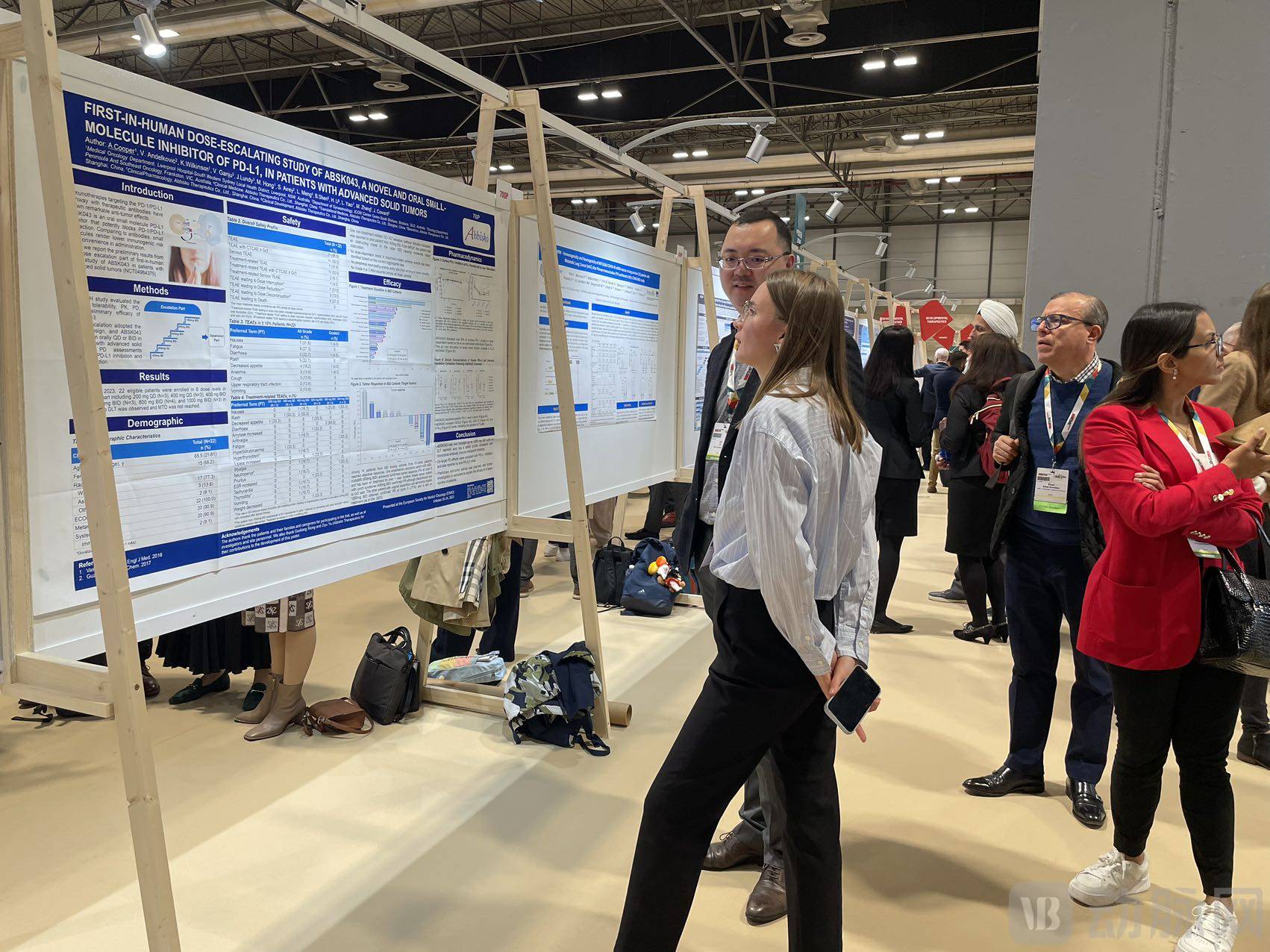
Small-molecule drug development has also yielded substantial results, with the latest clinical data released for popular targets such as HRS, EGFR, RET, and PARP. Among these,Abisko Therapeutics Announces Key Clinical Trial Results for Two Proprietary Innovative Small-Molecule Candidate Drugs,First-in-human clinical data for the FGFR4 inhibitor irpagratinib (ABSK011) in patients with advanced hepatocellular carcinoma and for the oral small-molecule PD-L1 inhibitor ABSK043 in patients with advanced solid tumors.
Kelun-Biotech: SKB264
TROP2-ADC
At the ESMO Congress, Kelun-Biotech presented, in an oral presentation, clinical Phase I/II study data on its innovatively developed TROP2-ADC (SKB264, MK-2870), co-developed with Merck & Co., for previously treated patients with metastatic hormone receptor-positive (HR+) and human epidermal growth factor receptor 2-negative (HER2-) breast cancer.
SKB264 is a representative innovative TROP2-targeting antibody-drug conjugate (ADC) developed by Kelun-Biotech, combining the specificity of monoclonal antibodies with the high potency of cytotoxic drugs.
As of April 12, 2023, the trial enrolled 41 patients, with a median age of 50 years (range: 34–66). Sixty-one percent of patients had an ECOG performance status (PS) of 1, and the median follow-up duration was 8.2 months. Among the 38 patients evaluable for efficacy, 47% had primary endocrine resistance. Seventy-nine percent of patients had received ≥2 lines of prior chemotherapy; prior therapies included paclitaxel (100%) and CDK4/6 inhibitors (65.8%).
Regarding safety, grade ≥3 treatment-related adverse events (TRAEs) occurred in 48.8% (20/41) of patients, with the most common being decreased neutrophil count (36.6%), decreased white blood cell count (22%), anemia (14.6%), decreased platelet count (9.8%), and increased gamma-glutamyl transferase (GGT) (7.3%). Discontinuation due to TRAEs occurred in 17.1% (7/41) of patients. No cases of peripheral neuropathy or drug-related interstitial lung disease (ILD) were reported, and there were no discontinuations or deaths attributable to TRAEs.
In terms of efficacy, the ORR was 36.8% (14/38), including 12 confirmed PRs and 2 unconfirmed; the DCR was 89.5%; the median DoR was 7.4 months, with a 6-month DoR rate of 80%. The median PFS was 11.1 months, with a 6-month PFS rate of 61.2%.
Hansoh Pharma: HS-20089
B7H4-ADC
HS-20089 consists of a humanized IgG1 anti-B7-H4 monoclonal antibody conjugated via a cleavable linker to a topoisomerase I inhibitor payload, with a drug-to-antibody ratio (DAR) of 6.
As of April 11, 2023, 44 patients with solid tumors received HS-20089 treatment, including 41 cases of breast cancer, 2 cases of ovarian cancer, and 1 case of endometrial cancer.
Three DLTs were observed in 2 patients, all at the 7.2 mg/kg dose level. The most common TRAEs (≥20%) were leukopenia, neutropenia, nausea, anemia, thrombocytopenia, vomiting, fatigue, elevated alanine aminotransferase, anorexia, elevated aspartate aminotransferase, and hyponatremia. No cases of interstitial pneumonitis or infusion reactions were reported.
Among the 33 evaluable patients, 8 achieved a partial response (PR) (24.2%), including 3 confirmed PRs and 5 unconfirmed PRs. The disease control rate (DCR) was 63.6%. In the subgroup of 16 patients with triple-negative breast cancer (TNBC), 6 PRs were observed (37.5%), including 2 confirmed PRs and 4 unconfirmed PRs. Among the 12 TNBC patients receiving the potential target therapeutic doses (4.8 and 5.8 mg/kg), 5 PRs were observed (41.7%).
Among patients who achieved PR, the longest treatment duration was 403 days (in the 0.7 mg/kg dose group).
Abbisko Therapeutics:
ABS-011: A Small-Molecule Inhibitor of FGFR4
ABSK043: Small-Molecule PD-L1 Inhibitor
At the ESMO Congress, Abbisko Therapeutics presented an open-label Phase I clinical study evaluating the safety, tolerability, and pharmacokinetics of irpagratinib (ABSK-011) in patients with advanced solid tumors.
Irpagratinib (ABSK011) is a highly selective small-molecule inhibitor of fibroblast growth factor receptor 4 (FGFR4), intended for the treatment of advanced solid tumors, particularly advanced hepatocellular carcinoma (HCC), cholangiocarcinoma, and breast cancer with abnormalities in the FGFR4 signaling pathway (such as amplification/overexpression of the ligand FGF19, or FGFR4 mutation/amplification/fusion). The FGFR4 signaling pathway represents a promising direction for the development of molecular targeted therapies for HCC. Compared with competing products, Irpagratinib has demonstrated superior potency and antitumor efficacy, along with favorable physicochemical properties in preclinical studies.
The study results indicate that: (1) ABSK-011 demonstrated a favorable overall safety and tolerability profile in patients with hepatocellular carcinoma; (2) The ABSK-011 twice-daily (BID) cohort showed remarkable efficacy in previously treated patients with FGF19-overexpressing hepatocellular carcinoma (ORR 40.7%). Preliminary efficacy data for ABSK-011 BID have shown promising trends. As the study is ongoing, further efficacy results are anticipated and warrant close attention.
Meanwhile, Abbisko Therapeutics presented an open-label Phase I clinical study at ESMO evaluating the safety, tolerability, and pharmacokinetics of ABSK043 in patients with advanced solid tumors.
BSK043 is a small-molecule PD-L1 inhibitor with favorable bioavailability and high selectivity, addressing the limitations of anti-PD-1/anti-PD-L1 antibodies in clinical practice, such as high cost, poor blood-brain barrier permeability, and immunogenicity.
Study results showed: (1) ABSK043 has been dose-escalated to 1000 mg BID, with good tolerability currently observed, no dose-limiting toxicities reported, and a safety profile consistent with that of monoclonal antibody immune checkpoint inhibitors. (2) Target-related pharmacodynamic (PD) effects were consistent with PD-L1 inhibition and aligned with previously reported data for PD-(L)1 monoclonal antibodies. (3) Preliminary antitumor activity has been observed in the study, warranting further exploration of efficacy in a larger patient population.
Innovent Biologics: Selpercatinib (Retevmo)
RET Inhibitors
Selpercatinib is the world’s first highly selective and potent small-molecule RET inhibitor. At this conference, the Phase 3 clinical trial of selpercatinib for the treatment of patients with RET fusion-positive non-small cell lung cancer (NSCLC) (the LIBRETTO-431 study) was selected for a Late-Breaking Abstract (LBA) presentation. It is the first randomized study to compare the safety and efficacy of targeted therapy versus PD-1 inhibitor plus chemotherapy in a patient population defined by specific genomic biomarkers.
This study evaluated selpercatinib versus pemetrexed plus platinum-based chemotherapy (with or without pembrolizumab) as first-line treatment for patients with advanced or metastatic non-small cell lung cancer (NSCLC) harboring RET gene fusions. The study met its primary endpoint, demonstrating that selpercatinib provided a statistically and clinically significant improvement in progression-free survival (PFS) compared with the control group.
Impression Pharma: senaparib
PARP Inhibitors
Senaparib is a PARP inhibitor developed by Imend Pharma, indicated for maintenance treatment in patients with FIGO stage III–IV epithelial ovarian cancer, fallopian tube cancer, or primary peritoneal cancer who have achieved a complete or partial response to first-line platinum-based chemotherapy. In August this year, China’s National Medical Products Administration (NMPA) accepted the new drug application for senaparib.
A randomized, double-blind, placebo-controlled, multicenter Phase 3 clinical trial of senaparib (the FLAMES study) was selected for a Late-Breaking Abstract (LBA) presentation at this year’s ESMO Congress. The study aimed to evaluate the efficacy and safety of senaparib monotherapy as maintenance treatment in patients with FIGO Stage III–IV ovarian cancer who had achieved a complete response (CR) or partial response (PR) following first-line platinum-based chemotherapy.
Preliminary study results demonstrate that senaparib maintenance therapy significantly prolongs progression-free survival (PFS) in patients with advanced ovarian cancer. Patients benefit from senaparib treatment regardless of their breast cancer susceptibility gene (BRCA) mutation status. Furthermore, senaparib exhibits good tolerability and a manageable safety profile.
References:
CSC Financial | Innovative Drug Industry: ESMO Conference Data Continues to Be Released, Medical Insurance Negotiation Rules Further Optimized
2023 ESMO | Abstracts Released! A Flourishing Landscape of ADC Drugs for Lung Cancer, with Latest Results from Hot Studies on Immunotherapy and Targeted Therapy