

First Round Agenda Released: Greater Bay Area Brain Science Industry Innovation and Collaboration Conference 2023, Second Annual Meeting of Shenzhen Society for Neuroscience, and Annual Meeting of the Neuroscientific Research Technology Branch of the Chinese Neuroscience Society
Brain science is hailed as the “final frontier” for humanity’s ultimate exploration of nature and self-understanding, and it is becoming a key focal point in the current global technological competition. In recent years, a new round of scientific and technological revolution and industrial transformation—represented by artificial intelligence, quantum information, integrated circuits, life and health, brain science, biological breeding, aerospace technology, and deep-earth and deep-sea exploration—has been advancing in depth, restructuring the global innovation landscape and reshaping the global economic structure. The field of brain science has undoubtedly become a vital engine for next-generation industrial innovation and development, making broad and profound contributions to socioeconomic progress.
As the first national innovative city and the first national independent innovation demonstration zone with a city as its basic unit, Shenzhen is also prioritizing the cultivation and development of future industries in the fields of brain science and brain-inspired intelligence, driven by favorable factors such as the new round of technological and industrial transformation and the “dual-zone” strategy.
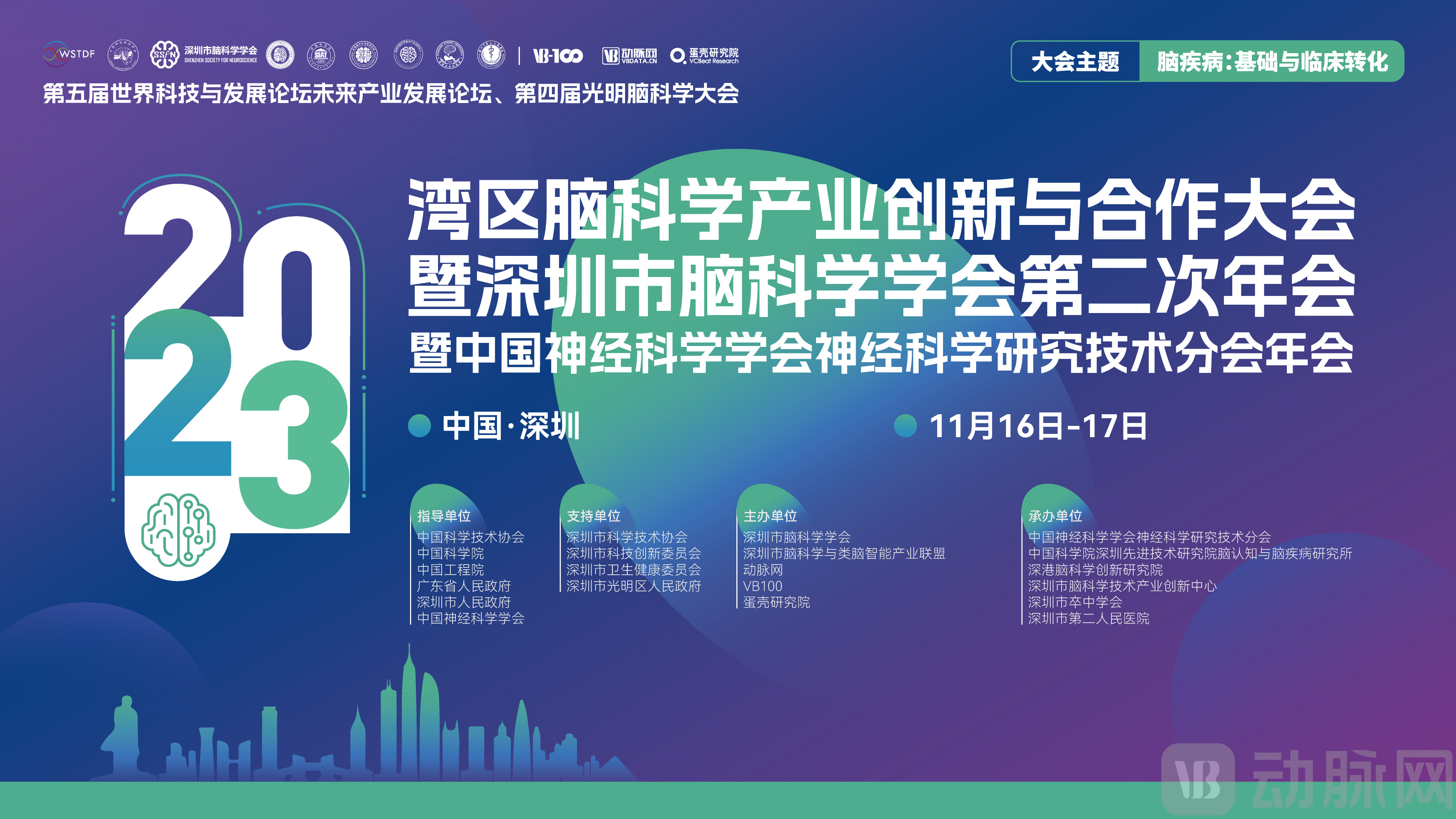
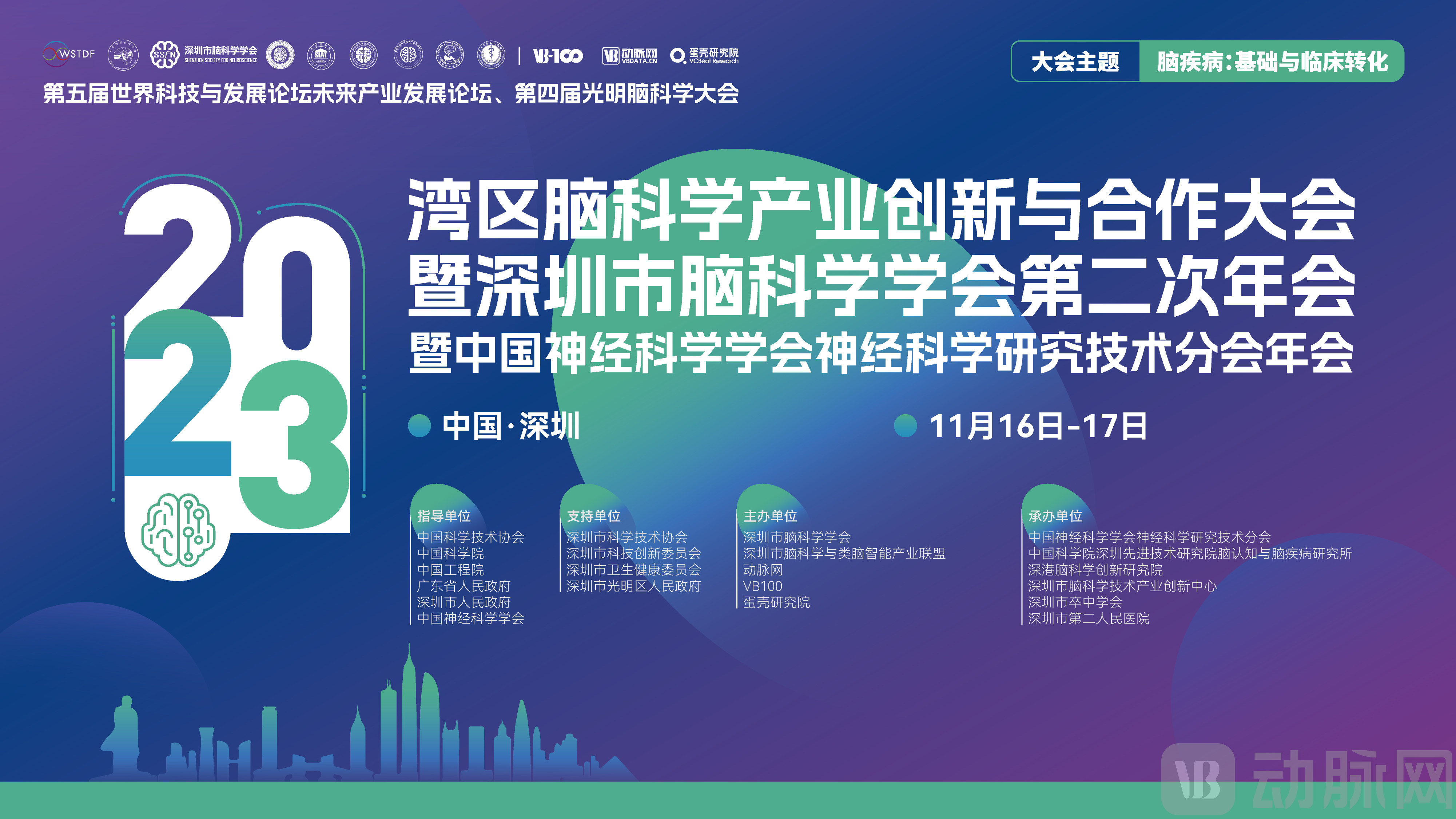
The 4th Guangming Brain Science Conference: Bay Area Brain Science Industry Innovation and Cooperation Conference·2023 Shenzhen Society for Brain Science Second Annual Conference & Chinese Neuroscience Society Annual Meeting of the Neural Research Technology Branch,also serves asBrain Science Parallel Forum of the Future Industry Development Forum at the 5th World Science, Technology and Development Forum,Co-organized by the Shenzhen Society for Brain Science, the Shenzhen Brain Science and Brain-Inspired Intelligence Industry Alliance, VCBeat, VB100, and Eggshell Research Institute atNovember 16–17In China· ShenzhenSpearheaded by VCBeat, the event aims to align closely with national policy directions and industrial development trends by inviting elite scholars and experts from academia, industry, and the capital sector to deepen the integration of industry, technology, and capital.
The theme of this conference is "Brain Diseases: Fundamentals and Clinical Translation”, Settings1 Opening Ceremony of the Main Forum、2 Academic Conferencesand7 Industry Sub-Sector Forums, exploring topics such as the development of novel drugs for brain diseases, early diagnosis and non-pharmacological treatments, to jointly discuss the future of the brain science industry.
Opening Ceremony of the Main Forum
Time:November 16, 09:00–12:00
The opening ceremony consisted of five segments: conference addresses, keynote speeches, list releases, report launches, and signing ceremonies. The forum invited approximately 600 participants, including relevant government officials, Nobel laureates, academicians of the Chinese Academy of Sciences and the Chinese Academy of Engineering, CEOs of Fortune Global 500 companies, renowned experts and scholars, representatives from industry organizations, heads of international medical institutions and investment firms, corporate representatives, and media representatives.
· Release and Interpretation of the "2023 White Paper on the Development of the Brain Science and Brain-Inspired Intelligence Industry"
·2023 Brain Science and Brain-Inspired Intelligence Innovation Young Leaders 30 (The New Brain 30) Launch Ceremony
· Unveiling Ceremony of the Shenzhen Concept Validation Center for Interventional Technologies in Neurological Disorders
· Strategic Cooperation Signing for the Brain Science Technology Industry Innovation Center
·Inauguration Ceremony of the Shenzhen Society for Neuroscience
Forum 1: Research Models for Brain Diseases and New Drug Development: Challenges and Paradigm Innovation
Time: November 16, 14:00-18:00
The new wave of technological revolution is sparking a fresh global transformation, with innovation in the pharmaceutical sector becoming a key indicator of a nation’s scientific and technological prowess. This conference will focus on the latest achievements, cutting-edge technologies, and future trends in the development of novel drugs for brain disorders. It will explore recent breakthroughs in this field, analyze drug development strategies and competitive barriers under the new landscape, and share the latest findings, practical experiences, and technical details of drug R&D, thereby advancing pharmaceutical research and development.
· How to Build a Bridge Between Neurological Disease Research and the Development of New Pharmaceuticals
·How Technology Empowers Innovative Drug Development for Major Diseases
· Innovation-Driven Transformation and Differentiated Strategy in Drug R&D
·How to Uncover the Clinical Value of Improved New Drugs
· R&D and Investment & Financing in the Innovative Drug Market
Forum 2: Precision Diagnosis and Treatment of Nuclear Medicine and Neurological Diseases
Time: November 16, 14:00-18:00
Nuclear medicine is an emerging discipline in modern medicine that plays a pivotal role in precision healthcare. It enables earlier detection of molecular-level disease information, thereby supporting clinical research on major neurological disorders such as Alzheimer’s disease.. In clinical applications, it can complement and corroborate CT, MRI, and ultrasound technologies, serving as a crucial step to facilitate earlier disease detection and assessment, seize optimal treatment opportunities, and improve survival rates.
· Technological Innovation and Clinical Application in Nuclear Medicine
· Frontiers and Hot Topics in In Vitro Nuclear Medicine Analysis
· Early Screening and Interventional Treatment of Neurological Disorders
· Clinical Examination, Treatment, and Application Value of Nuclear Medicine
· Novel Diagnostic and Interventional Methods Driven by Medical Imaging and Next-Generation Sequencing Technologies
Forum 3: Frontier Technologies and Clinical Needs in Brain Disease Research
Time: November 17, 09:00–12:15
Brain science research has entered a critical period of development. On one hand, the momentum of research advancement is rapid; on the other, it addresses major public health needs, with a particular focus on the early prevention and treatment of brain disorders. Centered on brain diseases, systematic efforts are being undertaken in areas such as cognitive mechanisms, intervention strategies, and diagnosis and treatment systems, to seize the commanding heights of the new round of technological revolution.。
· Precision Brain Science and AI-Empowered Diagnosis and Treatment of Brain Diseases in the Era of Digital Medicine
· Big Data and Cloud Computing Technologies Assist Elderly Care Institutions in Providing Personalized Brain Health Management
· How the Translation of Brain Science and Technology Achievements Can Alleviate the Heavy Socioeconomic Burden
· From Policy to Capital: How Brain Science Can Better Serve Healthy China
· From Biological Brains to Brain-Inspired Systems: Development and Key Technologies of Neuromorphic Computing
· How Frontier Technologies Drive Breakthroughs in Basic Research
Forum 4: Early Diagnosis and Non-Pharmacological Treatment of Brain Diseases: Opportunities and Challenges
Time: November 17, 09:00-12:15
In recent years,As lifestyles become increasingly fast-paced, the burden of psychological stress has grown, leading to a rising prevalence of individuals with psychobehavioral problems and mental disorders. Consequently, public mental health concerns have become increasingly prominent. While pharmacological treatments for mental illnesses are effective, they are often accompanied by significant side effects. Therefore, in addition to actively developing next-generation medications, exploring non-pharmacological strategies for neurological and psychiatric disorders—such as lifestyle-based early interventions—offers greater health benefits and enhanced safety.
· How to Break Through in Mechanism Elucidation and Strategy Optimization of Non-Pharmacological Interventions
· The Role of Traditional Chinese Medicine in the Prevention and Treatment of Brain Diseases
· Research Progress on the Pathogenesis and Early Diagnostic Techniques of Alzheimer's Disease
· Prevention and Intervention of Dementia—Nutrition and Exercise for Brain Health
· Neural Network Mechanisms of Parkinson’s Disease and New Strategies for Targeted Therapy
Forum 5: Brain Health and Homeostasis: Neuro- Frontiers in the Immune-Endocrine-Metabolic Interaction Network and Clinical Expectations
Time: November 17, 14:00-15:30
The bidirectional regulatory mechanisms between the brain and peripheral organs have long been a key frontier in neuroscience research. This conference will invite experts and scholars from both domestic and international fields to jointly discuss the molecular, cellular, and circuit-level mechanisms underlying the mutual regulation among the nervous, immune, endocrine, and metabolic systems. The aim is to explore their potential value in developing novel strategies for early diagnosis and optimized treatment of chronic and complex clinical diseases, thereby contributing wisdom and strength to continuously open up new development pathways and shape new growth drivers in the realms of brain science and life health.
· Immune-Metabolic Imbalance and Stress-Related Diseases
·Progress in Clinical Application of the Mechanism by Which Acupuncture Regulates the Neuro-Endocrine-Immune Network System
·Exercise Prevention and Intervention for Common Chronic Diseases
· Construction and Brain Science Applications of Personalized Intelligent Sleep Management Systems
· Technical Approaches and Methodologies in Neuro-Immune Interaction Research
· Microecological Regulation and Brain Homeostasis
Forum 6: Clinical Pain Points, Challenges, and Bottlenecks in Brain Diseases, and Cross-Disciplinary Innovation
Time: November 17, 15:30-18:00
Clinical neuroscience serves as a source of fundamental scientific questions and a base for validating and applying research and development outcomes. The future development of brain science will further leverage the advantages of clinical resources. In addition, the interdisciplinary nature, international frontier status, and technology-leading characteristics of brain science determine its cross-complementarity with other traditional industries and its catalytic role in fostering new business models.
· How Cell and Gene Therapy Technologies Facilitate the Treatment of Rare Diseases and Drug Development
· Molecular Mechanisms and Intervention Strategies for Major Brain Diseases
· Early Screening and Intervention Technologies for Cognitive Impairment
· Potential Therapeutic Targets and Drug Development for Nervous System Diseases
· Strategies for Enhancing Diagnostic Efficiency in Brain Diseases Through Digital Technologies
Forum 7: Frontier Technologies and Industrial Applications of Brain-Computer Interfaces
Time: November 17, 14:00-18:00
Neuroscience represents one of the fundamental scientific challenges facing human society, serving as a critical frontier for deepening our understanding of both nature and humanity itself. Brain-computer interfaces (BCIs) have emerged as an effective means to explore this domain. Driven by national strategic initiatives and continuous technological innovation, this forum will focus on the cutting-edge advancements of BCI technology in smart healthcare. It will center on key issues such as BCI paradigm design, the efficacy of diagnosis and treatment for brain disorders, and the naturalness of brain-computer interaction, with the aim of promoting the application and development of BCI technology in the field of smart healthcare.
· Clinical Applications of Brain-Computer Interfaces in China and Abroad, and Ethical and Safety Issues
· Applications of Wearable Devices in Behavioral Monitoring for Patients with Brain Disorders
·The Role of Minimally Invasive Brain-Computer Interface Technology in Driving Future Technological Advancements
· Research on the Adaptability of Brain-Computer Interfaces Across Different Populations
·In the era of large language models, how should frontier exploration and translation of research outcomes in brain-computer interfaces be conducted?
· Key Applications and Major Advances in Non-Invasive and Invasive Brain-Computer Interface Technologies in Rehabilitation Medicine
The conference is expected to attract over 600 professionals from the brain science industry, inviting top scientists and experts from academia and clinical practice, as well as industry leaders, to share their insights. Together, they will build platforms for academic exchange and for the integration of industry, academia, research, and clinical care, creating opportunities for intellectual engagement among scientists, clinical researchers, ecosystem entrepreneurs, young scholars, and students. This initiative aims to inspire research and learning, identify new directions for brain science research, and explore pathways for translating research findings into practical applications.
Conference Theme:Brain Diseases: Fundamentals and Clinical Translation
Conference Schedule:November 16–17, 2023
Conference Venue:China · Shenzhen
Guiding Organizations:China Association for Science and Technology, Chinese Academy of Sciences, Chinese Academy of Engineering, People's Government of Guangdong Province, People's Government of Shenzhen Municipality, Chinese Neuroscience Society
Supporting Organizations:Shenzhen Association for Science and Technology, Shenzhen Municipal Science and Technology Innovation Commission, Shenzhen Municipal Health Commission, People's Government of Guangming District, Shenzhen
Hosted by:Shenzhen Society for Neuroscience, Shenzhen Brain Science and Brain-Inspired Intelligence Industry Alliance, VCBeat, VB100, VCBeat Research Institute
Organizer:Neuroscience Research Technology Branch of the Chinese Society for Neuroscience, Institute of Brain Cognition and Brain Diseases, Shenzhen Institutes of Advanced Technology, Chinese Academy of Sciences, Shenzhen-Hong Kong Institute of Brain Science, Shenzhen Brain Science and Technology Industry Innovation Center, Shenzhen Stroke Society, and The Second People's Hospital of Shenzhen
Conference Scale:600+
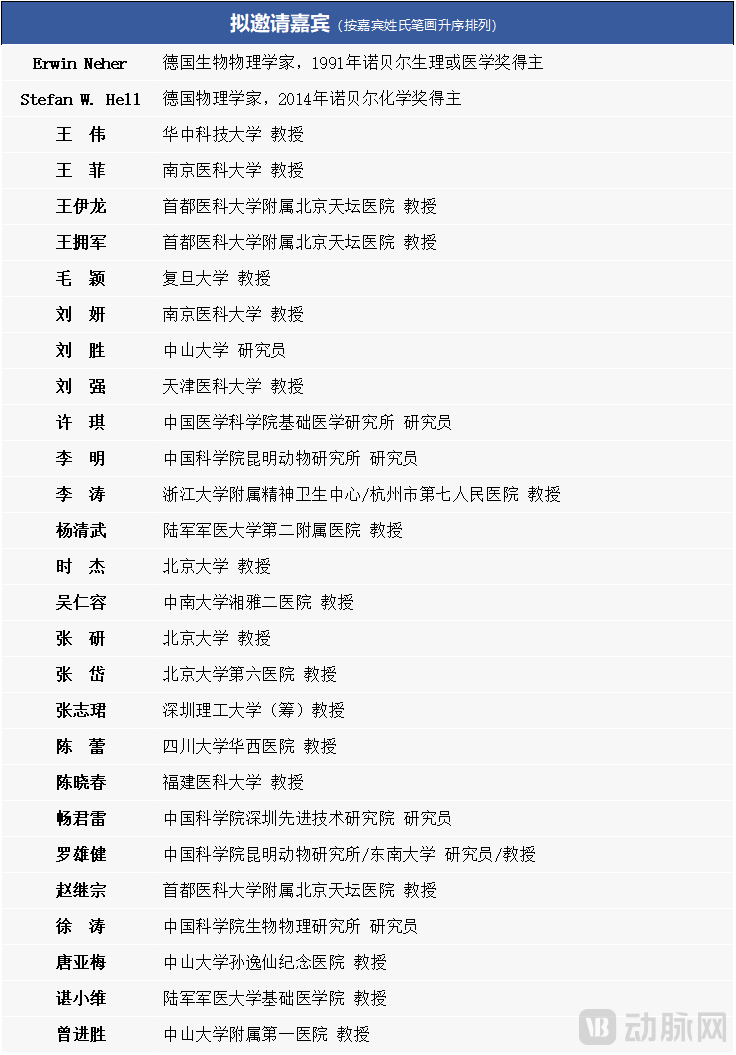
(Listed in ascending order by the number of strokes in members' surnames; no ranking implied)
Conference Chair:
Zhang Xu, Zhao Jizong
Executive Chairman:
Wang Liping, Wang Yongjun
Academic Committee:
Wei Wang, Fei Wang, Yutian Wang, Liping Wang, Yilong Wang,
Wang Yongjun, Mao Ying, Ye Keqiang, Bi Guoqiang, Liu Sheng,
Yan Liu, Qiang Liu, Qi Xu, Jianyuan Sun, Ming Li,
Li Tao, Yang Qingwu, Shi Jie, Wu Renrong, Zhang Xu,
Yan Zhang, Dai Zhang, Zhijun Zhang, Mingjie Zhang, Lei Chen,
Chen Xiaochun, Chang Junlei, Luo Xiongjian, Zhao Jizong, Hou Shengtao,
Xu Tao, Xu Fuqiang, Tang Yamei, Chen Xiaowei, Han Minghu,
Zeng Jinsheng, Tan Lihai
Organizing Committee:
Wang Liping, Wang Zhiqiang, Wang Tingmei, Gan Wenbiao, Bi Guoqiang,
Zhu Yingjie, Ren Lijie, Liu Huiming, Chi Feng, Sun Jianyuan,
Sun Xizhuo, Su Qiru, Li Weiping, Zou Jing, Zhang Zhijun,
Chen Yu, Chen Ye, Shang Chunfeng, Luo Wanyan, Zhou Tao,
Zhou Liemin, Meng Zhiqiang, Zhao Ruoqi, Xu Fuqiang, Xu Pengfei,
Gao Yusen, Guo Yi, Ji Shengjian, Huang Tianwen, Tu Jie,
Cheng Fei, Lu Yi
Conference Secretariat:
Wei Meihong, Bei Wenyu, Ai Jingyu, Li Shaowei, Li Yezhao,
Mengru Li, Xinyue Yang, Ling Wu, Xiaoni Wu, Zijian Qiu,
Zhang Kexin, Chen Xianxue, Yi Wenling, Miao Simin, Luo Lan,
Xu Yunjia, Gao Xiaotong, Tu Wenjun, Huang Yingying, Han Qianqian,
Zeng Boxin, Tan Minyi
“The 4th Guangming Brain Science Conference: Bay Area Brain Science Industry Innovation and Cooperation Conference · 2023”The 2nd Annual Conference of the Shenzhen Society for Brain ScienceAnnual Meeting of the Neuroscience Research Technology Branch of the Chinese Society for Neuroscience”Tickets are selling fast!

Scan the QR code to register and sign up
The Guangming Brain Science Conference Series is a grand, widely inclusive event in China’s brain and health sector, characterized by the deep integration of technology, industry, and capital, as well as high levels of participation. Since 2021, three editions have been held consecutively in Guangming Science City, attracting more than 26 million participants both offline and online, and drawing extensive attention from all sectors of society. In the first three editions, we invited three Nobel laureates, more than 12 academicians from China and abroad, and hundreds of top experts from related fields worldwide to focus on frontier brain science and industrial development trends, thereby establishing the conference series’ international character.
Through its successive conferences, the Brain Innovation Center has achieved remarkable results in building an industrial ecosystem for brain science and brain-inspired intelligence in Guangming Science City. To date, the Center has attracted more than 60 enterprises to establish operations in Guangming Science City, with 30 of them stationed directly within the Center. It has facilitated 11 enterprises in obtaining certification under the first and second batches of brain science enterprises in Guangming District, initially forming a scaled industrial cluster. With strong support from the Shenzhen Municipal and Guangming District governments, the Center has established 11 shared technology platforms, helping served enterprises secure over RMB 1 billion in financing and investment. Looking ahead, the Brain Innovation Center will continue to empower both capital and enterprises through bidirectional engagement, striving to build China’s first professional incubation and empowerment platform offering “plug-and-play” brain science infrastructure, and aiming to become a national demonstration hub for technological innovation in the brain science industry, with global reach.
The Shenzhen Society for Brain Science is a local, academic, non-profit social organization initiated by the Shenzhen Institutes of Advanced Technology, Chinese Academy of Sciences, and co-founded by brain science experts from Shenzhen People’s Hospital, Shenzhen Second People’s Hospital, Shenzhen University, Southern University of Science and Technology, Peking University Shenzhen Graduate School, Shenzhen University of Technology (in preparation), Shenzhen Bay Laboratory, and Shenzhen Institute of Neuroscience. Guided by demand-driven original innovation and following the path of “sharing, innovation, and service,” the Society aims to establish a platform for academic and technical exchange, thereby accelerating the integration of basic research, applied basic research, clinical studies, and industrialization in brain science. As the primary social organization supporting the brain science industry, the Society spearheaded the establishment of the “Shenzhen Brain Science and Brain-inspired Intelligence Industry Alliance.”