

Qiang Wei, a Young Scientist Devoted to Fundamental Research and Hard-Tech Innovation, Files IPO Prospectus for Meibai Biosciences
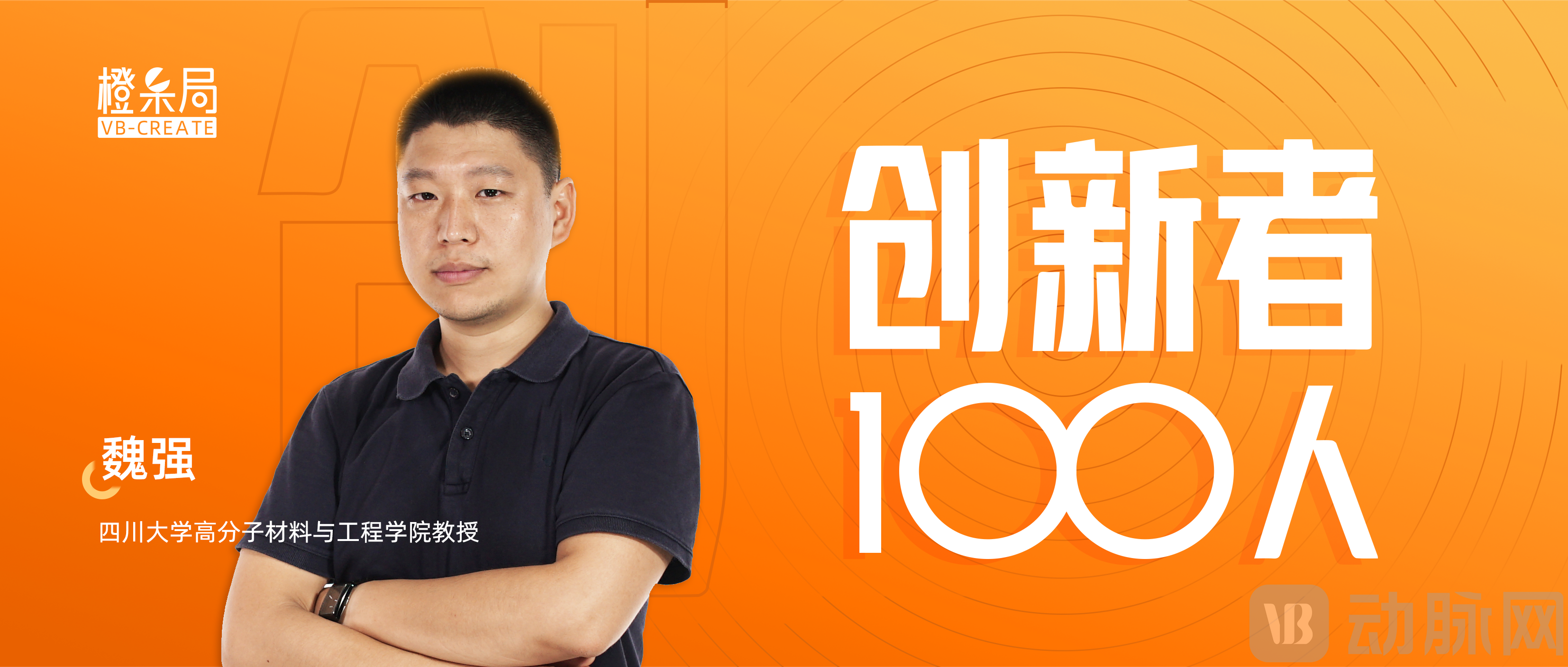
Wei Qiang, recipient of the National“Overseas TalentIntroduction Plan”Young Scientist Project, National Excellent Young Scientists Fund, National Award for Outstanding Self-Funded Chinese Students Abroad. Doctoral dissertation awarded the highest Latin honors degree in GermanySumma Cum Laude。
With an interdisciplinary background in materials science, chemistry, and biology, I primarily engage in fundamental research in cellular mechanobiology and the translational application of interfacial biomaterials. My research focuses on the mechanisms by which cells sense physical and mechanical cues from their microenvironment, as well as how cellular mechanical signals are transmitted and transduced to regulate gene transcription. Leveraging this understanding of cellular behavioral mechanisms, I co-founded Meibo Bio and serve as its Chief Scientist, achieving mass production of human-derived extracellular matrix and its application in tissue engineering.
As the corresponding author and first author inNano Letters、ACS Nano、Angewandte Chemie International Edition、Advanced Materials、Advanced SciencePublished papers in mainstream journals40more than one article, with multiple articles included inESIHighly cited paper. Also authorized patent10and other items. Serving as an international journalSmart Materials in Medicine、Materials Research Express、BiosensorsandFrontiers in Bioengineering and BiotechnologyEditorial Board Member,The InnovationYouth Editorial Board Member.
My first meeting with Professor Wei Qiang took place on the day before the 2023 Chinese Conference on Biomaterials. At that time, Chongqing was in its autumn rainy season. The southward retreat of the Western Pacific Subtropical High, coupled with the convergence of warm, moist air from the Indian Ocean and frequently active cold air masses from the north, revealed a gentle and humid side of this city renowned as one of China’s “Four Furnaces.”
This is the most comfortable season in Chongqing, where the cool, humid air clears the mind of fatigue and fog, creating a pleasant and relaxing atmosphere ideal for strolling and chatting. At a café next to the exhibition venue, Professor Wei Qiang shared with Orange Bureau his experiences pursuing higher education and conducting scientific research.Unlike most young scientists with overseas experience who favor applied research, this professor, not yet 40 years old, is dedicated to basic science.Over the course of more than a decade in scientific research, my journey has spanned from materials science to chemistry and biology, before ultimately returning to materials science—seemingly both a twist of fate and a testament to relentless pursuit.
Stacking Buffs in the Field of Materials Science
The more cutting-edge the scientific research, the more specialized and narrow it becomes. As a result, many researchers devote their entire careers to a single field. Professor Wei Qiang’s career path, however, has been somewhat “tortuous.”
In 2008, fromSichuan University, Major in Polymer Materials and EngineeringAfter completing his undergraduate studies, he aspired to design new materials. Driven by his passion for biomaterials, Professor Wei Qiang choseBiomedical Engineering。
However, at that time, the mainstream research direction in the field of polymer materials was still focused on material modification and processing. He would have continued his studies within his specialty like most graduate students, but his few years at the Free University of Berlin changed the course of his life.
Chemistry is a complex discipline, where macroscopic chemical reactions actually stem from orbital hybridization and electron transitions in the microscopic world—a realm governed by physics. It is for this reason that some argue the essence of chemistry is physics. During his postdoctoral fellowship at the Max Planck Institute for Medical Research, Professor Wei Qiang’s mentor was a biologist with a background in physics, who favored deciphering biological phenomena from a biophysical perspective. This subtle influence laid the groundwork for his future research in cell mechanics.
InMax Planck Institute for Medical ResearchDuring his postdoctoral research, he embarked on a journey under the guidance of his supervisor.Cell Biologyresearch. From materials to chemistry, and then to cell biology and physics, his past experiences have layered upon one another like cumulative buffs, ultimately leading him toCell Mechanicsworld.
Researchers investigate cell growth, development, aging, and death from a biological perspective, aiming to reconstruct the traces of cellular activities by capturing the transmission of genetic material and the footprints of cytokines, thereby applying these insights to disease treatment. However, it is possible that the transmission of genetic material and the generation of cytokines are also influenced by another factor. Cellular mechanics is the angle chosen by Professor Wei Qiang.
Cellular mechanics research involves the study of mechanical properties such as deformation, elastic constants, viscoelasticity, and adhesion forces of the cell membrane and cytoskeleton under mechanical loading. This is akin to a physical world at the cellular level. Cellular activities may be influenced by mechanical factors; if such a mechanical environment can be simulated, could it likewise induce similar cellular activities?
This may also be one of the foundational origins of materials-based regenerative medicine and tissue engineering research. Professor Wei Qiang explained that the “forces” in cell mechanics are not necessarily externally applied. Natural mechanical stimuli generated by physiological processes such as blood circulation and gas exchange within the human body can influence cellular changes. However, cells themselves generate endogenous forces from within, which play a key role in cell fate decisions.
Solving Hardcore Scientific Problems
Professor Wei Qiang’s research group profile includes the following statement:Addressing hard-core scientific problems.
When Orange Fruit Bureau asked what constitutes hard-core science, his answer was “scientific research that can be placed on bookshelves or truly applied.” There is an unwritten rule in his research group, namely"Simple patchwork based on existing achievements does not constitute innovation.", this should not be the direction in which outstanding graduate students devote their efforts to in-depth research. This was also the first lesson he taught his students.
“Works that deserve a place on the bookshelf” refer to foundational, fundamental research of great significance across various academic disciplines; “works that can be truly applied” refer to research that brings positive impacts to humanity and solves practical problems in production and daily life.
Perhaps this is why young scientists possess the mindset of an older generation, remaining steadfastly devoted to basic research. The concepts of “top-down” and “bottom-up” are frequently employed: top-down refers to progressing from the macroscopic level down to the microscopic through successive refinement, whereas bottom-up denotes advancing from foundational basic research to practical applications.
Professor Wei Qiang is a believer in the “bottom-up” approach. He firmly believes that,Basic research will drive applied innovation.
In Professor Wei Qiang’s view, the current trial-and-error approach to materials research is far from ideal. What he refers to as “mastering luck” entails a bottom-up strategy that identifies materials based on their “biological properties.” After discovering the regulatory role of mechanical factors in cell growth and matrix expression, Professor Wei and his team achieved a breakthrough in the development of human-derived extracellular matrix (ECM) materials for in vitro tissue engineering.
New Adventure
In 2019, Professor Wei Qiang met like-minded colleagues andIn Vitro Tissue-Engineered Human-Derived ECM MaterialsSeveral products have already secured regulatory approval for commercialization. A staunch advocate of the “bottom-up” approach, he is leveraging fundamental scientific research to realize his vision of technology transforming lives, thereby putting his belief in hard-core science into practice.
At present, theoretical research still occupies the majority of Professor Wei Qiang’s time. He believes that this approach makes translational applications twice as effective with half the effort. He has also conducted multiple studies on cellular metabolism and disease progression, aiming to provide more clues and evidence for therapeutic research. In addition to collaborations among various research groups within the hospital, the presence of the West China Medical Center provides support and advantages for scientists in the fields of science and engineering to carry out research related to physiology and pathology.
It has been revealed that Professor Wei Qiang, in collaboration with clinical experts at the West China Medical Center, is conducting research on a wide range of diseases and therapeutic approaches, including oncology, fibrosis, cardiovascular diseases, and regenerative medicine. By integrating basic scientific research with clinical investigation, this synergy empowers advancements in disease treatment research.