

Changmugu Receives China's First NMPA Class III Approval for AI-Powered Orthopedic Surgical Planning Software
On October 24, Beijing Changmugu Medical Technology Co., Ltd. (Changmugu®) independently developedAIJOINT®"Joint Replacement Surgery Simulation Software"Officially approved by the National Medical Products Administration (NMPA) with an Innovative Medical Device Registration Certificate (Registration No.: Guo Xie Zhu Zhun 20233211543), becomingChina's First Class III Registration Certificate for an Innovative AI-Assisted Orthopedic Treatment Medical Device. Changmugu®As a national-level “Little Giant” enterprise specializing in integrated, end-to-end solutions for AI-driven orthopedics and surgical robotics, the recent approval of its innovative orthopedic AI product fills a technological gap both domestically and internationally in 3D surgical simulation for orthopedic treatment. This milestone marks a revolutionary breakthrough in the clinical application of artificial intelligence in orthopedic surgery, ushering in a new era of AI-powered orthopedic diagnosis and treatment in China and injecting robust new momentum into the nation’s intelligent manufacturing sector.

NMPA Announces Approval for Marketing of Changmugu Joint Replacement Surgery Simulation Software
To accelerate the registration of innovative medical devices, the National Medical Products Administration (NMPA) has formulated and implemented the "Special Review Procedures for Innovative Medical Devices." This policy channels medical devices that hold Chinese invention patents, represent domestic firsts and international leadership in technology, and possess significant clinical application value into a special approval pathway for priority review. These policy innovations are designed to support the high-quality development of industrial innovation. Changmugu®Orthopedic Surgical Planning Software Was Approved for Market Entry in 2022 as a “China First”National Medical Products Administration Special Approval Green Channel for Innovative Medical Devices,The functional modules of this artificial intelligence software include3D Reconstruction and Visualization Module, Deep Learning-Based Bone Segmentation Module, Bone Medullary Cavity Centerline Extraction Module, Deep Learning-Based Recognition and Measurement Module, Prosthetic Template Matching Module. This product adoptsChina’s First Deep Learning Technology, performs 3D reconstruction and segmentation of CT images in compliant formats, automatically identifies anatomical landmarks, and assists physicians in simulating adult hip and total knee arthroplasty procedures. The product is expected to be launched on the marketImproving the Accuracy of Artificial Joint Placement to Reduce Postoperative Complications. This AI-powered innovative orthopedic product demonstrates Changmugu's®Leading and innovative advancements in orthopedic artificial intelligence technologies, driving the frontier value of high-quality development in medical technology.

China’s First AI-Enabled Orthopedic Surgical Planning Software Approved for Entry into the NMPA’s Green Channel for Special Review of Innovative Medical Devices
AI Orthopedic Surgery Simulation System
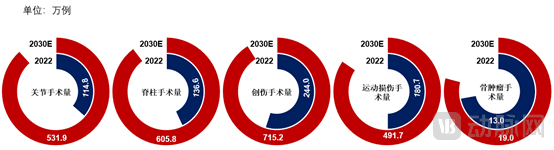
Volume of Orthopedic Surgeries in China, 2022 vs. 2030
Data source: Frost & Sullivan analysis
With the accelerating aging of the population, the demand for orthopedic care in China is growing steadily. According to Frost & Sullivan statistics, there are over 200 million patients with joint diseases and more than 200 million with spinal disorders in China. In 2020, orthopedic hospitals in China recorded 16.02 million patient visits. Orthopedic surgeries mainly include joint surgery, spinal surgery, trauma surgery, sports medicine surgery, and bone tumor surgery. As of 2022, the total number of orthopedic surgeries performed in China exceeded 6.5 million; it is projected that by 2030, this figure will surpass 20 million. In traditional orthopedic joint replacement surgeries, surgeons could only manually measure and repeatedly compare two-dimensional X-ray films before the operation. Conventional methods, such as manual film measurement and two-dimensional digital measurement, are limited in the information they provide and suffer from low accuracy due to factors like X-ray magnification and projection angles during imaging. Lacking precise and effective auxiliary tools for preoperative planning, doctors often have to mentally visualize the placement of prostheses, relying entirely on their intraoperative experience throughout the procedure. High-quality medical resources and the surgical expertise of leading specialists are difficult to standardize and replicate. Consequently, both patients and surgeons tend to concentrate in top-tier hospitals, making it challenging to decentralize these resources to primary care institutions. The contradiction between huge market demand and limited high-quality medical resources has become increasingly apparent.AI-based simulation software for joint replacement surgery can leverage independently established CT image databases for various orthopedic conditions and deep learning neural network models to achieve precise segmentation of different types of joint diseases. It enables personalized planning of medullary canal entry points and osteotomy volumes, and performs three-dimensional reconstruction of prosthesis anteversion angle, abduction angle, and implantation depth, thereby effectively reducing preoperative measurement errors. Additionally, the software can automatically calculate prosthesis coverage and accurately match prosthesis specifications and models. This AI-powered 3D simulation software achieves expert-level precision in preoperative planning, significantly improving the match rate between simulated plans and actual prostheses used. It holds substantial potential for clinical application in complex orthopedic surgeries in the future. By utilizing this AI surgical simulation technology, physicians can effectively enhance surgical precision.[6], and it can reduce surgical time and blood loss, shorten patients' hospital stays, and significantly lower postoperative complications, thereby substantially improving patient satisfaction and quality of life during recovery.[7]。
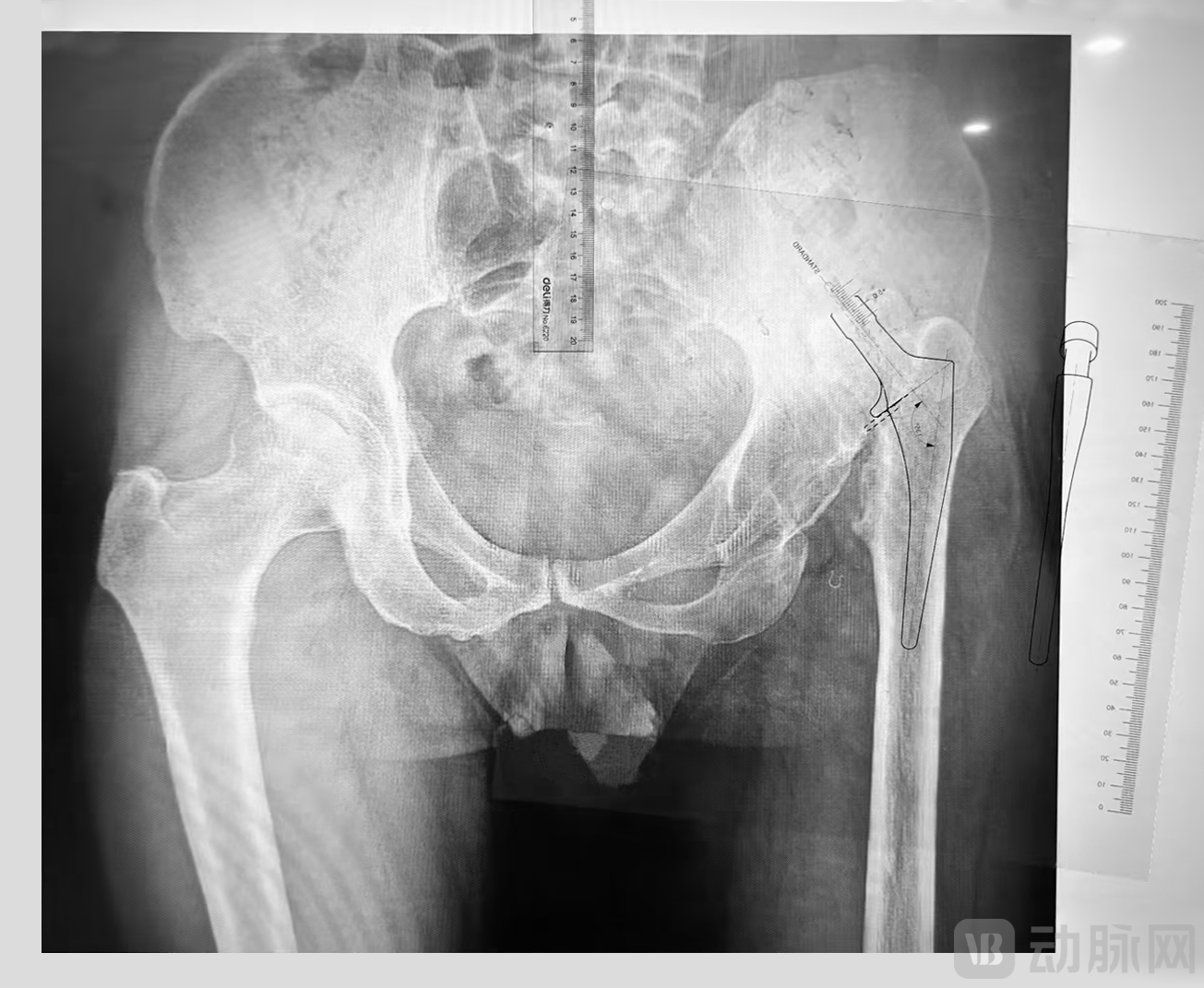
Traditional orthopedic surgeons perform preoperative 2D templating measurements using X-ray films.
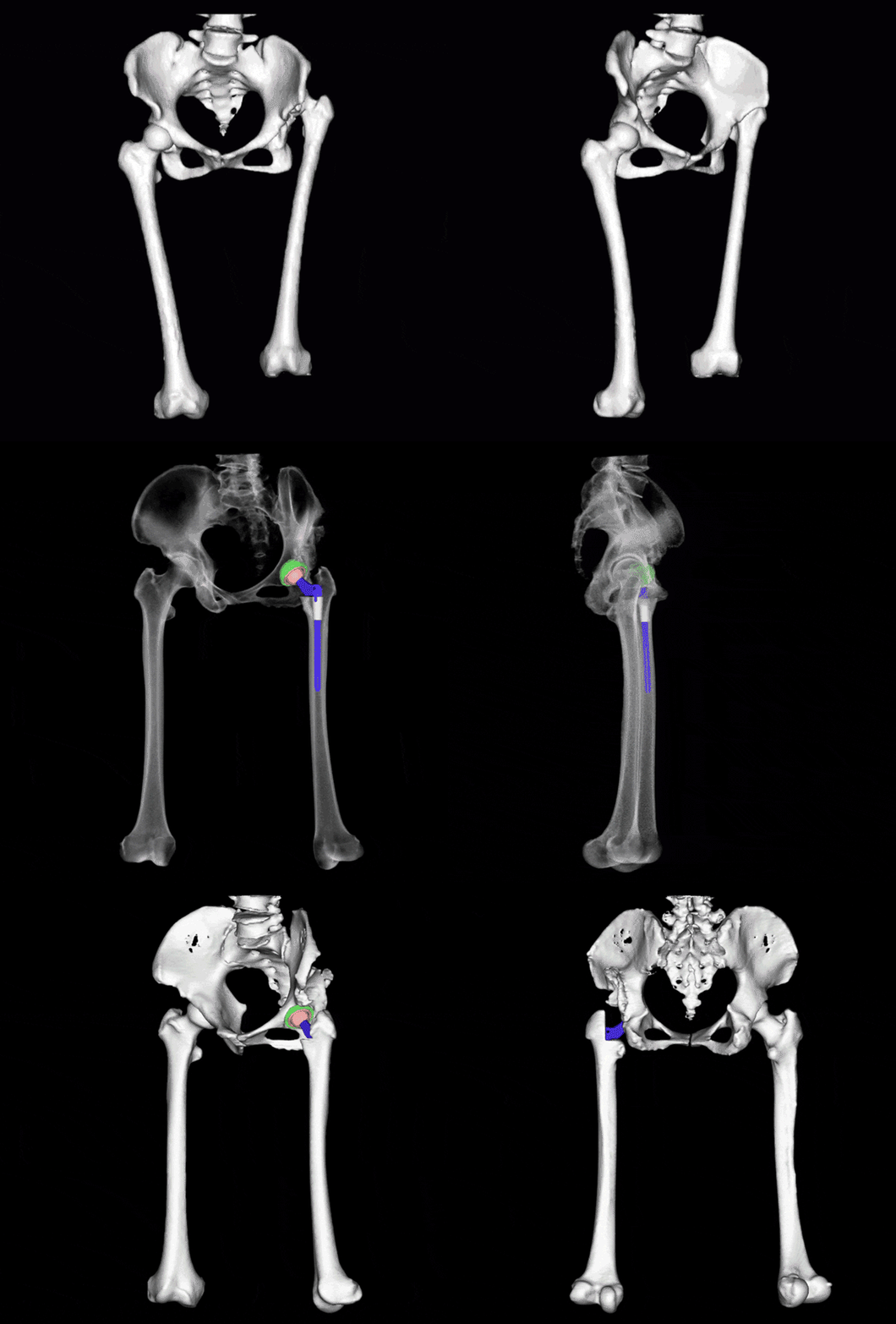
Orthopedic Surgeons via AIJOINT®AI-Powered Joint Replacement Surgery Simulation Software for Preoperative 3D Modeling and Precise Prosthetic Matching
Professor Wang Kunzheng, Director of the Joint Surgery Center at the Second Affiliated Hospital of Xi’an Jiaotong University; Chairman-elect of the Orthopaedic Branch of the Chinese Medical Association; and Leader of the Arthroplasty Group under the Orthopaedic Branch of the Chinese Medical Associationstates: “AIJOINT®The AI-powered orthopedic surgery simulation software has received the Class III Innovative Medical Device Registration Certificate from the National Medical Products Administration (NMPA), marking a significant milestone in the digital development of orthopedics in China! This achievement truly enables orthopedic surgery to transition from the “era of experience” to the “era of AI-driven precision,” making procedures more precise, minimally invasive, and efficient. AI technology provides clinicians with new perspectives and a safer surgical experience. We are committed to comprehensively promoting the clinical adoption and application of AI, accelerating the digital transformation of orthopedics in China, and leveraging technological advancements to benefit more patients.
Professor Zhang Xianlong, Shanghai Sixth People's Hospital Affiliated to Shanghai Jiao Tong University"Changmugu®AI-powered joint replacement surgery simulation software can not only effectively enhance the safety and efficacy of surgical procedures but also significantly contribute to the professional development of physicians at primary care institutions and early-career surgeons. It helps shorten the learning curve for young doctors, greatly facilitating the implementation of joint replacement surgeries in primary hospitals, thereby enabling more patients to receive high-quality treatment locally. Given the current imbalance in medical resources and standards across China, the adoption of AI-driven digital orthopedic innovations in underdeveloped and remote regions holds promise for achieving standardization and uniformity in orthopedic surgical practices.
Professor Chai Wei, Department of Orthopedics, Chinese PLA General Hospitalstated: “With the advent of the digital healthcare era, artificial intelligence is being increasingly applied in the medical field. AIJOINT®Orthopedic surgical simulation software represents a key frontier in the development of artificial intelligence. It effectively improves the success rate of orthopedic joint replacement surgeries, while reducing operative time and blood loss, thereby facilitating rapid patient recovery. This technology promotes the intelligentization and precision of orthopedic procedures, better meeting the public’s health needs. The application of such new technologies drives advancements and innovation in medical care, effectively enhancing the nation’s healthcare standards and competitiveness.
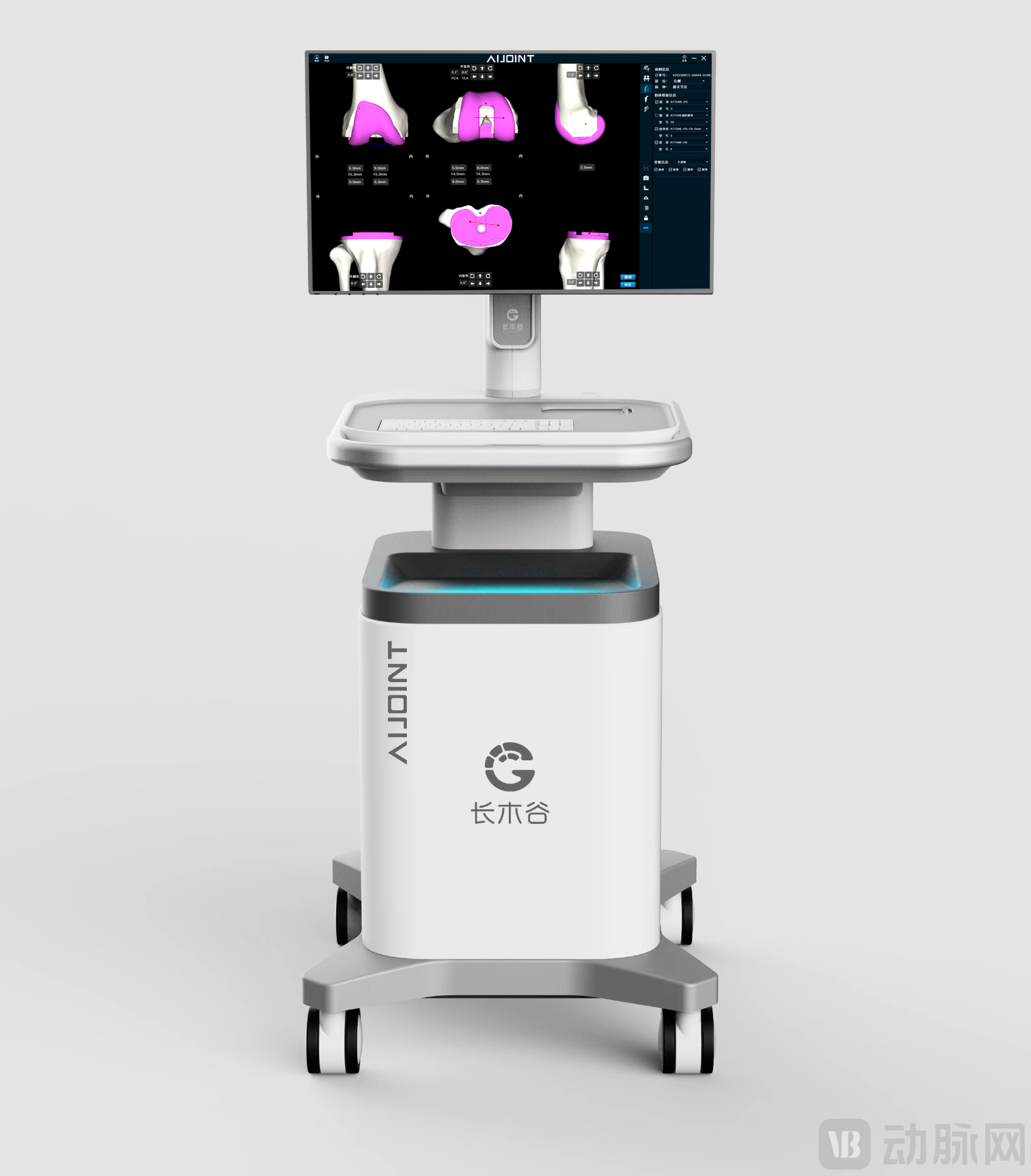
Changmugu®AIJOINT®Innovative Products
Medical-Engineering-Enterprise Joint Research Effort: After Five Years, China’s First Original AI-Enabled Class III Innovative Medical Device for Orthopedic Treatment Is Unveiled
Even the best artificial joint prostheses can have their postoperative service life compromised and lead to adverse complications if precise, personalized surgical plans and experienced lead surgeons are lacking. Major factors affecting short-term patient satisfaction and long-term prosthesis survival rates after total hip and knee arthroplasty include malpositioning of the prosthesis, poor alignment, joint instability, and limb length discrepancy. Traditional orthopedic surgery relies heavily on surgeons’ experience; however, joint replacement procedures are technically demanding, involve a wide variety of prosthesis models, and require substantial surgical expertise. The lengthy training period for young surgeons further exacerbates the mismatch between limited high-quality medical resources and surging demand. As a result, advanced medical technologies struggle to reach primary care institutions, causing patients to flock to tertiary hospitals and worsening the imbalance in healthcare resource distribution. How can we assist surgeons in achieving precision and excellence in every procedure, enable primary care hospitals to perform joint replacement surgeries effectively, and ensure patients benefit from prolonged prosthesis longevity?
To address this challenge, Changmugu®Through extensive collaborative research involving medical, engineering, and enterprise partners, and supported by the National Natural Science Foundation of China’s Key Program and the Beijing Municipal Science & Technology Commission’s Key Project on “AI+Health Collaborative Innovation Incubation,” Changmugu has, over a five-year period,®Through close collaboration between medicine and engineering, we continuously explore solutions to clinical pain points, transforming the extensive surgical experience of leading joint surgery experts into standardized algorithms for artificial intelligence deep learning.The final result is this China-original AI orthopedic surgery simulation software with independent intellectual property rights, covering everything from knee replacement to hip replacement. It is the first AI-powered surgical simulation software for total hip and total knee replacements in China.. This product can generate an optimal AI-driven orthopedic surgical plan preoperatively based on individual patient conditions, thereby avoiding the blindness and uncertainty associated with traditional surgeries and providing precise implementation standards for the entire workflow of orthopedic procedures.
Precision AI Surgical Simulation: Pioneering a New Direction in Orthopedic Diagnosis and Treatment
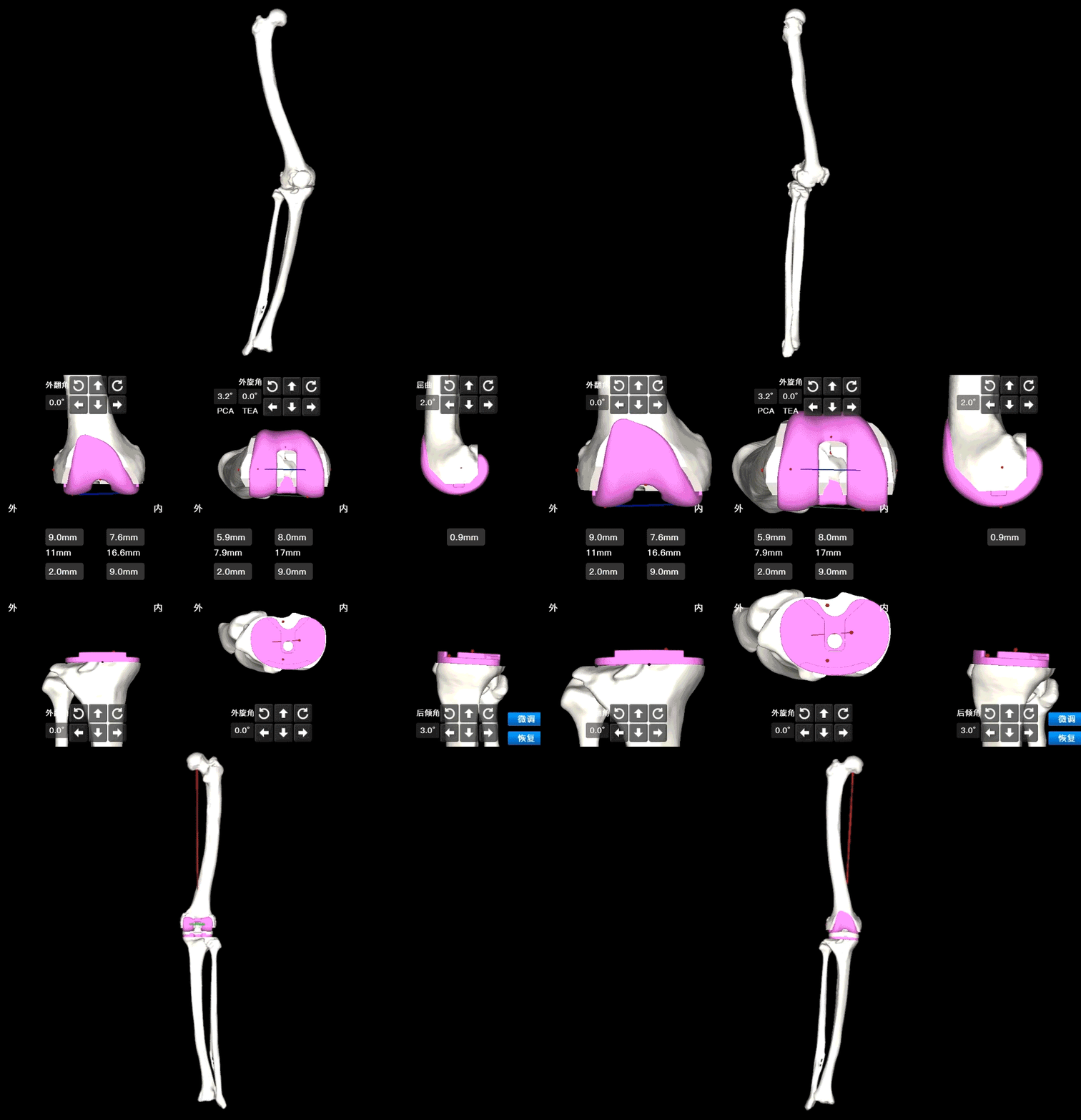
AI 3D Surgical Simulation Demonstration for Knee Arthroplasty
Changmugu®AI-powered surgical simulation software offers advantages such as high efficiency, precision, intelligence, customization, safety, and minimal invasiveness. Its working principle is based on artificial intelligence deep computing and learning technologies, integrated with clinicians’ extensive surgical experience. By leveraging medical imaging big data for training and deep learning, the system provides precise anatomical parameters and lower limb alignment from preoperative CT scans, thereby creating a tailored, intelligent, personalized, and precise AI-driven orthopedic surgical plan for each patient.The product is not constrained by the operator’s level of expertise, turning high-quality medical techniques and the surgical experience of top specialists—previously difficult to replicate—into reality. It provides a replicable implementation framework for enhancing primary healthcare capabilities and promoting the equitable distribution of premium medical resources.
Changmugu®AI-powered surgical simulation software, approved for market launch, leverages proprietary deep learning algorithms to intelligently segment bone structures from preoperative CT data, enabling rapid 3D reconstruction.[9], Intelligent Identification of Anatomical Landmarks[10], and automatically calculates based on the anatomical morphology of the bone and corresponding anatomical parameters, intelligently matching the required prosthesis model to achieve efficient preoperative surgical planning. This fundamentally addresses current issues such as low efficiency, slow speed, and inaccuracy in preoperative planning, thereby reducing the incidence of postoperative complications and improving surgical outcomes. It alleviates the pressure on physicians to stockpile a wide variety of prosthesis models and their corresponding instrumentation prior to surgery.With AI-powered orthopedic surgery simulation software, surgeons can determine the precise prosthetic model preoperatively and simulate the entire surgical procedure. This eliminates the need for repeated trial fittings after opening the affected joint in traditional surgeries, thereby reducing operative time and preventing the risk of encountering unsuitable prostheses for patients with unique anatomical requirements.
Meanwhile, the product also delivers cost savings from a health economics perspective. Assisted by AI-powered surgical simulation software, it helps patients reduce expenses related to anesthesia, blood transfusions, and hospitalization. Furthermore, precise prosthetic matching helps lower the incidence of intraoperative fractures, thereby reducing costs associated with consumables and braces required for such complications, as well as minimizing expenditures linked to postoperative revisions. This product not only offers significant clinical benefits and reduces medical costs for patients, but also improves hospital bed turnover rates and lowers secondary insurance reimbursement expenditures arising from various complications and revision surgeries. The AI surgical simulation product creates a win-win scenario for patients, physicians, hospitals, and medical insurance providers, representing a highly cost-effective solution in the pursuit of precise, digital, and universal orthopedic care. Precise AI surgical simulation is set to usher in a new era in orthopedic diagnosis and treatment.
AI Bridges the Digital Technology Gap in Primary Care Hospitals, Advancing Universal Healthcare Equity
AI-powered surgical simulation software offers significant advantages in substantially enhancing the standardization of surgical procedures and reducing operational complexity, thereby not only assisting experts at top-tier tertiary hospitals in improving surgical efficiency[8], facilitates the execution of complex procedures such as Crowe type IV developmental dysplasia of the hip (DDH) surgery via the direct anterior approach (DAA), reduces surgical errors, and enables physicians in primary care hospitals to rapidly acquire the surgical expertise of specialists from top-tier tertiary hospitals, thereby shortening the learning curve. By leveraging innovative medical technologies, it allows doctors at county-level hospitals and young physicians to benefit from national policy initiatives, promotes equitable access to healthcare for all citizens, and holds significant importance in addressing the uneven distribution of high-quality medical resources in China.
While developing technologically innovative products, Changmugu, as a national-level high-tech enterprise and a national-level specialized, refined, distinctive, and innovative “Little Giant” enterprise,®Actively fulfilling corporate social responsibility, Changmugu is dedicated to advancing the digitalization of orthopedics in China, enabling more county-level hospitals and young physicians to comprehensively adopt digital technologies.®Through digital surgical demonstrations led by clinical experts and the active promotion of orthopedic digital academic forums nationwide, hospitals in remote county-level regions—including Wushan County in Chongqing, Pingnan County in Guangxi, Tianquan County and Dazhu County in Ya’an, Sichuan, as well as Qiannan Prefecture, Qianxinan Prefecture, and Yuqing County in Guizhou—have successfully performed joint replacement surgeries assisted by AI-powered orthopedic surgical simulation software. This initiative enables patients who previously lacked access to specialized treatment to receive high-quality medical care within their own counties, achieving surgical outcomes comparable to those of top-tier tertiary hospitals. Furthermore, it allows grassroots hospitals with low surgical volumes and young surgeons to thoroughly simulate and rehearse the entire surgical procedure preoperatively using this product, making surgery as predictable as an open-book exam and ensuring doctors are fully prepared. To date, tens of thousands of patients have benefited from this program, truly facilitating the decentralization of high-quality medical resources.
In the future, Changmugu®We will continue to uphold the spirit of independent research and development, consistently aligning with national strategic directions. By leveraging our sustained innovation capabilities, we aim to establish a new model for orthopedic diagnosis and treatment in China, empowered by digital technologies. Our goal is to ensure that AI technologies developed in China benefit not only the Chinese population but also people worldwide. Changmugu®We will further strengthen the research and development of AI-assisted diagnostic and therapeutic technologies, so that technology can better benefit the people.
References:
1. Wu Dong, et al. Research and Development and Clinical Application of an Artificial Intelligence-Assisted 3D Planning System for Total Hip Arthroplasty [J].Chinese Journal of Reparative and Reconstructive Surgery, 2020, 34(9): 1-8.
2.Xi Chen, MD a, b, c, 1, Songlin Li, MD c, 1, Yiou Wang, MD d, Guixing Qiu, PhD c, ***, Wenwei Qian, PhD c, *The Journal of Arthroplasty,(2022)1-8.
3.Xi Chen, Yiou Wang, et al. Development and Validation of an Artificial Intelligence Preoperative Planning System for Total Hip Arthroplasty[J].Frontiers in Medicine.(2022)9.
4. Wan Chao, Dong Shengjie, Wang Shijun, Zhao Yuchi, et al. Application of AI-Assisted Surgical Planning Systems in the Precise Implantation of Individualized Total Hip Prostheses.OrthopedicsOrthopaedics, May 2022, Vol. 13, No. 3
5.Wu D , Zhi X , et al. Utility of a novel integrated deep convolutional neural network for the segmentation of hip joint from computed tomography images in the preoperative planning of total hip arthroplasty[J]. Journal of Orthopaedic Surgery and Research, 2022, 17(1).
6. Ding Ran, Wang Qi, Liu Ye, Zhang Qidong, Zhang Nianfei, Guo Wanshou, Wang Weiguo, et al. Application and Accuracy Analysis of Artificial Intelligence-Based Three-Dimensional Preoperative Planning in Total Hip Arthroplasty. April 2022,Biological Orthopedic Materials and Clinical Research, Vol. 19, No. 2.
7. Xu Zhengyu, Du Junwei, Jiang Yao, et al. Comparison of the Effects of Three-Dimensional Digital Planning and Two-Dimensional Film Template Measurement in Assisting Total Hip Arthroplasty [J].Biomaterials and Orthopedic Clinical Research, 2021, 18(2): 17-22.
8. Zhang Xianlong, Wang Kunzheng. The Future of Joint Surgery—Application of Digital Orthopedics Technology in Joint Surgery [J].Chinese Journal of Orthopaedics, 2021, 41(8): 525-531.
9. Wu Dong, Kong Xiangpeng, Yang Minzhi, Chai Wei. Development and Preliminary Application of Deep Learning Convolutional Neural Networks in Preoperative CT Segmentation for Hip Revision Surgery.Chinese Journal of OrthopaedicsChin J Orthop, January 2023, Vol. 43, No. 1
10. Wu Dong, Chai Wei, et al. Experimental Study on the Algorithm for Acetabular Cup Placement in Artificial Total Hip Arthroplasty[J].Chinese Journal of Orthopaedics, 2021, 41(3): 176-185.