

When Healthcare Meets Globalization: Seeking Certainty in an Uncertain World
On October 22, 2023, under the guidance of the Shanghai Biomedical Industry Promotion Center and hosted by CEIBSThe 1st China-Europe International Forum on Healthcare IndustryHeld successfully in Shanghai.
As one of the series of events during Shanghai Biopharmaceutical Industry Week, this forum focuses on“Deepening Integration in China · Leading Innovation Globally”Centered on this theme, the event brings together more than 30 distinguished guests from government, industry, academia, clinical research, and investment sectors. Through a series of keynote speeches and roundtable discussions, participants share cutting-edge research, practical case studies, and innovative insights. As pioneers in China’s healthcare industry, they jointly explore viable pathways for global healthcare innovation and development, while accelerating the rapid upgrading and high-quality growth of China’s healthcare sector.
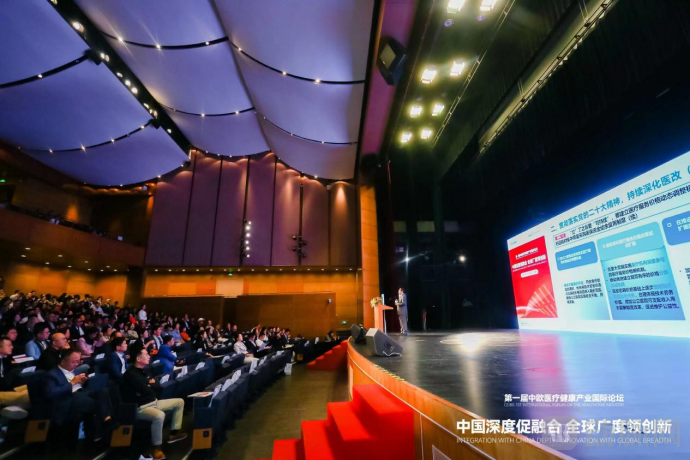
The forum is structured into three major sections, namely“China-Europe Perspectives”、"Zhong Ou Innovation"and“China-Europe Action”, and also invited multiple CEIBS alumni to participate, including the Vice Chairman of the Shanghai Association for Science and Technology and the President of the Shanghai Medical AssociationWu Jinglei, Academician of the Chinese Academy of Engineering and President of Ruijin Hospital, Shanghai Jiao Tong University School of MedicineNing Guang,Executive Vice President of AstraZeneca, President of International Business and ChinaWang Lei,Executive Director and Executive President of Shanghai Pharmaceuticals Holding Co., Ltd.Li YongzhongAmong others, they recount the tumultuous transformations of China’s healthcare industry over the past three decades from diverse perspectives, while also elucidating its future development trends and market prospects.
Based on this, VCBeat has distilled and organized the core insights from the forum, aiming to provide industry practitioners with food for thought and valuable takeaways.
Where Are the Opportunities in the Healthcare Industry Amid Global Digital Trends?
In recent years,“Going Global” has become a hot topic across the entire healthcare industry, frequently cited by entrepreneurs and investors alike.。
The underlying logic is straightforward: against the backdrop of national policies and market demand, coupled with the increasing maturity of domestically developed technologies and products, China’s healthcare industry is undergoing large-scale expansion. Meanwhile, overseas markets, which have yet to be deeply tapped, have become a second battleground where Chinese healthcare companies are fiercely competing for dominance.
This is inevitably another major opportunity for the healthcare industry, as well as its hidden second growth curve; however, on the other hand,“Going global” also presents its own set of challenges,For instance, the uncertainty of the global economy and how to adapt to and balance overseas markets.
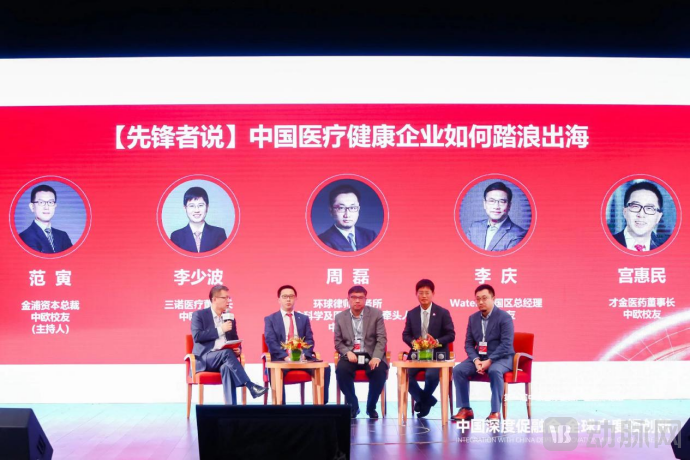
To this end, VCBeat has distilled the following three core insights from the “China-Europe Perspectives” section of the forum:
1. Correctly understand the trends and logic of global expansionIn the past, China’s medical sector “going global” relied primarily on the dividends of low land and labor costs. Now, however, this expansion has evolved from version 1.0 to 2.0, with higher-quality technologies and products being exported, marking a fundamental shift in the underlying logic.
Second, it is essential to have an accurate understanding of overseas markets.“Going global” means entering an entirely new business environment. In this process, it is crucial not to treat Chinese culture as a one-size-fits-all template; instead, companies must tailor their strategies to the local characteristics of their target markets. Aspects such as regulatory approvals and the establishment of market channels should be customized to fit specific local conditions. Prior to this, enterprises must possess strong capabilities to perceive and understand the new market environment.
Third, formulate a rational global expansion strategy and optimize market layout.“Going global” signifies the exploration of new markets, which inevitably entails certain costs and efforts. Therefore, it is essential to conduct thorough planning and strategic positioning in advance, adhere to long-term development strategies, and avoid sacrificing significant interests for minor gains. In this process, three core principles must be upheld: ensuring the authenticity of accounting and business activities; investing in the future without overinvesting; and implementing rigorous operations to continuously enhance operational efficiency and effectiveness.
Specifically, in terms of overall strategy, it is advisable to “band together” as much as possible. This approach facilitates the rapid establishment of market influence locally and helps mitigate risks to some extent, as operating in isolation with limited strength makes one prone to being overlooked. Of course, regarding specific products and market expansion for “going global,” it is also essential to maintain differentiation and cultivate distinct characteristics, thereby securing a firm foothold within the local industrial chain.
In the M&A process, it is even more crucial to maintain rationality. Mergers and acquisitions carry the highest risks among all business activities, particularly in cross-border deals. During M&A transactions, companies must be familiar with and respect international rules of engagement, possess the ability to rapidly secure financing, and maintain effective communication with relevant domestic authorities. After completing an acquisition, companies must not neglect respecting and building trust in the local culture, establishing incentive mechanisms, setting shared goals, aligning teams and working mechanisms, and ensuring coordination in the implementation of specific projects.
Overall, within the current landscape of great-power competition, China is poised to advance toward becoming a global leader in health technology and industry. This trajectory underscores that “going global” will undoubtedly serve as a critical strategic imperative for China’s healthcare sector in the future. Nevertheless, a more rational approach is required in determining how best to execute this international expansion.
Where Is the Opportunity When Chinese Innovation Meets Globalization?
In recent years, as China’s healthcare industry has entered a more complex and challenging phase, the emphasis on innovation and the scale of investment have been steadily increasing, andIt has gradually shifted from being market-oriented to being driven by clinical needs, transitioning from comprehensive generic imitation to comprehensive innovation.. However, it should not be overlooked that due to the relatively late start of medical innovation in China, significant challenges remain in this area at the current stage.
For example, in the 0 to 1 phase,The core pain point is insufficient R&D investment and lack of innovation.It is well known that the prerequisite for translation is the breakthrough from 0 to 1. To bridge this gap, it is essential to establish a basic research platform to drive research forward, while genuinely focusing on scientific issues in the medical field to generate research outcomes.
However, at present, China’s actual investment in the pharmaceutical sector remains far insufficient compared with that of developed countries in Europe and the United States. This shortfall is mainly reflected in an inadequate pool of R&D-oriented talent and an incomplete system of research platforms and infrastructure, which hinders our ability to develop truly innovative, cutting-edge products in the healthcare field.
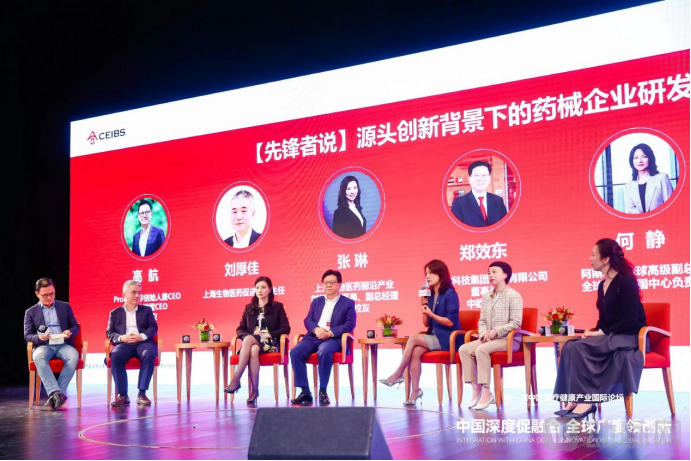
The second point isIncomplete Evaluation System for Scientific and Technological AchievementsIn the past, researchers were more inclined to turn “money” into “papers,” that is, using R&D funding to conduct research projects and ultimately producing academic papers. Now, with fundamental changes across the entire healthcare industry, the definition of translation has gradually shifted to turning “papers” into “money.” However, successfully completing this process requires a series of supportive systems and frameworks. To date, no particularly mature solutions have emerged, and stakeholders are still “crossing the river by feeling the stones.”
The third point isInability to effectively link the various stakeholders in the innovation chain. The translation of scientific and technological achievements is a process that progresses from 0 to 1, 1 to 10, 10 to 100, and even to 1,000. This process requires the participation of various stakeholders; for instance, researchers are needed in the early stages of R&D, while enterprises, government bodies, and investment institutions are required in the mid-to-late stages to provide support for research and development.
However, in many cases, these elements remain fragmented and fail to form a cohesive chain. This results in unclear pathways for the commercialization of research findings, with many R&D outcomes lacking practical translational value. Meanwhile, investment institutions may not fully recognize the importance of early-stage R&D, thus lacking the core capabilities to drive the translation of early-stage achievements. Consequently, a large number of early-stage innovations are lost in the market, missing critical opportunities for commercialization.
So, how can this be changed?
First, establish an independent department, namely the Office of Technology Transfer, to ensure that specialized tasks are handled by professionals. Second, improve the mechanism for balancing responsibilities, rights, and benefits, allowing researchers and their teams to conditionally share in the proceeds from technology commercialization while granting them maximum operational autonomy. Third, reform the performance evaluation system for scientific and technical personnel, moving away from using publications as the sole metric and instead prioritizing the market value and commercialization potential of specific research outcomes as core evaluation criteria.
Finally, it is essential to fully leverage the government’s leading role in the innovation market by establishing a robust and flexible mechanism for innovation translation. Acting as a nexus, the government should facilitate efficient linkages among research institutions, enterprises, and investment firms to jointly focus on early-stage innovations in the healthcare sector and collaboratively drive the successful commercialization of scientific achievements with market potential.
The translation of medical research findings into clinical applications is characterized by high risks, substantial investment, and a long return-on-investment cycle. This is because the process involves numerous uncertainties; many investments in innovative drugs ultimately yield no output, and the “last mile” of translational success may never be fully traversed. However, this very challenge is precisely why the industry as a whole is currently focusing on innovation translation: to continuously explore, converge efforts, and strive toward a shared goal.
At the forum, several CEIBS alumni drew upon their respective enterprises and industries to elucidate their development logic, highlight their significant contributions to the overall advancement of the healthcare sector in the past, and systematically outline the emerging challenges arising under the new market landscape.
As a hub committed to driving the rapid and high-quality development of China’s healthcare industry, CEIBS will cultivate more key talent in the medical field in the future, foster deep cooperation and exchange between Chinese enterprises and overseas markets, and jointly promote the internationalization of China’s healthcare industry.