

Breaking the Mold: Domestic Innovator Reshapes the Endoscopy Market Landscape [2023 CMEF]

viestar
Precision Optical Biopsy Technology R&D and Manufacturer
In the past two years, China's domestic medical endoscopy industry has experienced rapid development.
According to data from the “2023 Medical Endoscopy Industry Research Report,” the endoscopy sector not only witnessed a “peak in capital attraction” between 2021 and 2022, with total financing reaching nearly twice the sum of the previous four years, but the Chinese government also continued to issue detailed policy documents focusing on technological innovation, product registration and certification, domestic substitution, and standardization of clinical applications.
Driven by the dual forces of capital and policy, China’s traditional reusable endoscopes are rapidly closing the gap with international standards, transitioning from imitation to innovation. In the field of hybrid endoscopes, domestic manufacturers have demonstrated strong competitiveness. Domestic dark horses have emerged in technological areas such as confocal laser endomicroscopy and fluorescence endoscopy, with technical capabilities reaching a leading level globally. The market share of domestically produced medical endoscopes in China has increased from 10% in 2020 to 26% in 2022, with an average annual growth rate exceeding 60%.
The China Medical Equipment Fair (CMEF) (Autumn), as the largest medical device exhibition in China, showcases advanced medical equipment from across China and around the world each year. The aforementioned trends are clearly evident through observations at the exhibition.
This year, an increasing number of medical endoscopy companies have begun showcasing their proprietary solutions at the event, gradually establishing themselves as independent forces in the healthcare market. More than 60 enterprises from the medical optics sector participated in this exhibition, with Chinese manufacturers occupying the majority of the exhibition space. Their products, in terms of variety, quality, and innovation, are fully capable of meeting clinical needs.
From the perspective of industry development, the domestic medical endoscopy market in China has undoubtedly entered the second half, characterized by the rise of domestic brands, making the ascent of Chinese-made medical endoscopes an inevitability. For instance, in the field of confocal laser endomicroscopy, China has produced its first confocal endomicroscopy enterprise, achieving independent innovation and technological breakthroughs in the realm of high-end medical equipment. Chinese “intelligent” manufacturing is beginning to turn the tables against the odds and emerge as a powerful new force, presenting a striking landscape from Chinese medical enterprises within the global high-end medical equipment industry.
Domestic Medical Endoscopes See Widespread Innovation: Confocal Laser Endomicroscopy Debuts as a Major New Product at CMEF
Although China’s development in the field of reusable endoscopes lagged behind overseas markets by nearly a century, the establishment of the first domestic medical endoscope manufacturers, such as Shenda Medical Endoscope, in the 1980s has enabled rapid improvements in the quality of Chinese-made medical endoscopes, ushering in an era of import substitution.
According to data from the Zhongcheng Medical Device Research Institute, nearly 750 models of domestically produced reusable endoscopes have obtained NMPA medical device registration certificates, maintaining an annual growth rate of over 24% for two consecutive years. Furthermore, between 2020 and 2022, the total sales revenue and market share of domestically produced medical endoscopes in healthcare institutions across China increased year by year, with an average annual growth rate that exceeded the national sales growth rate by 65%. This demonstrates that domestically produced reusable endoscopes have made significant progress in product variety, quality, innovation, and commercial implementation, indicating a broad market prospect.
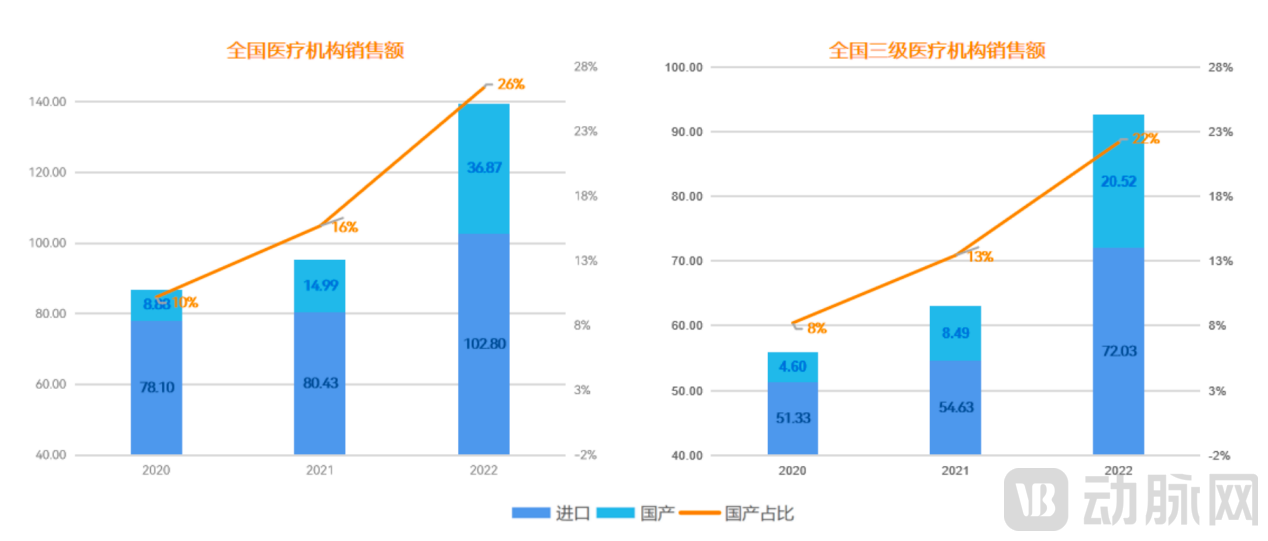
Sales of Domestically Produced and Imported Medical Endoscopes in China (2020–2022) (in RMB 100 million)
Source: Zhongcheng Medical Device Research Institute; Graphic by VCBeat
It is worth noting that domestic manufacturers have not only achieved successive breakthroughs in reusable endoscopes but also continue to make technological advancements and innovations.
For instance, the 4K medical endoscopy segment, currently a high-growth area, is developing rapidly. Companies such as Mindray Medical, Sonoscape Medical, and Yuansai Medical have emerged, gradually breaking through technological blockades and narrowing the gap with overseas products. Meanwhile, the field of composite endoscopes—which presents greater challenges in both R&D for traditional reusable endoscopes and manufacturing complexity—is also showing strong growth momentum. With multiple technologies already leading domestically, Chinese-made endoscopes are gaining a certain degree of influence in the international market.
Viestar, which recently secured three consecutive medical device registration certificates from the National Medical Products Administration (NMPA)—for the Beixi® Probe-based Confocal Laser Endomicroscopy System (pCLES), the electronic endoscopic image processor, and the single-use cholangiopancreatoscopy catheter—has once again broken monopolies. This achievement marks a significant milestone for China’s confocal microscopy industry and strengthens the global brand presence of Chinese high-end medical equipment.
It is reported that viestar owns the world’s largest large-scale manufacturing center for confocal laser endomicroscopy (CLE) systems. It is the only company to have consecutively led two national key R&D projects in the field of confocal microscopy, and has continuously developed multiple CLE products that are first-of-their-kind in China, exclusively produced by Chinese manufacturers, and globally leading. These products have repeatedly set industry benchmarks and become exemplary models, gaining widespread clinical adoption. At this event, viestar will make its debut at the China Medical Equipment Fair (CMEF) with its full portfolio of high-end medical devices, showcasing these independently controlled and intelligent Chinese-made innovations.
World’s No. 2, China’s Only: viestar Products Cover Multidisciplinary Clinical Application Scenarios
Confocal Laser Endomicroscopy is a high-end endoscopic technology with micron-level resolution and optical sectioning capabilities. By combining optical systems with unique algorithms, it achieves ultra-high resolution and an ultra-small distal tip size, enabling real-time in vivo visualization of cellular images that are highly consistent with histopathological biopsy results.
By leveraging this novel endoscopic diagnostic technology, non-invasive optical biopsy and targeted precision biopsy can be achieved during diagnosis, thereby reducing missed diagnoses, improving diagnostic accuracy, and aiding pathological diagnosis. During treatment, it enables precise delineation of surgical margins and resection of multifocal lesions. In postoperative follow-up monitoring, it helps reduce the incidence of residual disease and recurrence. This technology represents a significant developmental trend in endoscopic and minimally invasive diagnosis and treatment.
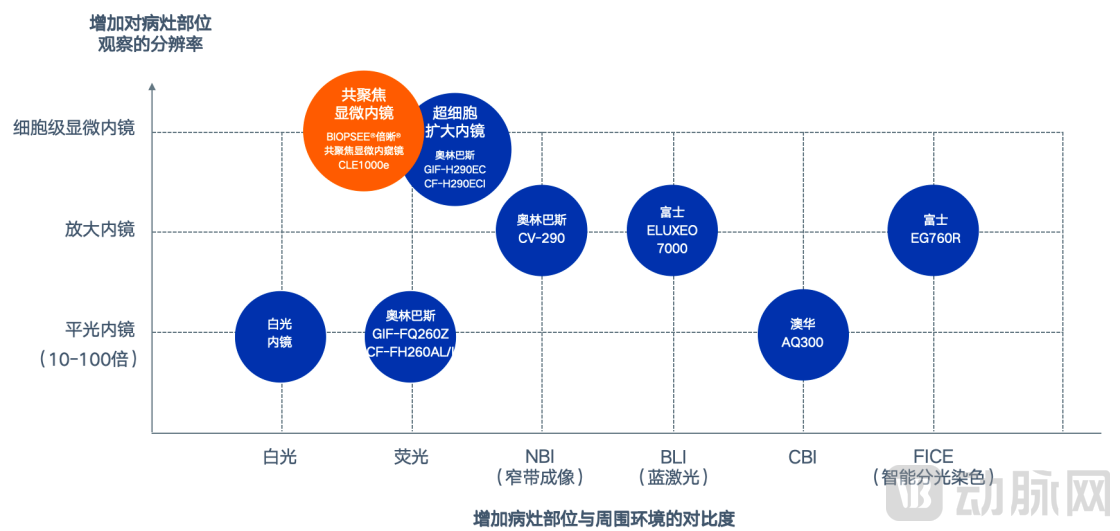

Trends in the Development of Endoscopic Technology
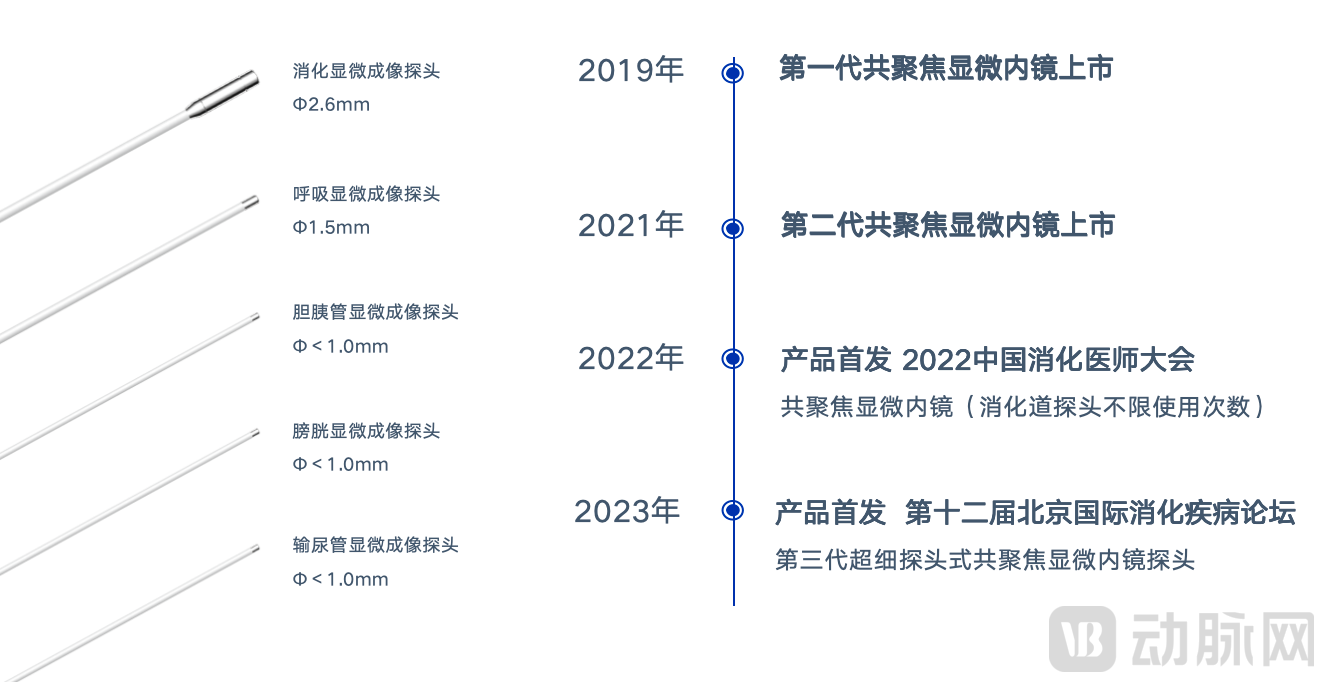
As a leading enterprise in China for confocal cell-level endoscopy, viestar has focused on the product development and scaled production of three major product lines—“visual biopsy products, diagnostic and therapeutic channel products, and early tumor treatment products”—since its establishment in 2014. In 2019, it obtained the first domestic medical device registration certificate for confocal laser endomicroscopy.
Since then, the company has maintained its innovation and R&D momentum by collaborating with upstream and downstream partners across the entire industry chain, facilitating rapid breakthroughs in core product technologies. In 2021, it obtained regulatory approval for the market launch of the second-generation Beixi® confocal laser endomicroscope, and in 2022, it successfully secured a key national R&D project under China’s 14th Five-Year Plan titled “R&D of Core Components for Fluorescence Confocal Laser Endomicroscopy.” This year alone, the company has obtained three medical device registration certificates from the National Medical Products Administration (NMPA), achieving comprehensive product coverage across all major application scenarios in the digestive system (including the esophagus, stomach, small intestine, colon, biliary tract, and pancreatic duct), the urinary system (including the bladder and prostate), and the respiratory system (including the bronchi and lungs).
At this CMEF, viestar will showcase four products: the BIOPSEE® Beixi® ultra-thin probe-based confocal laser endomicroscopy system for biliary tract, the BIOPSEE® Beixi® ultra-thin probe-based confocal laser endomicroscopy system for urology, the BIOPSEE® Beixi® probe-based confocal laser endomicroscopy system for gastrointestinal tract, and the FUSIONTM DiscoveryTM integrated confocal laser endomicroscopy system for biliary tract. These products serve as the best testament to the company’s successful breakthrough in core technologies and its mastery of key links in product research, development, and production.
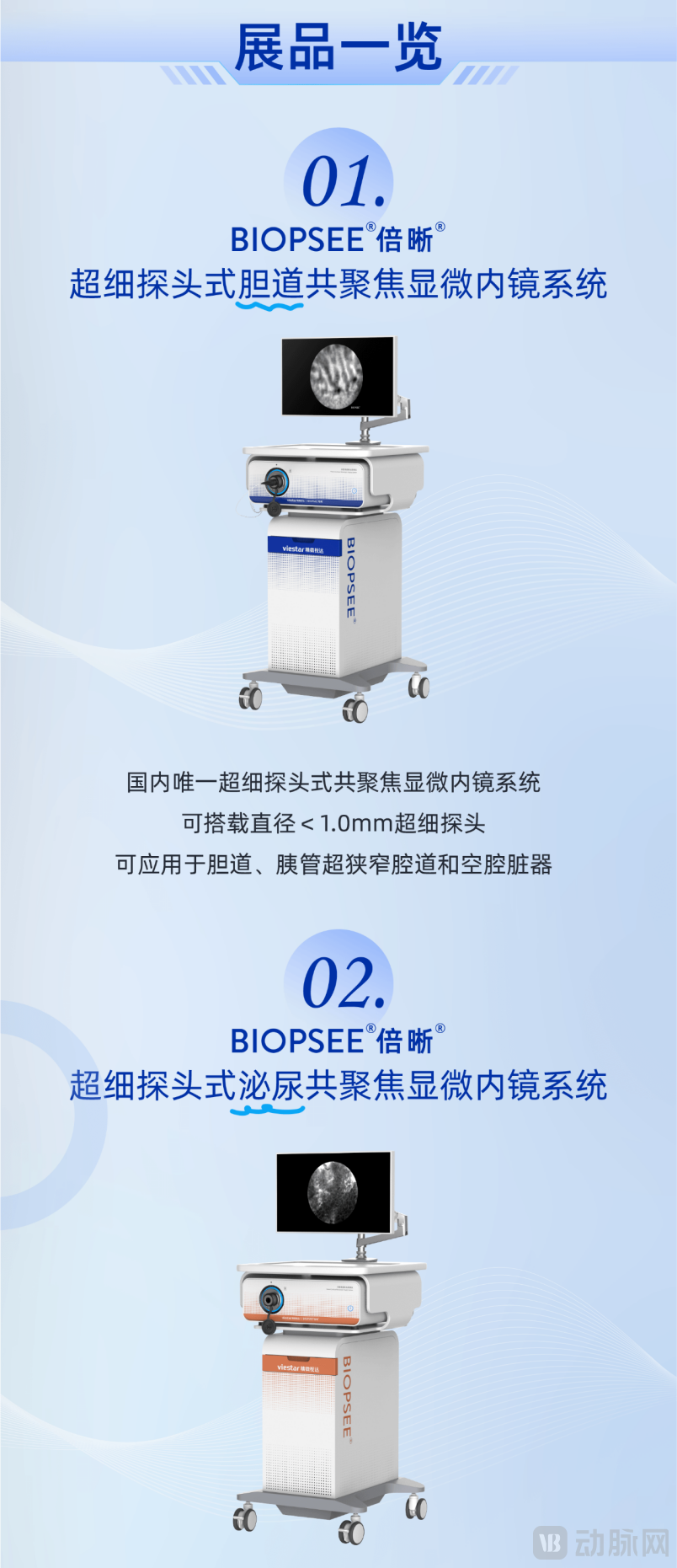
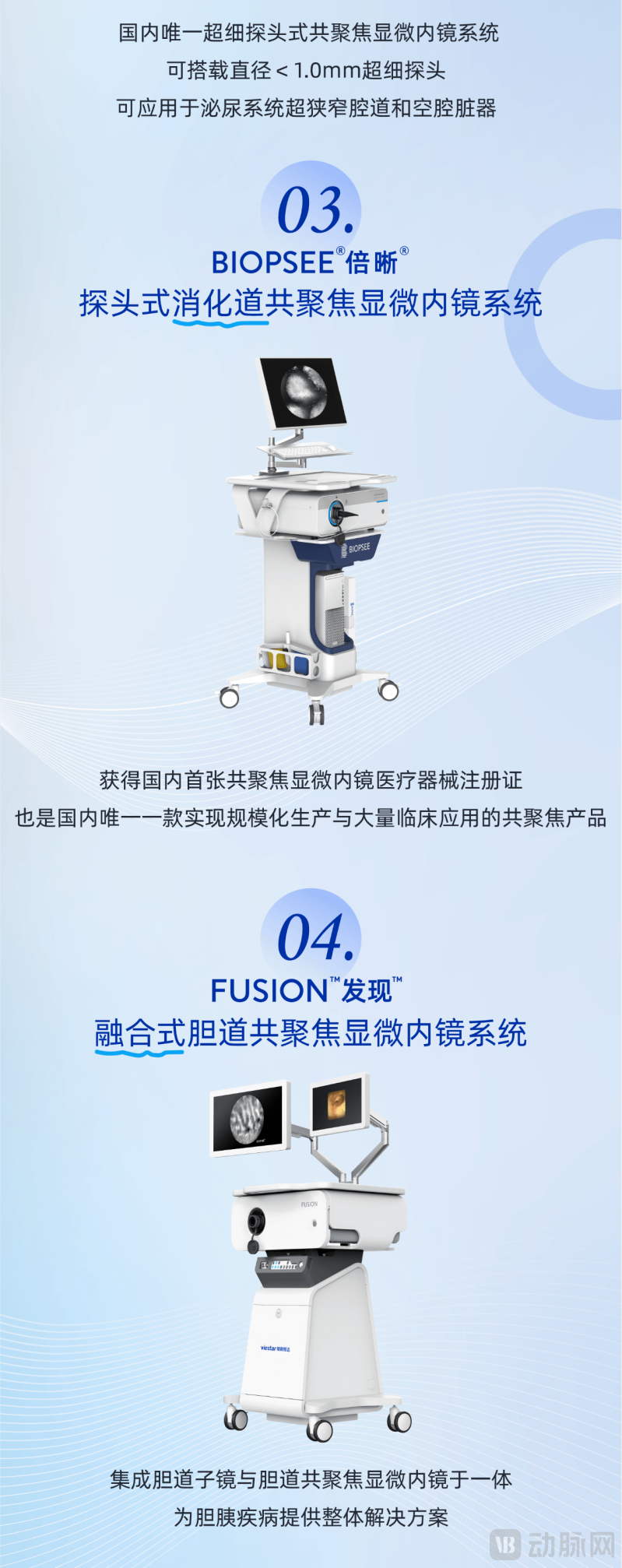
As its product portfolio continues to be refined, viestar has entered a phase of large-scale product commercialization.
Over 40 clinical studies initiated, promoting the widespread clinical application of confocal laser endomicroscopy
In fact, prior to this, viestar had already conducted trials, professional education, and training programs for confocal laser endomicroscopy in multiple regions across China. Since establishing its marketing team in May 2022, the company has achieved full coverage of regional academic benchmark hospitals in the field of gastroenterology within six months by building a comprehensive after-sales service system, after-sales training system, and medical service system. During this period, it launched more than 40 clinical studies, benefiting over 5,000 patients.
Among them, Biopsee® has been adopted by over 140 leading hospitals across China, with installations completed at multiple top-50 hospitals nationwide, including Beijing Friendship Hospital, Shanghai Changhai Hospital, Nanjing Drum Tower Hospital, Shanghai Renji Hospital, and Beijing Tsinghua Changgung Hospital.
However, viestar did not stop there; instead, it continued to advance product R&D, clinical applications, and market implementation in tandem.
Nowadays, enterprises are not only promoting the widespread adoption of technologies through comprehensive training systems and ample clinical application demonstrations, but also driving innovation in technology application with a focus on medical-engineering integration. For instance, to better serve clinical practice with confocal laser endomicroscopy (CLE), viestar launched a nationwide recruitment plan for 40 clinical research projects last month, supporting 40 hospitals in conducting clinical studies using CLE and thereby extending the scope of these “clinical research projects.”
In light of the current development trends in the high-end medical device industry, medical devices that focus on filling industry gaps, breaking import monopolies, overcoming critical import dependencies, or representing independent domestic innovation possess high technological sophistication and significant application value, thereby addressing unmet needs of enterprises, clinical practitioners, and patients.
However, we must recognize that the concept of “high-end” is time-sensitive. As products mature and undergo iteration, the trajectory for iterative upgrades and breakthroughs in “high-end” offerings will shift. Therefore, even companies that initially developed products to fill industry gaps or break import monopolies must continue to strengthen their R&D capabilities, consistently launch new products, and achieve new breakthroughs to maintain their leading position and build higher barriers to entry.
Viestar serves as a prime example. Although the company has achieved domestic leadership in the field of confocal laser endomicroscopy, it continues to refine its product pipeline and development strategy. By adhering to this direction, Viestar is poised to achieve deeper market penetration and accelerated global expansion, ultimately attaining a leading position worldwide.
2023 Shenzhen CMEF: viestar Invites You to Join the Grand Event
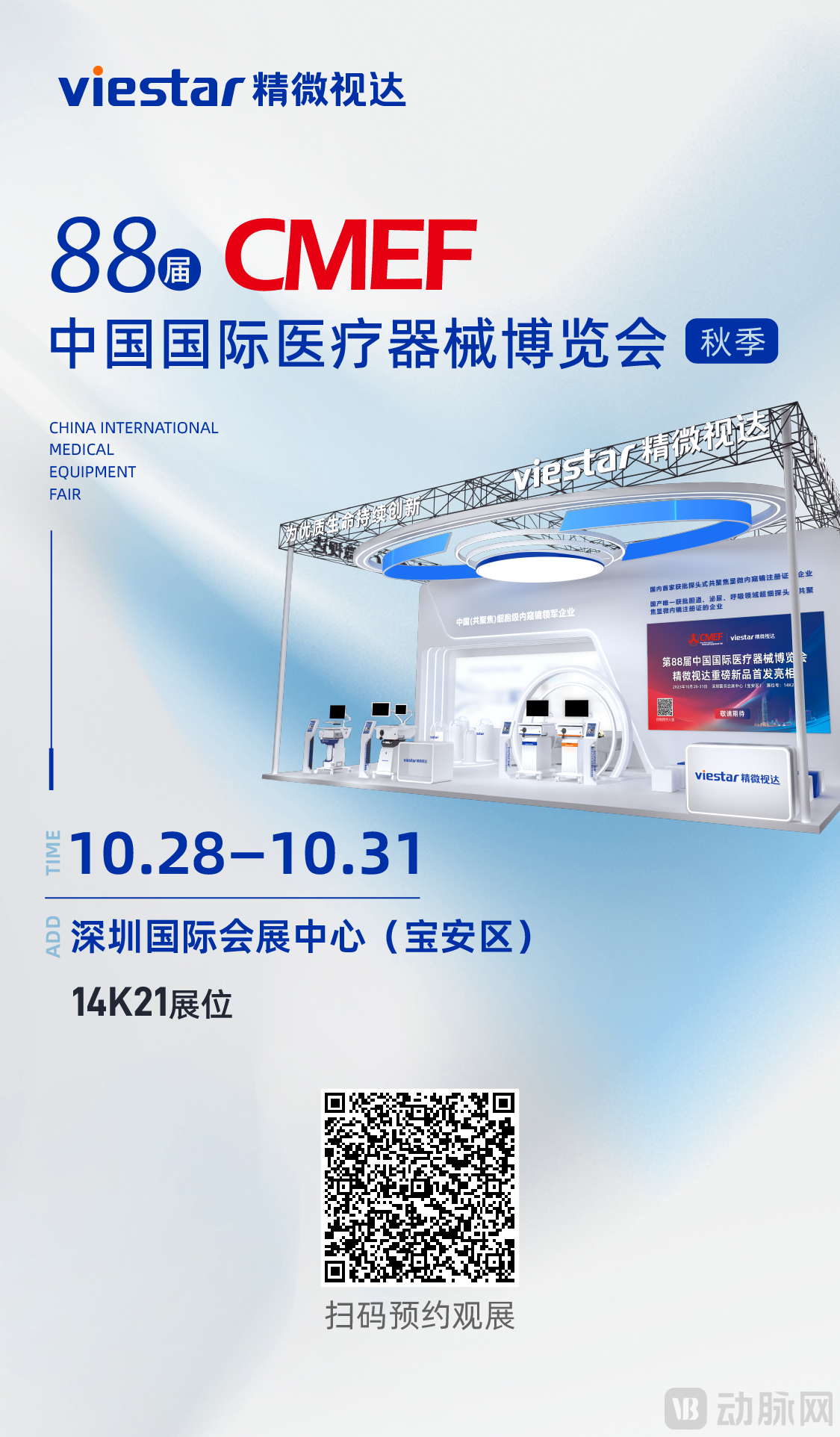
Scan the QR code above to reserve your exhibition space.
References:
1. “2023 High-End Medical Device Industry Research Report,” VCBeat
2. “2023 Medical Endoscope Industry Research Report,” VCBeat