

GenSci125: World’s First Once-Weekly Long-Acting Injectable Progesterone for Assisted Reproductive Technology Receives FDA IND Approval

GenSci
Gene Engineering Pharmaceutical and Growth Hormone Producer
CHANGCHUN HIGH-TECH
Pharmaceutical R&D Developer
On January 16, Changchun High-Tech Industries (Group) Inc. (“Changchun High-Tech”) announced that its subsidiary, GenSci, will conduct a Phase I clinical trial in the United States for its injectable GenSci125 project (IND No. 168162), indicated for luteal phase support or replacement in assisted reproductive technology. This marks the first FDA-approved long-acting weekly injectable progesterone formulation to enter clinical studies.
On December 15, 2023, CHANGCHUN HIGH-TECH announced that GenSci had received the "Notice of Approval for Drug Clinical Trials" from the National Medical Products Administration (NMPA) regarding GenSci125 for Injection. The NMPA approved GenSci to conduct clinical trials for GenSci125 for Injection for the indication of luteal phase support in assisted reproductive technology.
Progesterone is a progestogen secreted by the corpus luteum of the ovary. It facilitates the transformation of the endometrium from the proliferative phase to the secretory phase, thereby promoting endometrial maturation and shedding, maintaining the menstrual cycle, and preparing the uterus for embryo implantation. During early pregnancy, it stabilizes the endometrium and supports gestation, making it a commonly used and essential medication for maintaining pregnancy in clinical practice. Clinically, progesterone is primarily indicated for conditions such as luteal phase defect, endometriosis, threatened abortion, and habitual abortion.
Currently, progesterone products on the market are mainly available in three formulations: capsules, injections, and gels. However, their respective advantages and disadvantages have, to some extent, limited the widespread use of progesterone products.
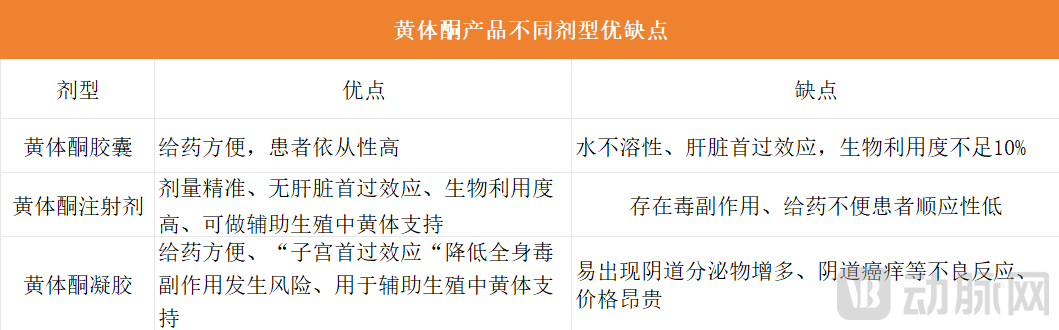
Among them, progesterone injections can be classified into long-acting and short-acting formulations. Currently, short-acting progesterone formulations are widely used in clinical practice in China for luteal phase support; however, they require daily administration, which is associated with poor patient acceptance, low compliance, and missed doses, thereby leading to suboptimal therapeutic outcomes.
Compared with short-acting formulations, long-acting formulations enable sustained drug release over weeks, months, or even years. Long-acting administration can enhance drug efficacy and safety by maintaining drug levels in the body within the optimal concentration range—specifically, not falling below the minimum therapeutic plasma concentration and not exceeding the safe threshold concentration.
GenSci125 for Injection is a long-acting weekly progesterone formulation independently developed by GenSci, leveraging the company’s core proprietary long-acting drug delivery technology. In 2014, the company launched “Jintrolong,” the world’s first long-acting recombinant human growth hormone, ending the nearly century-long history of daily injections for growth hormone therapy and extending the dosing interval to once weekly.
Compared with short-acting injectable progesterone formulations, GenSci125 for injection significantly reduces the frequency of clinical administration, offering patients a better therapeutic option. The primary clinical indications for progesterone, such as threatened miscarriage and recurrent miscarriage, typically require 8–12 weeks of treatment. As a long-acting weekly formulation with stable release, GenSci125 for injection eliminates the need for daily dosing, improves patient compliance, and better meets market demand.
GenSci will systematically conduct Phase I clinical trials of GenSci125 for injection to evaluate the safety and tolerability, pharmacokinetics (PK) after single-dose administration, and PK profiles in comparison with multiple consecutive doses of short-acting progesterone. Previously, Jin Lei, the company’s founder, stated that GenSci aims to complete relevant U.S. clinical studies for its long-acting growth hormone products by around 2025, with market launch expected in 2027.
Progesterone can be used in a variety of clinical settings. In addition to the treatment of abnormal uterine bleeding, menopause, endometrial cancer, hyperplastic precursor lesions, and amenorrhea, progesterone is also considered one of the therapeutic options for breast cancer patients with mastalgia.
According to data released by the International Agency for Research on Cancer (IARC) in 2020, approximately 2.2 million new cases of breast cancer were reported globally, with this figure projected to reach 3 million by 2040. Driven by the rising incidence of the disease and increasing demand for fertility preservation, the progesterone market is poised for sustained growth. An industry report published by Bizwit Research & Consulting LLP indicates that the global progesterone market size was valued at RMB 42.316 billion and is expected to grow at a compound annual growth rate (CAGR) of 13.89%, reaching RMB 90.13 billion by 2028. Data from Menet also shows that in 2021, the market size of progesterone at terminal public medical institutions in China—including urban public hospitals, county-level public hospitals, urban community health centers, and township health centers—exceeded RMB 1.7 billion, representing a year-on-year increase of 15.17%.
Notably, the favorable news that GenSci125 for injection received FDA approval for clinical trials also drove a 1.02% increase in CHANGCHUN HIGH-TECH’s stock price on the day, closing at RMB 125.35 per share. This marks one of the few gains since the stock opened with a 6.30% plunge the day after CHANGCHUN HIGH-TECH announced on January 11 the divorce between shareholder Jin Lei and Wang Simian.
However, the recent approval for clinical trials alone is insufficient to offset the negative impact of CHANGCHUN HIGH-TECH’s previous “divorce incident.” Nevertheless, the company is actively taking measures to “salvage” its situation: it recorded cumulative net financing purchases of RMB 306 million over three consecutive trading days; its subsidiary, Baike Biological, saw a significant surge in performance of its shingles vaccine, with estimated operating revenue for 2023 ranging from RMB 1.76 billion to RMB 1.87 billion, and net profit attributable to shareholders ranging from RMB 470 million to RMB 530 million, representing a year-on-year increase of 158.9% to 191.95%; additionally, the company released the “Shareholder Return Plan for the Next Three Years (2023–2025)” and issued a indicative announcement on the repurchase of company shares.
The announcement released by CHANGCHUN HIGH-TECH also stated that following this change in equity interests, Mr. Jin Lei and Ms. Wang Simian would be treated as a single shareholder for consolidated calculation purposes, and the provisions of Article 4, Paragraph 1 and Article 5 of the Implementation Rules regarding share reduction ratios would apply to them jointly. Should either party have plans to reduce their holdings in the future, each will determine their respective quotas based on their individual shareholding ratios and make the necessary disclosures, thereby avoiding situations akin to “divorce-style share reductions.”
Furthermore, CHANGCHUN HIGH-TECH is actively strategizing its transformation and development to reduce its heavy reliance on growth hormone products and identify new drivers for performance growth. The recent approval of the GenSci125 injection for clinical trials may bring another blockbuster product to GenSci and CHANGCHUN HIGH-TECH, expected to further expand their growth potential in the women’s health sector.
Last November, CHANGCHUN HIGH-TECH publicly stated that GenSci would gradually transform into an enterprise centered on children’s health and women’s health, while maintaining stable performance in its growth hormone business, and strive to achieve product diversification and internationalization. One month later, construction began on GenSci’s Global Science and Technology Innovation Headquarters and R&D Center, which is expected to be operational by 2027, potentially accelerating the company’s transformation process.