

2023 Annual Innovation White Paper on Digital Health: Nearly 100 Policies and Approvals Signal Accelerated Implementation, Half of Funding Linked to Artificial Intelligence
Over the past decade, the Fourth Industrial Revolution—characterized by data as its foundation and artificial intelligence applications as its visible manifestation—has driven nearly every aspect of human society. The rapid advancement of digital technologies has also spurred the growth of digital health. Although progress has not been as swift as anticipated, digital health is indeed playing an increasingly significant role in the healthcare industry.
Revolutionary advances in digital health are rapidly transforming the healthcare sector. Technologies such as artificial intelligence, cloud computing, the Internet of Things (IoT), blockchain, digital diagnostics and therapeutics, telemedicine, and consumer-facing mobile health applications are being increasingly adopted, bringing convenience to all stakeholders in the healthcare ecosystem.
Despite the significant challenges faced by the entire healthcare industry over the past year, the immense value of digital health remains unquestionable over a longer time horizon. To document the profound transformation in digital health and explore its vast future potential, VCBeat and VBInsight have compiled an analysis of the current status and development trends of digital health in 2023, producing the “2023 Annual White Paper on Digital Health Innovation.” This report aims to clarify how digital health innovation reshaped healthcare in 2023.
Digital Health is a relatively broad definition, referring to a field of knowledge and practice related to the development and use of digital technologies to promote healthcare. It represents advancements in the healthcare sector that have emerged during the evolution of the Fourth Industrial Revolution, driven by information and communication technologies, big data, and artificial intelligence.
To date, there is no universally accepted definition of digital health, with varying definitions emphasizing different aspects depending on the context and requirements. One category of definitions focuses on the types and applications of digital technologies. Another approach emphasizes the use of digital technologies to improve healthcare and health outcomes. A third perspective highlights the transformation of health systems, positing that digital health will drive the shift toward a patient-centered model of care.
These definitions underscore the high degree of conceptual and perspectival variability in digital health. Overall, however, digital health is widely recognized as an opportunity to transform healthcare systems from a provider-centric model into a patient-centric digital health ecosystem. By leveraging digital technologies to enable patients to self-manage their physical and mental well-being, it empowers consumers while also enhancing convenience and cost-effectiveness for healthcare providers and all stakeholders involved in the healthcare sector.
Just as there are several different ways to define digital health, its classification also adopts various approaches. Although classification based on the underlying digital technologies is relatively common, such technologies often serve multiple functions across different stages of healthcare delivery. Consequently, this approach does not facilitate a clear understanding of the purpose of each digital health technology, nor does it aid in determining how to implement and evaluate them.
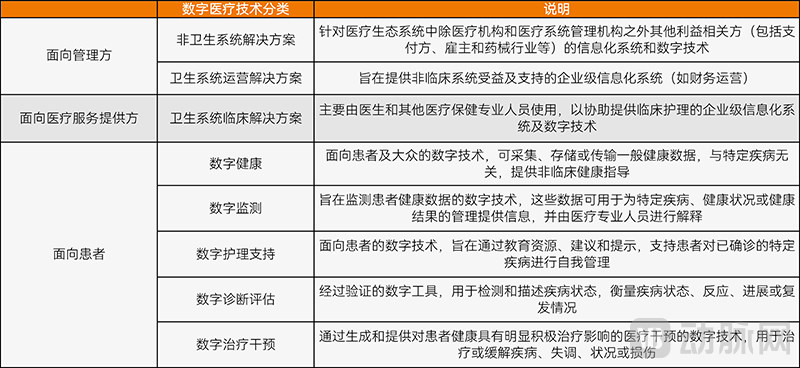
Classification of Eight Categories of Digital Health Technologies (Graphic by VCBeat)
It is for this reason that classifying digital health based on its role at different stages of the healthcare process has gained increasing recognition. To achieve precise classification, some research institutions proposed in 2023 that distinct dimensions should be established on this basis, including four key aspects: end users/beneficiaries, intended use, regulatory review, evidence-based data, and product/intervention type.
Based on these dimensions, we canDigital healthcare technologies are categorized into non-health-system solutions for administrators and health-system operational solutions; health-system clinical solutions for healthcare providers (such as medical institutions); and digital health, digital monitoring, digital care support, digital diagnostic assessment, and digital therapeutic interventions for patients.A total of 8 solution categories.
Among these, patient-facing solutions range from digital health to digital therapeutic interventions, with their clinical impact increasing progressively. Consequently, requirements regarding expected reimbursement, regulatory review, and evidence-based support are correspondingly elevated. Meanwhile, while patient-facing digital health technologies can be upgraded to higher tiers, they will inevitably be subject to additional regulatory oversight and require more robust evidence-based support than before.
Furthermore, due to the complexity of digital health systems and market demands, an increasing number of digital health technologies are not confined to a single category but instead incorporate multiple functionalities. The classification of such technologies is determined by the category to which the highest-risk component among these multifunctional modules belongs, which in turn dictates the level of regulatory oversight required to ensure the product’s safety and effectiveness.
It is evident that the latest definition and classification of digital health are more scientific and closer to the essential nature of medical products than previous versions. As this new framework continues to evolve and mature, it will provide better methodological tools for future research in digital health.
Capital Data: Investment Slows, AI Grows Against the Trend
Regarding investment and financing data, we selected the period from December 2022 to November 2023 as the analysis window. By mining and cleaning investment and financing data from VCBeat’s Orange Data platform, we identified 109 valid records of domestic digital health-related investments and financings, thereby providing insights into the evolving trends of the digital health industry in 2023.
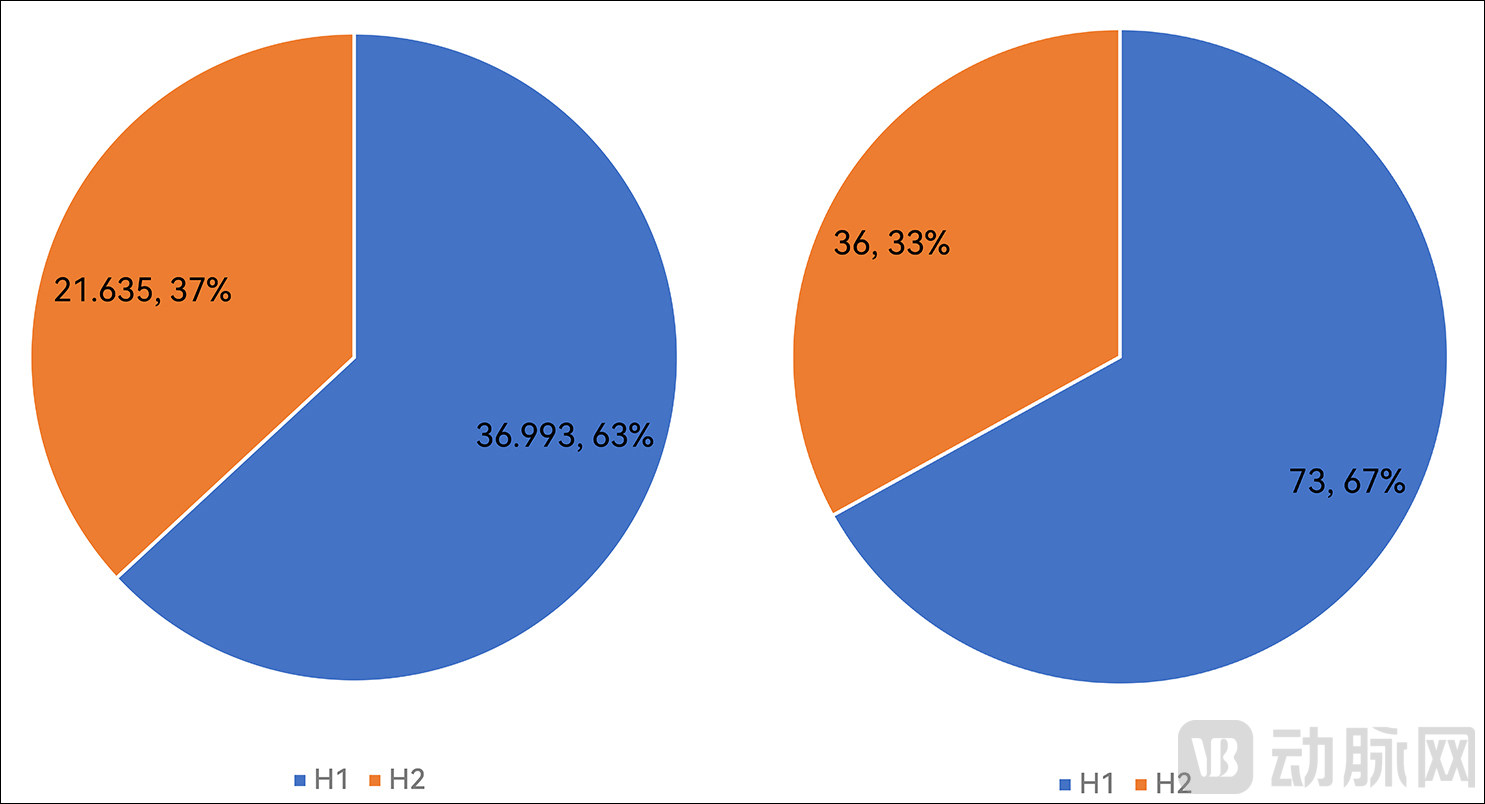
Domestic Digital Health Industry Financing Amount (Left) and Number of Financing Events (Right) by Half-Year (December 2022–November 2023)
During the statistical period, financing events were divided by time. In the first half (December 1, 2022–May 31, 2023), there were a total of 73 investment and financing events, with cumulative financing amounting to RMB 3.6993 billion. In the second half, there were only 36 investment and financing events, with cumulative financing reaching RMB 2.1635 billion. Clearly, the capital market was significantly more active in the first half than in the second half.
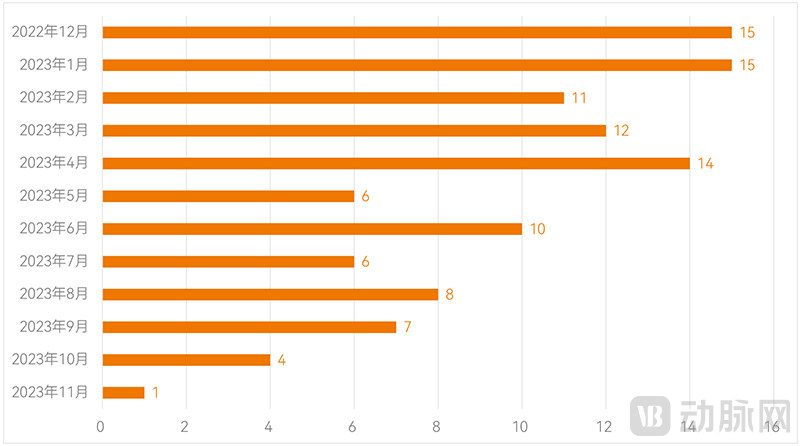
Number of Financing Events in China's Digital Health Industry by Month
Clues can also be gleaned from the number of financing events broken down by month. December 2022 and January 2023 saw the highest number of completed financing deals, with 15 each. As time progressed, the number of financing events declined rapidly, dropping to single digits per month after July.
This aligns with general perceptions. After experiencing its final peak in late 2022 and early 2023, the investment and financing market has been significantly impacted by the economic situation, resulting in a marked decline. However, this trend is not unique to digital health. According to statistics on quarterly investment and financing data in China’s healthcare sector over the past two years, compiled by VCBeat Orange, funding amounts in China’s healthcare industry have been declining quarter by quarter since Q1 2022.
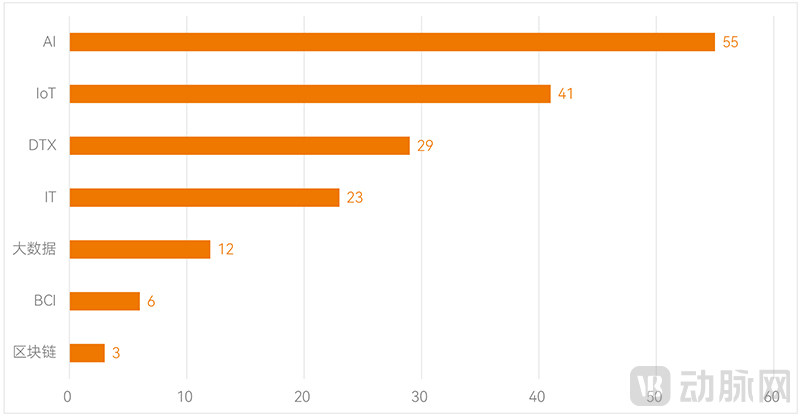
Number of Financing Events in China's Digital Health Industry by Technology Category
If categorized by the digital technologies employed—namely, informatization, artificial intelligence (AI), digital therapeutics, the Internet of Things (IoT), brain-computer interfaces (BCI), big data, virtual reality (VR), and blockchain—AI accounts for the highest number of financing events. A total of 55 companies that completed financing rounds have AI as a core component of their primary business activities. This trend aligns with the rapid emergence of generative AI in 2023.
Among the 18 major financing rounds valued at RMB 100 million or more, artificial intelligence (AI) also made significant contributions, with 10 of these large-scale deals involving AI. This indicates that although AI-based medical imaging has progressively entered the mid-to-late stages of development, other AI-plus sectors—such as pathology, electronic medical records (EMR), and voice recognition—have become some of the few high-quality investment targets in the capital market over the past year. Amidst a broader macroeconomic downturn, these areas have benefited from the surge in generative AI.
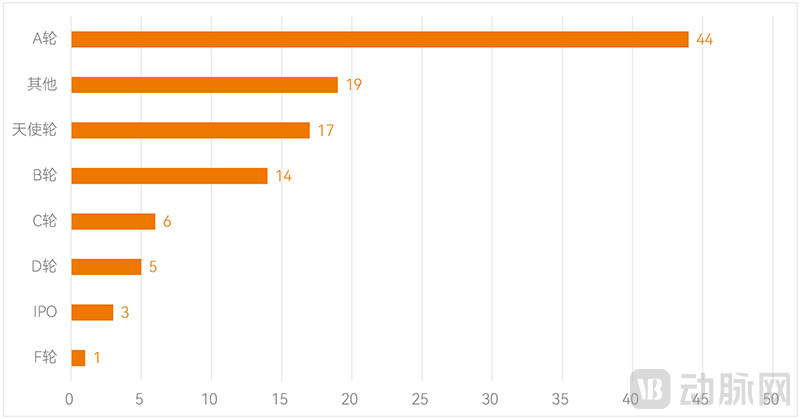
Number of Financing Deals in China's Digital Health Industry by Round
In terms of overall financing rounds, Series A funding events were the most frequent, with a total of 44 occurrences; Other rounds and Angel rounds followed in second and third place with 19 and 17 occurrences, respectively; There were 14 Series B funding events. It is evident from the distribution of financing rounds that the digital healthcare sector remains largely in its early to mid-stage development.
Policy Data: Digital Healthcare Receives High Priority, with Policies Driving Integration Across All Aspects
According to incomplete statistics from VCBeat, the Chinese central government issued 66 policies related to digital healthcare between December 1, 2022, and December 22, 2023. These policies primarily focus on several key areas: overall strategic planning for digital healthcare; leveraging digital healthcare to empower specific clinical scenarios; accelerating the informatization, standardization, and integrated development of platforms within regulatory and healthcare institutions; exploring new application scenarios for digital healthcare; streamlining the review, approval, and implementation of new digital healthcare technologies; enhancing patient convenience through digital healthcare solutions; and promoting high-quality development of the healthcare system via digital technologies.
In particular, in response to the sustained boom in generative artificial intelligence this year, multiple departments jointly issued the Interim Measures for the Administration of Generative Artificial Intelligence Services. Meanwhile, regulatory oversight in the field of medical artificial intelligence has continued to achieve breakthroughs. As the competent authority for drugs and medical devices, the National Medical Products Administration (NMPA) has released several important regulatory policies in recent years to promote the development of digital health.
Moreover, data elements have been a particularly hot topic over the past year. The “Twenty Measures on Data,” released in December 2022, is regarded as the foundational framework for China’s data infrastructure system, marking that the Chinese government has formulated a clear and actionable strategy for data. Building on this foundation, the National Data Bureau was subsequently established, explicitly designating “data elements × healthcare” as a key focus area of the “Data Elements ×” initiative.
Approval Data: Significant Growth in AI Medical Devices, Digital Therapeutics Maintain Steady Growth Rate
In recent years, regulatory authorities have continuously optimized and refined the review and approval processes for AI-based medical devices. They have issued multiple evaluation key points and review guidelines for imaging AI analysis software tailored to specific clinical domains, leading to a maturing approval framework. This has, in turn, spurred a surge in product registration and market access within this sector. Throughout 2023, a total of 48 AI-based medical devices obtained Class III medical device registration certificates in China, representing a 50% increase from the 32 approved in 2022 and marking the highest number of Class III approvals in any year to date.
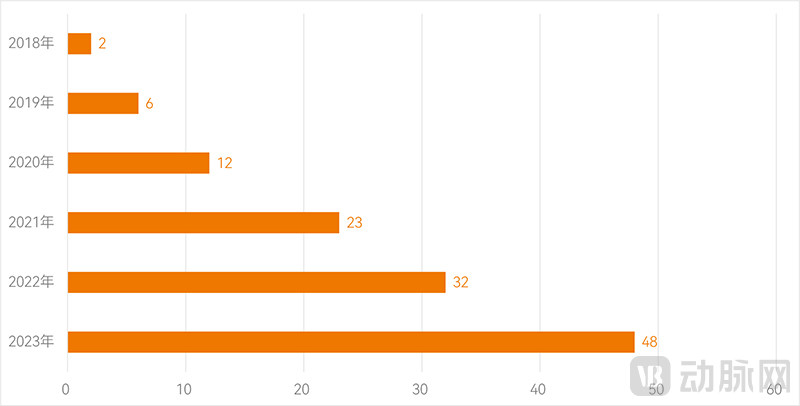
Incomplete Statistics of AI Medical Devices Approved for Class III Certification in China by Year
When analyzed by year, the number of Class III certifications approved annually in the field of artificial intelligence has maintained rapid growth. To date, a cumulative total of 122 AI-based medical devices have obtained Class III certification. Among these, Shukun Technology is particularly noteworthy: it secured eight Class III certifications in 2023 alone, bringing its total to 12, the highest number of Class III certifications approved for any company to date.
In 2023, seven AI-based medical devices were included in the National Medical Products Administration’s (NMPA) Green Channel for Innovative Medical Devices, reflecting a certain level of innovation. Meanwhile, six AI-based medical devices ultimately received approval through the expedited review pathway for innovative medical devices. Among these six approved innovative products, two had entered the expedited review pathway as early as 2019, and three entered in 2021, underscoring the challenges associated with obtaining regulatory approval for medical devices, particularly innovative ones.
Notably, United Imaging Group had another product shortlisted in the aforementioned two statistics. This brings the total number of its AI-based software medical devices that have entered the expedited review pathway for innovative medical devices to two, making it one of the companies with the largest number of products in this channel. When considering the entire list of innovative medical devices, United Imaging Group has 9 products that have entered the pathway and 8 products that have already received approval, also ranking among the top. This demonstrates United Imaging Group’s strong innovation capabilities.
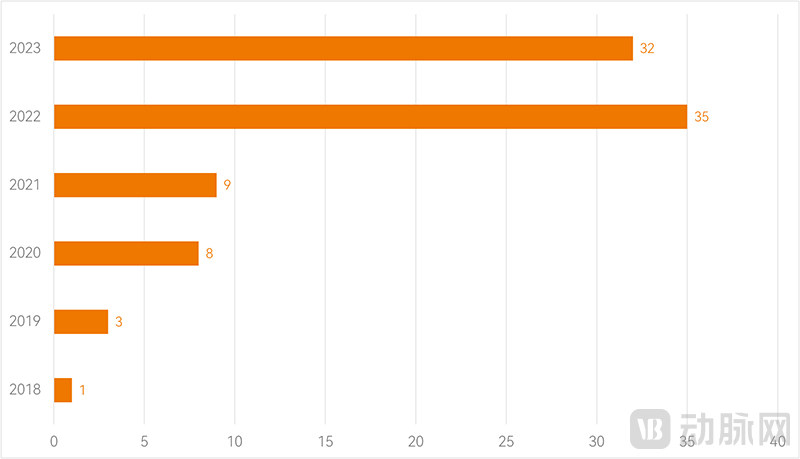
Incomplete Statistics of Approved "Digital Therapeutics" in China by Year
In addition to artificial intelligence, the number of approvals for digital therapeutics—primarily those classified under digital treatment and intervention—remained high in 2023. According to incomplete statistics based on publicly available information, a total of 32 software-based medical devices that met the widely accepted definition of digital therapeutics were approved in 2023, essentially maintaining the same level as the 35 approved in the previous year. In recent years, the number of approved “digital therapeutics” products has shown a clear accelerating trend. As of 2023, a total of 88 “digital therapeutics” have received regulatory approval and obtained medical device certifications.
Of course, as China currently lacks clear approval guidelines, many products require individual classification and determination, which has, to some extent, limited the number of approved digital therapeutics. In response, Chinese regulatory authorities are also exploring the establishment of a relevant evaluation framework for “digital therapeutics.”
In 2023, digital healthcare experienced accelerated development. In particular, the rapid rise of generative artificial intelligence has begun to permeate and reshape various aspects of healthcare. Advances in digital technologies such as the metaverse and the Internet of Things (IoT) have also facilitated the implementation of digital healthcare solutions in an increasing number of scenarios. On another front, the establishment of data as the fifth factor of production, coupled with supportive policies, is fostering promising prospects for the application and development of healthcare data.
Generative artificial intelligence (AI) and the large language models (LLMs) underpinning it have been among the most hotly discussed topics over the past year. Currently, LLMs in the healthcare sector can process diverse data types, including medical texts, medical imaging, life omics, and protein engineering. In the future, they are poised to play a significant role in various areas such as medical services, patient care, operational management, Traditional Chinese Medicine (TCM), pharmaceutical supply, clinical research, public health, smart medical insurance, and health management. Over the past year, numerous companies in China have undertaken innovative explorations in the field of generative AI.
For example, DeepWise Medical applies generative AI to MRI scans, generating new sequence data from raw scan sequences to prevent image quality degradation caused by improper operations. This technology accelerates the imaging process of existing MRI equipment by 2–4 times and reduces the contrast agent dosage to 10% of previous levels. Furthermore, DeepWise Medical has achieved improvements in image quality and resolution, delivering higher-quality images than those obtained before acceleration, thereby enhancing diagnostic outcomes. Its AI imaging products have been deployed in over 500 hospitals and imaging centers worldwide, including more than 200 top-tier institutions in China, receiving positive feedback from customers. The company has also established strategic partnerships with industry leaders such as Siemens Healthineers China, Bayer Healthcare, and Bracco Imaging.
In mid-2023, Smart Eye released the "Bianshi" multimodal large medical model, which supports text, image, video, and audio inputs in the healthcare sector. The health insurance risk control model built upon this foundation can combat fraudulent insurance claims and empower the supervision of health insurance funds. Currently, big data models for health insurance anti-fraud have been piloted and implemented in provinces such as Hunan, Henan, and Xinjiang, providing new tools for the intelligent supervision of health insurance funds. Furthermore, Smart Eye leverages its multimodal large medical model technology to empower medical institutions in operational management, clinical diagnosis, and clinical research, while offering patients personalized and intelligent personal health management outside of hospital settings, thereby driving the digital and intelligent transformation of the health insurance and healthcare industries.
In late 2023, Yidu Tech released its independently developed large language model (LLM) tailored for multi-scenario applications in the medical vertical. The model has outperformed GPT-3.5 in evaluations across specific medical tasks, including triage, basic medicine, general practice, clinical internal medicine, clinical surgery, and professional licensing examinations. Furthermore, it achieves significantly higher accuracy and recall rates in data structuring tasks compared to other large models with similar parameter sizes. Yidu Tech’s LLM has been deployed in collaboration with several top-tier hospitals ranked among the top 20 nationwide, empowering diverse scenarios such as medical research, clinical decision support, and data governance.
Data is one of the three core elements of artificial intelligence and a fundamental component in developing the digital economy, which has increasingly highlighted its importance. From late 2022 to 2023, there were continuous favorable developments in healthcare data, with multiple policies introduced. However, it must be acknowledged that the utilization of healthcare data still faces significant challenges. Driven by these policies, medical institutions, which hold the majority of healthcare data, will undoubtedly increase their investment in data mining and applications, thereby transforming these dormant data “oil and gas fields” into truly usable data products.
New-generation medical big data centers, built on innovative design concepts, have also been successively launched over the past year. For instance, Yidu Tech released its next-generation data center, YiduEywa 2.0, in late 2022. Built upon Yidu Tech’s medical intelligence brain “YiduCore,” this new-generation data center provides a variety of tools tailored to the data usage needs of different roles and scenarios, thereby enhancing data accessibility and utilization efficiency. This helps hospitals improve their data usage efficiency and accelerate the conversion of healthcare data into value. Following the release of Yidu Tech’s large language model in late 2023, YiduEywa was upgraded to version 3.0. Leveraging the large model for more efficient data understanding, structured normalization, and data quality control, it has further improved data governance efficiency by more than 50%.
In recent years, new-generation cloud-native information systems that break through the limitations of traditional IT architectures have gained increasing favor. For instance, Huazhuo Technology’s cloud-native healthcare informatics system has been deployed in dozens of traditional Chinese medicine (TCM) hospitals across China, leveraging its architectural advantages to significantly enhance digital service capabilities in TCM. This has continuously improved the accessibility, convenience, and equity of TCM services, unlocked the value potential of data elements, and enabled comprehensive mining and application of TCM clinical data, thereby empowering the inheritance and innovation of TCM through digital health technologies. Notably, in 2023, the company established a patient-centered clinical data center and integration platform for a TCM hospital in Zhejiang Province, while promoting the adoption of new technologies and models such as the TCM Health Brain, the “One-Stop TCM Prescription” service, TCM heritage preservation, and “TCM Specialties + AI.”
Mining and leveraging healthcare data is not the exclusive domain of offline hospitals; internet hospitals can also derive significant empowerment from it. Naiterui leverages its internet hospital platform to break through the limitations of traditional pharmaceutical supply chains. By establishing strategic partnerships with multiple pharmaceutical supply chain enterprises, it achieves information sharing and resource integration. Through extensive application of big data and artificial intelligence technologies for real-time monitoring and intelligent forecasting of drug inventory, Naiterui not only ensures timely drug supply but also prevents inventory overstock and improves inventory turnover rates. This approach addresses common pitfalls in traditional pharmaceutical supply chains—such as untimely supply, inventory backlog, and excessive costs—caused by information opacity, fragmented resources, and slow decision-making.
Winning Health has jointly developed a cloud-based Hospital Information System (HIS) featuring a “Dual SaaS” architecture (HIS-SaaS and Internet Hospital SaaS) with Foshan Fosun Chancheng Hospital. This architecture is designed to integrate data across in-hospital and out-of-hospital settings, as well as online and offline channels, thereby consolidating offline medical resources and driving innovation in both clinical operations and management. Specifically, HIS-SaaS provides foundational hospital capabilities, serving as a critical infrastructure for digital transformation in healthcare by supporting the extension of various innovative business scenarios. Meanwhile, Internet Hospital SaaS offers connectivity capabilities for an ecosystem encompassing internet-based pharmaceutical services, post-diagnosis health management, and commercial insurance, acting as a data and capability exchange hub for building digital health platforms. The system has significantly improved patient experience, enhanced physicians’ work efficiency, and strengthened group-level operational management capabilities.
As the most prominent form of digital therapeutic intervention, digital therapeutics (DTx) have garnered significant attention in recent years. A growing number of Chinese DTx companies have gradually recognized the necessity of clinical trials for DTx and are allocating more resources to this end. The results of these clinical trials provide robust evidence demonstrating the efficacy of DTx, thereby substantially strengthening the evidence base for digital therapeutic interventions.
Digital therapeutics are also expanding into more innovative application scenarios. For instance, Hainan Province began incorporating digital therapeutics in 2023 to enhance screening for cognitive impairment among the elderly and chronic disease management for diabetes. Yidu Tech was successfully selected for Hainan Province’s “2+3” Health Service Package project and launched pilot initiatives in 2023, promoting the innovative application of digital therapeutics and the digital transformation of healthcare in Hainan. Furthermore, Yidu Tech integrated its diabetes digital therapeutics for the first time into the paid health management services of “Tianjin Huiminbao,” a local supplemental medical insurance plan. These innovations in application scenarios are commendable. It is reported that Yidu Tech’s diabetes digital therapeutics product has also received FDA approval.
Moreover, in 2023, the rapidly evolving digital technologies began to spark a new revolution in healthcare scenarios.
For instance, the Longevity series of smart hardware by Tianyu Elderly Care utilizes millimeter-wave radar technology to detect human activity and abnormal behaviors within a designated area. Leveraging big data and AI analytics, it accurately identifies falls among individuals in the room and automatically sends alerts to the management platform. The system also enables non-intrusive monitoring of vital signs, overseeing sleep and health metrics by continuously tracking respiration and heart rate, thereby providing reference recommendations for users’ sleep and health status. By collaborating with traditional elderly care service providers, this solution helps address challenges such as difficulties in engaging with seniors, weak connectivity, delayed service delivery, and the inability to meet personalized care needs.
In the realm of sensor applications, OPPO, a company that has crossed over from the consumer electronics sector, also launched an innovative home smart health monitoring device, the H1, in 2023. This product is equipped with thermopile sensors and Time-of-Flight (TOF) proximity sensors, innovatively employing infrared non-contact technology for body temperature measurement. This method is not only fast and convenient—delivering temperature readings within seconds with a measurement error of merely ±0.2°C—but also avoids physical harm and cross-infection. Consequently, it enables safer and more rapid early screening for respiratory infections and dynamic body temperature management for other diseases.
The above is an excerpt of the main content of the report. Below are the outstanding innovation cases of the year. Scan the QR code on the poster to access the full report.

Table of Contents:
PART 01. Latest Definition, Scope, and Classification of Digital Health
1.1. Definition and Development of Digital Health
1.2. Latest Developments in Digital Health Classification
PART 02. 2023 Digital Healthcare in Numbers
2.1. Capital Data: Investment Slows, AI Grows Against the Trend
2.2. Policy Data: Digital Healthcare Receives High Priority, with Policies Driving Integration Across All Aspects
2.3. Approval Data: Significant Growth in AI-Based Medical Devices, with Digital Therapeutics Maintaining Steady Growth Rate
PART 03. Interpretation of Digital Health Innovation Trends in 2023
3.1. Ubiquitous Generative AI Will Reshape Healthcare
3.2. Continuous Benefits from Healthcare Data Applications Signal Imminent Industry Acceleration
3.3. Strengthening the Evidence Base for Digital Therapeutics and Exploring Broader Indications Through Multimodal Technologies
3.4. The Continuous Evolution of Digital Technology Sparks a Revolutionary Innovation in Healthcare Scenarios
PART 04. Interpretation of Digital Healthcare Innovation Cases in 2023
4.1. Winning Health—Partnering with Foshan Chancheng Hospital to Co-build a New Generation of Cloud HIS
4.2. Netri—Innovative Internet Healthcare Solutions to Address Challenges in the Pharmaceutical Supply Chain
4.3. Huazhuo Technology — Cloud-Native + Digital TCM Empowering the Digital Transformation of Traditional Chinese Medicine
4.4. DeepWise Medical Imaging — Generative AI at Scale Empowers the Imaging Product Portfolio
4.5. Yidu Tech—Large Models Empower YiduCore to Evolve into a “Medical Super Brain”
4.6. Wisdom Eye “Bianshi” Multimodal Medical Large Model
4.7. Tianyu Elderly Care—Millimeter Wave-Based Longevity Smart Elderly Care Solution