

Shanghai Biomarker Life Sciences Completes Tens of Millions RMB Angel Funding Round, Pioneering High-Resolution Proteomics Research

SHC
Innovative Investment Institutions in the Biomedical Field

YuanBio Venture Capital
Venture Capital Institution
Recently,Shanghai Mima Life Sciences Co., Ltd. announced the successful completion of its tens-of-millions-yuan angel financing round, led by the Shanghai Biomedical Innovation Transformation Fund, with participation from YuanBio Venture Capital, Zhongxin Yuanchuang, and Sinan Yuanke.
Shanghai Mima Life Sciences possesses a globally leading antibody affinity-based proteomics detection platform, featuring performance advantages of ultra-sensitivity, ultra-multiplexing, high throughput, and reproducibility. Its proprietary Proximity Barcoding Assay (PBA) technology employs unique protein molecular tags combined with RCA proximity tags to enable single-protein molecule counting while simultaneously characterizing the protein profile of a cluster. This platform facilitates co-localization, qualitative, and quantitative protein analysis at the levels of protein complexes, exosomes, and cells.
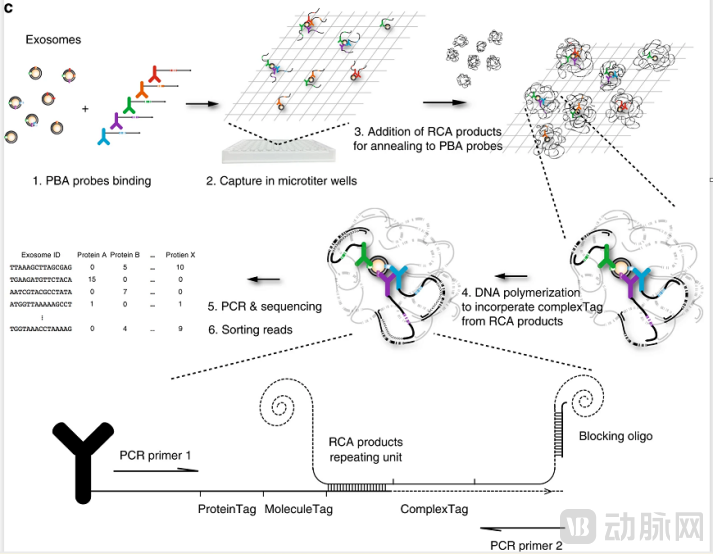 Wu, D.,et al. Nat Commun.(2019)
This technology platform is poised to enable precise analysis of low-abundance proteomes in plasma and other samples at a low cost, addressing current challenges in proteomics R&D such as low automation, insufficient throughput, poor sensitivity, and high expenses, thereby efficiently empowering life science research, new drug development, and clinical diagnostics.
Dr. Wu Di, Founder and Chairman of Shanghai Mima Life Sciencesstated: “We sincerely appreciate the recognition, trust, and support from our investors. Leveraging our proprietary proximity encoding technology, we have achieved high-throughput digital analysis of single-vesicle proteomes, providing a powerful tool for elucidating fine cellular structures and discovering next-generation liquid biopsy biomarkers. As a platform technology, proximity encoding holds unique application potential in areas such as single-molecule protein quantification, post-translational modifications, protein–protein interactions, and spatial distribution, inevitably bringing about a revolutionary improvement in the detection resolution of proteomics. This round of financing will advance our exploration in these fields and accelerate the development and practical application of related products.”。”
President and Partner, Shanghai Biomedical Innovation Transformation FundGuo Qiushanstated: “PBA, the proximity barcoding technology developed by Mima Life Sciences, is a next-generation ultra-high-throughput and ultra-sensitive proteomics analysis platform that achieves technological and patent breakthroughs through foundational innovations. With its single-molecule detection capability and spatial information generated by its proprietary Rolling Circle Amplification (RCA) design, PBA provides solutions for high-value research areas such as post-translational modifications and spatial quantification, significantly expanding the range of detectable sample types and informational dimensions. We fully support Mima in leveraging its independently developed proteomics technology to open a new chapter in downstream applications for researchers worldwide.”
Partner, YuanBio Venture Capital Suzhou Angel FundDr. Cheng Gang“It stated: ‘Proteomics is more complex than genomics and imposes higher requirements on detection tools. Therefore, Mima Life Sciences’ next-generation protein detection technology is bound to significantly advance the entire field and is expected to bring about major transformations in the biopharmaceutical sector.’”
About Shanghai Bima Life Sciences Co., Ltd.
Shanghai Mima Life Sciences Co., Ltd. was established in 2023, with a founding team comprising academic and industry experts. The company is dedicated to developing next-generation molecular detection methods. By integrating robust computational biology algorithms, it provides powerful proteomics analysis tools to accelerate the discovery of novel molecular biomarkers. It delivers efficient and precise solutions for scientific research, clinical practice, and drug development, empowering scientists worldwide to explore the mysteries of life and drive innovation in the biopharmaceutical industry.