

Should Scientists Be Encouraged to Start Companies?
In 2017, the Chinese Academy of Sciences (CAS) organized a debate featuring Mi Lei, founding partner of CAS Star, and Cao Zexian, researcher at the Institute of Physics, Chinese Academy of Sciences, representing the opposing sides.
The subject of the heated debate between the two parties was,“Should Scientists Be Encouraged to Start Businesses?”。
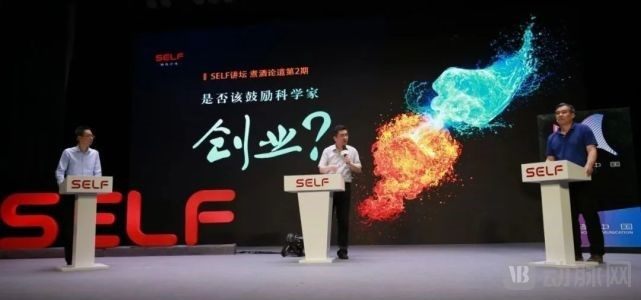
Debate scene, sourced from the internet
Mi Lei raised the first question: “China currently invests 1.5 trillion yuan annually in scientific research funding. If we fail to promote the translation of scientific and technological achievements, some technological outcomes may depreciate and go to waste after a few years. Therefore, the state is now encouraging some individuals to step forward and facilitate this translation process. Do you believe that the industrialization of scientific and technological achievements should be encouraged?”
Cao Zexian responded that the industrialization of scientific and technological achievements should be encouraged. However, he further believes that this work should be carried out by engineers—individuals at the level of engineers and technicians—rather than by scientists.
After several rounds of back-and-forth, neither side managed to persuade the other. So an audience member spoke up:
“The translation of scientific research achievements is very important and necessary. However, in this process, there actually needs to be a bridge between scientists and entrepreneurs.”
Mixed Results
At a conference, Academician Shi Yigong publicly opposed scientists starting businesses.
“What was the final straw that broke the camel’s back?”
It encourages scientists to establish enterprises.
You heard it right. After hearing these remarks at this year’s National People’s Congress, I felt a deep sense of heaviness. Every field has its own specialization; my expertise lies in basic research and, to some extent, education. Asking me to engage in business management, establish companies, or serve as CEO would be misapplying my talents and intellect.
“It is impossible for one to simultaneously serve as a university professor, a corporate executive, and a financial manager. From government leaders to academic institutions, and from the central government to local authorities, there has been encouragement for scientists and technologists to establish enterprises, which is misguided.”
Academician Shi Yigong’s Remarks Hit the Pain Points of Scientist Entrepreneurs.Researchers who spend long periods in laboratories often lack market insight and business acumen; if they start their own companies, they are bound to encounter obstacles at every turn, while also neglecting their scientific research and delaying the training of students.Furthermore, market perception and user understanding are also frequently criticized, as the limitations of time and energy make it impossible to achieve a perfect balance.
An entrepreneur cited the example of a professor who, after winning a provincial-level science and technology award, insisted on starting his own company. However, lacking business acumen, the venture failed within a few years. An investor also told VCBeat that he never considers projects led by scientists.
“Their greatest strength lies in frontier exploration. To ‘justify the taxpayers’ money,’ many scientists are simply not suited for entrepreneurship.”
Despite skepticism, an increasing number of scientists have stepped onto the entrepreneurial stage in recent years.
Hongjun Shi, a professor at the Laboratory of Cardiac Development and Regeneration in the School of Life Sciences at Westlake University, founded Westlake Vitae; Song Guo, a professor in the Department of Computing at The Hong Kong Polytechnic University, founded Zero Motion Medical; Tianshi Chen, a researcher and doctoral supervisor at the Institute of Computing Technology of the Chinese Academy of Sciences, founded Cambricon; Xiaou Tang, a professor in the Department of Information Engineering at The Chinese University of Hong Kong, founded SenseTime...
These are enterprises founded by scientists in the field who champion “original innovation.”
When the low-hanging fruit has been picked or original innovation resources are gradually depleted, researchers equipped with abundant technological resources, encouraged and supported by national policies, are no longer constrained by external dependencies. Leveraging their solid scientific and technological achievements, they establish their own companies, thereby enhancing industrial competitiveness more rapidly.
This approach to entrepreneurship is far superior to that of entrepreneurs who merely imitate and produce “knockoffs.”
Policy Stimulus, Capital Chasing
On December 24, 2021, the 32nd Session of the Standing Committee of the 13th National People’s Congress voted to pass the revised Law of the People’s Republic of China on Progress in Science and Technology, with “strengthening reforms to the ownership rights of job-related scientific and technological achievements” highlighted as a key focus. This means that researchers will be incentivized through equity stakes, stock options, and dividend distributions, thereby stimulating innovation.
Policy Environment Stimulates Scientists to Launch Startups. Data from Fuxin Hui Business School shows that by the end of 2022, more than 60% of the listed companies on the STAR Market had founding teams composed of scientific researchers, engineers, or industry experts. In the primary market, this proportion may be even higher.
These emerging leading scholars are attracting the attention of capital. In a short period, media platforms have been flooded with articles titled “VCs Hunting Professors.” Investment cases in “scientist-founded enterprises” by major top-tier investment firms have shown a significant upward trend.
According to statistics from VBInsight, China’s healthcare sector recorded 121 early-stage investment and financing transactions in the first half of 2022 (a detailed list is provided at the end of this article), far exceeding the 59 such transactions during the same period last year. Among the 121 startups that secured funding in the first half of the year, 76% of their founders had a scientific background.
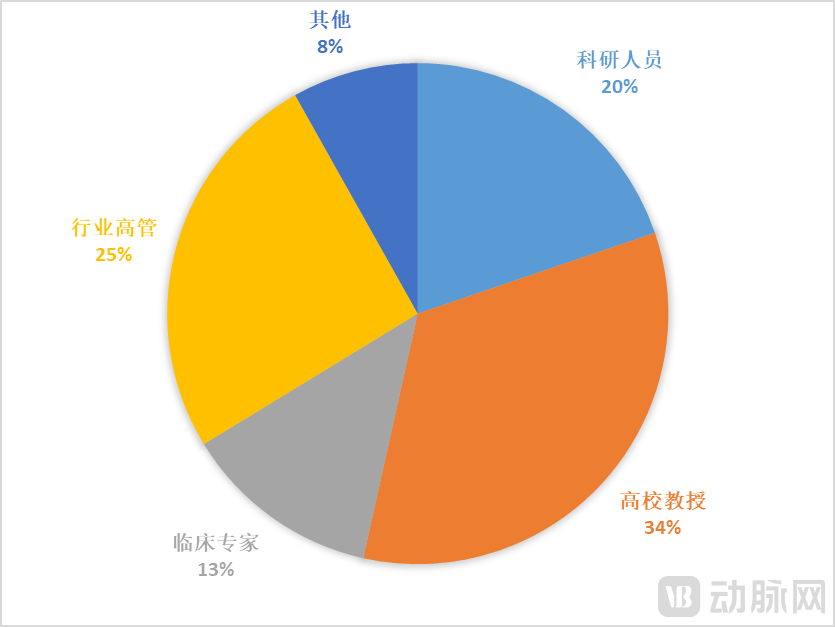
An investor made the following analogy on social media: The primary market today is largely dominated by professors and experts from universities and research institutes. This closely resembles the trend in the early days of the internet boom, when senior executives from major tech companies left their positions to launch startups.
In a bid to “secure” professors, some early-stage investment firms have quietly compiled lists of faculty members spanning various fields, including biomedicine, artificial intelligence, and robotics. Some venture capital (VC) firms even reimburse tuition fees for their partners to pursue further education at universities, aiming to build rapport with professor-led entrepreneurs and other founders with technical backgrounds.
In the past two years, professors starting businesses has become extremely popular.
Avoid Excessive "Criticism"
In 2017, the People's Daily called for avoiding excessive criticism of researchers who start their own businesses.
“However, a lack of innate ability does not preclude future success; we should not completely shut the door on entrepreneurship for researchers simply because they are not adept at business management.”
Now, this statement remains relevant.
In interviews with over 100 scientist-entrepreneurs conducted by Orange Bureau, whenever the issue of “lack of business knowledge” was raised, they consistently told us that Chinese people have strong learning abilities and are fully capable of acquiring such knowledge to fill this gap.
Today, the question of “whether scientists should be encouraged to start businesses” remains unanswered. Rather than debating the “whether,” more people are choosing to elevate the discussion to a higher level, focusing on “which scientists are suited for entrepreneurship.”
One category comprises young scientists. They not only possess innovative and cutting-edge technologies but are also filled with passion, eager to translate scientific achievements into practical applications. These scientists demonstrate unwavering determination, remain resilient in the face of setbacks, and exhibit strong execution capabilities, adaptability, and flexibility.
In 2018, after joining the School of Life Sciences at Westlake University, Li Xu independently established a high-quality protein interaction network encompassing nearly all human disease-associated proteins and hundreds of thousands of interactions, as well as protein reprogramming networks under pathological conditions such as neurodegenerative diseases and hematologic malignancies.
In November 2022, seizing industry opportunities, he founded Gaowei Pharma and advanced multiple targets into Phase II clinical trials. In July 2023, Gaowei Pharma announced the completion of its angel financing round, raising tens of millions of RMB.
Li Xu stated that entrepreneurship naturally demands an “all-in” approach—failing to commit wholeheartedly is irresponsible toward investors, the university, the company team, and even oneself. He advocates for going all out, being precise, and fully immersing oneself in the endeavor.
One category comprises senior scientists. They possess entrepreneurial qualities, are visionary and goal-oriented, and have a deep and comprehensive understanding of science. They demonstrate strong mobilization and leadership capabilities, excel in organization and coordination, and possess outstanding communication skills. They typically do not engage in substantive management within the company, retaining their identity as researchers while breaking new ground in frontier science.
In 2021, Chen Guoqiang, who has nearly 40 years of research experience in “microbiology and biomaterials,” established Bluepha. He publicly stated, “The company resolves minor issues independently; only challenging problems are escalated to me, as they may constitute fundamental scientific questions. Typically, I primarily focus on organizing basic research through my laboratory at the university.”
Regardless of the type of scientist embarking on entrepreneurship, once they have the idea to start a business independently, they must objectively and calmly assess the value of their technology, while placing greater emphasis on market analysis, sales strategies, and team collaboration.
A recently popular TV drama states:
Entrepreneurship Means “A Warm Heart and a Cool Head”。
How to Break the “High Failure Rate” Dilemma?
According to data from the U.S.-based technology transfer firm Bastille, the failure rate of startups founded by American university professors is as high as 96–97%. Given that even the United States, with its well-established innovation commercialization system, faces such high rates, China, which is still in the early stages of development, is likely to have an even higher failure rate.
Scientists excel at innovation and breakthroughs in the laboratory, whereas translating these achievements into practical therapeutic products requires a different skill set. Scientists do not need to abandon their core research expertise to devote themselves full-time to entrepreneurship.
Currently, there are two primary models for scientist-led entrepreneurship: full-time founding and serving as a scientific advisor to support startup ventures. Unlike traditional entrepreneurial logic, scientist-led startups require addressing cutting-edge scientific challenges while identifying viable pathways to commercialization.
Many industry insiders have stated that not every scientist is suited for entrepreneurship. In their observation, there are few success stories of scientists who have started businesses on a full-time basis.
In 2022, Zhang Ying, founder of Matrix Partners China, distilled ten recommendations for founders of technology companies based on his observations and experiences:
1. Pay attention to the alignment between valuation and business pace;
2. Build the optimal investor/institutional portfolio for long-term development;
3. Establish an external think tank that is tailored to your needs and features a complete ecosystem;
4. Even in the best of times, prepare for the worst-case scenario;
5. Adopt a proactive, higher-level, and more comprehensive perspective on international competition to secure greater strategic flexibility for future development;
6. Leading companies should carefully consider M&A opportunities within their ecosystems, both domestically and internationally, to achieve scale;
7. Capitalize on favorable market conditions to appropriately monetize a portion of existing shares, thereby establishing a sound financial foundation for the sustained and healthy development of the company for oneself and the executive team;
8. Respect business logic; don’t just hold out for a grand slam;
9. Understand the gap between the labels of "entrepreneur" and "business leader," and how to achieve the ultimate goal;
10. Only with firm belief can things improve.
It offers personalized advice for scientist-founders and emphasizes the importance of building their teams. In fact, every scientist entrepreneur needs a team, which includes contributions from investors, management professionals, corporate scientists and engineers, as well as legal, financial, and logistical staff.
Behind this,It is a more robust mechanism to support scientists in launching startups, helping them reduce their failure rates.
Universities also recognize that improving the success rate of scientist-led startups requires building a virtuous ecosystem with positive interactions among innovation, entrepreneurship, and venture capital. This ecosystem includes access to capital, entrepreneurial mentorship, legal counsel, and more...
In 2021, Shanghai Jiao Tong University Future Fund of Funds was launched, with an initial scale of RMB 1 billion. This fund of funds is known as the first in China initiated and established by a university, serving as a guiding fund of funds to support the commercialization of the university’s scientific and technological achievements and alumni entrepreneurship.
In March 2022, Shanghai Jiao Tong University launched the “Tiangong Initiative.” On one hand, it fully leverages alumni resources to guide capital toward greater attention to scientist-led startups, facilitate efficient validation of innovative concepts, and help scientists secure financing. On the other hand, it engages professors or alumni who have already achieved entrepreneurial success to serve as startup mentors for other faculty members with entrepreneurial aspirations, providing more targeted entrepreneurship guidance.
Relevant officials stated that the goal is to cultivate a cohort of interdisciplinary professionals proficient in technology, management, law, finance, investment and financing, and marketing, thereby fostering outstanding hard-tech startups capable of leading the future.
With the support of the “Tiangong Plan” and the “Future Industry Fund of Funds,” Shanghai Jiao Tong University helped five companies secure financing totaling RMB 198 million in less than one year.
After a series of strategic deployments, Shanghai Jiao Tong University finally unveiled a resounding slogan:
Empowering Entrepreneurship and Employment through the Commercialization of Scientific and Technological Achievements.
The commercialization of research outcomes and faculty entrepreneurship have never been mutually exclusive; what remains contentious is how to balance scientific research with entrepreneurial ventures and how to improve the success rate of startups.
At the debate, an audience member asked, “Looking back, what exactly were the reasons for your startup’s failure at that time? Now you confidently encourage scientists to start businesses; where does your confidence come from?”
Mi Lei summarized that the two waves of entrepreneurship in China during the 1980s and 1990s were not the optimal windows for scientists to start businesses:
At that time, China’s technological foundation was weak, researchers had limited understanding of commerce, and the social environment was not conducive to scientist-entrepreneurs.
“Over the past three decades, there were so many opportunities in the Chinese market that we only needed to focus on business model innovation. I believe we have reached the limits of model innovation, and we must now pivot toward technological innovation.”
After a decade of development, Mi Lei and CAS Star have presented their own answer to serving scientist-led entrepreneurship: building an integrated hard-tech startup ecosystem that combines “research institutions + early-stage investment + startup platforms + post-investment services,” along with a post-investment service system featuring “soft services + hard services.”
Soft services refer to conventional post-investment services, including publicity, training, financing, and industrial matchmaking. Hard services, on the other hand, involve providing enterprises with specialized, customized R&D spaces, as well as essential “hardware” such as specialized equipment and facilities indispensable for hard-tech research and development and industrialization.
They are all exceptionally intelligent individuals who help professors translate their research findings into practical products or services by building platforms and providing resources and support. It is akin to a group setting out on a treasure hunt, where some are responsible for cargo transport, others for life-saving operations, and still others for navigation.
They rode the waves, avoiding shipwrecks and hidden reefs, to reach the shore.
References:
“Clash of the Titans: Should Scientists Be Encouraged to Start Businesses?”
“Should Scientists Start Companies?”
“Scientist-Entrepreneurs Are Being Fiercely Courted by VCs”
“Several Recommendations for Scientists Starting Businesses”