Domestic Sequencing Instrument Industry Report Released: MGI Tech's Full-Throughput Product Portfolio Drives the Rise of Chinese-Made Sequencers

MGI
Gene Sequencing Instruments and Related Reagent & Consumables R&D Manufacturer
The Rise of Domestic Sequencers Has Become a Notable Focus.
In recent years, with breakthroughs in key technologies and maturing market education, the downstream market for sequencers has continued to expand. New demands and opportunities have accelerated the R&D of domestically produced sequencers in China, ushering in a wave of import substitution. Meanwhile, to achieve technological self-reliance and controllability in critical areas, the government has increased investment and support for the R&D of domestic sequencers, continuously issuing multiple strategies for replacing high-end scientific instruments with domestically produced alternatives and further restricting the procurement of imported equipment. In addition, the accumulation of talent and technology in the field of domestic sequencers has provided the Chinese sequencing industry with the core capabilities needed to break the monopoly held by imported products.
According to statistics from VCBeat, excluding Sanger sequencers, nearly 20 companies in China have disclosed their independently developed sequencing instruments. Among these, nearly 30 models have been announced as commercialized, and 8 have received approval from the National Medical Products Administration (NMPA). Chinese enterprises are actively engaged in the development of both high-throughput sequencers and emerging single-molecule sequencers.
"2023 Research Report on China's Domestic Sequencer Industry" aims to explore the driving factors behind the surge in domestic sequencers and analyze how to accelerate the commercialization of domestically produced sequencers. To this end, VCBeat conducted research on 8 sequencer companies and 3 gene sequencing service providers, interviewed 11 industry experts, and compiled this report.
According to a report by Frost & Sullivan, the domestic market size for gene sequencers and consumables in China reached approximately RMB 4.4 billion in 2022. MGI generated approximately RMB 1.16 billion in revenue from its gene sequencing business in China, accounting for a domestic market share of approximately 26.1%. The market share of newly sold gene sequencing equipment in China has steadily increased, reaching approximately 39.0% in 2022. In the first half of 2023, MGI’s sequencer business demonstrated strong growth, with revenue totaling RMB 1.098 billion, a year-on-year increase of 39.89%. Among this, revenue from sequencing instruments amounted to RMB 459 million, up 35.69% year on year; revenue from reagents and consumables reached RMB 624 million, up 42.12% year on year; and revenue from services and others amounted to RMB 15.3149 million, up 96.22% year on year.
As of September 30, 2023, the number of newly sold and installed units in the first three quarters exceeded 640, surpassing the total new sales installations for the entire year of 2022, with cumulative global sales installations exceeding 3,100 units. As the first Chinese sequencer manufacturer to go public, how has MGI built its “kingdom” of sequencers covering high, medium, and low throughput?
As a sequencer R&D enterprise with high technological barriers, MGI has built a robust research and development team and established a global patent layout under the leadership of its core team, which possesses extensive experience in technology and industrialization. According to VCBeat’s “Report on the Domestic Sequencer Industry,” as of January 23, 2023, MGI held 620 granted patents, ranking it as the highest among Chinese-made sequencer enterprises globally.
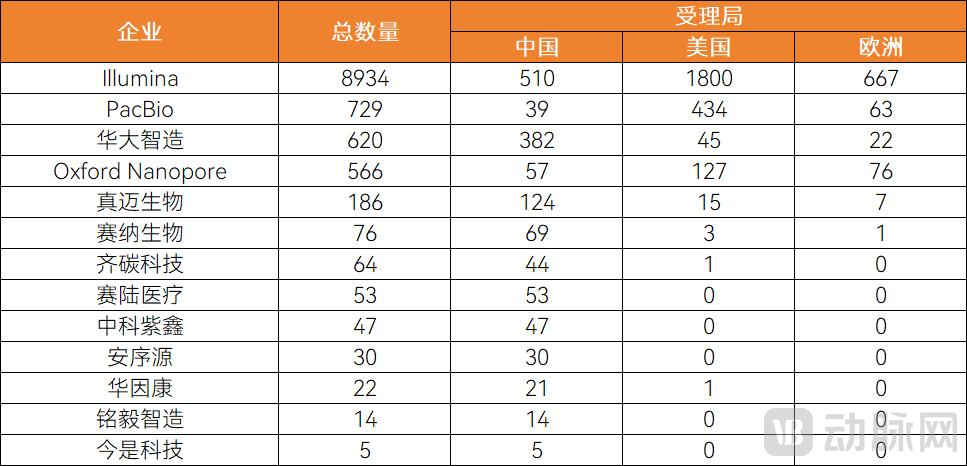
Number of Patents Granted to Select Sequencer Manufacturers
Image source: VCBeat, “Report on China’s Domestic Sequencer Industry”
MGI’s exceptional talent pool and strategic patent portfolio enabled it to lead the industry’s first wave of financing—securing $200 million in Series A funding in 2019, raising over $1 billion in Series B funding in 2020, and rapidly completing its IPO in 2022.

Image source: VCBeat, “Report on China’s Domestic Sequencer Industry”
“Research Report on the Domestic Sequencer Industry” points out that comprehensive coverage of high, medium, and low throughput is a core development trend in the sequencer industry. Low-to-medium throughput sequencers represent a favorable market entry point, while ultra-high/high-throughput sequencers determine the upper limit of a company’s capabilities and its potential for business expansion.
MGI is one of only two sequencer manufacturers worldwide that have established a comprehensive product portfolio covering high-, medium-, and low-throughput sequencing. The company currently has seven commercially available sequencers, achieving full coverage across low-, medium-, and high-throughput platforms. These instruments are suitable for small panels, small genomes, low-coverage whole-genome sequencing (WGS), transcriptomics, single-cell analysis, medium-to-large panels, and human whole-genome sequencing. Moreover, MGI’s sequencers are among the few approved for simultaneous DNA and RNA detection.
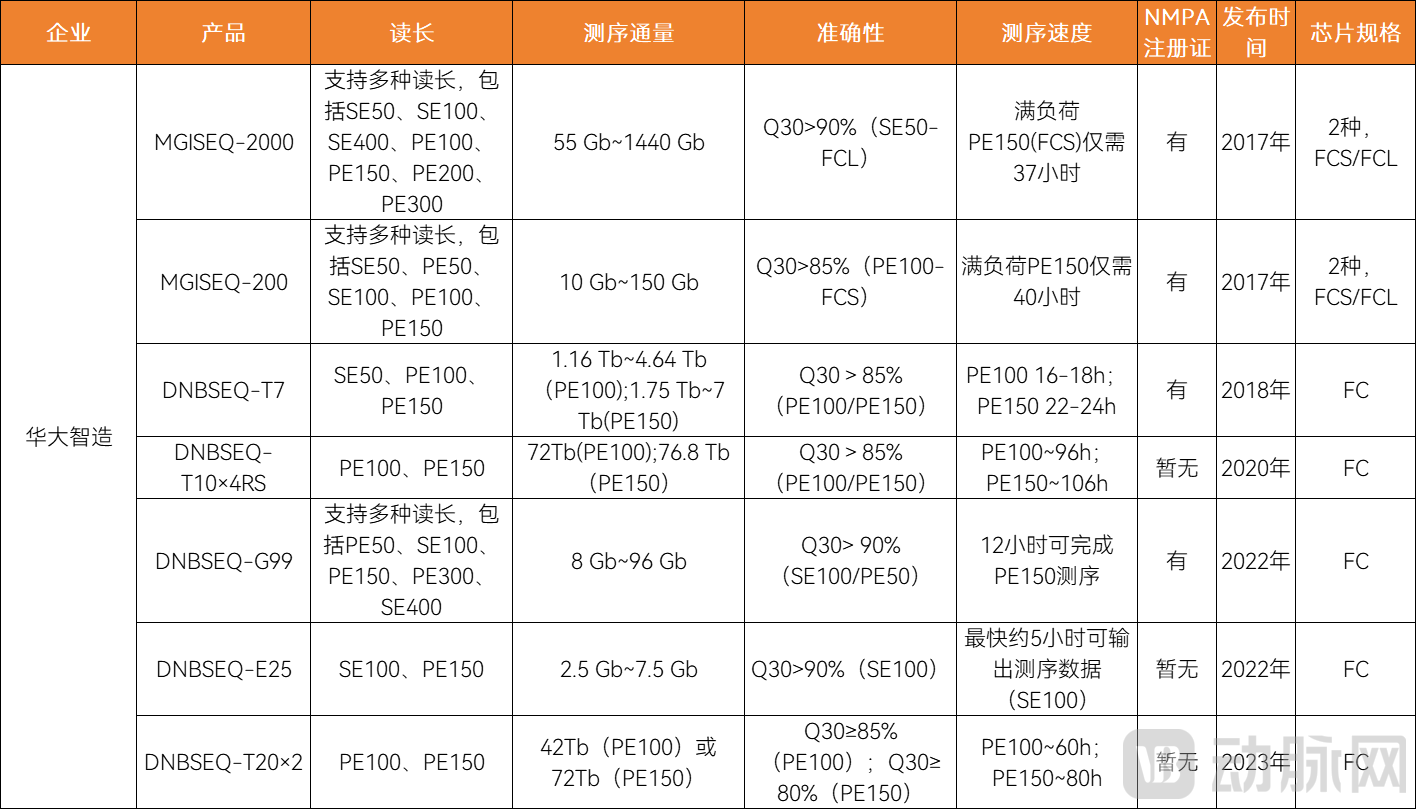
MGI's Commercialized High-Throughput Sequencers
Image source: VCBeat, “Report on the Domestic Sequencer Industry”
According to Grand View Research, in 2019, the combined market share of high-throughput sequencing technologies adopted by MGI, Illumina, and Thermo Fisher Scientific exceeded 90%. High-throughput sequencers are currently the most widely used gene sequencing technology and represent a key focus for Chinese sequencer manufacturers. As of December 31, 2023, 19 high-throughput sequencing models from 10 companies had been commercialized. In the field of high-throughput sequencers, MGI plays a strongly leading role. As of December 31, 2023, a total of 26 high-throughput sequencers had received approval from the National Medical Products Administration (NMPA); among these, three were imported products, and 15 were based on MGI’s DNBSEQ technology.
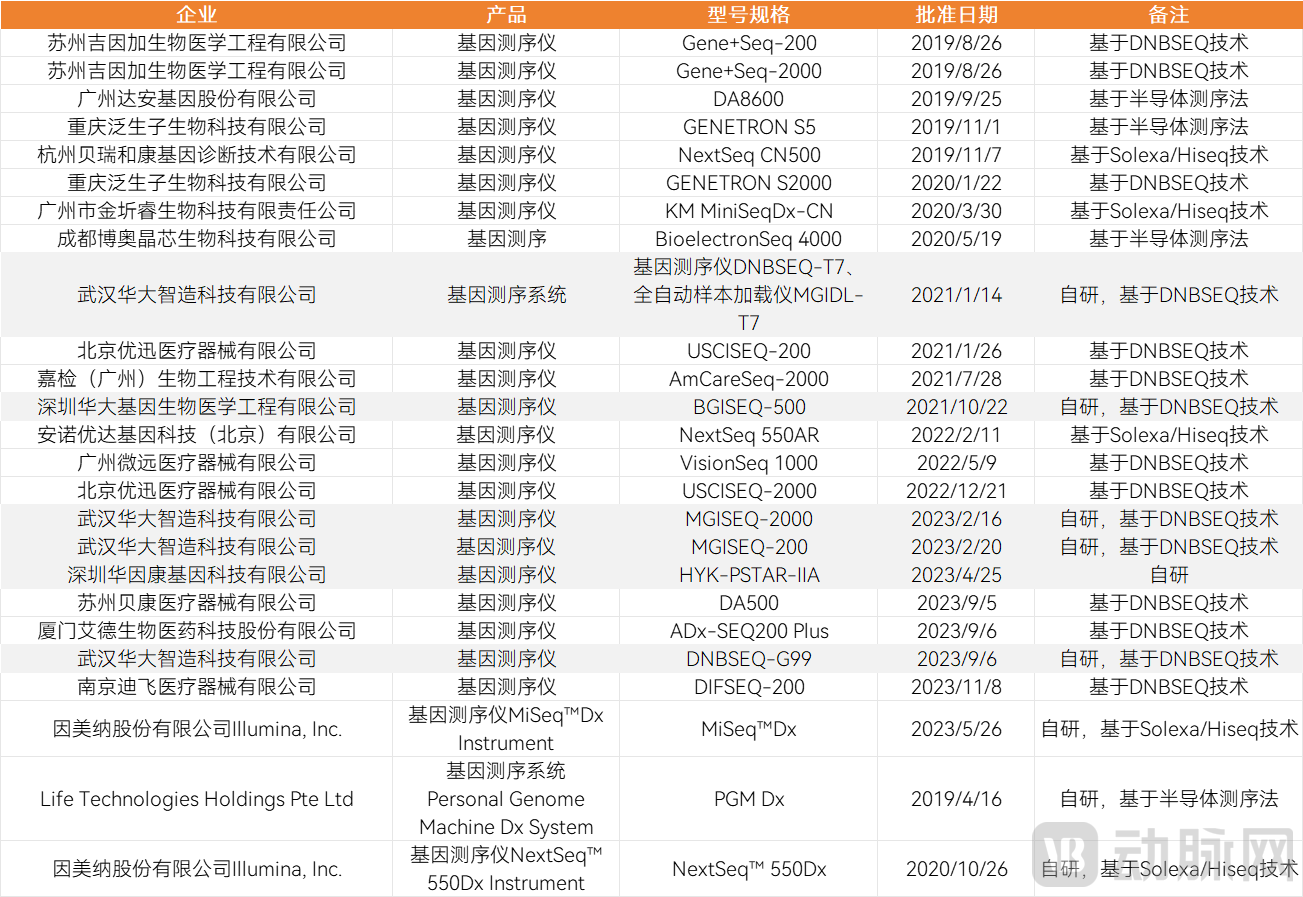
NMPA-Approved High-Throughput Sequencers
Image source: VCBeat, “Report on the Domestic Sequencer Industry”
In terms of core performance metrics, MGI has raised the ceiling for domestically produced sequencers, with each of its models demonstrating global competitiveness. The domestic high-throughput sequencing sector is evolving along two main trajectories: one represented by ultra-high-throughput sequencers such as MGI’s DNBSEQ-T20×2 and DNBSEQ-T7, and the other by low-to-mid throughput, desktop sequencers exemplified by the DNBSEQ-G99.
Ultra-high-throughput sequencers focus on large-scale population genomics research, characterized by ultra-high throughput and extremely low sequencing costs. MGI’s ultra-high-throughput sequencers have already been commercialized. The DNBSEQ-T20×2 has set global records for sequencer throughput and per-sample cost, achieving a single-run throughput of 42 Tb (PE100) or 72 Tb (PE150), which is 4.5 to 7 times that of conventional ultra-high-throughput sequencers. Capable of completing up to 50,000 human whole-genome sequencing cases annually, it reduces the per-sample cost to under $100. This marks the reduction of human whole-genome sequencing costs from over $3 billion to below $100, truly bringing the vision of “universal access to genetic technology” into reality. With the launch of the DNBSEQ-T20×2, MGI has further expanded its sequencer product portfolio, completing a comprehensive matrix covering “low-throughput, mid-throughput, high-throughput, and ultra-high-throughput” platforms.
In terms of throughput, MGI has established a comprehensive portfolio ranging from 2.5 G to 72 Tb, achieving numerous industry firsts. The DNBSEQ-T7, launched in 2018, was the sequencer with the highest single-day production capacity globally at the time and remains one of the highest-throughput standalone clinical genomic sequencers worldwide. The DNBSEQ-E25 offers exceptional portability; leveraging microfluidics technology, it eliminates the need for complex optical systems and requires no engineer-led calibration during operation, significantly lowering the barrier to entry for using sequencers.
Desktop sequencers are designed for customers with small to medium sequencing scales, making them suitable for independent laboratories or research groups. With a sequencing throughput of approximately 100–500 Gb, these instruments are characterized by low capital costs, flexible chip specifications, and low operational startup costs. The DNBSEQ-G99 is one of the fastest models among global small-to-medium throughput sequencers. It pioneers the use of triangular matrix signal sites on sequencing flow cells, enabling higher-density data output on a smaller surface area. Each flow cell delivers a throughput of 80 million reads (80M), and thanks to a highly integrated fluidic system coupled with an ultra-fast biochemical reaction system, PE150 sequencing can be completed within 12 hours. The DNBSEQ-G99 also offers exceptional speed in various application scenarios, including pathogen detection, targeted sequencing, and amplicon sequencing. Leveraging its advantages of low startup costs, rapid detection speed, and ease of operation, the DNBSEQ-G99 will drive more institutions to conduct sequencing projects in-house.
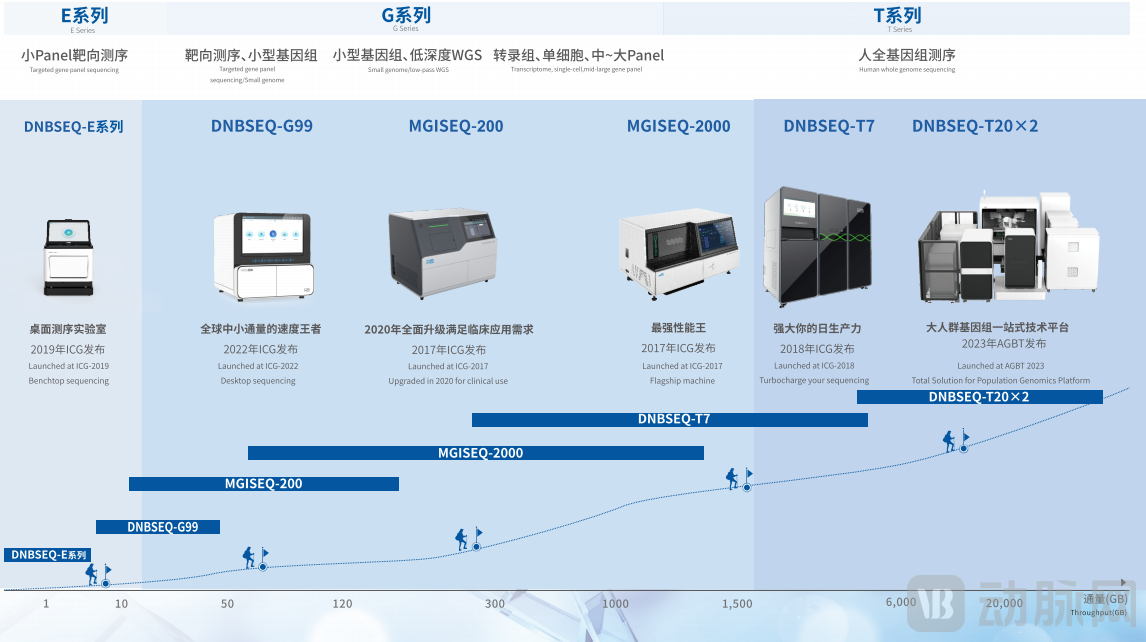
MGI Sequencing Product Line Portfolio
Image source: MGI
Reagents and consumables constitute the primary revenue source for sequencer manufacturers. The closed nature of instruments, with reagents and consumables tightly integrated with the sequencers, is a defining characteristic of the gene sequencing industry. Consequently, sales of reagents and consumables are key to sustaining profitability for sequencer companies. High-throughput sequencers consume significantly more reagents than mid- to low-throughput models, thereby generating substantially higher revenue.
From a profitability perspective, sequencers follow the typical “razor and blades” model, generating revenue through the continuous consumption of “blades” by the “razor.” Relying solely on sequencer sales makes it difficult to sustain continuous growth; instead, profitability depends more heavily on the reagents and consumables associated with the sequencers. In the first half and the first three quarters of 2023, MGI’s year-on-year growth in revenue from sequencing reagents and consumables exceeded that of its sequencing instrument revenue.
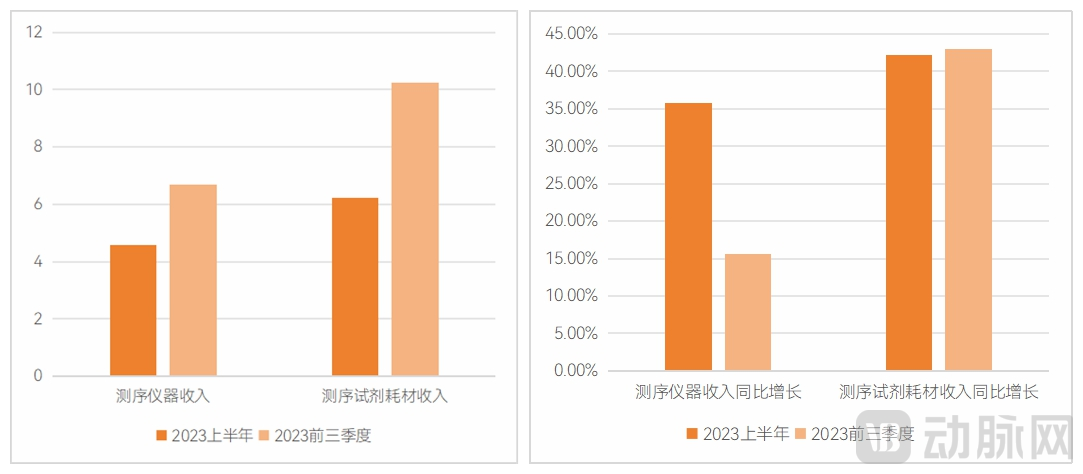
MGI Sequencing Instrument Revenue and Sequencing Reagent and Consumable Revenue
Image source: VCBeat, “Report on the Domestic Sequencer Industry”
In terms of product portfolio construction, domestic sequencer manufacturers are not confined to sequencers and their associated reagents and consumables; their business scope has expanded to include laboratory automation, single-cell sequencing, spatial omics, and other products and technologies. This continuous expansion of technological reach and business depth serves to better meet the personalized needs of research customers while also establishing differentiated competitive advantages for these enterprises.
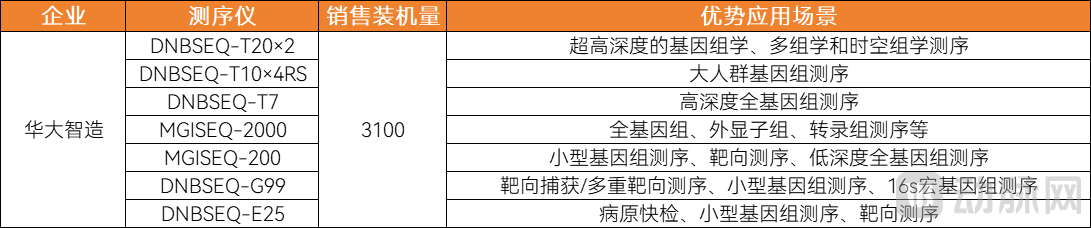
Advantageous Application Scenarios of MGI’s Domestically Produced Sequencers
Source: VCBeat’s “Report on the Domestic Sequencer Industry”
MGI believes that companies with a full-chain layout centered around life science laboratories are more competitive. A key feature is the continuous improvement of its product matrix, guided by market demand. Its newly added businesses target both upstream and downstream segments of the life sciences industry, establishing a broad application ecosystem that includes automated biobanks, single-cell solutions, mobile genetic data centers, remote ultrasound, BIT, and Smart Labs.
For instance, traditional manual sample preparation fails to meet the efficiency and precision requirements of large-scale gene sequencing; therefore, laboratory automation has become a high-frequency demand among sequencer users. To align with the automation needs of gene sequencing, MGI has established a laboratory automation business, providing key supporting tools for the sequencing workflow, including automated platforms, sample pre-treatment reagents, and magnetic bead raw materials.
Currently, Chinese-made high-throughput sequencers are expanding into overseas markets at a relatively rapid pace and have achieved initial success. This has also impacted sequencer manufacturers globally. In the first half of 2023, Illumina’s total revenue was $2.263 billion, representing a year-on-year decline of approximately 5%. Revenue from China fell by 16% year on year, the Asia-Pacific region by 19%, and the Americas by 2.4%.
In 2022, MGI and Illumina reached a settlement on all pending litigation in the United States, with Illumina paying net compensation of $325 million to MGI’s subsidiary, Complete Genomics.
Leveraging robust foundational technologies, MGI is breaking down global patent barriers for sequencers, having secured 45 authorized patents in the United States and 22 in Europe. In the first half of 2023, the company’s sequencer revenue grew across all overseas regions. Notably, following breakthroughs in patent litigation disputes in Europe and the United States, MGI achieved substantial revenue growth for its sequencers in the Europe, Middle East, and Africa (EMEA) region and the Americas.
MGI, the pioneer, has divided the global market into four segments. In the Asia-Pacific region, MGI has participated in genomics projects in multiple countries, including the United Arab Emirates, Singapore, Thailand, and Indonesia. The Europe and Africa region boasts a mature scientist training system, serves as a frontier for innovation in genomics research, and exhibits strong demand for scientific research; therefore, MGI is strategically focusing on the scientific research market in this region. Although competition is fierce in the Americas, the market potential is the largest, and the company is making concerted efforts to build a localized sales team.
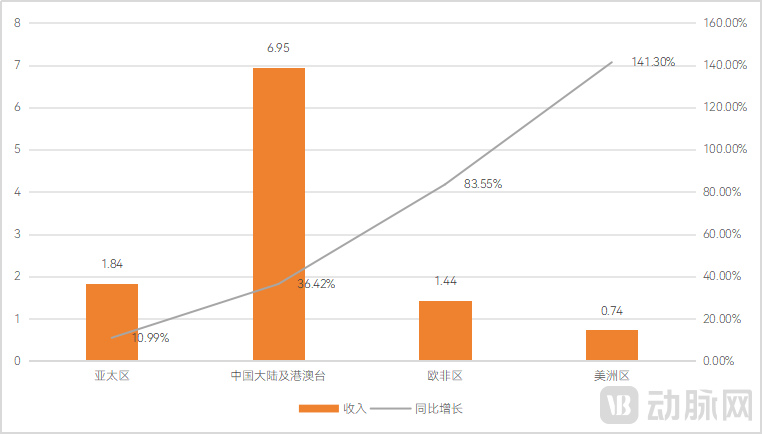
Revenue Breakdown of MGI's Sequencer Business Segment by Region (Unit: RMB 100 Million)
Image source: VCBeat, “Report on China’s Domestic Sequencer Industry”
As of December 31, 2023, adhering to its core mission of becoming a creator of essential tools for life sciences, MGI has established a business presence in over 100 countries and regions, serving a cumulative total of more than 2,600 users worldwide. The company has set up R&D, manufacturing, training, and after-sales service centers in numerous countries and regions around the globe. MGI is one of only two companies worldwide, and the sole company in China, capable of independently developing and mass-producing clinical-grade gene sequencers with throughput ranging from gigabase (Gb) to terabase (Tb) levels across low, medium, and high throughput categories.
Please scan the QR code to add the assistant and obtain the full report. If you have already added the assistant, please initiate your inquiry proactively.