

Yunzhun Pharma Achieves 50% Annual Growth for Three Consecutive Years by Pioneering Integrated Single-Cell and Spatial Multi-Omics Solutions
In the field of biology, spatial information is crucial, as space influences cellular phenotype, state, and function.For example, the position of a cell relative to surrounding cells within the human body determines the signals it receives. These signals may arise from cell–cell interactions, soluble messenger molecules, or therapeutic agents. Disruption of intercellular interactions in the human body can lead to disease. Therefore, when investigating the biological mechanisms underlying human development and disease, researchers must carefully assess how a cell’s microenvironment influences its normal function or dysfunction.
With continuous technological iterations and ongoing scientific exploration, spatial omics—a novel technology capable of providing information on the spatial relationships between tissues and cells—has experienced explosive growth. Spatial omics enables the correlation of molecular mechanisms with their in situ tissue contexts, allowing for the observation of cellular composition and native gene expression across different tissue regions. By revealing the spatial heterogeneity of omics data, it helps elucidate cell–cell interactions, thereby enabling researchers to gain deeper insights into the tissue microenvironment and tissue growth.
Since 2020, Yunzhun Pharmaceutical Technology Co., Ltd. (hereinafter referred to as “Yunzhun Pharma”) has been providing scientific research services, specializing in single-cell multi-omics, spatial multi-omics, quantitative tissue pathology, and tumor microenvironment analysis. The company has established experimental bases and professional technical service teams in Shanghai and Guangzhou.
Extending from single-cell multi-omics to spatial multi-omics, Yunzhun Pharma has become the Chinese experimental base for 10x Genomics and Akoya, and last August, it obtained the title of the only SomaLogic globally certified laboratory in China. How can cutting-edge international technologies empower scientific research in China? How can a “premium” scientific research service platform be built? VCBeat interviewed Xue Haihua, CEO of Yunzhun Pharma.

Xue Haihua, CEO of Yunzhun Pharmaceutical
After graduating from the Department of Genetics and Genetic Engineering at Fudan University, Xue Haihua successively joined well-known multinational corporations such as Leica, Olympus, and Danaher. In 2016, Xue Haihua joined Shanghai Renke Biotechnology Co., Ltd. (the parent company of Yunzhun Pharmaceutical) as General Manager, and in 2020, he assumed the role of CEO at Yunzhun Pharmaceutical.
“As single-cell technologies become increasingly widespread, intense competition in China’s scientific research services sector has long been underway, enabling users to easily find service providers that fit their budgets. Yunzhun Pharmaceutical aims to deliver high-quality services and result presentation, positioning itself on a premium, boutique service path,” said Xue Haihua.
Leveraging its parent company, Renke Biotechnology’s, deep strategic agency partnership with 10x Genomics, Yunzhun Pharmaceutical established a research service platform and experimental team based on 10x Genomics technologies in 2020, offering single-cell transcriptomics and spatial transcriptomics services. At that time, spatial omics was just emerging in China’s scientific research community. Due to its ability to provide profound insights into key biological questions—such as complex cellular interactions, signaling pathways, and regulatory mechanisms within organisms—spatial omics has rapidly been regarded as the next major frontier in the life sciences sector over the past two years.
Yunzhun Pharmaceutical has seized this emerging opportunity.
Xue Haihua stated, “Yunzhun’s top priority in selecting service products is to partner with suppliers that are technologically advanced and industry leaders. Meanwhile, we also target research solutions that align with long-term scientific trends and offer pioneering, era-defining capabilities.” Following the introduction of 10x Genomics, Yunzhun Pharmaceutical further incorporated the Akoya spatial proteomics platform and the SomaLogic high-throughput proteomics platform, gradually establishing a comprehensive technology platform matrix for single-cell and spatial multi-omics.
The second step in delivering premium solutions lies in establishing a highly professional in-house service team. Xue Haihua introduced that Yunzhun Pharmaceutical’s technical support and laboratory services teams have received direct training and learning from the technical teams of 10x Genomics, Akoya, and other companies. After three years of practical experience, the team has accumulated extensive expertise in technical support and sample processing, and has developed proprietary, highly stable sample processing methods based on the existing platform.
In the field of single-cell multi-omics, the Yunzhun Medical team has processed over 1,000 tissue samples; in spatial transcriptomics testing, the team has analyzed more than 2,000 samples, accumulating extensive experience in single-cell data analysis and integrated analysis of spatial transcriptomics with single-cell data. Meanwhile, Yunzhun Pharmaceutical has established a multi-layered quality control system encompassing experimental quality inspection, data quality control, and report review, ensuring the delivery of data reports under strict standards.
In addition, Yunzhun Pharmaceutical is continuously expanding its infrastructure. In 2021, the company established an independent laboratory and training base spanning over 500 m² in Shanghai, marking its initial entry into the scientific research market in East China. In 2022, Yunzhun Pharmaceutical expanded beyond East China by setting up an independent laboratory in Guangzhou, thereby providing solutions to scientific research users across China.
To achieve 50% annual business growth, technology and a strong team alone are insufficient; more importantly, it is essential to strategically position oneself with future-oriented proteomics and integrated analysis solutions.
“In fact, it is precisely the customer base, comprehensive solutions, and team experience accumulated in recent years that have enabled Yunzhun to continuously attract new cutting-edge technology platforms,” mentioned Xue Haihua. Following its entry into the transcriptomics field, Yunzhun Pharmaceutical is gradually expanding its presence in proteomics. In August 2023, it obtained SomaLogic global certification—a distinction held by only eight laboratories worldwide, three of which are in Asia, making Yunzhun the sole certified laboratory in China.
Proteomic information is crucial for elucidating the complex, interconnected molecular signaling networks that directly regulate major cellular processes such as proliferation, differentiation, aging, and apoptosis. Although sequencing technologies are highly mature, mRNA transcript abundance provides only an indirect measure of cellular state and cannot reliably predict differences in protein abundance. These data fail to reveal changes in post-translational modifications (PTMs), including phosphorylation and protein degradation, thereby limiting a comprehensive understanding of disease mechanisms.
Therefore, the development of proteomics detection technologies is crucial for uncovering the molecular mechanisms underlying diseases to identify new therapeutic targets, as well as for discovering novel biomarkers for diagnosis and prognosis. SomaLogic has employed a variety of approaches to select new protein targets and to map protein coverage across biological processes and various disease areas.
As a global leader in proteomics, SomaLogic currently offers a robust proteomics solution (11K) capable of measuring 11,000 proteins from a 55-microliter sample. These proteins cover half of the human genome-encoded proteome (approximately 20,000 proteins), enabling researchers to decipher human biology by constructing extensive interaction networks.
“The Somalogic platform only entered the Chinese market in 2023. Any technology follows a natural progression from awareness and familiarity to understanding and application. My view is that Yunzhun Pharmaceutical can play a facilitating role in promoting awareness and adoption of such cutting-edge global technologies.”Xue Haihua emphasized, “After a decade of promotion, the concept of multi-omics has been widely accepted. The current challenge is that researchers not only require analytical frameworks within the multi-omics paradigm but also need research support and integrated analysis in more cutting-edge omics fields.”
As one of the few research service companies in China to have established both transcriptomics and proteomics technologies, Yunzhun Pharmaceutical can provide customers with joint experimental analyses based on different platforms, achieving multiple cross-validations. In short, Yunzhun Pharmaceutical can perform multiple validations on the same sample, meeting the holistic needs of multi-omics and full-process workflows through a one-stop solution.
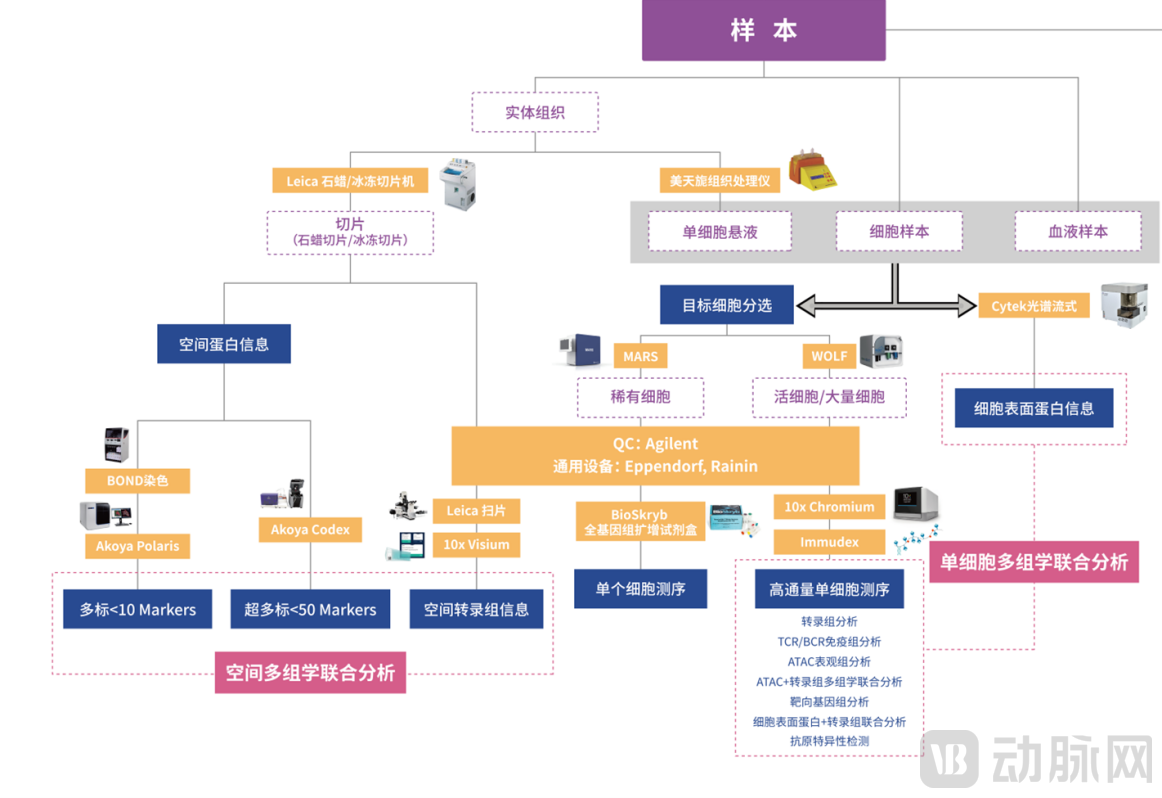
Single-Cell and Spatial Multi-Omics Solutions (Image source: Yunzhun Pharmaceutical)
Taking the tumor immune microenvironment as an example, the combined application of spatial transcriptomics and spatial proteomics enables the observation of spatial information within tissue samples regarding the immune microenvironment, such as cell localization and intercellular interaction networks, differences in cellular composition across distinct regions, and the correlation between tumor-immune cell interaction networks and tumor progression.
Looking at the domestic landscape, 2023 may well mark the year when proteomics in China began to take off. In May, the International Big Science Program for Human Proteome Navigation (π-HuB Program), initiated and led by Academician He Fuchu and Chinese scientists with a global scope, released its white paper and established its international headquarters—the Guangdong Institute of Smart Medicine International—in Guangzhou. In July, the newly revised Implementation Rules for the Regulation on the Management of Human Genetic Resources came into effect in China. As proteomic data are not included within the definition of human genetic resource information, this change has broadened the scope for collaboration between China’s proteomics community and the global scientific community.
New target discovery, development of companion diagnostic markers, development of novel clinical diagnostic markers, and R&D of covalent drugs for “undruggable” targets... The possibilities of proteomics are emerging, and Yunzhun Pharmaceutical represents the foremost service provider in this industrial chain.