

Moonwalk Biosciences, Co-Founded by CRISPR Pioneer Feng Zhang, Files for IPO Amid Advances in Epigenetic Therapeutics

Moonwalk Biosciences
Precision Epigenetic Drug Developer
When asked by a reporter from Biopharma Dive about the reasons for founding Moonwalk, Alex Aravanis fell into reminiscence.
As a former executive at Illumina and Grail, Aravanis has spent decades researching in the field of human genomics. As early as the early 1980s, while pursuing his postdoctoral studies at Stanford University, he met Feng Zhang, who was then a graduate student at the same institution.
Subsequently, as their respective careers took off, the two parted ways. In 2013, Aravanis rose to prominence at the DNA sequencing giant Illumina, where he led research and developed the first distributed comprehensive genomic analysis of liquid biopsies and tumor tissues, the first exome-wide targeted RNA analysis of tumor tissues, massively parallel single-cell sequencing, and other sequencing platform technologies. Three years later, he founded Grail, its cancer detection spin-off. Meanwhile, Zhang Feng joined the Massachusetts Institute of Technology in 2011, conducting research at the Department of Brain and Cognitive Sciences within the McGovern Institute for Brain Research and at the Broad Institute. He has not only become a pioneer in the field of gene editing but also founded multiple pharmaceutical start-ups.
Nearly two decades later, the two scientists reunited to co-found a new biotechnology company named Moonwalk Biosciences (hereinafter referred to as “Moonwalk”).
Moonwalk Biosciences secured $57 million in seed and Series A financing upon its launch. The round was led by Alpha Wave Ventures, with participation from ARCH Venture Partners, Future Ventures, GV, Khosla Ventures, and YK Bioventures. The proceeds will support the continued development of Moonwalk’s epigenetic analysis and engineering technology platform, as well as advance its epigenetic therapy pipeline toward clinical trials.
Aravanis stated, “This capital injection will provide Moonwalk with approximately three years of cash flow, as the company strives to advance its drug candidates into the clinical stage during its Series B financing round.”
In addition to Aravanis and Zhang Feng, the co-founders of Moonwalk also include Dr. Arash Jamshidi and Dr. Justin Valley.
Arash Jamshidi holds a Bachelor of Science degree in Electrical Engineering from Simon Fraser University, as well as Master’s and Ph.D. degrees in Electrical Engineering and Computer Science from the University of California, Berkeley. He currently serves as Chief Technology Officer at Moonwalk Biosciences. He has received the Severin-Rosenberg Fund Innovation Award from the University of California, Berkeley, and was named to the Silicon Valley Business Journal’s “40 Under 40” class of 2021. Prior to joining Moonwalk Biosciences, Arash was Senior Vice President of Data Science and a scientific co-founder at Grail.
Justin Valley earned his Ph.D. and master’s degrees in Electrical Engineering and Computer Science from the University of California, Berkeley. Prior to co-founding Moonwalk Biosciences, Justin served as Vice President of Applications and Consumables at Berkeley Lights (now part of Bruker Corporation). Over an eight-year period, Justin helped establish much of the foundational technology for Berkeley Lights’ optofluidic systems, which are widely recognized as industry-leading high-throughput platforms for studying complex, single-cell, live biology.
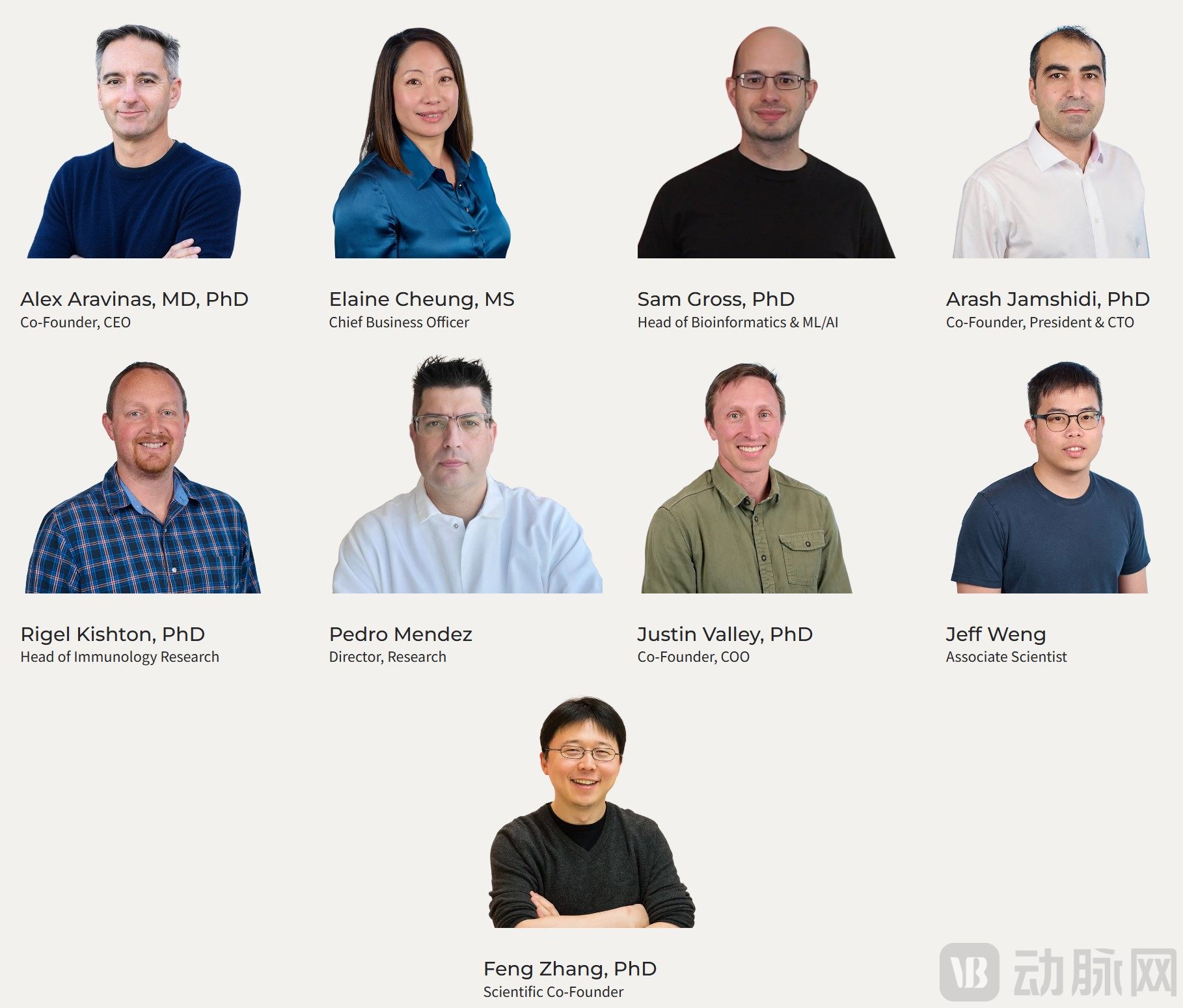
Moonwalk Team (Image source: Moonwalk official website)
According to its official website, Moonwalk is the first company to combine an epigenetic discovery platform with precision engineering.. Its proprietary technology has two key components: methylation profiles and epigenome reprogramming.
Methylation Profile
Traditional gene editing typically involves cutting, nicking, or removing DNA fragments, whereas epigenetics regulates the “on” or “off” states of genes without altering the DNA itself. Moonwalk aims to modify disease-associated gene expression by modulating methylation patterns that determine cellular states.
In an interview with FirstWord, Aravani stated that methylation acts like a switch, determining which genes are expressed and which are not.
Although the theory that “epigenetics can yield therapies to modify disease” has existed for years, practical drug development in this field has been constrained by a lack of comprehensive understanding of the 28 million methylation sites in the genome that regulate gene expression. Just as the Human Genome Project launched in 1988 helped usher in the genetics revolution, a methylome sequencing study co-authored by Aravani and published in Nature last January is critical to discovering the “epigenomic recipe” that determines cell types.
Reprogramming the Epigenome
Moonwalk Biosciences is leveraging gene-editing technology designed by Feng Zhang to modify methylation states in the genome.. The company’s primary mission is to identify epigenetic differences between healthy and diseased cells, and to leverage this knowledge to develop compounds capable of resetting the methylation state of diseased cells to that of healthy cells. This process is referred to by the company as “read-write.”
In terms of “reading,” Moonwalk is deploying artificial intelligence and machine learning technologies to predict which of the 28 million methylation sites contribute to cellular health, which are prone to triggering disease, and which represent optimal therapeutic targets.
In terms of “writing,” Moonwalk plans to “write” a compound that combines a validated targeting mechanism—whether it be a Cas protein with guide RNA, a TALE protein, or a zinc finger protein—with an enzyme, thereby enabling methylation, demethylation, or histone modification at the target site to turn genes on or off as needed.
Aravani stated that this approach offers two potential advantages over currently used gene-editing technologies. First, because it does not involve DNA cleavage, the risk of genotoxicity is lower, resulting in a higher safety profile. Second, while these editing methods are adept at knocking out genes, activating genes is considerably more challenging. Modulating methylation is particularly well-suited for inducing gene expression.
Currently, Moonwalk Biosciences, Inc. has not yet disclosed specific details of its therapeutic product pipeline.
Indeed, Moonwalk Biosciences is not the only company that has recognized the potential of the epigenome, nor is it the only one focused on the development and commercialization of therapeutic drugs.
Foreign companies active in this space also include Chroma Medicine, Tune Therapeutics, and Epic-Bio. All three have made significant bets on epigenome-editing therapies. In March last year, Chroma completed a $135 million Series B financing round, planning to use the funds to further develop its epigenetic platform for modulating gene expression. Tune, founded in 2021, announced late last year that it is leveraging its proprietary epigenome-editing technology to develop treatments for chronic hepatitis B virus infection, with clinical application of TUNE-401 expected by the end of this year. Epic-Bio completed a $55 million Series A financing round in July 2022. Its lead development candidate, EPIC-321, has entered the clinical stage.
In China, there are few pharmaceutical companies focused on new drug development in the field of epigenetics. The major players include Sailan Pharma, EpiVance Therapeutics, CStone Pharmaceuticals, Chia Tai Tianqing Pharmaceutical Group, Sanhome Pharmaceutical, Hutchison MediPharma, Hengrui Medicine, Haihe Biopharma, and Sinocelltech. Among them, Sailan Pharma completed its Series A+ financing round of nearly RMB 100 million last December. The company’s two self-developed innovative drugs, CTS2190 and CTS2016, have both smoothly entered Phase I clinical trials, with the first subject enrolled in the first half of 2023. EpiVance Therapeutics is currently the first and only biotechnology company in China dedicated to developing next-generation gene therapies by leveraging endogenous epigenetic gene regulatory mechanisms in the human body. Its pipeline products primarily target chronic diseases.
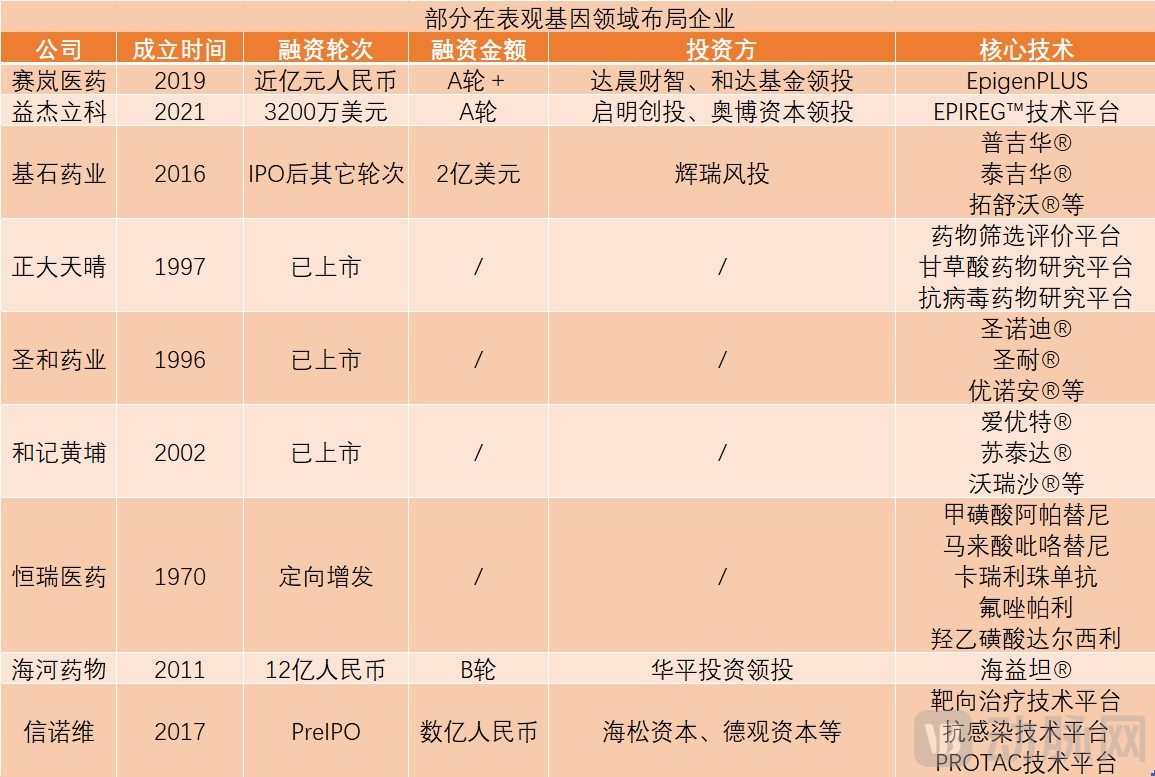
(Incomplete statistics; compiled by VCBeat)
It will be worth watching where companies developing therapies based on epigenome editing technologies choose to focus in the coming years. For Aravani, epigenetic editing technology holds broad application prospects in areas such as cancer, neurodegenerative diseases, and metabolic disorders. If all goes according to plan,He hopes that Moonwalk Biosciences will be able to submit a New Drug Application (NDA) for its first therapeutic drug within two to three years.