

ArriVent Biopharma, Backed by Hillhouse and Lilly, Goes Public on Nasdaq with China-Originated Oncology Asset Furmonertinib

ArriVent
Biopharmaceutical Product Developer
The bell marking CG Oncology’s listing had barely faded when biotech company ArriVent Biopharma (“ArriVent”) followed in CG’s footsteps, debuting on the Nasdaq on January 26.
Filings submitted by ArriVent to the U.S. Securities and Exchange Commission indicate that the IPO will involve the issuance of approximately 8.3 million shares at a price of $18 per share, valuing the company at $550 million. According to the latest updates, ArriVent raised approximately $175 million in its initial public offering, exceeding previous expectations.
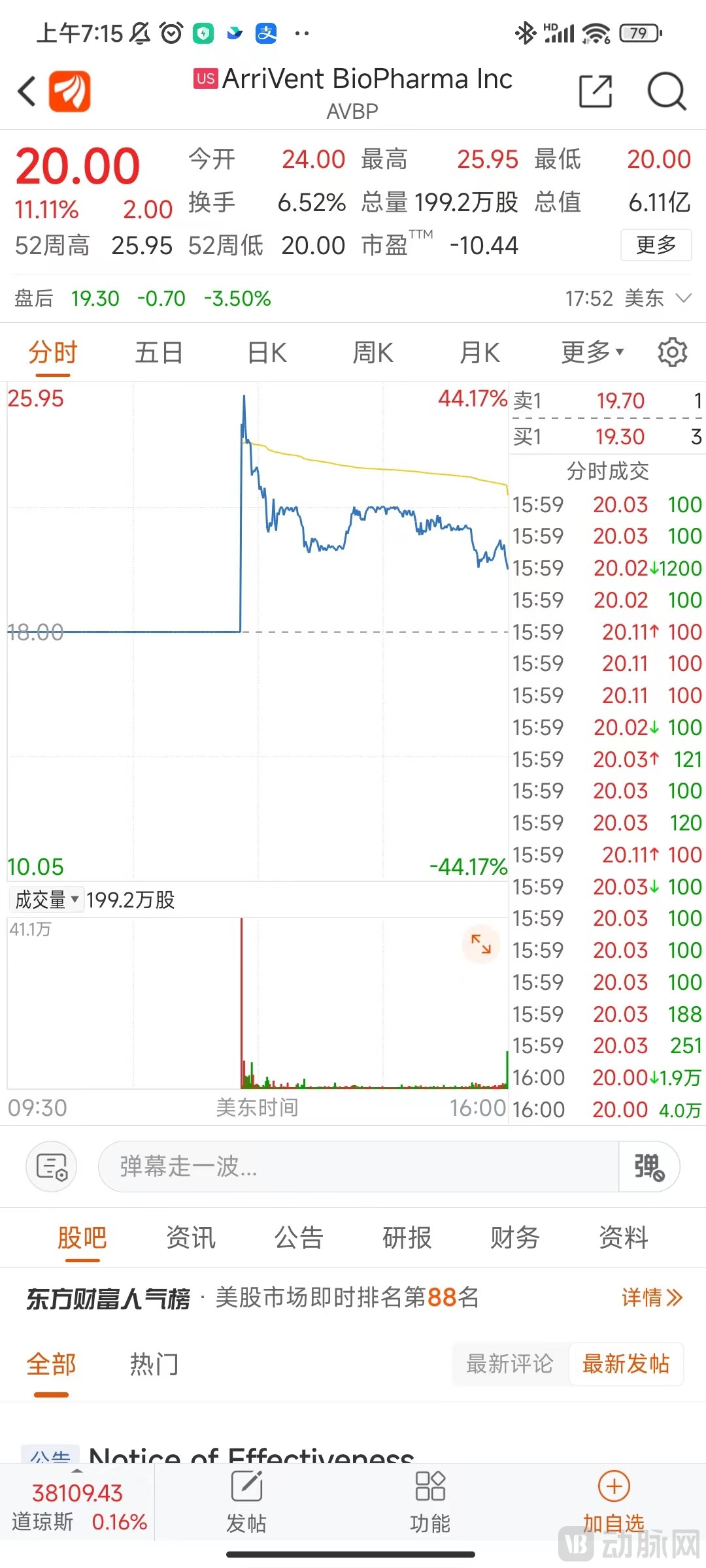
ArriVent's Stock Price Chart on the First Day of Listing
On its first day of trading, ArriVent opened at $24 per share and rose as high as $25.95 during the session before closing at $20.
The market appears to be recovering, and the driving force behind ArriVent’s IPO is an innovative drug from China.
In early 2024, multiple healthcare companies have announced their initial public offering (IPO) plans, with a diverse distribution across various sectors.
On January 2, biotechnology company CG Oncology’s application for an initial public offering (IPO) on the Nasdaq was accepted, and it successfully listed on the 25th, becoming the first biotech IPO of the year. Founded in 2010, CG Oncology’s core and sole pipeline asset, CG0070, is an intravesical oncolytic virus therapy currently in Phase 3 clinical trials for the treatment of Bacillus Calmette-Guérin (BCG)-unresponsive non-muscle-invasive bladder cancer (NMIBC). The data disclosed for this product have been impressive, and it has been granted both Fast Track designation and Breakthrough Therapy designation by the U.S. Food and Drug Administration (FDA). Lepu Biopharma in China has also licensed this product.
Since then, other companies have followed suit, including BrightSpring Health Services, which listed alongside ArriVent on January 26; Haoxi Digital Technology, a firm specializing in healthcare marketing; FibroBiologics, a biotech company that went public on the 31st and develops fibroblast-based therapies for chronic diseases; and BioLingus, an award-winning biotechnology firm from Switzerland. Within less than a month of the new year, multiple healthcare companies have successively debuted on the secondary market.
Not only have there been successful IPOs, but multiple companies have also filed for listings.
including Moderna’s partner, the U.S. gene-editing technology service provider Metagenomi Technologies, which filed on January 5; Zhengye Biology, an animal vaccine manufacturer from Jilin, which filed on January 9; Alto Neuroscience, a psychiatric drug development company, which filed on January 12; and Kyverna Therapeutics, a California-based company focused on developing CAR-T therapies for autoimmune diseases, which filed on January 16.
Whether it was the fervent trading activity during the JPMorgan Healthcare Conference, or the consecutive listings of several healthcare companies and multiple IPO filings within a short period, all signs point to a potential recovery in the healthcare industry in 2024—one grounded in rationality and value realization.
For the market, innovative pharmaceutical companies with products entering mid-to-late stage clinical trials and relatively bright commercialization prospects are more likely to gain favor.
According to BioPharma Dive, only five of the 79 companies that went public in 2020 had drugs in Phase 3 clinical trials at the time of their IPOs. Among the 19 companies that conducted initial public offerings in 2023, six had such products. In 2024, within just the first month, two newly listed companies, CG Oncology and ArriVent, already had pipelines in Phase 3. Meanwhile, the core pipelines of two other filing companies, Alto and Kyverna, had reached Phase 2.
While companies going public in previous years were known primarily for their emerging technologies, the market now places greater emphasis on whether IPO candidates can successfully commercialize their technologies.
As one of the first biotech companies to announce its initial public offering (IPO) plans in the new year, ArriVent carries the market’s expectations for high-quality innovative pharmaceutical enterprises, and it is the founders behind the company who have made ArriVent what it is today.
Prior to ArriVent, its founder, Dr. Zhengbin Yao, served as CEO and Chairman of Viela Bio, an innovative biopharmaceutical company focused on autoimmune diseases.
In February 2018, AstraZeneca spun off six early-stage inflammation and autoimmune projects from its global biologics R&D division, MedImmune, to establish Viela Bio. Dedicated to the development of autoimmune disease therapies, Viela Bio naturally appointed Zhengbin Yao, former Senior Vice President at MedImmune who oversaw the Respiratory, Inflammation, and Autoimmunity Innovative Medicines unit, as its CEO.
Subsequently, Viela went public in 2019 at $19 per share. Two years later, Horizon Therapeutics acquired Viela for $53 per share, in a deal valued at approximately $3.1 billion. During the few short years that Zhengbin Yao led Viela, the company secured around $283 million in investments from prominent venture capital firms, including Boyu Capital, Tonghe Yucheng, and Hillhouse Capital.
It is worth noting that the names of these investment institutions also appear on ArriVent’s list of investors.
In 2021, Yao Zhengbin co-founded ArriVent with his team, and over the following two years, ArriVent completed multiple rounds of financing totaling $305 million.
In June 2021, ArriVent completed a $150 million Series A financing round, with investors including Hillhouse Capital, Lilly Asia Ventures, and OrbiMed. In March 2023, ArriVent closed a $155 million Series B financing round. The proceeds from this round will be primarily used to support pivotal Phase 3 clinical trials and indication expansion for the company’s core product, furmonertinib, as well as to expand its product pipeline.
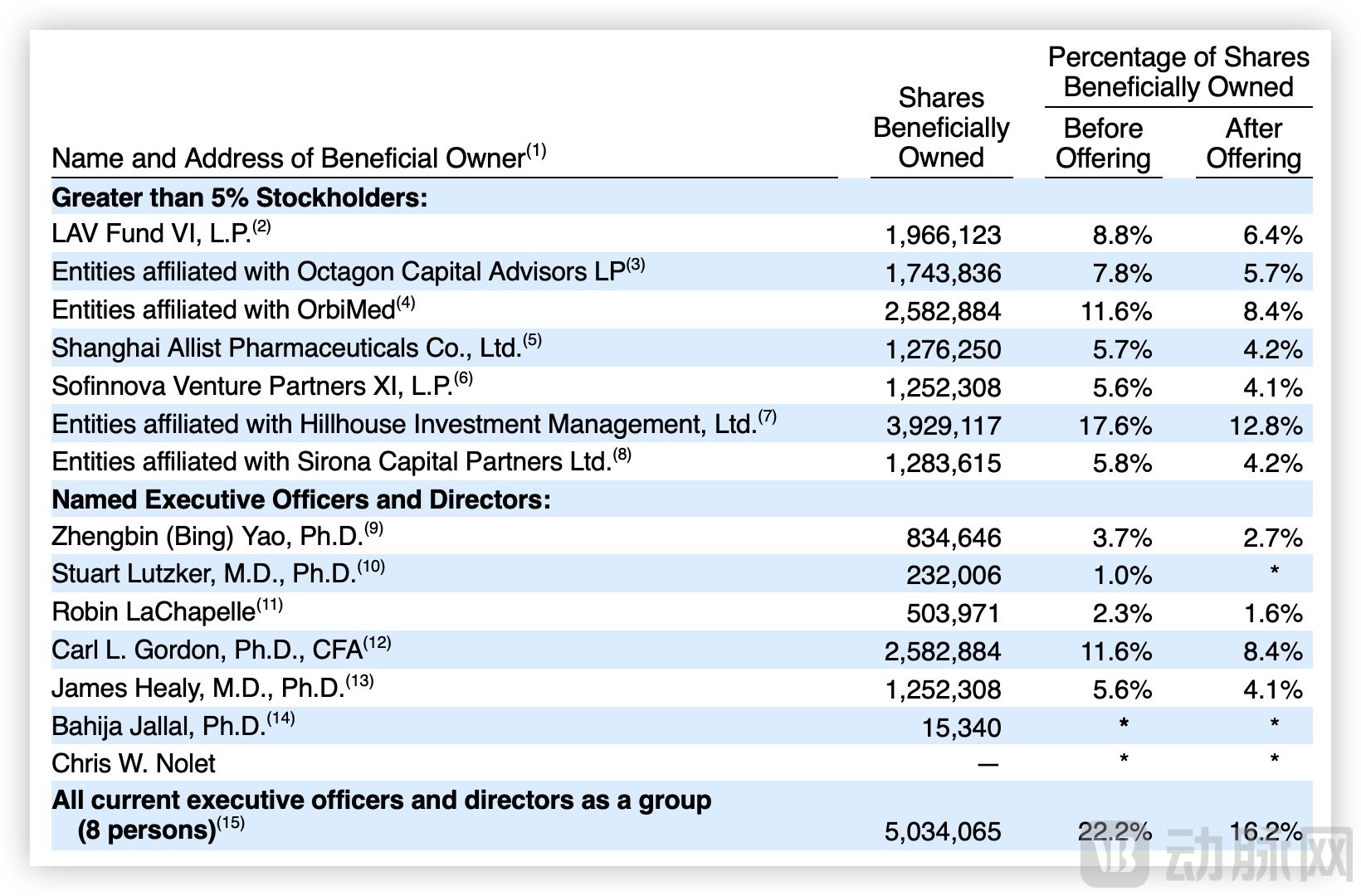
Major Shareholders of ArriVent, Source: Prospectus
According to ArriVent’s prospectus, Hillhouse Capital holds a 17.6% stake in ArriVent, making it the leading institutional investor; OrbiMed, Lilly Asia Ventures, Catalio Capital Management, Sirona Capital Partners, Allist Pharmaceuticals, and Sofinova Investments hold stakes of 11.6%, 8.8%, 7.8%, 5.8%, 5.7%, and 5.6%, respectively.
Among these, the most noteworthy is Allist’s 5.7% equity stake. Allist did not appear on the investor lists in the previous two financing rounds; its presence here is primarily attributable to furmonertinib.
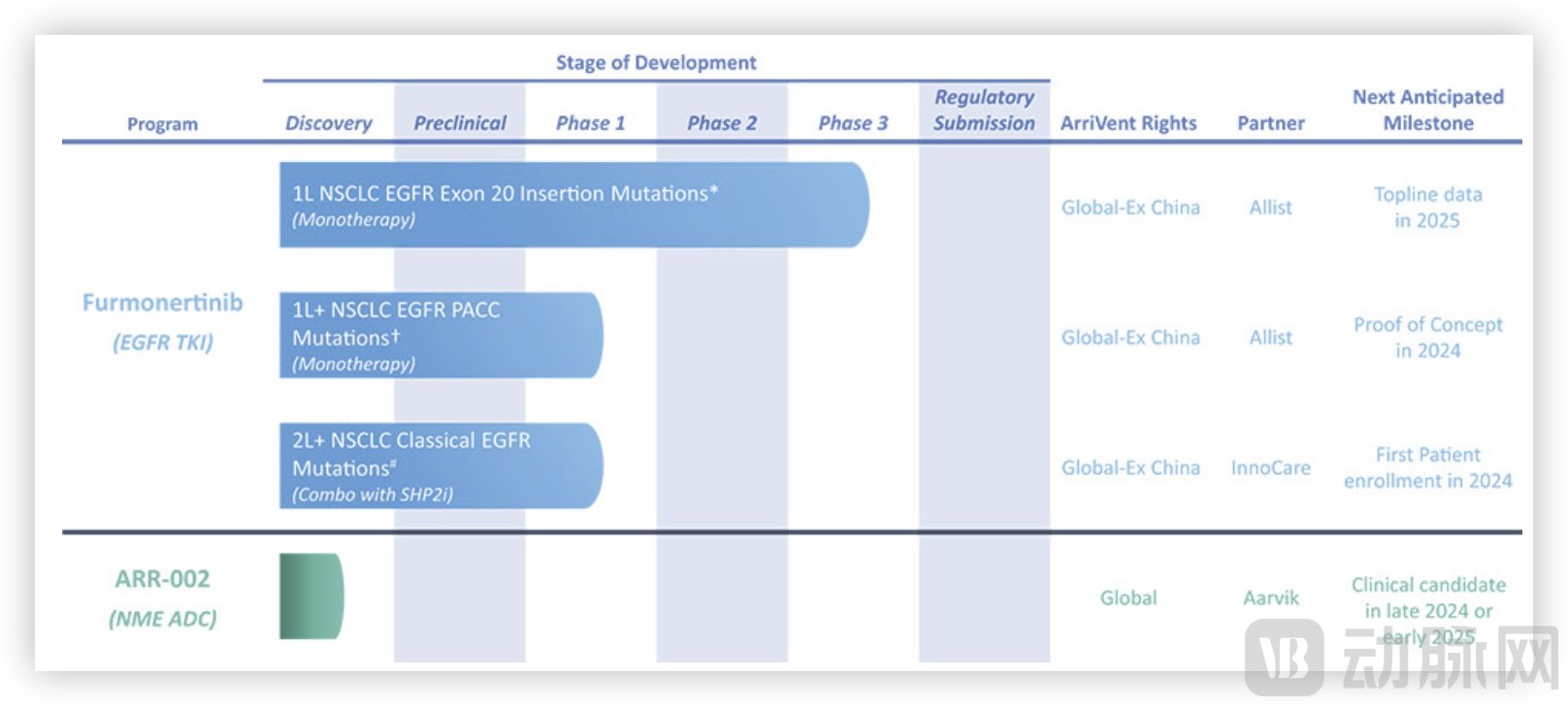
ArriVent’s Pipeline Under Development, Source: Prospectus
ArriVent currently has two pipelines: one is furmonertinib, and the other is an antibody-drug conjugate (ADC) pipeline co-developed with Aarvik Therapeutics. Furmonertinib is considered ArriVent’s core asset and is being developed for the treatment of non-small cell lung cancer (NSCLC). This asset originates from the Chinese innovative pharmaceutical company Allist.
Furmonertinib not only propelled ArriVent into the secondary market, but as early as 2020, Shanghai Allist Pharmaceuticals successfully listed on the STAR Market by virtue of this drug.
As can be seen from the prospectus submitted by Allist at that time, furmonertinib was the only product in Allist’s R&D pipeline that had reached the stage of filing for marketing approval. It is precisely for this reason that furmonertinib was regarded as a critical guarantee for Allist’s successful initial public offering.
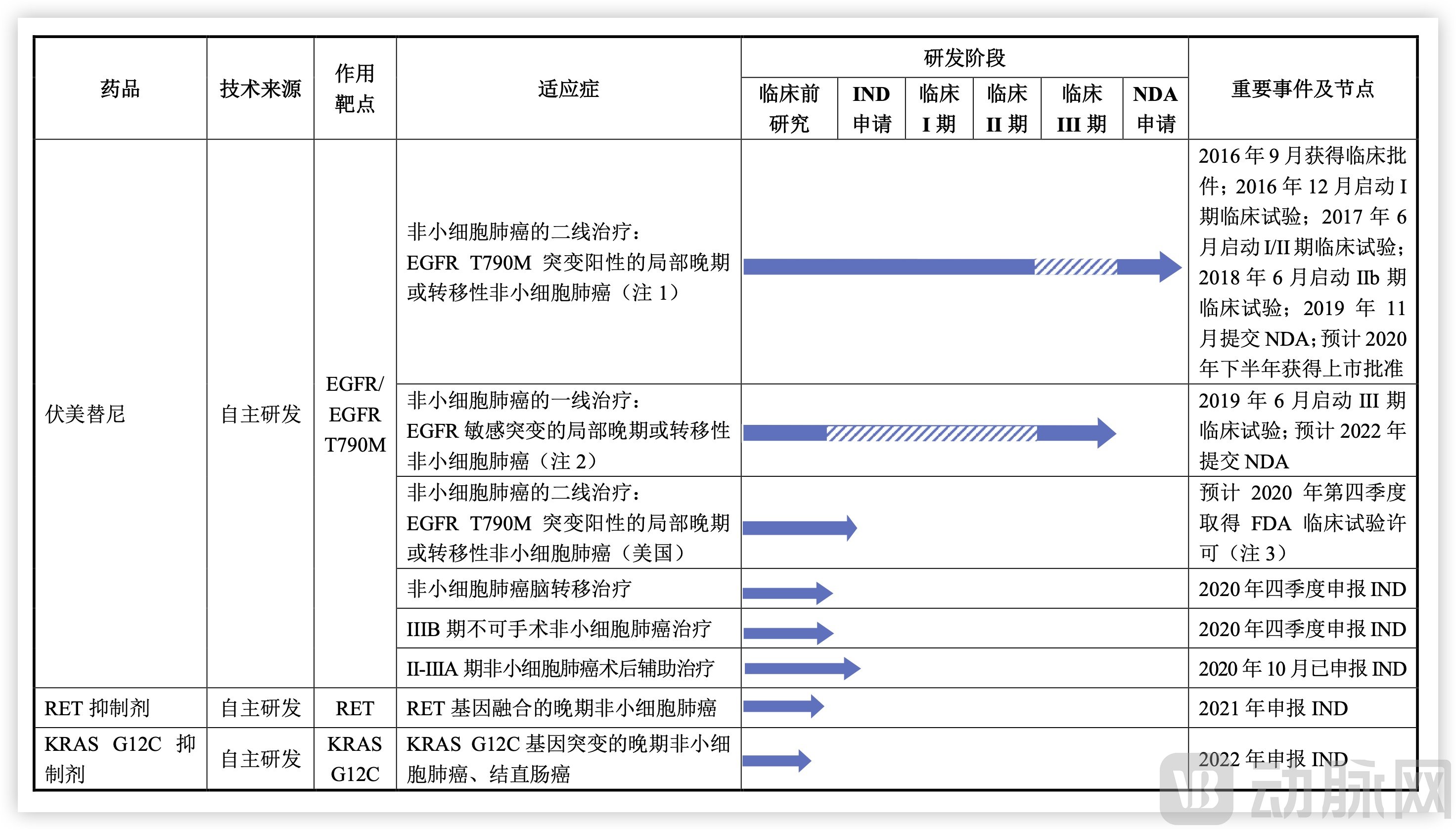
Furmonertinib is Allist’s core pipeline asset. (Image source: Company prospectus)
As furmonertinib officially entered the commercialization phase in 2021, Allist’s revenue achieved significant growth. From 2020 to 2022, Allist’s annual revenue surged from RMB 560,000 to RMB 530 million and then to RMB 790 million. The company not only turned a profit in 2021 but also recorded a net profit exceeding RMB 100 million in 2022.
In 2023, furmonertinib continued to drive Allist’s rapid growth. Revenue for the first three quarters reached RMB 1.35 billion, a year-on-year increase of 160%; net profit amounted to RMB 410 million, up 660% year on year; and net profit attributable to shareholders of the parent company after deducting non-recurring gains and losses totaled RMB 380 million, representing a year-on-year surge of 1,800%. Thanks to its successful renewal in the 2023 National Reimbursement Drug List (NRDL) negotiations, furmonertinib is expected to sustain strong sales volume growth in 2024.
In June 2021, Allist granted ArriVent the exclusive rights to develop furmonertinib outside of Greater China, with an upfront payment of $40 million, subsequent milestone payments not exceeding $765 million, and a certain percentage of shares in ArriVent, making ArriVent an affiliate of Allist.
ArriVent is optimistic about furmonertinib’s potential to become a competitive player in the global market for third-generation EGFR-TKIs, stating that it can stand out among numerous new drugs. The company aims to accelerate the clinical development of furmonertinib for new indications, unlock its best-in-class (BIC) potential, and achieve overseas commercialization as soon as possible.
Based on published clinical studies, furmonertinib is characterized by dual activity, high selectivity, potent tumor shrinkage, and a favorable safety profile. Compared with first- and second-generation EGFR TKIs, furmonertinib retains many key advantages of third-generation EGFR-TKIs, including the potential to overcome T790M mutation-mediated resistance, while also targeting a broader spectrum of EGFR mutations.
In 2022, Allist reported the results of the FURLONG clinical trial of furmonertinib for the first time, a Phase III, double-blind, placebo-controlled trial conducted in China as first-line treatment for patients with non-small cell lung cancer (NSCLC) harboring classical EGFR mutations.
In the FURLONG clinical trial, furmonertinib demonstrated therapeutic potential with superior progression-free survival (PFS) compared to the first-generation EGFR-TKI gefitinib, with a median PFS of 20.8 months versus 11.1 months for gefitinib.
Furmonertinib’s ability to cross the blood-brain barrier was also demonstrated in this trial using central nervous system-specific objective response rate (ORR). The ORR data showed that furmonertinib achieved a 91% reduction in brain metastases, compared with 65% for gefitinib. In the FURLONG trial, the incidence of treatment-related serious adverse events and treatment-related adverse events leading to discontinuation was comparable between furmonertinib and gefitinib.
In October 2023, furmonertinib was granted Breakthrough Therapy Designation by the U.S. Food and Drug Administration (FDA) for the treatment of previously untreated locally advanced or metastatic non-squamous non-small cell lung cancer (NSCLC) with EGFR exon 20 insertion mutations. Should the ongoing Phase 3 FURVENT clinical trial prove successful, ArriVent will utilize approximately $50 million to $60 million from its initial public offering (IPO) proceeds to submit a New Drug Application (NDA) to the FDA and support subsequent commercialization activities for furmonertinib.
In July 2023, InnoCare Pharma and ArriVent entered into a clinical collaboration to evaluate the efficacy and safety of ICP-189 in combination with furmonertinib for the treatment of patients with advanced non-small cell lung cancer (NSCLC). The future prospects for furmonertinib are highly promising.
The excellent clinical outcomes, coupled with the strong revenue performance of Furmonertinib by Allist Pharmaceuticals, have earned market recognition for its commercialization prospects and served as a key guarantee for ArriVent’s successful IPO.
Allist, as the seller, bears a striking resemblance to ArriVent in certain respects; they are like two sides of the same coin.
Entrepreneur Du Jinhao and scientist Guo Jianhui co-founded Allist, embarking on a journey that spanned over a decade—from starting with generic drugs to developing independently researched Class 1.1 new drugs in China, such as allisartan isoproxil for the treatment of hypertension. However, just before allisartan isoproxil was launched, Guo Jianhui unfortunately passed away due to illness. At this critical juncture, Du Jinhao recognized that although the market prospects for antihypertensive drugs were promising, it would be extremely challenging for a nascent pharmaceutical company to establish commercial distribution channels.
After careful consideration, Allist chose to sell allisartan isoproxil.
Just as the market believed that Allist would gradually decline after divesting allisartan isoproxil, Du Jinhao recruited Dr. Luo Huibing, a Ph.D. in medicinal chemistry from the Shanghai Institute of Materia Medica, Chinese Academy of Sciences, to serve as the head of R&D. Under his leadership, Allist ventured into the oncology sector, focusing primarily on targeted therapies for lung cancer. Furmonertinib, an independently developed third-generation EGFR inhibitor by Allist, is indicated for the treatment of non-small cell lung cancer (NSCLC) with EGFR sensitizing mutations and EGFR T790M resistance mutations. Clinical data have demonstrated that furmonertinib exhibits significant efficacy and an excellent safety profile.
Advancing furmonertinib to the marketing approval stage prior to its IPO was considered a key factor in Allist’s successful listing on the STAR Market. However, commercializing a new drug is no simple feat. This time, the arrival of one individual significantly boosted Allist’s confidence: Mou Yanping, hailed as the “Queen of Oncology.”
Reviewing Mou Yanping’s decades-long career, she has held positions at multiple multinational pharmaceutical companies, including GSK, AZ, Johnson & Johnson, and MSD, accumulating extensive experience in sales and marketing. Notably, during her tenure at MSD, she built and managed the sales team for Keytruda (K drug), helping MSD China’s oncology business achieve over $500 million in sales revenue in 2019. Prior to Allist’s IPO and the commercialization of furmonertinib, Mou Yanping joined Allist as General Manager.
As can be seen from Allist’s prospectus at the time, the company incurred no selling expenses during the reporting period, meaning that Mou Yanping’s work had to start from scratch.
Similar to PD-1 inhibitors represented by Keytruda, competition in the EGFR-TKI sector is equally intense. Leveraging its first-mover advantage, AstraZeneca’s osimertinib captured the majority of the 2020 market for EGFR inhibitor monotherapy with a 56% share, achieving combined sales of over RMB 4 billion in China’s public medical institutions and urban brick-and-mortar pharmacies.
To this end, Allist has adopted a dual strategy for the commercialization of furmonertinib, combining the establishment of an in-house sales team with licensed collaborations. Under the leadership of Mou Yanping, a marketing team of nearly 500 employees was built, covering 30 provinces and municipalities, approximately 1,000 hospitals in core market areas, and around 500 DTP (Direct-to-Patient) pharmacies. The team successfully secured furmonertinib’s inclusion in the National Reimbursement Drug List, achieving first-year post-launch sales exceeding RMB 200 million. Furthermore, Allist partnered with Jiangsu Fosun, a subsidiary controlled by Fosun Pharma, granting it exclusive promotional rights for furmonertinib in over 1,500 hospitals.
Notably, shortly after its approval for market launch, furmonertinib was incorporated into both the Chinese Guidelines for the Treatment of Stage IV Primary Lung Cancer (2021 Edition) and the Chinese Guidelines for the Treatment of Brain Metastases in Lung Cancer (2021 Edition). Furthermore, furmonertinib was featured in The Lancet Respiratory Medicine, a top-tier international academic journal, becoming the first domestically developed third-generation EGFR-TKI to have the full text of its pivotal Phase IIb registration clinical study published. This achievement has laid a solid foundation for the academic promotion of furmonertinib.
Precisely because furmonertinib is the third third-generation EGFR-TKI small-molecule targeted therapy to be marketed in China, it differs from existing products in both molecular structure and clinical characteristics. In particular, its dual activity and high selectivity in tumor suppression mechanisms give it the potential to become a best-in-class innovative drug.
To this end, Mou Yanping, then General Manager of Allist, formulated a strategy for the drug’s commercial expansion into overseas markets. The collaboration with ArriVent not only accelerated the clinical development and global promotion of furmonertinib, but also further expanded its clinical and commercial value.
Domestic biotech companies have also come to realize the significance of the adage, “In the world of martial arts, speed is the ultimate weapon.”
Mou Yanping has publicly stated that the time window for launching a new product is now very short—whereas it used to be around 10 years, it is now at most only two to three years. Meanwhile, the domestic market space in China remains limited; only by pursuing globalization can companies access a sufficiently large market size.
Global expansion, indication expansion, and inclusion in the National Reimbursement Drug List have become the three key strategies in the commercialization of furmonertinib.
Particularly regarding overseas expansion, this cross-border transaction includes not only an upfront payment but also R&D and sales milestone payments, as well as the value of ArriVent’s equity. Furmonertinib has already received approval in China for the treatment of non-small cell lung cancer (NSCLC), making the associated R&D milestone payments virtually certain. Furthermore, given current development trends, the likelihood of achieving sales milestones is also extremely high. Allis Pharmaceuticals is also poised to realize the value of its equity stake in ArriVent following the latter’s public listing.
Unlike typical pipeline licensing deals, Allist’s overseas partnership with ArriVent, driven by the drug’s strong core competitiveness, has not only yielded substantial returns but also propelled its partner into the secondary market. This offers new insights for many domestic innovative pharmaceutical companies: there are alternative ways to go global.