

Tallac Therapeutics Files IPO Prospectus: AOC Pioneer Led by $1B+ Biotech Veterans Unveils TRAAC Platform and Lead Candidate TAC-001

Tallac Therapeutics
Immuno-oncology Developer
In November 2023, Tallac Therapeutics (“Tallac”) presented the first clinical data for its AOC drug candidate TAC-001—a conjugate of a potent TLR9 agonist and a CD22 antibody—at the SITC 2023 Annual Meeting. These data represent the first clinical evidence that systemically administered TLR9 agonist–antibody conjugates (TRAACs) can activate B cells to drive antitumor immune responses.
Tallac, a private biopharmaceutical company headquartered in the San Francisco Bay Area, was founded in 2018. In August 2023, Tallac announced that it had secured $15 million in debt financing from Horizon Technology Finance. Previously, in 2020, the company completed a Series A financing round totaling $62 million, with investors including venBio Partners, Morningside Venture Capital, Lightstone Ventures, Matrix Partners China, and MRL Ventures Fund.
 Investor Map (Source: Tallac Official Website)
Tallac's founding team possessesAverage of over 20 yearsdrug development experience, with team members including Wan Hong, Corey Goodman, Jaume Pons, and Curt Bradshaw. Except for Curt Bradshaw, the other three share commonalities in their career trajectories,They had both previously worked at Pfizer and the publicly listed biopharmaceutical company ALX Oncology (hereinafter referred to as“ALX”)—with market capitalizations exceeding $1 billion, and the latter two also hold key positions at their Series A investors, venBio Partners and Lightstone Ventures.
Hong Wan is the President, Chief Executive Officer, and a Director of Tallac. She holds a bachelor’s degree from Harvard University and a Ph.D. from the University of California, Berkeley. She is also a founding management team member and the Chief Scientific Officer of ALX, a biopharmaceutical company dedicated to exploring CD47 (a transmembrane protein highly expressed on tumor cells) as a therapeutic target for hematologic malignancies and solid tumors. Under her leadership, the team has advanced the application of ALX148, a best-in-class myeloid checkpoint inhibitor, across multiple oncology indications. Previously, Dr. Wan held key positions at Pfizer and Wyeth Research, where she was responsible for early-stage development and strategic execution.

Wan Hong (Image source: Tallac official website)
Corey Goodman wears the triple hats of scientist, educator, and entrepreneur. He has served as a Helen Hay Whitney Postdoctoral Fellow at the University of California, San Diego, a Professor of Biology at Stanford University, and the Class of 1959 Professor of Neurobiology at the University of California, Berkeley, where he held the chair for 25 years. He has published more than 200 papers. Meanwhile, he has received numerous honors, including the Alan T. Waterman Award, the Canada Gairdner Biomedical Award, the March of Dimes Prize in Developmental Biology, the Reeve-Irvine Research Medal, and the Dawson Prize in Genetics from Trinity College Dublin.
He co-founded eight biotechnology companies.Exelixis was the first. During his tenure at Renovis, Goodman served as President and Chief Executive Officer, leading the company to become a publicly traded entity until its acquisition by Evotec. Additionally, he served as the Founder and President of Pfizer’s Center for Therapeutic Innovation and Biologics.He is the Executive Chairman of ALX’s Board of Directors and a Managing Partner at venBio Partners, the Series A investor.

Corey Goodman (Image source: Axonis Therapeutics official website)
Jaume Pons holds a Ph.D. in Molecular and Cellular Biology from the Autonomous University of Barcelona and is the developer of fremanezumab, an antibody approved by the FDA in 2018. Additionally, he has advanced two other antibodies into late-stage clinical development and nine others into human trials across multiple therapeutic areas. From 2007 to 2015, he served as Chief Scientific Officer of Rinat Neuroscience Corporation, a subsidiary of Pfizer. Concurrently, from 2009 to 2015, he held the positions of Senior Vice President of Pfizer’s Global Research and Development Leadership Team and Chief Technology Officer of Pfizer Biotherapeutics. Since April 2015, Jaume Pons has been serving as President, Chief Executive Officer, and a member of the Board of Directors at ALX Oncology.He also holds key positions at Lightstone Ventures and venBio Partners, the Series A investors.

Jaume Pons (Image source: venBio official website)
The trio, who have demonstrated exceptional capabilities in both biopharmaceutical R&D and commercial translation of products, have once again joined forces at Tallac. The development trajectory of Tallac’s products, from clinical stages to post-market launch, is highly anticipated.
In the field of oncology, despite the success of checkpoint inhibitors and CAR-T (chimeric antigen receptor T-cell) therapies, some patients have developed resistance or even failed to respond to these treatments from the outset. The applicability of these two therapies is limited, prompting countless biotechnology companies to seek a third approach, with novel therapies leveraging innate and adaptive immune responses becoming a focus for some companies.
Based on this, Tallac has developed a novel Toll-like receptor (TLR) agonist antibody conjugate platform (TRAAC).The multifunctional immune activation platform delivers a potent TLR9 agonist (T-CpG) via systemic administration to achieve targeted immune activation, inducing both innate and adaptive immune responses for the treatment of various malignant tumors.
TLR pathways play a crucial role in mounting robust innate immune responses against invading pathogens and in adaptive immunity.TLR9 is a key intracellular Toll-like receptor widely expressed in immune cell populations, including B lymphocytes and myeloid cells. It induces the production of antitumor cytokines and activates immune responses only upon stimulation by agonists.In other words, when the TLR9 signaling pathway activates immune cells, it can not only directly kill tumor cells but also help adaptive immunity (T cells) effectively eliminate them.
Synthetic CpG oligonucleotides are potent TLR9 agonists that mimic bacterial fingerprints to activate the innate immune target TLR9, thereby stimulating anti-tumor cytokine production and activating the immune system through TLR9 signaling.Clinically, the potential of TLR9 activation for cancer therapy has been demonstrated by intratumoral injection of CpG molecules in patients with melanoma.
TRAAC employs site-specific conjugation to precisely control the location and number of conjugated T-CpG (a TLR9 agonist), thereby enabling fine-tuning of conjugate activity. By selecting appropriate cellular targets and antibodies and conjugating them with T-CpG, specific immune cell populations within the systemic or local tumor microenvironment can be activated.
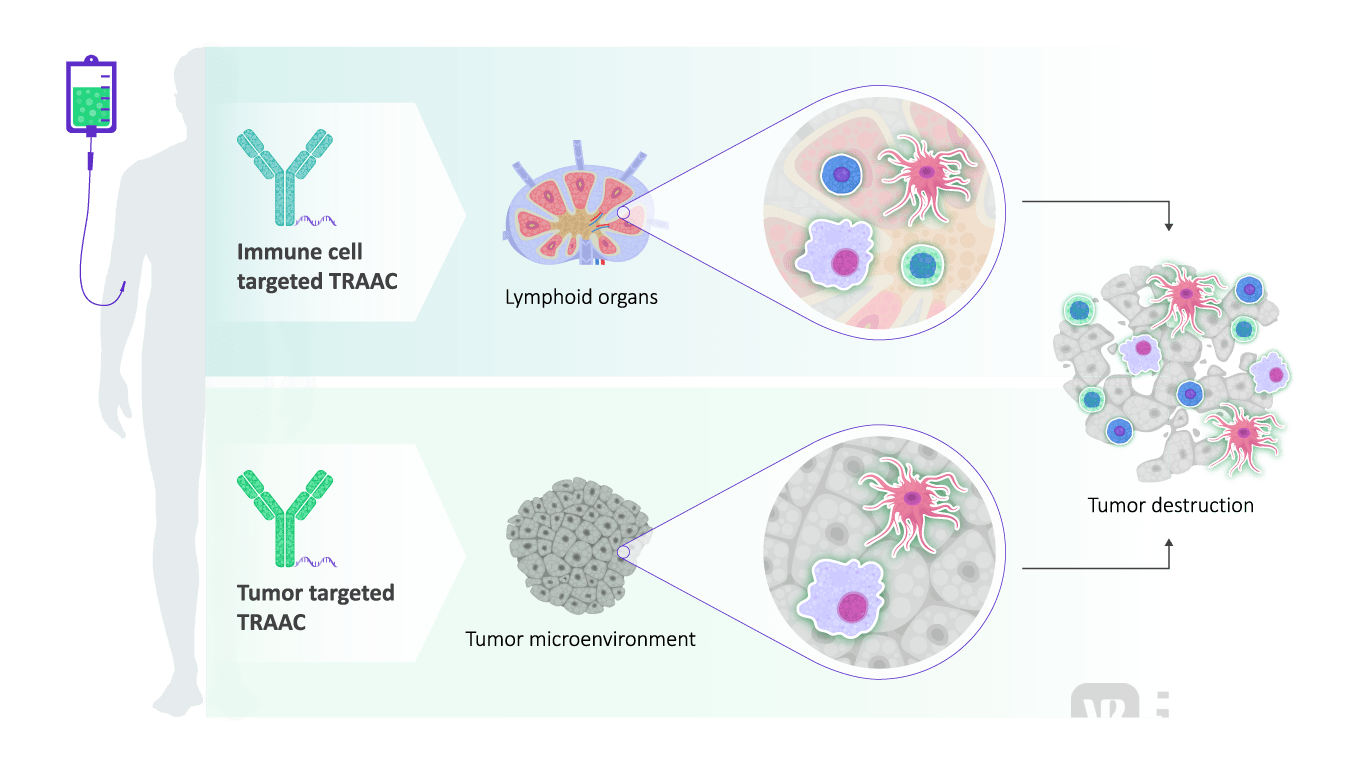
Diagram of TRAAC Mechanism of Action (Image source: Tallac official website)
Leveraging the TRAAC platform, Tallac has developed multiple drug pipelines, with TAC-001 being the most advanced.
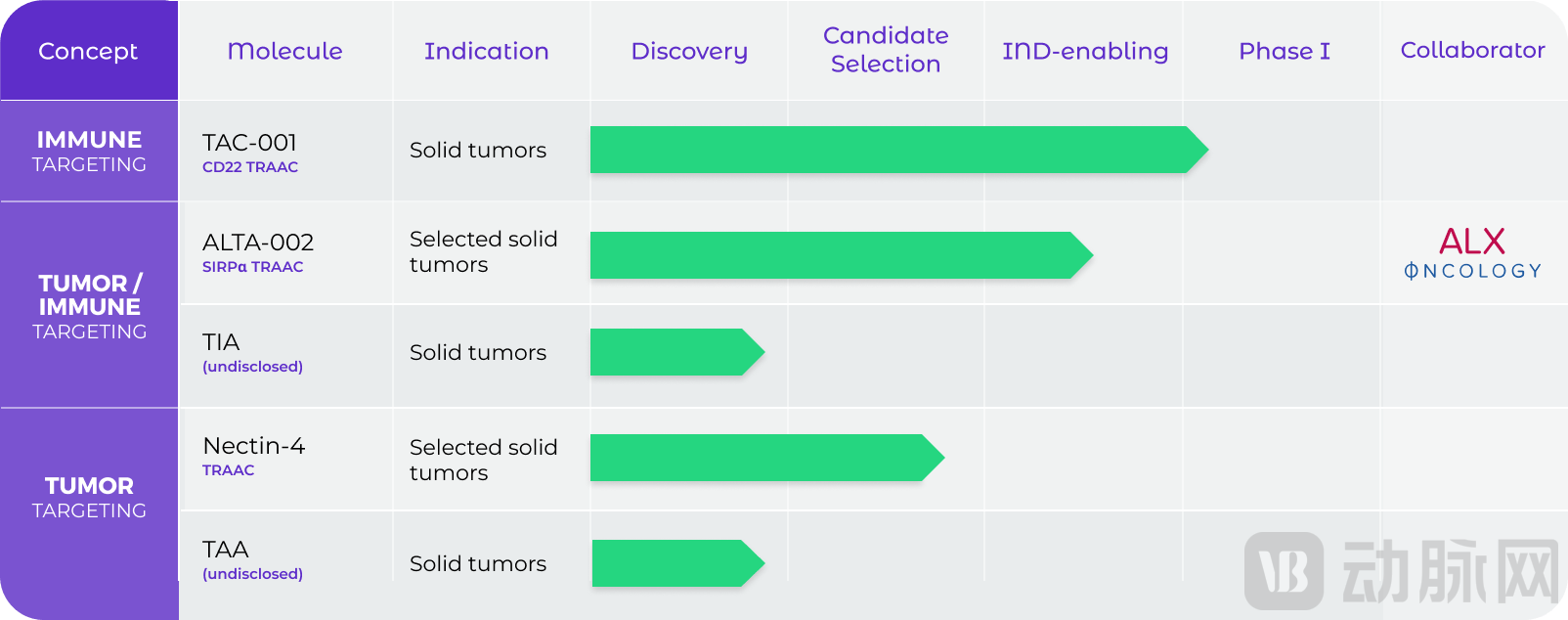
Drug Pipeline (Source: Tallac Official Website)
TAC-001 is a systemically administered TRAAC molecule, comprising a potent TLR9 agonist conjugated to a CD22 antibody, designed to selectively activate B cells to drive anti-tumor immune responses. In July 2022, Tallac announced that the first patient had been dosed in its Phase 1/2 study of TAC-001 in patients with advanced solid tumors. In November 2023, Tallac publicly disclosed the Phase 1 clinical safety and efficacy data of TAC-001 in patients with solid tumors for the first time.
Preliminary findings on safety, tolerability, pharmacokinetics (PK), and pharmacodynamics (PD) in patients with advanced or metastatic solid tumors demonstrated that monotherapy with TAC-001 (0.1 to 3 mg/kg) was well tolerated, exhibited pharmacodynamic activity consistent with its proposed mechanism of action (MOA), and yielded preliminary clinical activity, including durable stable disease (≥6 months) and partial responses per RECIST 1.1 criteria (the standard method for assessing solid tumor response to treatment in clinical studies). These clinical data demonstrate that systemic administration of a B cell-targeting TLR9 immune agonist that activates B cells is generally well tolerated, with induced immune activation consistent with preclinical studies.
Furthermore, TAC-003, developed by the Company, has completed preclinical testing, including exploratory toxicology studies in non-human primates, and has been selected as the Company’s third clinical candidate. Preclinical data indicate that it triggers TLR9 signaling, inducing robust immune cell activation (including myeloid and dendritic cell activation, phagocytosis, cytokine production, and lymphocyte activation), thereby eliciting both innate and adaptive immunity and achieving potent single-agent antitumor efficacy.
TAC-003 consists of T-CpG conjugated to a novel Nectin-4-targeting antibody. Nectin-4 is a cancer-associated antigen that is overexpressed in many solid tumor types but has limited expression in normal tissues. Compared with enfortumab vedotin, monotherapy with TAC-003 yields more durable therapeutic effects across tumors with varying levels of Nectin-4 expression, including those refractory to anti-PD-1 therapy.
Tallac’s future projects may include more antibodies, linkers, and CpG payloads with different targets.
Nucleic acid therapeutics are regarded as the “third wave” of drug development, and oligonucleotide drugs, as a key component thereof, are naturally held in high expectation. Oligonucleotides encompass a wide variety of types, including antisense oligonucleotides (ASOs), small interfering RNAs (siRNAs), CpG oligonucleotides, and aptamers. While they offer the advantage of programmable design, they also suffer from drawbacks such as low extracellular stability and difficulty in entering target cells. Incorporating them into conjugate therapeutics, with monoclonal antibodies serving as carriers to overcome these inherent limitations, can effectively mitigate these disadvantages and broaden their scope of application.
Compared with other conjugated drugs such as antibody-drug conjugates (ADCs), antibody-oligonucleotide conjugates (AOCs) utilize antibodies to deliver oligonucleotides to specific cells or tissues, thereby reducing the required therapeutic dosage and addressing the challenge of targeted oligonucleotide delivery. Compared with traditional small nucleic acid therapies, AOCs exhibit superior pharmacokinetic properties and more specific biodistribution. AOCs combine mature monoclonal antibody (mAb) technology with the precision and potency of oligonucleotide therapy. By conjugating different nucleic acid drugs to an antibody (or Fab fragment) targeting a single antigen, diverse diseases can be treated, highlighting broad market potential across multiple therapeutic areas.

The first AOC drug to enter clinical trials was Avidity Biosciences’ (NASDAQ: RNA) AOC 1001. Companies worldwide developing AOCs, in addition to Tallac Therapeutics, include Avidity Biosciences, Dyne Therapeutics, and Denali Therapeutics. Few domestic pharmaceutical companies have established a presence in this field; Jiajin Bio is among the first in China to engage in AOC research and development.
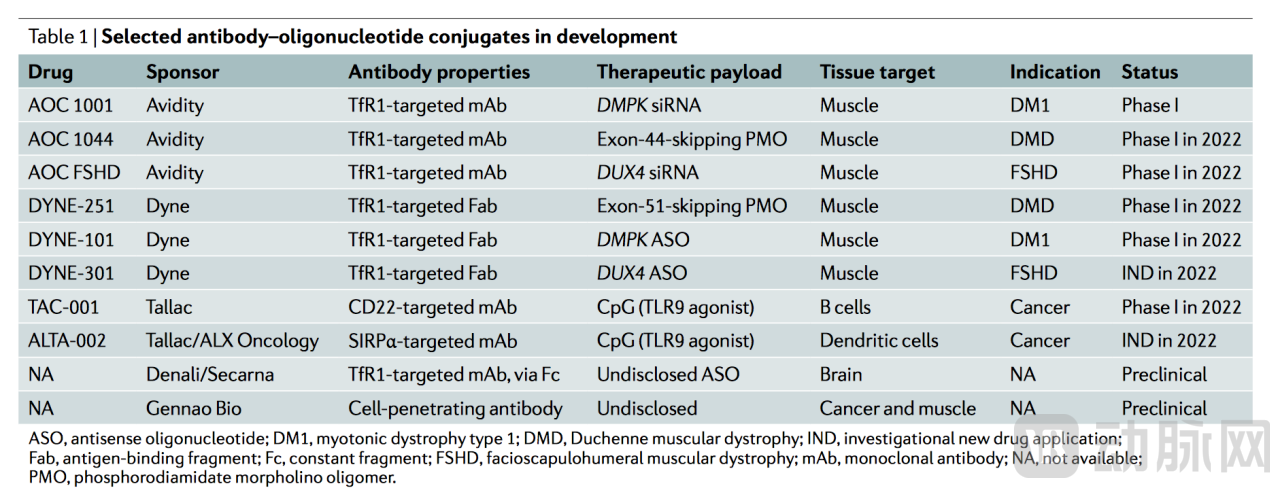
AOC Drugs Under Development (Image source: Nature Reviews Drug Discovery)