

GuLian Healthcare Drives High-Quality Rehabilitation to Achieve Dual Growth in Scale and Quality
In recent years, the supply of rehabilitation medical services in China has continued to grow, and it remains one of the specialty areas strongly encouraged by the state.
In 2023, the General Office of the Communist Party of China Central Committee and the General Office of the State Council issued the “Opinions on Further Improving the Medical and Health Service System,” which pointed out that the number of specialized medical institutions for rehabilitation and nursing should be increased by supporting areas with abundant medical resources in transforming some public medical institutions into nursing homes and rehabilitation hospitals, and by encouraging non-governmental forces to establish such facilities, so as to improve the continuous care service system and expand the supply of services such as rehabilitation medicine, elderly care, and disability care.
Amid the trend of population aging, there remains a substantial unmet demand for rehabilitation medical services, and the quality of rehabilitation care requires further improvement.
Private rehabilitation medical institutions are a crucial component of China’s rehabilitation healthcare system. As a national comprehensive rehabilitation healthcare group, Guilian Medical is committed to building high-quality rehabilitation services to drive simultaneous growth in both the volume and quality of rehabilitation care.
Guolian Healthcare has always placed discipline development in a pivotal position.
Rehabilitation therapy is the core component of rehabilitation medicine, directly influencing the recovery of patients’ motor, sensory, speech, and psychosocial functions. In this regard, Guelian Healthcare has provided key support to the disciplinary development of its Therapy Department, including establishing it as an independent unit, granting autonomy in decision-making regarding disciplinary development strategies, and prioritizing resource allocation, thereby supporting the advancement of more specialized therapeutic techniques.
“Discipline construction within the Therapy Department is of critical importance. Currently, we are prioritizing the development of the three mainstream technical domains—Physical Therapy (PT), Occupational Therapy (OT), and Speech Therapy (ST)—and have further subdivided them. For instance, PT has been specialized into neurological PT, musculoskeletal PT, cardiopulmonary PT, and critical care PT, while OT has explored areas such as non-pharmacological psychological interventions,” stated Xu Chen, Co-founder and Co-CEO of Gulian Medical.
The integration of clinical care and rehabilitation is also one of the key components of discipline development at Glian Medical.
For example, Chengdu Tianfu New Area Goolian Hetai Rehabilitation Hospital has established specialized rehabilitation sub-disciplines, including Critical Care Rehabilitation, Comprehensive Rehabilitation, Neurological Rehabilitation, Bone and Joint Rehabilitation, Spinal Cord Injury Rehabilitation, and Traditional Chinese Medicine (TCM) Rehabilitation. The hospital emphasizes close collaboration between rehabilitation therapy and clinical departments such as Cardiology, Neurology, Neurosurgery, Orthopedics, Psychiatry, TCM, and Clinical Nutrition. While strengthening rehabilitation training, the hospital also reinforces the management of primary diseases and clinical treatment, complemented by services such as hyperbaric oxygen therapy, psychotherapy, and nutritional support, thereby providing patients with high-quality medical care that integrates intensive care, clinical treatment, functional rehabilitation, and specialized nursing.
At Xiangya Boai Rehabilitation Hospital, the integrated orthopedics and rehabilitation discipline connects diagnosis and treatment across orthopedics, spine surgery, sports medicine, rehabilitation, and pain management, establishing distinctive therapeutic strengths. Xu Chen introduced that this discipline fully integrates front-end emergency care, clinical surgery, postoperative rehabilitation, and social functional rehabilitation.
Furthermore, Xiangya Bo’ai Rehabilitation Hospital has also strengthened its chemotherapy capabilities in the field of oncology rehabilitation, providing patients with more integrated and personalized services.
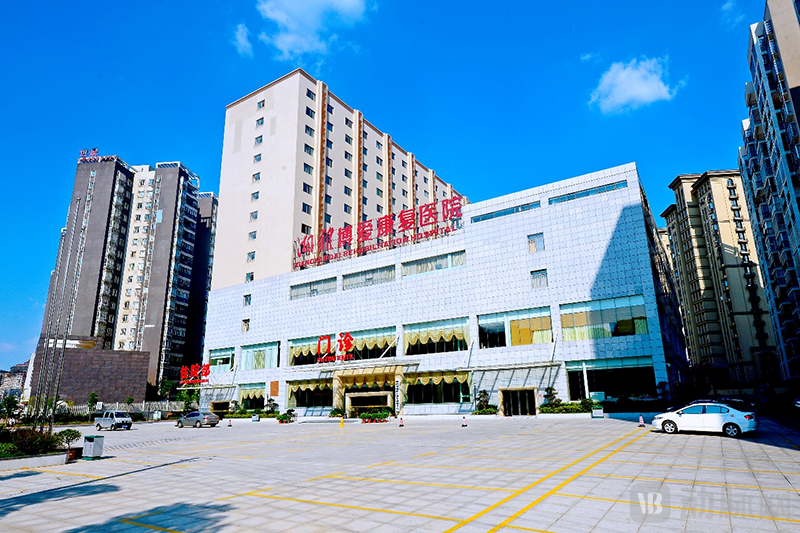 Xiangya Boai Rehabilitation Hospital
Based on the integration of clinical care and rehabilitation, GuLian Medical actively promotes early rehabilitation intervention.
Early intervention is a key principle of rehabilitation therapy and an important indicator of the quality of rehabilitation medical services. Surveys show that the rate of early rehabilitation intervention in orthopedics, neurology, and intensive care unit wards, as well as for key disease categories, has been gradually increasing across China. However, it remains at a relatively low level compared to international standards and fails to fully meet patients’ clinical needs. The National Health Commission and other relevant departments have issued multiple documents calling for an increase in the rate of early rehabilitation intervention.
Gulian Medical has made numerous attempts in the area of early rehabilitation intervention, even exploring ultra-early intervention.
Taking hyperbaric oxygen therapy as an example, it is a crucial treatment modality for critically ill patients, particularly those in neurorehabilitation intensive care. The key to achieving optimal outcomes with hyperbaric oxygen therapy lies in early intervention. At medical institutions under the Guilian Healthcare Group, critically ill patients can receive early hyperbaric oxygen therapy while still on ventilators during their stay in the Intensive Care Unit (ICU) or High Dependency Unit (HDU). This approach is combined with other rehabilitative therapies to enhance treatment efficacy.
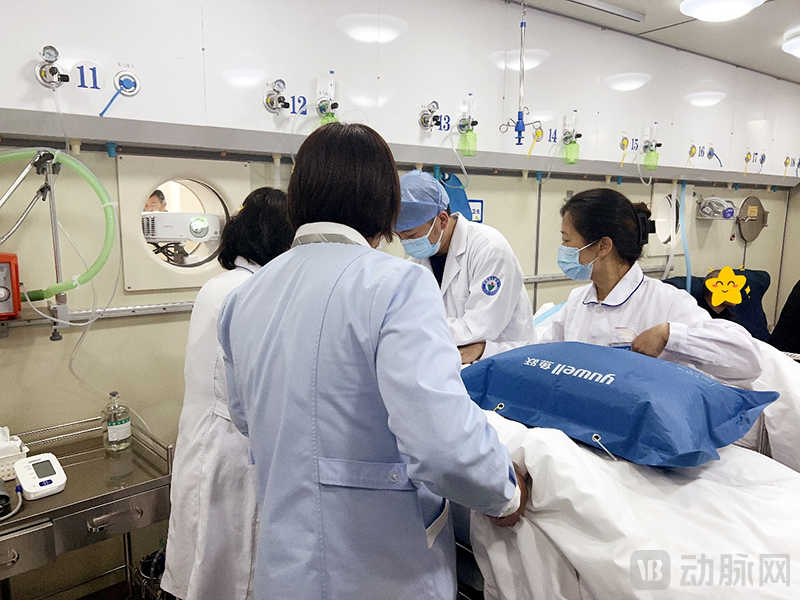 Wuxi Gulian Hospital Hyperbaric Oxygen Therapy Center
At Chengdu Tianfu New Area Gulian Hetai Rehabilitation Hospital, the Department of Critical Care Medicine has established an integrated model encompassing monitoring, treatment, rehabilitation, and nursing. By implementing “critical care monitoring plus ultra-early cardiopulmonary and exercise rehabilitation,” the hospital accelerates the recovery process for critically ill patients in the early stages.
Payment method reform is also a major breakthrough for GuLian Medical in implementing high-quality rehabilitation.
Since June 2022, with the support of Changsha’s medical insurance policies, Xiangya Boai Rehabilitation Hospital has launched a pilot program for the “Functional Rehabilitation Group (FRG) value-based payment” model. The FRG payment system covers 15 disease groups, including intracranial hemorrhagic disorders, spinal cord injuries, and post-operative care for artificial joint replacement, involving more than 1,300 ICD diagnoses.
Zhang Zhen, Director of the Medical Insurance Affairs Department at Xiangya Boai Rehabilitation Hospital, stated that during the implementation of FRG-based payment, the hospital vigorously advanced the development of standardized systems, strengthened training for key personnel including physicians, therapists, and nurses, promptly identified and resolved issues, and facilitated exchanges among rehabilitation experts in the field, thereby enhancing the quality of rehabilitation medical services. “For hospitals and physicians, since patient admission requires a focus on resolving functional impairments, along with comprehensive process management, quality control, and technological innovation throughout the rehabilitation treatment pathway, rehabilitation medicine has achieved better development and attained higher patient satisfaction.”
Building High-Quality Rehabilitation: The Most Direct Value Lies in Improving Rehabilitation Outcomes.
For example, the study “Clinical Observation of Hyperbaric Oxygen Combined with In-Chamber Ventilator for Brain Resuscitation in 40 Patients,” published by Ningbo Haishu Gulian Rehabilitation Hospital, demonstrated that early hyperbaric oxygen therapy combined with in-chamber ventilator support has a positive effect on brain resuscitation in patients after cardiopulmonary resuscitation, significantly improving their neurological function.
Chengdu Tianfu New Area Guliang Hetai Rehabilitation Hospital has established a three-tiered stepwise rehabilitation system comprising “ICU-HDU-General Ward.” Through multidisciplinary team (MDT) collaboration, the hospital provides one-stop critical care services, including monitoring, clinical treatment, rehabilitation, and nursing. This approach enables the active initiation of ultra-early bedside rehabilitation for critically ill patients while they undergo intensive monitoring, nursing, and enhanced therapy. This strategy promotes the recovery of physical function, accelerates weaning from mechanical ventilation, extubation, and arousal, prevents multi-organ dysfunction, and facilitates timely transfer to general wards for further intensive rehabilitation training, thereby comprehensively enhancing, improving, and compensating for functional capabilities.
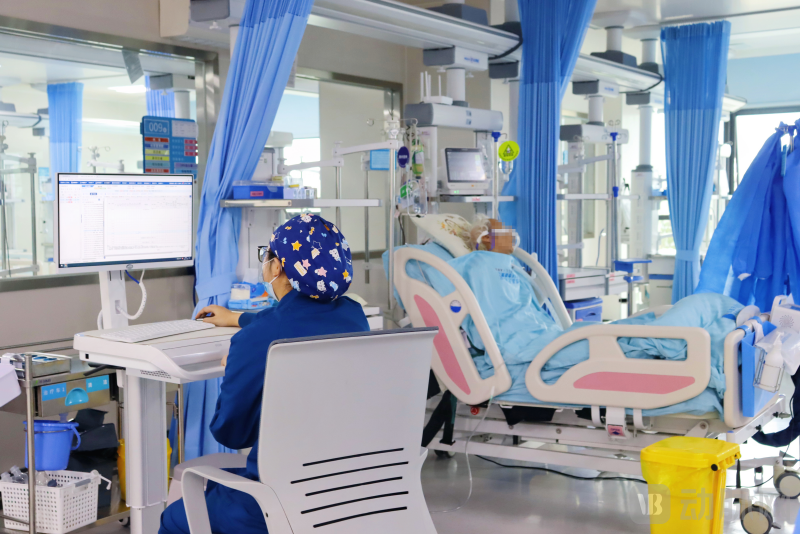 Ward 1, Department of Critical Care Rehabilitation, Chengdu Tianfu New Area Gulian Hetai Rehabilitation Hospital
High-quality rehabilitation also plays a positive role in reducing healthcare resource consumption and alleviating the payment burden.
“Critically ill patients consume substantial medical resources during the clinical phase, making it highly significant to transition them safely and promptly into the rehabilitation or post-acute care phase,” Xu Chen stated, emphasizing that this approach notably facilitates hospital bed turnover and enhances the efficiency of medical resource utilization.
Xu Chen cited the example of Chengdu Tianfu New Area Guliang Hetai Rehabilitation Hospital, which has established “Treatment + Monitoring + Rehabilitation” wards—specifically, disorders of consciousness (DOC) wards—for patients with impaired consciousness, implementing comprehensive coma arousal and rehabilitation strategies. “Promoting arousal in these patients significantly helps reduce the subsequent burden on medical resources.”
Previously, patients had to undergo clinical treatment and reach a stable vital signs condition before being admitted to rehabilitation hospitals. With the deepening exploration of integrated clinical and rehabilitative care, enhanced diagnostic and therapeutic capabilities, and the configuration of advanced equipment in rehabilitation hospitals, the admission process for patients has been moved forward. “Early or ultra-early intervention reduces overall costs, which not only alleviates the financial burden on patients but also helps save medical insurance expenditures,” said Xu Chen.
At Xiangya Boai Rehabilitation Hospital, one and a half years of implementing FRG-based payment have enabled patients to receive earlier, comprehensive, continuous, high-quality, and affordable rehabilitation medical services.
From a broader perspective, the social benefits generated by high-quality rehabilitation are immeasurable.
The ultimate goal of rehabilitation medicine is to address a series of issues related to patients’ reintegration into society following disease diagnosis and treatment. In Xu Chen’s view, it is particularly critical for young and middle-aged patients that, after undergoing rehabilitation and returning to society with normal physiological and psychological functions, they are able to continue realizing their personal value and contributing their strength to social development.
“We once treated a patient with severe functional impairment due to spinal cord injury. After receiving effective rehabilitation therapy and psychological counseling, the patient was able to learn how to drive and plans to open a small convenience store, full of confidence in the future. It is deeply gratifying for us that rehabilitative medicine helps such patients regain their confidence in life,” remarked Xu Chen.
Over the past year, Guilian Medical has continued its expansion: the Chengdu Tianfu New Area Guilian Hetai Rehabilitation Hospital was unveiled, the Chengdu Tianfu New Area Heyang Guilian Geriatric Hospital opened its doors, and the Guilian Mango Chengdu Chenghua Center commenced operations... Throughout 2023, Guilian Medical added a total of five new facilities. To date, it operates 27 medical institutions across China, with further enhancements in business scale, hospital development, and departmental construction.
While expanding its scale, GuLian Medical strives to replicate high-quality rehabilitation services across various regions.
For instance, specialized hyperbaric oxygen therapy (HBOT) services, initially launched in East China, have gradually expanded to other regions across the country. Hyperbaric oxygen chambers at institutions such as Chengdu Tianfu New Area Guelian Hetai Rehabilitation Hospital, Mianyang Guelian Rehabilitation Hospital, and Xiangya Bo’ai Rehabilitation Hospital have been successively put into operation. HBOT is progressively becoming a standard offering at every hospital under the Guelian Medical Group.
As a key discipline, the development of therapeutic disciplines in medical institutions under Gullian Healthcare is accelerating; the group also requires its affiliated medical institutions to gradually cover the ten major subspecialties of rehabilitation medicine and provide comprehensive rehabilitation medical services.
Meanwhile, GooLian Medical collaborates with renowned universities and high-level public hospitals to enhance the professional skills of physicians, therapists, and nurses through training programs, as well as to identify outstanding talent. A regularized mechanism for professional exchange has also been established among its affiliated medical institutions, facilitating the flow of advanced technologies and high-quality resources.
……
With the implementation of the aforementioned measures, it is foreseeable that rehabilitation medical services will see simultaneous growth in both volume and quality, enabling Guilian Medical to deliver greater value in the future.