

Pivotal Moment for Industrial Translation: Clinical Experts in Oncologic Pathology Elaborate on mIHC’s Real-World Implementation and Product Portfolio
A series of national incentive policies, coupled with advances in digital and intelligent technologies, have propelled the pathology department—once a “niche specialty”—into a period of significant transformation.
In recent years, the Chinese government has continuously issued policies to encourage and support the development of the pathology industry. These initiatives include promoting the establishment of telepathology services and third-party pathology diagnostic centers, leveraging the pivotal role of pathological diagnosis in guiding tumor-targeted pharmacotherapy, strengthening specialty pathology departments to support the high-quality development of public hospitals, and relaxing approval requirements for AI-based medical software. Against the backdrop of healthcare cost containment, reimbursement rates for pathological diagnostics have risen counter-trend. Driven by these factors, long-standing pain points such as the significant shortage of pathologists, uneven distribution of pathology resources, and the low professional status and income of pathologists are expected to be gradually addressed.
Policy sets the ceiling, while technology forms the foundation. As innovative technologies such as AI-assisted pathological diagnosis, multiplex immunohistochemistry (mIHC), molecular pathology, single-cell sequencing, and big data bioinformatics are increasingly integrated into pathological diagnostics, the field is undergoing an iterative transformation from qualitative to quantitative analysis, and from manual operations to fully automated, intelligent processes.
These transformations have profoundly altered the demands placed on pathology departments.
According to research by VCBeat, changes in clinical demand for pathological diagnosis and treatment are reflected in multiple aspects of pathologists’ daily practice. In the context of tumor diagnosis, these changes include: a shift from single-marker testing to multi-marker testing; a transition from focusing solely on the tumor itself to simultaneously considering the tumor microenvironment; an evolving expectation from indifference toward turnaround time to a demand for faster testing results; a transformation from purely manual operations to fully automated and intelligent workflows; and the challenge of leveraging scarce tissue samples for more effective testing.
The underlying logic behind these shifting demands points to a broader trend: the upgrading and transformation of next-generation pathology departments.
Compared with traditional pathology departments, next-generation pathology will focus on digitalization, intelligence, and precision. In the construction of this new system, multiplex immunohistochemistry (mIHC), hailed as a representative technology of the new generation of pathology, is receiving extensive attention from both academia and industry. At the Smart Pathology Technology Forum of the 4th Oriental Molecular Diagnostics Academic Conference, held in Shanghai on January 5, 2024, numerous pathology and clinical experts frequently discussed mIHC technology and its clinical applications. Furthermore, the mIHC Clinical Translation Technology Center was established to promote the clinical translation and application of mIHC.
Why are numerous departments continuously focusing on mIHC technology, with many even positioning it as a standard tool in routine clinical practice? This is not only because the technical features of mIHC—such as multi-parameter analysis, minimal sample requirement, accuracy, and quantification—perfectly align with the needs of next-generation pathology departments. It also reflects considerations regarding the level of workflow automation enabled by mIHC technology and the performance standards required for clinical applications.Sufficient to support the transition from traditional pathology departments to next-generation pathology departments, becoming a core technical module that must be configured.
The Next-Generation Pathology Department Signals a Shift Toward Digitalization and Intelligence in Pathology. As a representative technology of the next-generation pathology department, multiplex immunohistochemistry (mIHC) has made significant progress in clinical applications. Currently, many large tertiary hospitals across China have begun to adopt mIHC technology. Policy support has also been granted, with mIHC technology products officially included in the national list of medical service chargeable items, further stimulating clinical procurement interest. Moreover, the clinical significance of mIHC technology has been clearly defined and affirmed in multiple expert consensus statements.
Specifically, mIHC has brought significant improvements to pathological diagnosis.
First, there is a significant improvement in the speed of diagnosis and treatment.Traditional immunohistochemistry testing is cumbersome, involving multiple steps and consuming significant time, typically requiring 7–10 days to issue a report. For patients seeking medical care away from their home regions, this necessitates a wait of at least one week for pathological results before appropriate treatment can commence. Such prolonged waiting periods impose substantial psychological burden and financial pressure on patients. Consequently, reducing the turnaround time for immunohistochemical diagnosis has become a primary demand placed by clinical practitioners on pathology departments.
The application of mIHC technology has significantly accelerated pathological diagnosis, achieving turnaround times comparable to those of clinical laboratory reports, thereby meeting the needs of physicians and patients for rapid diagnosis. This not only reshapes the stereotypical perception of pathological diagnosis in clinical practice but also represents a qualitative leap in its speed.
In this regard, Professor Zhou Caicun, Director of the Department of Oncology at Shanghai Pulmonary Hospital Affiliated to Tongji University, also stated that one of the values of mIHC lies in its significant contribution to accelerating diagnostic speed in pathology departments. “Lung cancer involves numerous therapeutic targets, necessitating larger sample sizes and incurring higher costs and time consumption. Many patients currently travel with their families to major cities for medical care, making it even more critical to obtain diagnostic results on an expedited basis. The application of mIHC has effectively enhanced the speed of diagnosis and treatment.”
Next is achieving the leap from single-indicator to multi-indicator analysis.Immunohistochemistry is limited by traditional staining and imaging methods, which allow for a maximum of three markers per cell. Consequently, it fails to simultaneously acquire in situ information on more than three biomarkers or elucidate intercellular interactions. With the rise of immunotherapy regimens, an increasing number of biomarkers have been identified as highly correlated with tumor progression and treatment response. This necessitates simultaneous multiplex staining to investigate their colocalization, expression levels, and spatial relationships. Therefore, conventional immunohistochemistry is no longer adequate to meet the advanced demands of tumor immunotherapy research.
Moreover, mIHC technology enables the staining of seven or more markers on a single tissue section, facilitating in-depth multi-target analysis and generating a greater volume of valid data. This allows physicians to gain deeper insights into intercellular interactions and provides richer pathological information.
“The ability to simultaneously stain multiple markers is one of Professor Zhu Hongguang’s most intuitive impressions of mIHC. As Chair of the Department of Pathology at Shanghai Medical College, Fudan University, he noted, ‘Traditional immunohistochemistry techniques were primarily limited to single-marker staining, making it difficult to identify more than three markers. In contrast, mIHC can label 7–9 markers on a single tissue section, offering an absolute advantage in multi-parameter analysis.’”
Professor Hou Yingyong, Director of the Department of Pathology at Zhongshan Hospital, Fudan University, also pointed out: “For digestive system diseases with extremely high incidence rates, multiplex immunohistochemistry (mIHC) can generate dozens of tissue sections and detect hundreds of biomarkers, thereby alleviating the diagnostic and therapeutic burden on clinical departments. Furthermore, by integrating mIHC technology with artificial intelligence and digital pathology analysis, it is possible to dynamically observe molecular markers and spatial structures within samples, gain insights into how to activate immune system functions, and even establish foundational data for future drug development and cancer therapy.”
Furthermore, it reduces tissue sample loss.Tissue loss is a significant challenge in immunohistochemistry (IHC). A core requirement for pathology departments is to minimize sample consumption while maximizing the extraction of biological information. Multiplex immunohistochemistry (mIHC) enables the labeling of multiple markers on a single tissue section, thereby truly reducing tissue sample consumption. This technique is particularly suitable for clinically precious samples or specimens with limited tissue volume, such as biopsy cores.
Moreover, facilitating clinical research on the tumor microenvironment is also one of the core values of mIHC technology.mIHC technology excels in speed, sample size requirements, multi-parameter analysis, and cost-effectiveness, making it an ideal choice for tumor microenvironment research. It not only accelerates diagnostic processes but also provides richer marker information, while keeping associated labor and consumable costs relatively low. This enables more precise characterization of the tumor microenvironment and alleviates the financial burden on hospitals and patients.
Professor Guo Lingchuan, Director of the Department of Pathology at the First Affiliated Hospital of Soochow University, is also closely focusing on the empowering role of multiplex immunohistochemistry (mIHC) in studying the tumor microenvironment. He stated, “Pathology departments have previously focused mainly on tumor morphology and the tumor parenchyma, while neglecting the tumor microenvironment. In the future, greater attention will be paid to the types, functions, quantities, and proportions of cells surrounding tumors within the tumor microenvironment, as well as their clinical implications. mIHC enables better in situ, qualitative, and quantitative analysis of the tumor microenvironment.”
Professor Huang Chen, Director of the Laboratory at the Center for Basic Medical Research, Institute of Medical Innovation, Peking University Third Hospital, added, “mIHC simultaneously acquires information on tumor markers, cell states, immune cell subtyping, immune regulation, and stromal cells within tissues, enabling high-dimensional, panoramic analysis of tumor microenvironment characteristics. Moreover, mIHC is compatible with FFPE samples and features a straightforward operational workflow.”
It is evident that, compared with conventional methods, multiplex immunohistochemistry (mIHC) represents not merely an increase in the number of detectable biomarkers, but a qualitative transformation across multiple domains, including research on the tumor immune microenvironment, guidance for therapeutic decision-making, and prognostic assessment. In the construction of next-generation pathology systems, mIHC constitutes a superior choice, and its clinical value has been widely recognized by numerous pathology experts.
Clinical practice relies on industrial support. A clinical technology faces numerous challenges from its inception to implementation, including regulatory compliance, automation, user-friendliness, and the accumulation of data samples, all of which require urgent resolution.During the clinical translation of mIHC technology, Kuoran Biomedical has consistently played a significant role on the industry side., with regard to the clinical implementation of mIHC, Kuoran Biomedical has also completed its strategic layout and is continuously promoting the widespread clinical application of this technology.
Professor Bai Chenguang, Director of the Department of Pathology at the First Affiliated Hospital of Naval Medical University, expressed the following view: Kuoran Biomedical’s complete mIHC solution offers two major advantages. First, its fully automated immunohistochemistry stainer standardizes experimental workflows; second, its proprietary digital scanner and analysis software streamline the analytical process. These two products precisely address the urgent needs for automation, standardization, and convenience in the clinical application of mIHC.
In the process of integrating mIHC with clinical pathology workflows, academic experts have also encountered several practical pain points:
First is the issue of cross-reactivity in labeling., when there are too many types of stains, color bleeding may occur; however, the multispectral unmixing technology of the Kuoran Bio KR-HT5 scanner effectively resolves the issue of color bleeding;
Second, the issue of market access.In response to this challenge, the approval of the Class II medical device registration certificate for the KR-HT5 high-throughput fluorescence digital pathology scanner marks a promising start. Leveraging multispectral unmixing technology, the KR-HT5 enables fully automated quantitative pathological imaging of nine markers on a single tissue section, facilitating the transition from qualitative traditional immunohistochemistry (IHC) to quantitative multiplex immunohistochemistry (mIHC), thereby better supporting the advancement of pathology.
To further advance the clinical implementation of mIHC technology, it is also necessary to haveA continuous influx of large-scale test sample data provides robust theoretical support.According to data disclosed by Kuoran Biomedical, the company has tested tissue samples from thousands of patients with various solid tumors, demonstrating stable and reliable accuracy and authenticity in its data detection. Moreover, Kuoran Biomedical’s mIHC solution has achieved clinical application in multiple cancer types, including breast cancer, lung cancer, and liver cancer.
In this regard, Professor Dong Hui from the Department of Pathology at the Third Affiliated Hospital of Naval Medical University also shared his insights on the clinical application of mIHC technology. He stated, “The immune phenotype of tertiary lymphoid structures (TLS) affects the prognosis of intrahepatic cholangiocarcinoma. While evaluating histopathology, it is also essential to analyze the immune phenotype of TLS. By leveraging Kuoran Biomedical’s mIHC technology, clinicians can identify a broader range of immune cell subtypes and characterize their spatial distribution, thereby providing evidence to guide clinical treatment and prognostic assessment.”
It must be acknowledged that although Kuoran Biomedical has made significant progress in promoting the clinical implementation of mIHC, broader clinical adoption of this technology still requires the participation of additional stakeholders. With theChina's First mIHC Clinical Translation Technology CenterThe establishment of this initiative brings new opportunities to this process.
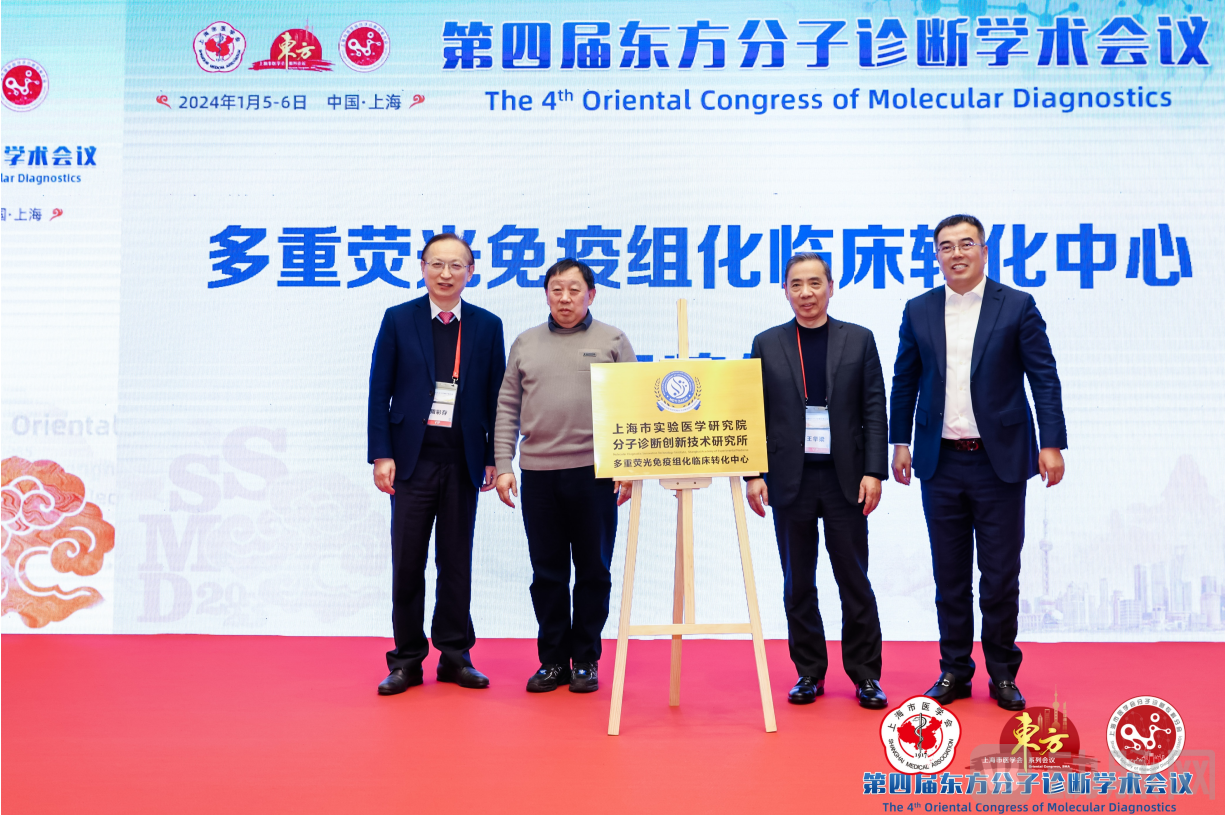
According to VCBeat, the mIHC Clinical Translation Technology Center was established through a close collaboration between the Institute of Innovative Molecular Diagnostics Technologies at the Shanghai Institute of Laboratory Medicine and Kuoran Biomedical Technology (Shanghai) Co., Ltd. The center is dedicated to addressing key challenges in the clinical translation of multiplex immunohistochemistry (mIHC). It will strengthen the research and development capabilities of domestically produced intelligent digital pathology instruments and analysis software, establish industry standards for mIHC, and promote the formulation of expert consensus statements and clinical practice guidelines.
The establishment of this center marks a significant step forward in the clinical translation of multiplex immunohistochemistry (mIHC). In driving the widespread clinical adoption and commercialization of next-generation pathology technologies, we have witnessed the technical prowess and determination of Kuoran Biomedical. Numerous leading academics have fully affirmed the clinical value of mIHC. We are confident that this key pathological technology will achieve faster and better development in the future, playing a core role in building the next-generation pathology system.