

Domestic Hard-Tech Breakthroughs Signal a Springtime for Smart Rehabilitation Robotics
Seven years ago, Dr. Li Luya, who had been deeply engaged in robotics and medical device R&D for over two decades, spent more than six months visiting hospitals across China and holding in-depth discussions with dozens of rehabilitation experts. Learning that most stroke patients still lacked access to effective rehabilitation medical devices, he decided to enter the field and develop intelligent rehabilitation robots.
At that time, apart from a few top-tier Grade A tertiary hospitals that possessed suspension-type treadmill rehabilitation robots, intelligent rehabilitation equipment was scarce, and rehabilitation training relied entirely on therapists performing manual techniques and using simple assistive devices.
Over the past seven years, intelligent rehabilitation medical devices have been increasingly integrated into frontline clinical rehabilitation practice, with a growing trend toward deployment in community healthcare settings, elderly care institutions, and even homes. Anjielai, founded under the leadership of Dr. Li, has leveraged this period to accumulate strength and unleash its potential, frequently introducing cutting-edge “black technologies” to build a comprehensive portfolio of intelligent rehabilitation products. This progress has not only attracted significant industry attention but also earned special coverage from CCTV News. These developments signal that the spring season for the intelligent rehabilitation robotics sector has indeed arrived.
On January 18, Anjielai’s independently developed ExoHug®The Upper Limb Medical Rehabilitation Training Device Has Officially Received the NMPA Class II Medical Device Registration Certificate.
ExoHug®The approval marks a milestone for Anjielai in building its portfolio of smart rehabilitation products.
Since September 2022, LiteStepper®The single-lower-limb rehabilitation robot has obtained regulatory approval. To date, Anjielai holds six medical device registration certificates, four of which have been designated as innovative medical devices. Currently, its intelligent rehabilitation robot products cover neurological and musculoskeletal rehabilitation for the shoulder, elbow, wrist, hip, knee, and ankle.
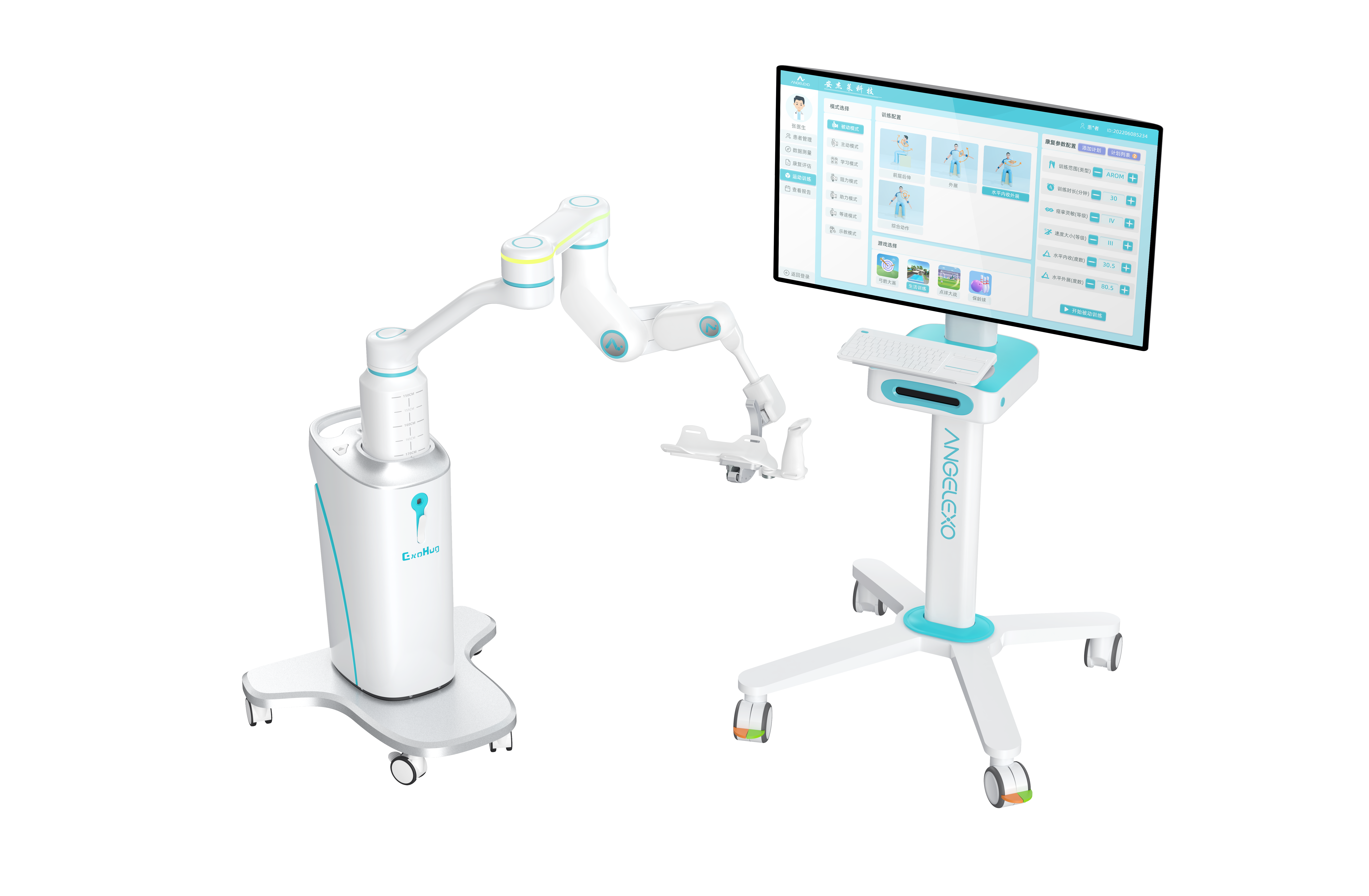
ExoHug®Upper Limb Medical Rehabilitation Training Device, image source: company official website
The rapid and efficient development of robots tailored for different joint areas stems from Angelic’s unwavering commitment to technological innovation. From the outset, the research and development team immersed itself in brain science-based rehabilitation clinical practice—reviewing literature, gathering data, consulting clinical experts, visiting rehabilitation hospitals, and engaging in academic discussions with leading figures in the domestic and international rehabilitation industries. Targeting neurological and musculoskeletal rehabilitation, they developed intelligent rehabilitation medical devices that meet critical clinical needs.
Newly Approved ExoHug®Upper Limb Medical Rehabilitation Training Device: Based on endpoint control, it innovatively integrates core technologies from intelligent robotics R&D, including compliant actuation, virtual reality, force feedback, spatial dynamic structures, deep learning-based visual algorithms, and human-computer interaction. This enables complex multi-joint movements of the upper limb in three-dimensional space, helping patients improve range of motion, enhance muscle strength, and boost cognitive abilities, thereby achieving proactive, personalized, systematic, and precise rehabilitation.
In neurological rehabilitation, traditional therapeutic approaches are either passive or active but lack assistance from intelligent devices. Consequently, rehabilitation outcomes vary significantly across institutions and are heavily influenced by human factors. Patients often experience a lack of engagement during training sessions, which can lead to negative emotions and hinder the effective implementation of rehabilitation programs.
From a clinical practice perspective, rehabilitation therapies that involve active patient participation often yield twice the results with half the effort. Therefore, Angelai adheres to a patient-first approach. Whether for single lower limb, ankle joint, or upper limb rehabilitation equipment, its products integrate the clinical treatment concepts of active and personalized rehabilitation, stimulating patient initiative and significantly improving rehabilitation efficiency and outcomes.
with LiteStepper®Taking the single-limb rehabilitation robot as an example, by collecting and analyzing active movement data from the patient’s unaffected side, it provides adaptive commands and patterns for the affected side, thereby making the rehabilitation training process more personalized. Meanwhile, based on a comprehensive rehabilitation program covering the entire recovery cycle, rehabilitation physicians can save training prescriptions, enabling a more systematic approach to patient recovery.
Guided by the “Assessment–Training–Reassessment” principle, rehabilitation outcomes are presented in a data-driven manner to provide reference for rehabilitation physicians in adjusting training protocols, while rehabilitation robots assist patients in performing more precise rehabilitation training.
Guided by the rehabilitation goals of “proactive, personalized, systematic, and precise” care, Anjielai has leveraged its strengths to strategically deploy AI-driven rehabilitation solutions. As evidenced by its products that have already received regulatory approval and been launched on the market, multiple offerings have been recognized as innovative medical devices, underscoring strong affirmation of the company’s innovation efforts and demonstrating robust product vitality and competitiveness.
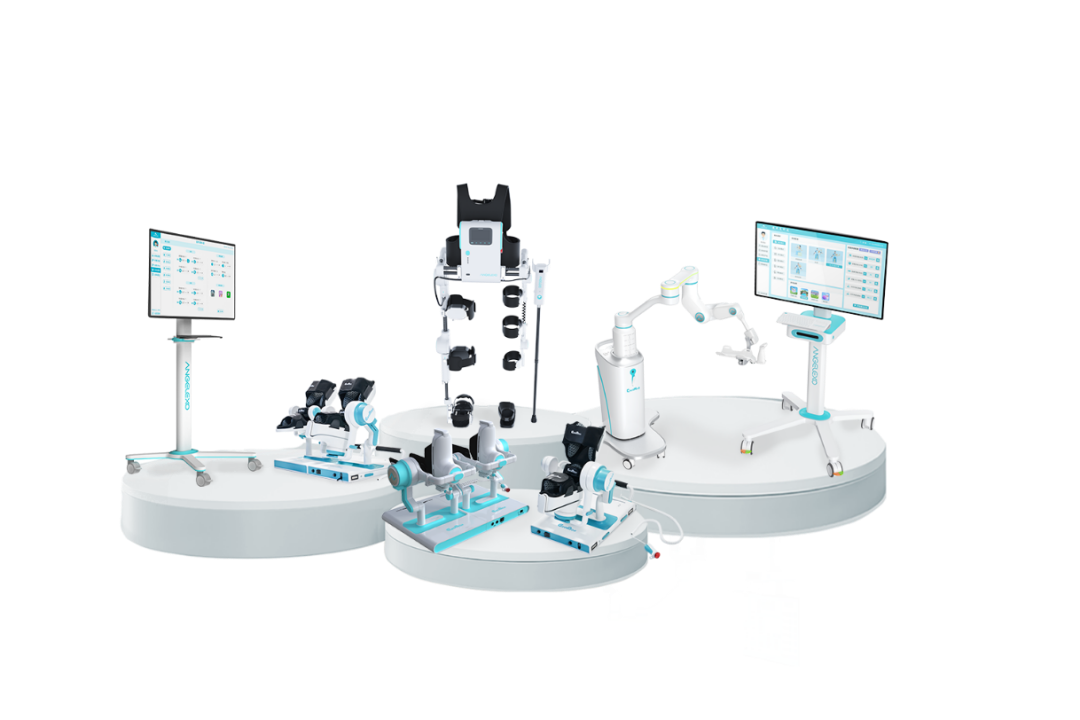
Anjie Lai’s Intelligent Rehabilitation Product Matrix and Clinical Solutions
Artificial intelligence is booming. Brain-computer interfaces hold great promise for the future.
In the medical field, interest in brain-computer interfaces (BCIs) continues to rise. AngelCare has actively engaged in this domain, leveraging its extensive experience in applying neuroscience to clinical practice through deep specialization in neurological and musculoskeletal rehabilitation, and has developed BCI products.
Brain-computer interface (BCI) products utilize non-invasive EEG sensors to capture motor imagery signals from the motor cortex, enabling control over limb movement for rehabilitation purposes. Within the company’s product portfolio, intelligent rehabilitation robots designed for various body parts serve as terminal devices that connect with BCI products, forming a more effective brain-controlled limb rehabilitation training system.
Centered on brain-computer interfaces, we deliver a comprehensive solution for integrated cognitive and motor rehabilitation, enabling patients to “translate thought into movement” and elevating intelligent rehabilitation therapy to new heights.
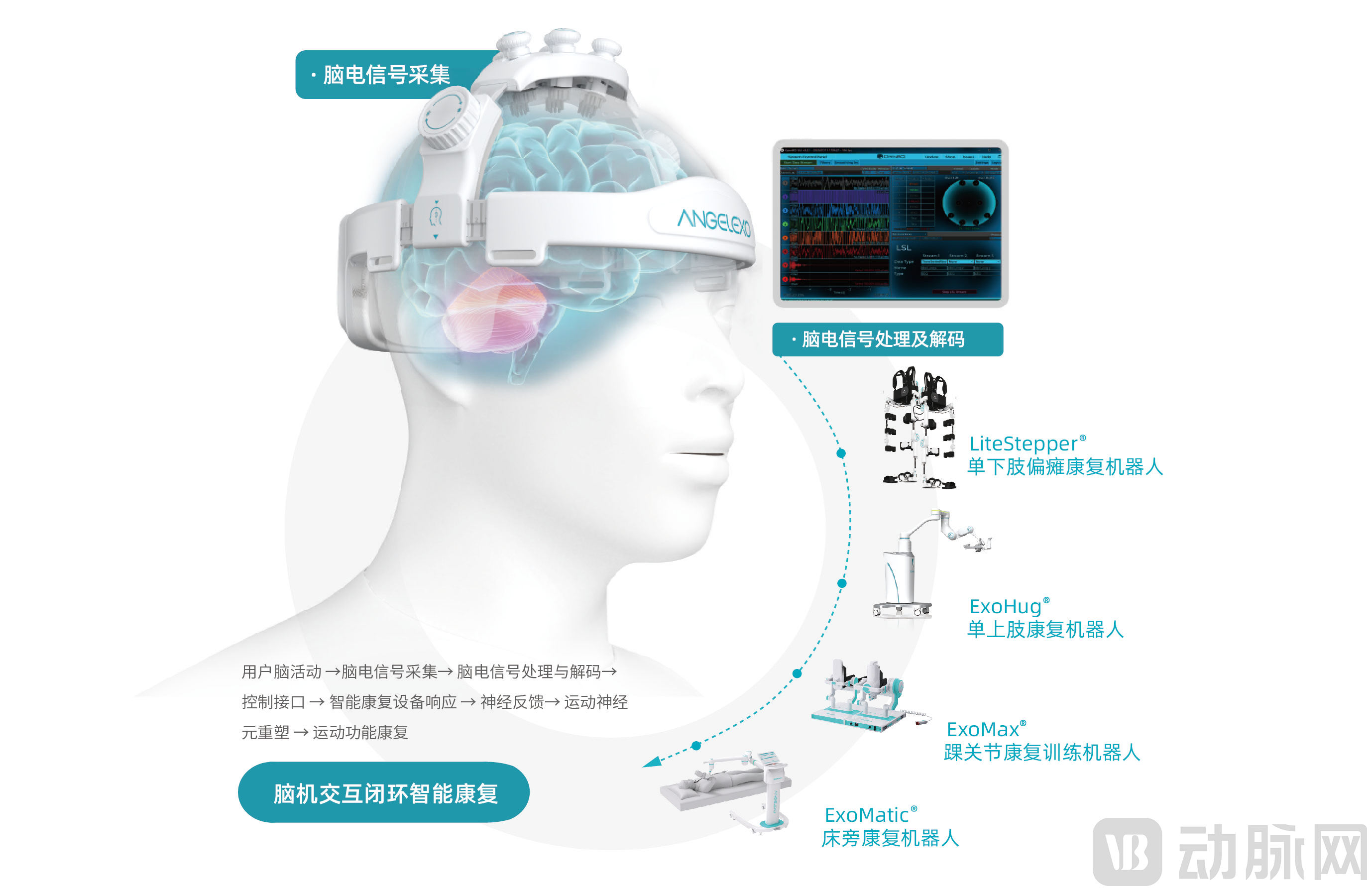
Centered on brain-computer interface products, connecting various types of intelligent rehabilitation robots
For rehabilitation institutions, a comprehensive solution centered on brain-computer interfaces also helps improve overall rehabilitation efficiency.
Taking post-stroke rehabilitation as an example, the entire rehabilitation process is fully integrated, starting from early bedside intervention and extending to the upper and lower limbs as well as individual joints. Patient data throughout the rehabilitation journey are presented in a more multidimensional manner, facilitating comprehensive oversight of the rehabilitation process by physicians.
It is worth noting that the application of early bedside rehabilitation is not limited to the Department of Rehabilitation Medicine; there is substantial demand in other specialties, including Neurosurgery, Neurology, Intensive Care Units (ICU), Orthopedics, Oncology, and Geriatrics. Breaking down barriers between these departments would benefit a broader patient population and generate significant social value.
Recently, Angelai collaborated with the Institute of Automation, Chinese Academy of Sciences, and other institutions to undertake a key project under the National Key R&D Program 2023 “Proactive Health and Technological Responses to Population Aging,” titled “Research on Frontier Technologies for Intelligent Assessment, Early Warning, and Personalized Intervention of Motor and Cognitive Impairments in the Elderly.” Additionally, in partnership with Zhejiang University and other entities, it undertook a project under Zhejiang Province’s 2024 “Jianbing” (Vanguard) and “Lingyan” (Leading Goose) R&D Breakthrough Program, titled “Research on Perception, Motor Enhancement, and Rehabilitation Systems Based on Brain-Computer Interfaces.” The research outcomes from these projects will further solidify the clinical application foundation for brain-computer interface products.
Focusing on brain-computer interfaces, fostering collaborative innovation among industry, academia, research, and healthcare institutions, and building a portfolio of intelligent rehabilitation products constitute the company’s key strategic development directions.
The development of the brain-computer interface (BCI) application ecosystem is critical to the competitiveness of intelligent rehabilitation solutions. Only by developing a wider range of smart rehabilitation products centered on BCI technology, and by building a comprehensive and robust ecosystem that meets the needs of the entire rehabilitation process, can companies stand out in future market competition.
The New Wave of Rehabilitation Robotics Led by Brain-Computer Interface Products Will Undoubtedly Create a New Milestone in Intelligent Rehabilitation Clinical Practice.
In recent years, with the clinical adoption of intelligent rehabilitation devices, clinical academic standards have improved, public awareness of rehabilitation has broadened, and its influence has expanded. Whether in the rehabilitation departments of tertiary general hospitals, secondary rehabilitation hospitals, or community rehabilitation centers, intelligent rehabilitation devices are increasingly favored. A growing number of patients are choosing to undergo rehabilitation treatment at professional institutions equipped with such technology.
Clinical academic research on intelligent rehabilitation robots is also gaining momentum. Over the past year alone, AngelRay has continuously collaborated with institutions such as the Affiliated Rehabilitation Hospital of the National Research Center for Rehabilitation Technical Aids, Yangzhi Rehabilitation Hospital Affiliated to Tongji University, The Second Affiliated Hospital of Zhejiang University School of Medicine, The Fifth Affiliated Hospital of Zhengzhou University, Jiangsu Province People’s Hospital, Hunan Provincial People’s Hospital, and The Second Affiliated Hospital of Anhui Medical University, to conduct joint research projects aimed at exploring and validating the clinical effectiveness of its products, achieving encouraging results.
What remains unchanged is that many patients still choose to recuperate at home after discharge, thereby missing the optimal window for rehabilitation. From a societal perspective, with proper rehabilitation training, patients with hemiplegia could potentially reintegrate into society. However, the reality is that prolonged bed rest not only plunges patients into despair but also drives their families into financial and emotional ruin.
For patients, continuing rehabilitation therapy after undergoing surgery at a major hospital presents numerous practical challenges, such as cost, transportation convenience, and the need for family accompaniment. Therefore, completing subsequent rehabilitation at a secondary hospital or community hospital closer to home is relatively more convenient and cost-effective.
On the other hand, the state is gradually streamlining payment mechanisms for community-based and home-based rehabilitation services. The coverage of medical insurance policies at various levels across provinces and municipalities continues to expand, and the scope of reimbursable rehabilitation medical services is being steadily broadened. Primary-level rehabilitation institutions are beginning to absorb the spillover demand for rehabilitation services from large hospitals.
Compared with large hospitals, community rehabilitation centers have limited physician resources, while there is a large number of people in the surrounding areas with rehabilitation needs, especially among the elderly population. According to the “90+7+3” model, 97% of the elderly will receive care at home and in the community in the future. Home and community settings will become the primary market for rehabilitation services.
To meet the demand for accessible, home-based rehabilitation services, AngelRehab is actively expanding its community rehabilitation network. In September 2023, the Health Commission of Henan Province and the Administration of Traditional Chinese Medicine of Henan Province issued a document to promote the “full-chain” model of integrated medical and elderly care. In collaboration with the Fifth Affiliated Hospital of Zhengzhou University, the company has launched robot-enabled smart rehabilitation service centers at multiple community-level integrated care facilities, including the Fuhua Street Community Health Service Center in Zhengzhou as a pilot site. These initiatives are slated for broader rollout across Henan Province and eventually nationwide.
Smart Rehabilitation: A Field on the Rise
“A stroke patient sat in a wheelchair, his face etched with sorrow, as he was wheeled out of the hospital by his family. That scene struck me deeply; I knew I had to do something to help these patients get back on their feet!” said Dr. Li. He has been dedicated to this mission for seven years.
Over the past seven years, with the improvement of living standards and advancements in health awareness among Chinese residents, the rehabilitation industry is seizing a prime opportunity for rapid development.
According to iResearch, the market size of China’s rehabilitation medical industry reached RMB 101.1 billion in 2021 and is projected to exceed RMB 260 billion by 2025. Frost & Sullivan predicts that, driven by policy support and industry development, the rehabilitation medical device sector may generate an incremental market worth RMB 102.63 billion by 2025.
For enterprises, this market size is substantial enough to warrant significant investment and effort. In the past, awareness of rehabilitation was inadequate, partly due to insufficient publicity and partly because the rehabilitation process itself was often monotonous and tedious. However, a new generation of intelligent rehabilitation equipment, represented by rehabilitation robots, has begun to shift the paradigm toward patient-led care, employing highly interactive methods to encourage patients to actively participate in their rehabilitation training.
It is often said that technology is cold, yet compared to traditional rehabilitation equipment of the past, rehabilitation robots offer more compassionate assistance. For patients who have endured illness and even life-and-death struggles, there is a greater need for care and empathy. Intelligent rehabilitation subtly addresses these challenges through smart interventions, providing gentle, unobtrusive support during the stages when patients are most prone to negative emotions and self-abandonment.
Intelligent rehabilitation products, represented by rehabilitation robots, are becoming the dawn that guides patients out of darkness.
Rehabilitation is not the end of treatment, but the beginning of a new life.