

Jiyuan Medical Accelerates Global Expansion with Overseas Manufacturing Facility and Filing of IPO Prospectus
On January 17, the National Bureau of Statistics released 2023 demographic data showing that China had 9.02 million births for the full year, with a birth rate of 6.39 per thousand and a natural growth rate of -1.48 per thousand. This marks the seventh consecutive annual decline in China’s number of births since 2017. The Party Leadership Group of the National Health Commission has publicly stated that under conditions of negative population growth, “declining birthrates and population aging” will become the new normal.
To more effectively address changes in demographic trends, an increasing number of pro-natalist policies have been introduced.In January 2024, following the inclusion of multiple therapeutic assisted reproductive technology (ART) procedures in the outpatient reimbursement scope of basic medical insurance by the Beijing and Guangxi Healthcare Security Administrations, the Gansu Provincial Healthcare Security Administration also announced that, effective February 1, 2024, certain therapeutic ART medical services, including “oocyte retrieval,” would be covered by the basic medical insurance and work-related injury insurance funds.
Intrauterine pathologies in women, such as intrauterine infection and intrauterine adhesions, are among the common causes of infertility and a significant factor contributing to the failure of assisted reproductive technology (ART). In the treatment of infertility, hysteroscopy is considered the "gold standard" for diagnosing intrauterine lesions and holds substantial value in improving pregnancy rates following ART.
Amid this new demographic landscape and favorable policy environment, Jiangsu Jiyuan Medical Technology Co., Ltd. (hereinafter referred to as “Jiyuan Medical”), the global leader in disposable electronic hysteroscopes, focuses on “3A+"Hysteroscopic Diagnosis and Treatment Technology, Independently Developed ARMI with Independent Intellectual Property Rights"®The disposable electronic hysteroscope has been registered and marketed in more than 30 countries and regions worldwide, which is of great significance for promoting the widespread adoption of disposable electronic hysteroscopes and benefiting female patients globally.
What is “3A”+“Diagnostic and therapeutic techniques? Compared with traditional reusable hysteroscopes, what are the advantages of single-use electronic hysteroscopes?”With these questions in mind, VCBeat conducted an exclusive interview with Zhang Yunfei, founder and chairman of Jiyuan Medical, to discuss hysteroscope 3A+Dialogue on the Popularization and Integrated Development of Diagnosis and Treatment
“3A+It is a diagnostic and therapeutic technology concept first proposed globally by Jiyuan Medical, with all of Jiyuan Medical’s businesses—including R&D and manufacturing, marketing, and product services—centered around 3A+“Elaborating on this concept, it specifically refers to a disposable hysteroscopic diagnosis and treatment technology that enables ‘anytime, anywhere, by anyone, with truly no cross-infection.’ This entails promoting the adoption of clearer, minimally invasive, and more convenient disposable electronic hysteroscopes in a broader range of clinical scenarios, thereby meeting the diagnostic and therapeutic needs of more physicians and patients,” said Zhang Yunfei.
First, “anytime, anywhere (Anysite, Anytime)” refers to leveraging ARMI®Disposable Electronic Hysteroscope: Any medical institution or health examination center with the capability to perform hysteroscopy in outpatient and day-surgery settings can implement the "See & Treat" concept, enabling "immediate consultation upon appointment and immediate treatment upon diagnosis."
On January 9, 2024, the Chinese Journal of Obstetrics and Gynecology published the “Chinese Expert Consensus on the Establishment and Management Processes for Day-Case Hysteroscopic Surgery Centers,” which stated thatImplementing day-case hysteroscopic surgery and establishing dedicated day-case hysteroscopic surgery centers are effective approaches to addressing the difficulties and high costs faced by patients with gynecological diseases in tertiary general or specialized hospitals.
The slender, flexible body of the disposable electronic hysteroscope features moderate curvature, minimizing uterine trauma. Consequently, cervical dilation and anesthesia are not required, effectively alleviating patient discomfort. Furthermore, the lower procurement cost, ready-to-use design without assembly, and single-use nature of the device reduce both product maintenance expenses and patients’ medical costs, while enhancing hospital diagnostic and treatment efficiency.
Secondly, “Anybody” refers to ARMI®The insertion tube of the disposable electronic hysteroscope has an outer diameter of ≤5 mm, which is one-third thinner than that of reusable hysteroscopes. It facilitates procedures such as uterine cavity examination, biopsy, surgery, and fallopian tube recanalization, thereby expanding the application of hysteroscopy in the diagnosis and treatment of gynecological diseases.
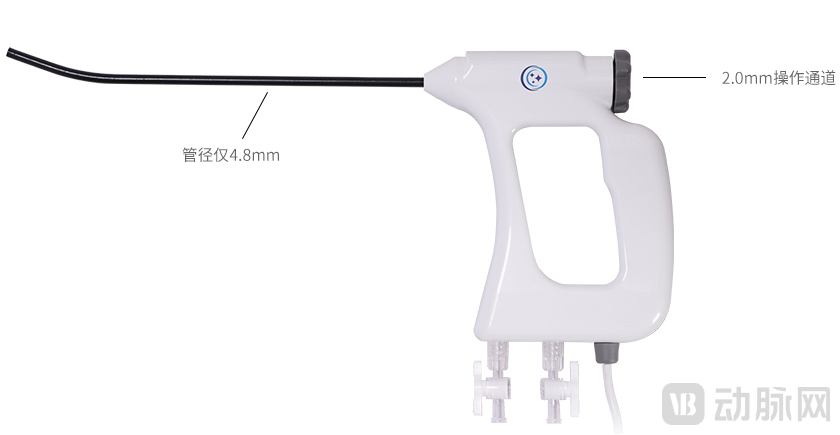
ARMI®Disposable Electronic Hysteroscope
ARMI®The single-use electronic hysteroscope features a high degree of digitization, with an ultra-slim outer diameter of 4.8 mm (3.0 mm for the micro-hysteroscope). Its 16° angled tip, combined with a 100° field of view and left-right 180° rotation control, fully meets the access standards for vaginal hysteroscopic techniques. It is particularly suitable for patients in whom traditional hysteroscopy is more prone to failure, such as those who are obese, have anteverted or retroverted uteri, cervical stenosis, or are infants and females under 17 years of age. In addition, ARMI®Its various specifications can also match the specific physiological structures of different ethnic groups.
For assisted reproductive technology, traditional reusable hysteroscopes require mechanical dilation of the cervix to 9 mm prior to examination, which can easily damage the cervical microstructure and compromise conception success rates. In contrast, single-use electronic hysteroscopes serve as a powerful tool for outpatient evaluations in assisted reproduction, enabling direct and accurate assessment of the fallopian tubes, endometrium, ovaries, and other tissues. This facilitates the diagnosis of infertility causes and improves the likelihood of conception.
Finally, the concept of “zero risk of cross-infection” addresses the fact that traditional reusable hysteroscopic instruments require time-consuming and multi-step sterilization and cleaning processes before they can be reused. In contrast, disposable electronic hysteroscopes require no disinfection, are ready for immediate use and then discarded, offering high efficiency and convenience while truly eliminating the risk of cross-infection.
Jiyuan Medical’s in-development product pipeline also includes its self-developed GQJ.®Medical endoscope image processors, disposable surgical instruments, suction catheters, resection loops, and more, aiming to create a comprehensive disposable gynecological endoscopy solution based on disposable electronic hysteroscopes.
In early 2024, Jiangsu Jiyuan Medical Technology Co., Ltd., an industry leader, once again surpassed itself as its self-developed second-generation “Disposable Electronic Hysteroscopic Imaging Catheter” and second-generation “Medical Image Processor” received approval for market launch from the National Medical Products Administration.
Zhang Yunfei stated, “Compared to the first generation, the second-generation ARMI®“The iterative advantages of disposable electronic hysteroscopes can be perfectly encapsulated in three words: inheritance, supplementation, and upgrade.”
As of September 2023, the first-generation single-use electronic hysteroscope had been utilized in over 5,000 cases across more than 800 medical institutions. The second-generation model retains and builds upon the clinically validated advantages of its predecessor.Meanwhile, in response to clinical feedback, the R&D team expanded the specifications of disposable electronic hysteroscopes, including ultra-thin integrated scopes with an outer diameter of <4 mm featuring an operating channel, ultra-thin diagnostic scopes with an outer diameter of <3 mm, and hysteroscopes of varying lengths tailored to the anatomical characteristics of different ethnic populations across countries.
It is reported that the second-generation disposable electronic hysteroscope has a lower overall cost compared to the first generation., making it more suitable for rapidly penetrating high-end markets in developed countries such as Europe and the United States, as well as for popularization in emerging markets like Southeast Asia. It reduces patients’ healthcare costs while enhancing the allocation of primary healthcare resources and service capabilities.
“Upgrade” primarily refers to two aspects. First, the second-generation medical endoscopic image processor is equipped with a high-performance processor, significantly enhancing imaging quality and image processing capabilities. This enables the product to provide superior computational power and image quality in the complex intrauterine environment, assisting physicians in detecting lesions that are difficult to identify with the naked eye, thereby reducing the rates of missed diagnoses and adverse events.
In addition, the second-generation product features automatic recognition of inserted instrument information, which can be directly linked to patient data, thereby eliminating cumbersome manual operations during surgery. It also introduces a 16:9 aspect ratio for image display and upgrades the module resolution from 160,000 pixels to 640,000 and 1 million pixels, among other functional and performance enhancements.
VCBeat learned during the interview that,Jiyuan Medical’s third-generation single-use ultra-high-definition electronic hysteroscope is currently under development., and will soon provide hospitals, physicians, and patients with more convenient, safe, and cost-effective treatment options through its innovative product performance.
In the interview, Zhang Yunfei vividly compared traditional reusable hysteroscopes to film cameras and disposable electronic hysteroscopes to digital cameras equipped with CMOS sensors. “With lower costs, ease of mass production, reduced power consumption, and high integration, CMOS sensors rewrote the imaging logic of the film and CCD era upon their market launch, capturing the majority of the market.”“Likewise, single-use electronic hysteroscopes that offer greater clarity, minimal invasiveness, enhanced convenience, and lower costs will also redefine the era and drive the global adoption of single-use hysteroscopy technology.”
Mass production and cost control capabilities are the key competitive advantages for manufacturers of “commoditized” single-use electronic hysteroscopes. This requires enterprises to possess stable, large-scale production capacity, while also imposing new demands on their capabilities in cost control, manufacturing proficiency, and quality control.Currently, Jiyuan Medical has established the manufacturing capability for single-use electronic hysteroscopes at scale and with low costs.
In terms of scaled production capacity, Jiyuan Medical has established its own factory certified under the ISO 13485 quality management system for medical devices, adopting modularized production methods with an annual total output capacity of 350,000 units. Regarding cost control, all components of Jiyuan Medical’s single-use electronic hysteroscopes are domestically produced in China, which helps control costs and ensure a stable supply.
For Jiyuan Medical, a domestic industry leader, “going global” is an even more complex and multifaceted imperative. In terms of innovation advantages, Jiyuan Medical has filed over 100 patents domestically and internationally, with more than 30 already granted. The company has also applied for over ten international trademarks and secured multiple PCT international patents in regions including the United States, the European Union, and Southeast Asia.
Boston Scientific has projected that the global market size for single-use endoscopes will reach $2 billion in 2024. Meanwhile, GlobalData predicts that the number of single-use endoscopic procedures in North America alone will increase from 1.28 billion in 2021 to 7.39 billion in 2030, representing a compound annual growth rate (CAGR) of 30.5%. Driven by the large patient population with infertility and breakthroughs in assisted reproductive technologies, the global single-use endoscope market is demonstrating rapid growth.
Faced with a global market of immense potential, Jiangsu Jiyuan Medical Technology Co., Ltd. is actively establishing overseas production bases to deliver disposable gynecological endoscopy solutions with superior performance and cost-effectiveness to doctors and patients worldwide. By leveraging geographic proximity to target markets, the company aims to respond efficiently to customer needs, integrate into local markets, and reduce transportation and logistics costs. Meanwhile, centered on these overseas facilities, the company will better utilize global resources, enhance brand awareness and influence, and lay the foundation for the future penetration of more innovative products.
As previously mentioned, Jiyuan Medical has currently completed registration and sales in more than 30 countries and regions. It is expected to complete regulatory approvals for market access in over 130 countries by 2024, with sales operations in more than 90 countries.
At the conclusion of the interview, Zhang Yunfei stated, “The name ‘Jiyuan’ signifies ‘practicing medicine to benefit the world and pursuing far-reaching ambitions.’ The company has three objectives: First, to achieve the position of ‘No. 1 in China and a global leader’ in the field of single-use electronic hysteroscopes, promoting the minimally invasive, intelligent, and outpatient-based transformation of global hysteroscopic diagnosis and treatment technologies. Second, to list on the STAR Market within the next three to five years. Third, to break through the single-use hysteroscope segment and align the company’s R&D strategy with the broader single-use endoscope market, thereby shouldering a higher and greater mission in medical technology innovation.”