

Sensci Bio's Decade-Long Breakthrough: The World’s First Blood-Based Precision Diagnostic Kit for Early-Stage Alzheimer’s Disease
At the end of 2023, the prestigious international journal Brain, Behavior, and Immunity published online a groundbreaking research article titled “Specific serum autoantibodies predict the development and progression of Alzheimer’s disease with high accuracy (血清特异性自身抗体准确预测阿尔茨海默病的发生发展).”For the first time, seven specific serum autoantibodies with diagnostic value were identified, laying the foundation for the development of new early diagnostic markers for Alzheimer’s disease (AD) based on peripheral blood circulation.
This paper, with an impact factor of 15.1, was jointly published by Shanghai Xiansai Biotechnology Co., Ltd. and the team led by Professor Shen Lu, Director of the Department of Neurology at Xiangya Hospital of Central South University. Previously, as a collaborating Principal Investigator (PI) for Xiansai Biotechnology, Professor Shen presented this breakthrough finding to global peers at the Alzheimer’s Association International Conference (AAIC) in July 2023.
Xiansai Biotechnology is a global innovative research enterprise founded in 2018, with its primary research focus on the early and precise diagnosis of neurological and vascular diseases. Currently,The company’s first product, the Alzheimer’s Disease Seven Autoantibody Detection Kit, has passed the special review procedure for Class II innovative medical devices administered by the Hunan Provincial Medical Products Administration, and is currently applying for Breakthrough Device Designation from the U.S. FDA.
From Imitation to Innovation: 20 Years of Serial Entrepreneurship
In 1998, after graduating, Cao Liqin, the founder of Xiansai Biotechnology, successively joined multiple pharmaceutical companies, including Spry Pharmaceutical, the Innovation Business Division of Changsha Double-Crane Pharmaceutical, and Dekang Pharmaceutical. He gained experience across various functional departments of pharmaceutical enterprises, spanning R&D, sales, and operational management.
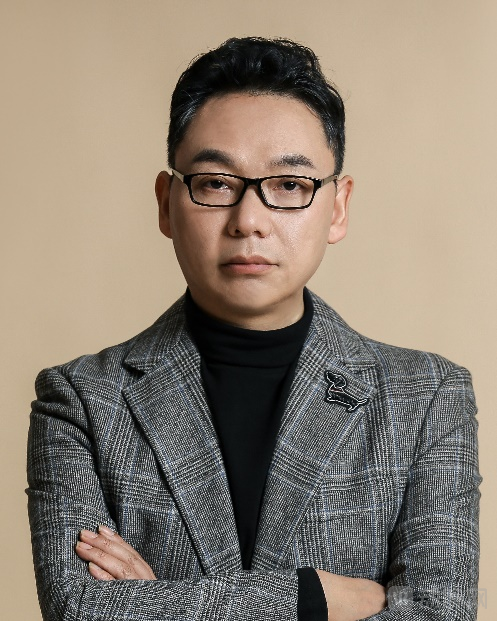
Cao Liqin, Founder of Xiansai Biotechnology
Since 2003, Cao Liqin has embarked on independent entrepreneurship, focusing deeply on the generic drug sector and delivering an impressive track record. Notable achievements include: In 2008, Cao Liqin fully funded and managed the entire process for the early-stage R&D, registration, and promotion of Xinshenghua Tablets, a postpartum analgesic. This product has been on the market for over a decade, with annual sales exceeding RMB 100 million. In 2014, he participated in the nationwide promotion of Piperacillin Sodium and Sulbactam Sodium for Injection, a penicillin-class antibiotic, driving its peak annual sales to nearly 20 million vials. Although China’s Marketing Authorization Holder (MAH) system was not officially implemented until 2019, Cao Liqin, having identified this trend years in advance, became one of the earliest explorers and holders of drug MAHs, successfully developing numerous projects.
However, sticking to the path of generic drugs was clearly not Cao Liqin’s aspiration. “Generic drug development is a disordered and homogenized creative process, where much of what is termed ‘innovation’ is merely low-cost repetition.” In pursuit of true innovation, Cao Liqin dove headfirst into the innovative biopharmaceutical industry in 2013. Leveraging his extensive network built over many years, he traveled frequently between China and abroad, engaging with scientists behind various scientific achievements to learn from them and negotiate collaborations.
“The most time-consuming project originated from the Molecular Pathology Laboratory at the University of Chicago. Although we ultimately did not invest in it, this project was highly innovative as a typical example of academic research commercialization, yet it faced numerous challenges in commercialization. We followed up on this project for a year and a half, spending at least one month in their laboratory to help them resolve many operational difficulties,” said Cao Liqin.
San Diego, Chicago, and Houston are the three U.S. cities where Cao Liqin has been based. Innovation is their common attribute. “During these exchanges and collaborative learning experiences, although my background is in food science, a considerable number of people have mistakenly assumed that I specialize in biotechnology or healthcare-related fields,” Cao Liqin remarked with a smile.
From 2013 to 2016, Cao Liqin evaluated more than 1,000 projects and, after conducting on-site visits to over 30 of them, narrowed his focus to two major areas: neuroscience and solid tumors. “At Northwestern University in the United States, we met Professor Matts, who specializes in dopamine research within neuroscience. His laboratory has conducted clinical trials in the field of dopamine for more than 30 years, elucidating its mechanisms. The more I engaged with this area, the greater my passion and interest in neuroscience became,” said Cao Liqin.
“The more in-depth my exchanges and communications with overseas professors and scholars became, the more ashamed I felt—ashamed that I had not yet taken steps toward innovation at that time,” said Cao Liqin. Subsequently, he invested in the world’s first improved formulation of docetaxel, which received FDA marketing approval in late 2022. After accumulating substantial high-quality resources and gaining extensive expertise in the operation and management of China’s pharmaceutical market, Cao Liqin also participated in the early-stage investment in Changchun Shengboma Biotechnology. This company is a high-tech enterprise with full-chain R&D and manufacturing capabilities, ranging from medical-grade polylactic acid polymers to finished absorbable medical devices, and is poised to become the leading global brand for “baby face injections.”
Cao Liqin has also resolved to pursue genuine innovation. “Addressing unmet clinical needs is one of our key criteria. Globally, there is a lack of highly suitable solutions for the precise diagnosis of early-stage Alzheimer’s disease (AD),” said Cao Liqin. As an irreversible neurodegenerative disorder with poorly understood pathogenesis, AD often reaches its optimal intervention window before a clinical diagnosis is made. Therefore, early detection and screening for AD are particularly crucial. Naturally, the precise early diagnosis of neurological and vascular diseases became the ultimate direction chosen by Cao Liqin and his team.
Around 2017, Cao Liqin led his team to formally collaborate with Professor Shen Lu from Central South University. This marked Cao Liqin’s genuine pivot toward developing “first-in-class” innovative diagnostic products. During the same period, perhaps moved by Cao Liqin’s determination for innovation or drawn by a shared vision for innovative projects, he assembled a team of young and promising scientists in addition to Dr. Zhu Shuyong. Most members of this team were born after 1985, including Wu Qihui, a postdoctoral fellow at the University of Pennsylvania who serves as the company’s Chief Scientist, and Yin Kun, also a postdoctoral fellow at the University of Pennsylvania, a researcher at Shanghai Jiao Tong University School of Medicine, and the head of the research group on intelligent rapid diagnosis of pathogenic microorganisms, who serves as the Technical Director.
In addition, the team has received strategic guidance from Liu Xiaoling, former Head of Antibody Drug R&D for Alzheimer’s Disease (AD) and Parkinson’s Disease (PD) at Eli Lilly and Company. The clinical Principal Investigator (PI) team comprises numerous leading industry experts and professors from China and abroad, including Dr. Zhu Shuyong, who holds a Ph.D. from the Hannover Institute of Biomedical Research and completed his postdoctoral fellowship at the Institute of Virology, Hannover Medical School; and Jim Lu, a Ph.D. graduate of Johns Hopkins University, board-certified pathologist in the United States, and practicing pathologist.
From the perspective of team composition, leveraging resources accumulated over years of travel between China and the United States, along with a long-term strategic vision, Cao Liqin has not only built a young and dynamic team of scientists but also established a team with a global background to pursue more far-reaching and broader objectives.
Non-invasive, Accurate, and Early: Optimal Diagnostic Criteria Based on ROC Curve Analysis
Currently, early diagnostic biomarkers for Alzheimer’s disease (AD) include cerebrospinal fluid (CSF) Aβ42/40, p-tau, and T-tau levels, as well as Aβ-PET and tau-PET imaging. However, the former involves invasive procedures with difficult sample collection, while the latter is costly and requires specialized qualifications, limiting their widespread application in early AD diagnosis. Consequently, the search for easily accessible and cost-effective biomarkers remains a focal point of research in early AD diagnosis.
After years of effort, the team at Xiansai Biotechnology expressed over 1,000 recombinant self-antigens potentially associated with Alzheimer’s disease (AD), aging, and neurodegenerative diseases in vitro, and collected serum samples from 1,686 participants across four cohorts, including 767 AD patients, 146 individuals with mild cognitive impairment, 518 cognitively normal healthy elderly individuals, and 255 patients with other neurodegenerative diseases. They successfully screened and identified seven AD-specific autoantibodies, including those against MAPT, JMJD2D, and ASXL1.
It is important to emphasize that this is a set of biomarkers capable of crossing the blood-brain barrier and detectable in peripheral blood. Further validation and optimized integration have revealed that,The diagnostic performance of the 7-antibody panel for AD reached 0.94, while its discriminatory performance for PD and frontotemporal dementia (FTD) was 0.91 and 0.71, respectively.
The immune system plays a crucial role in the pathogenesis and progression of Alzheimer's disease (AD). As a chronic brain injury disorder, AD involves the release and exposure of central nervous system antigens, which may trigger autoimmune responses involving self-antigens and antibodies. Plasma cells selectively express antigen-specific antibodies through clonal expansion.
This research, published in late November 2023, was based on data already completed by Shanghai Xiansai Biotechnology Co., Ltd. in 2021. When the findings were first presented at the global Alzheimer’s Association International Conference (AAIC), Professor Shen Lu stated, “Blood tests are simpler and more scalable than cerebrospinal fluid analysis and neuroimaging. Identifying Alzheimer’s disease (AD) in the preclinical stage allows for intervention before significant brain damage occurs, potentially altering the course of the disease.”
Based on these research findings, Xiansai Biotechnology has developed the world’s first non-invasive blood-based diagnostic tool applicable to all stages of Alzheimer’s disease (AD). Compared with currently available diagnostic methods, the seven-autoantibody assay offers the advantages of being non-invasive, accurate, and capable of early detection. It represents the optimal diagnostic criterion as determined by ROC curve analysis, enabling precise early diagnosis through a simple peripheral blood draw.
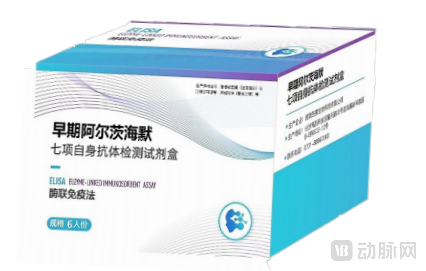
Xiansai Biotech Early-Stage Alzheimer's Disease Seven-Autoantibody Detection Kit
Powered by Three Major Technology Platforms, the First Non-Invasive Blood Test Kit for Alzheimer’s Disease is Set to Enter the Commercialization Stage
“World’s First” Innovation: Underpinned by the Three Major Technology Platforms Established by Xiansai Biotechnology from the OutsetSynthetic Biology Platform, Proteomics Platform, Genomics Platform.
“The synthetic biology platform is the most fundamental underlying tool, through which we can precisely design a wide variety of enzymes and proteins,” introduced Cao Liqin.
Since 2011, the founding team of Xiansai Biotechnology has been dedicated to building proteomics and genomics platforms, while engaging in the innovative research, development, and improvement of related products. On its proteomics platform, Xiansai Biotechnology applies self-generated antibodies as the underlying technology for early disease diagnostic biomarkers across various technical platforms, including enzyme-linked immunosorbent assay (ELISA), chemiluminescence immunoassay, microfluidics, and colloidal gold assays.
On the genomics platform, Xiansai Biotechnology primarily focuses on upgrading mobile PCR-related testing technologies. Currently, Xiansai Biotechnology has improved LAMP technology and launchedXiansai High-Sensitivity LAMP Technology, and in line with the trend toward home-based testing technologies, it will develop single-use home test kits for detecting infectious diseases such as Mycoplasma, Chlamydia, HIV, and Helicobacter pylori infections. Cao Liqin revealed to VCBeat that this technology is quite globally leading.
Currently, Xiansai Biotechnology’s proprietary Alzheimer’s disease (AD) diagnostic project is on the verge of commercialization, and the company holds more than five invention patents in China. From a global perspective, Xiansai Biotechnology has initiated its international expansion strategy. Regarding overseas patent protection, it has already secured PCT patent coverage in Japan, while patent applications in the United States, Europe, and other countries have been accepted.
In addition to its early diagnosis project for Alzheimer’s disease (AD), Shanghai Xiansai Biotechnology Co., Ltd. has deployed multiple innovative diagnostic initiatives both domestically and internationally, covering conditions such as sudden-death diseases represented by cerebral infarction and respiratory diseases represented by Mycoplasma pneumoniae pneumonia. Notably, its cerebral infarction diagnostic project, based on autoantibody testing, is poised to enter the registration process with the National Medical Products Administration (NMPA). From an international perspective, significant gaps remain in these areas, and Xiansai Biotechnology’s early strategic positioning may enable it to seize a competitive advantage.
From defining a brand-new entrepreneurial direction to approving each company project, Cao Liqin has maintained a prudent style and an international perspective. “I have a strong passion for innovation, which is why I mostly collaborate with young, driven scientists when building my team. However, I am also relatively conservative. Whether setting broad strategic directions or specific tactical goals, I aim to address the most pressing real-world problems globally over the coming decades. For instance, our project initiatives must not be driven solely by commercial objectives; instead, they must be grounded in unmet clinical needs—issues that remain unresolved on a global scale. We are committed to building a highly innovative, ‘cutting-edge’ elite team.”
In addition to diagnostics, Shanghai Xiansai Biotechnology Co., Ltd. may also expand into the therapeutic field in the future, continuing to address all unmet clinical needs and unresolved challenges worldwide.