

Neurolief Submits IPO Prospectus: Pioneering Non-Invasive Neuromodulation for Migraine and Depression
Neurolief
Developer of Digital Therapeutics and Neuromodulation Technologies
Neurolief is a developer of neuromodulation technologies, founded in 2013. As a company focused on developing a digital therapeutic platform for the treatment of chronic neurological and psychiatric disorders, it has developed proprietary neuromodulation technologies for treating neurological and psychiatric conditions.
Neurolief’s technical domains include neuroscience, neuromodulation technologies, and neurotechnology devices.
Headquartered in Israel, the company primarily conducts its business in Tampa, Florida, USA. Its neuromodulation product for migraine relief has established partnerships with local companies in Japan, Greater China, and South Korea.
On January 2, 2024, Neurolief announced that it had secured a strategic equity investment from Sawai Group Holdings, solidifying the strategic partnership between Neurolief and the Japanese pharmaceutical company. Prior to this, Neurolief had completed its seed and Series A financing rounds.
Neuromodulation technology, as a frontier science involving medicine, bioengineering, and physics, has witnessed rapid global development with the advancement of research in various countries. Its clinical applications have expanded from movement disorders such as Parkinson’s disease, dystonia, and essential tremor to psychiatric and neurological conditions including pain, epilepsy, obsessive-compulsive disorder, anorexia nervosa, and depression.
The neuromodulation market is primarily composed of three major segments: Spinal Cord Stimulation (SCS), Deep Brain Stimulation (DBS), and Vagus Nerve Stimulation (VNS). In terms of global market share, SCS devices account for the largest proportion, representing nearly 55% of the total market in 2018; DBS devices accounted for 16%, VNS devices for 14%, and other categories for approximately 15%.
Although neuromodulation is experiencing high growth globally, its penetration rate in the Chinese market has remained consistently low.
DBS has become a major area of exploration for the intervention of treatment-resistant psychiatric disorders. Clinical trials are currently underway in conditions including depression, Alzheimer’s disease, Tourette syndrome, addiction, anorexia nervosa, and schizophrenia.
For a long period, the lack of domestically produced DBS hardware, the absence of established multidisciplinary teams, the lack of unified and comprehensive guidelines and standardized procedures for DBS implementation, and the high cost of imported products have all been significant factors limiting the development of the domestic market. However, since China introduced Deep Brain Stimulation (DBS) systems in 1998, neuromodulation has begun to develop in the country.
SCS is primarily used to treat intractable pain, such as peripheral nerve injury pain, diabetic foot neuropathic pain, postherpetic neuralgia, and post-amputation pain. Although the patient population is large, the annual number of SCS implants in China remains low compared to the global annual volume of 100,000 cases, largely due to the high cost of SCS therapy.
Vagus Nerve Stimulation Therapy, also known as VNS therapy, is a non-invasive neuromodulation approach for treating epilepsy that does not require craniotomy. It represents a shift from the traditional surgical model of resecting epileptic foci via open skull surgery. By stimulating the left vagus nerve, VNS modulates cerebral electrical activity to help control seizure episodes. In 2005, the U.S. Food and Drug Administration (FDA) approved implantable vagus nerve stimulation (VNS) for the treatment of treatment-resistant depression (TRD). However, there remains a significant gap in the clinical application of VNS for TRD in China.
For the global market, China’s neuromodulation market is still in its early stages of development, with a favorable and uncrowded competitive landscape. Furthermore, neuromodulation technology offers substantial room for expansion across a broad range of indications. Its therapeutic characteristics—namely target specificity, reversibility, durability, and adjustability—create significant potential for future growth in market size.
Currently, pain has become one of the chronic diseases that seriously affect human life and quality of life, following cardiovascular and cerebrovascular diseases, cancer, and other conditions. Chronic pain not only causes problems such as limited physical function, anxiety, insomnia, and depression for patients themselves, but also imposes a huge medical burden on society.
Of grave concern, the “Chinese Guidelines for the Diagnosis and Treatment of Migraine (2022 Edition)” indicate that the healthcare-seeking rate among migraine patients in China is only 52.9%, while the correct diagnosis rate by physicians stands at merely 13.8%. Furthermore, well-known opioid neuromodulatory drugs have exposed numerous problems.
A 2022 report by the U.S. Congress Joint Economic Committee stated that opioid misuse cost the United States nearly $1.5 trillion, accounting for approximately 7% of the nation’s gross domestic product (GDP) that year. The Lancet predicted that, with the rise in co-use of xylazine and opioids, approximately 1.22 million Americans would die from opioid overdoses cumulatively between 2020 and 2029 unless new measures were implemented. Consequently, there is an urgent patient demand for more effective and safer pain management treatments.
Faced with a steadily rising number of patients suffering from pain, companies have increased their R&D investments in novel pain management pharmaceuticals and medical devices. Coupled with strengthened policy guidance and financial support from governments worldwide, the industry has continued to develop, with non-pharmacological treatment modalities gradually gaining prominence.
Among these, the treatment modalities for chronic pain have achieved diversified development. These include not only traditional pharmacological neuromodulation and non-pharmacological therapies (such as interventional procedures, acupuncture, physical therapy, and nerve blocks), but also interventional treatments leveraging emerging technologies, such as VR therapy and neuromodulation.
The medical devices developed by Neurolief represent a breakthrough neurotechnology innovation for the treatment of neurological and neuropsychiatric disorders.
Relivion MG, launched by Neurolief, is a wearable electronic device. It aims to provide a safe, effective, and fast-acting treatment for reducing migraine-related pain by modulating cranial nerves through transcutaneous nerve stimulation.
More specifically, the device features three adjustable output channels,Simultaneously delivering weak electrical pulses to the occipital nerves and the six branches of the trigeminal nerve. This neuromodulatory approach can modulate multiple neural systems in the brain associated with emotion, cognition, and behavior, enabling the release of neurotransmitters in the brainstem and regulating brain networks involved in pain control.
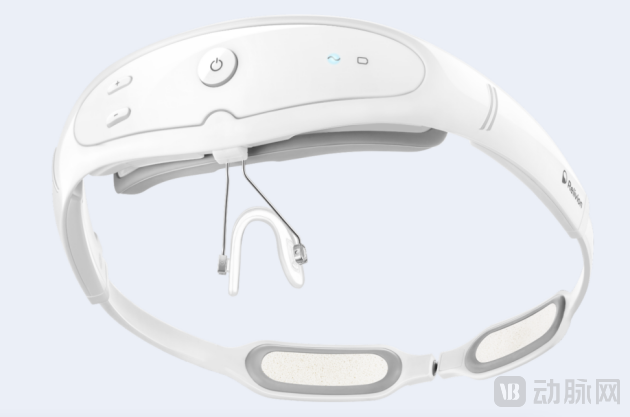
Relivion MG Image source: Neurolief
According to the clinical study results on the official website, Relivion MG significantly alleviated pain in patients when used for the acute treatment of migraine:Two hours after treatment initiation, over 60% of patients experienced pain improvement (compared with 37% in the control group), nearly 50% achieved pain freedom (compared with 11% in the control group), and 75% reported resolution of their most bothersome migraine symptom (compared with 47% in the control group). Subjects had a favorable overall impression of the treatment efficacy, and the safety profile was good.。
As part of the digital therapeutic platform, Relivion MG also connects with a mobile app and cloud-based database. Within the app, patients can log their treatment days and migraine days, while staying informed about the latest recommendations from their physicians. Physicians can remotely monitor patients, analyze patient data, track health status and treatment progress, and use these insights to tailor personalized treatment plans for each patient.
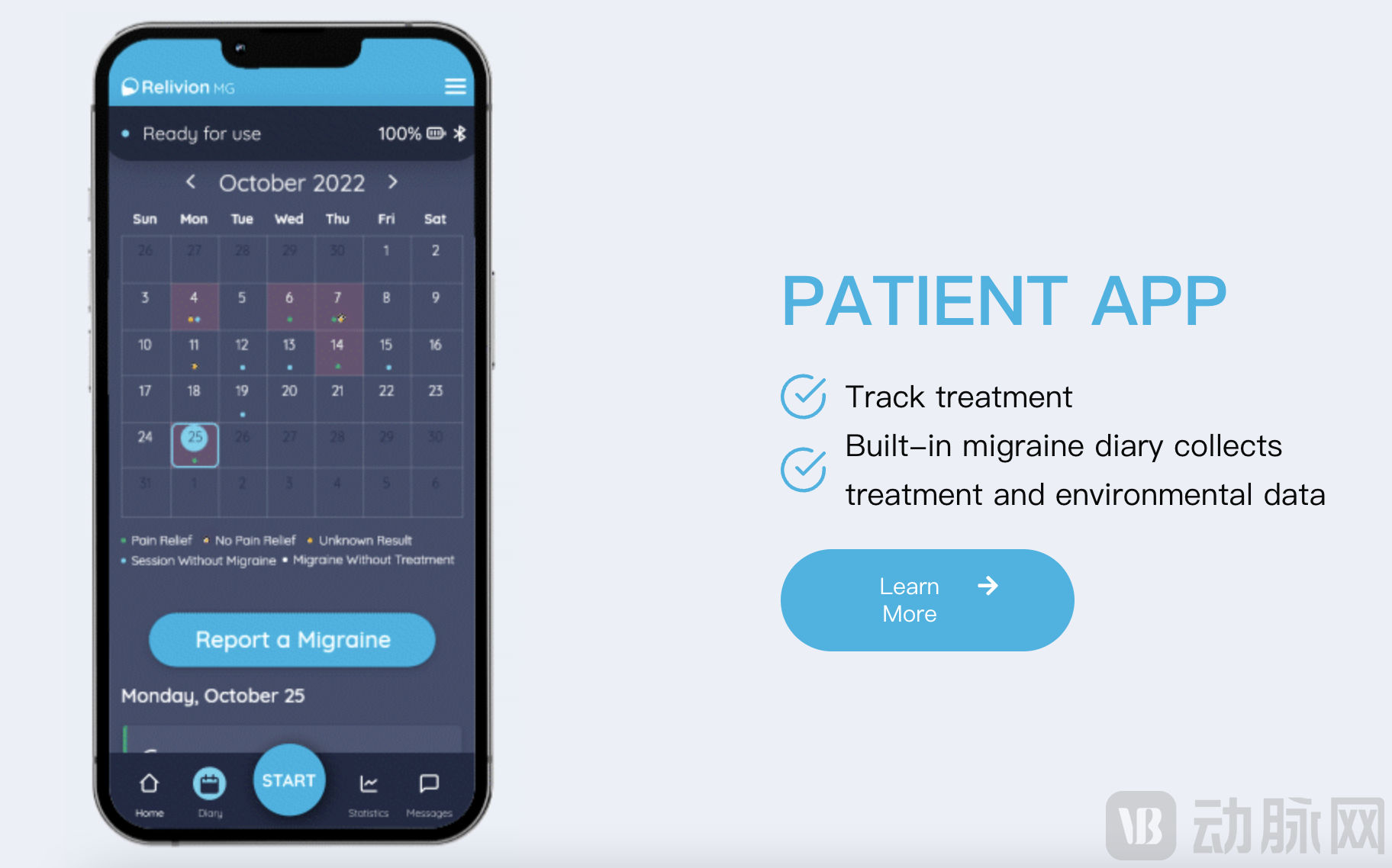
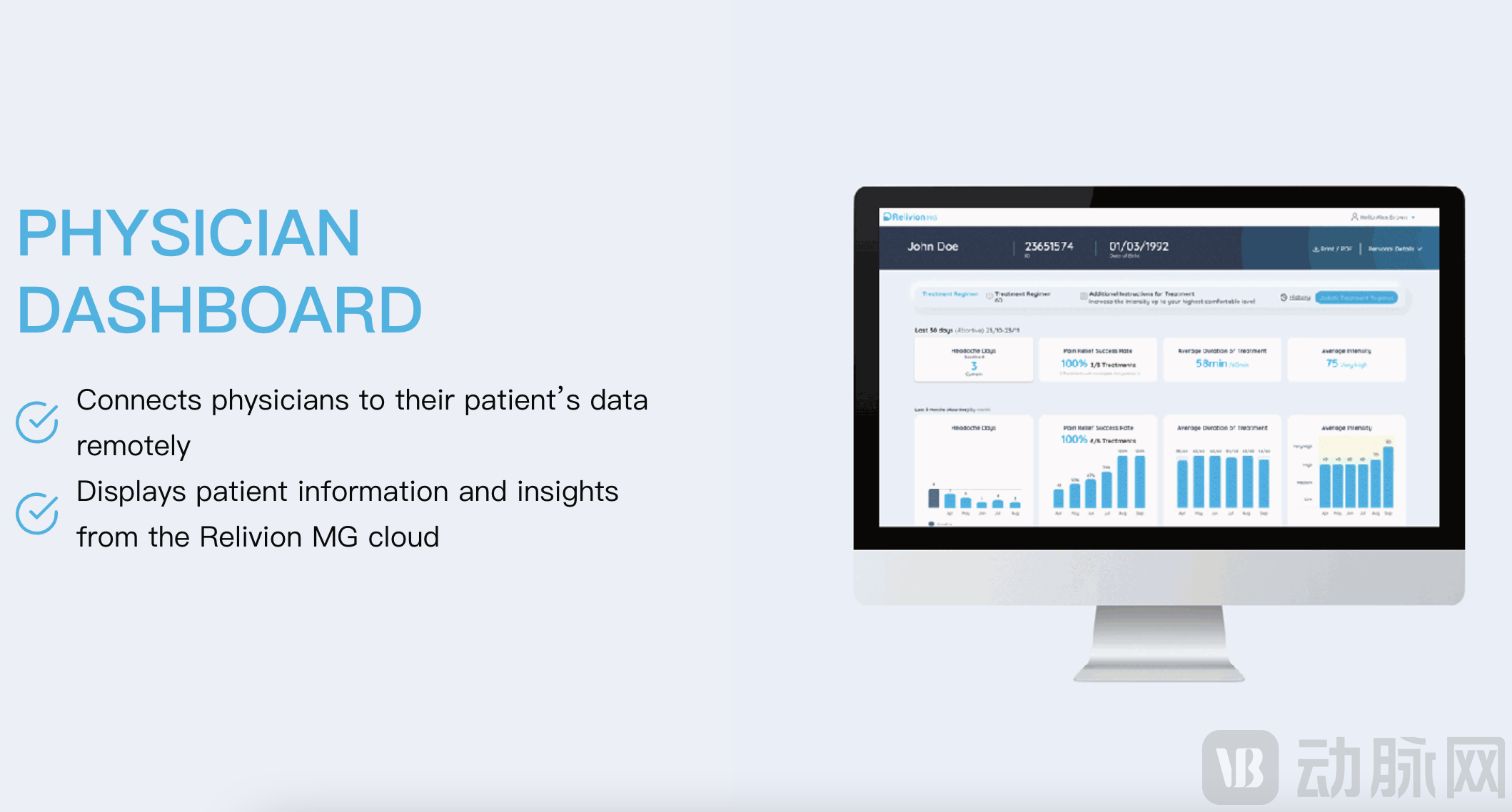
Relivion MG App Image source: Neurolief
Relivion MG has received CE marking in the European Union for the treatment of migraine in adults, and FDA clearance for the treatment of migraine with or without aura in adults. On January 9, 2024, Relivion MG was approved by Japan’s Ministry of Health, Labour and Welfare (MHLW). The company has entered into a collaboration with a Japanese pharmaceutical firm to advance the development and marketing of Relivion in Japan.
In addition, Neurolief has developed Relivion DP for the treatment of major depressive disorder (MDD), which has received FDA Breakthrough Device designation. Looking ahead, Neurolief stated that it will continue to expand its portfolio of treatments for conditions such as depression, anxiety, and insomnia.
Focusing on chronic pain and making neuromodulation its mission has always been the original aspiration of Neurolief’s founders.
Scott Drees, CEO, is a pioneer in the neuromodulation industry. Over his 27-year career, he has been dedicated to developing neuromodulation therapies and companies to meet the needs of patients with chronic neurological disorders. Mr. Drees has held positions at Integer Holdings, Nuvectra, and Neuromodulation Ventures, during which time he amassed extensive experience in neuromodulation therapies, laying the professional foundation for establishing Neurolief.
Another co-founder, Amit Dar, is also an expert in the field of neuromodulation, with over 25 years of experience in developing state-of-the-art neurostimulation technologies.
Prior to founding Neurolief, Amit Dar served as Global Director of R&D at Bioness Neuromodulation and Vice President of R&D for the NeuroMuscular Electrical Stimulation (NESS) system. He played a key role in developing multiple breakthrough neuromodulation technologies and successfully launching them globally, with hundreds of thousands of patients worldwide currently benefiting from these innovations.
On July 8, 2021, Neurolief and Shenlingrui Pharma entered into a partnership, jointly announcing that Shenlingrui Pharma had secured an exclusive license agreement to develop and commercialize Relivion in Greater China and South Korea.
Neurolief is a clinical-stage neuroscience biotechnology company focused on developing and commercializing innovative neuroscience therapies and building an innovative CNS therapeutic pipeline, including treatments for migraine, diabetic peripheral neuropathic pain, depression, attention-deficit/hyperactivity disorder (ADHD), and other CNS disorders with significant unmet clinical needs.
The collaboration between Neurolief and Shenlingrui Pharmaceutical has accelerated new explorations in the field of neuromodulation in China. Today, neuromodulation is experiencing rapid development, with expanding applications and promising long-term prospects. We are confident that the future industry of neuromodulation in China holds great potential.