

Deputy Director Xiao Wei Leads the Establishment of a Medical-Engineering Interdisciplinary Center in Line with Medical Development Trends

In the 1970s, leading U.S. institutions such as Harvard University and the Massachusetts Institute of Technology (MIT) proposed the concept of interdisciplinary integration, established interdisciplinary laboratories, and conducted basic research, applied research, and technology transfer, achieving positive outcomes. To a certain extent, interdisciplinary integration helped these universities usher in a new era of prosperity: U.S. universities have maintained an 80% technology transfer rate, long ranking first in the world.
Similarly, interdisciplinary collaboration between medicine and engineering centers on clinical medical needs by integrating medical science with engineering disciplines such as mathematics and physics. This approach compensates for healthcare professionals’ gaps in engineering expertise, resolves bottlenecks in medical-engineering integration, and injects new vitality into the translation of innovations within hospitals.
A series of compelling cases demonstrate that “the intersection of medicine and engineering empowers clinicians to play a significant role in the translation of research findings into clinical applications.”:
Peking University Third Hospital transferred patents related to “semi-personalized and fully personalized artificial joints for total knee arthroplasty and their minimally invasive precision surgical tools” for RMB 50 million; West China Hospital licensed seven patents for the development of “ultra-long-acting local anesthetics” to enterprises for RMB 250 million; Shanghai Ninth People’s Hospital licensed eight patents for the development of “auditory brainstem implant devices” to enterprises for RMB 30 million...
Xiao WeiHe serves as the Vice President in charge of operations at Sichuan Science City Hospital, which also operates under the name Staff Hospital of the China Academy of Engineering Physics (CAEP). As a vice-ministerial-level national research institute with independent planning status under the state, CAEP boasts top-tier national capabilities in scientific research and the transfer and commercialization of military-civilian integration achievements in fields such as nuclear materials, lasers, physics, mechanics and mathematics, information science and electronic engineering, polymer materials, and precision machining. The academy is home to 29 academicians from the Chinese Academy of Sciences and the Chinese Academy of Engineering.
As a directly affiliated institution of the China Academy of Engineering Physics (CAEP), how can the hospital leverage CAEP’s research engineering capabilities—housed within this national-treasure-level defense research and production entity—to conduct interdisciplinary medical-engineering research, address clinical needs, and facilitate the translation of scientific achievements? This has been a persistent question for the hospital’s leadership team.
Based on extensive external research, and under the collective leadership of the hospital’s Party and administrative leadership, with the support and cooperation of the China Academy of Engineering Physics (CAEP) headquarters, its various institutes, and the Chengdu Science and Technology Development Center, the Sichuan Science City Hospital and the CAEP Chengdu Science and Technology Development Center jointly spearheaded the establishment of the National Science and Technology Innovation Intelligence Platform (Sichuan) Medical-Engineering Interdisciplinary Research Center in April 2022.
Pursue a distinctive path of medical-engineering interdisciplinary integration characteristic of the China Academy of Engineering Physics.
Navigating the Path Forward
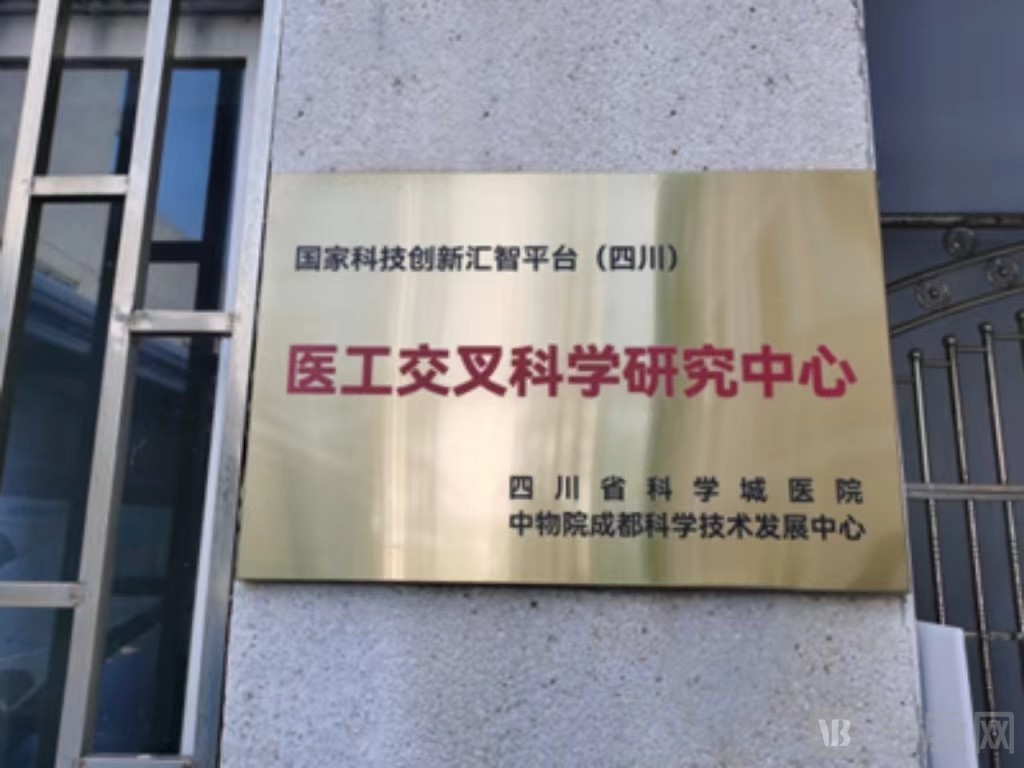
Medical-Engineering Interdisciplinary Science Research Center. Photo provided by the interviewee
Nearby, West China Hospital serves as an exemplary model. In 2023, it ranked first among hospitals in the number of granted patents (851), granted invention patents (451), and Patent Cooperation Treaty (PCT) applications (9).
Therefore, prior to the establishment of the Interdisciplinary Center, Xiao Wei led a team to conduct a site visit at the Technology Transfer Department of West China Hospital. The delegation was surprised to discover that many of the National Health Commission’s policies on medical-engineering translation had adopted practices from West China Hospital. Most notably, the hospital’s renowned “Nine West China Measures” for scientific and technological achievement translation have been directly implemented by the National Health Commission and numerous large teaching hospitals.
After visiting the Technology Transfer Office of West China Hospital, the hospital’s Party and administrative leadership, after careful consideration,Decided to adopt the West China Hospital model, using it as a guiding reference to forge CAEP’s own path in medical-engineering convergence.
The Interdisciplinary Center for Medicine and Engineering aims to leverage the capabilities of research institutions such as the China Academy of Engineering Physics (CAEP) to establish a high-level, open platform for interdisciplinary collaboration in medicine and engineering. Open to medical professionals across China and globally, the platform will identify critical pain points, bottlenecks, and challenges in clinical practice, actively align with the scientific research and engineering commercialization capabilities of various institutes, promote the integration of medicine and engineering, and contribute to the Healthy China initiative.
Prior to the establishment of the Medical-Engineering Interdisciplinary Center, Xiao Wei had never been directly involved in any projects related to medical-engineering interdisciplinary collaboration. Although he had clearly perceived the growing prominence of this field through national policies and industry trends, he remained largely unfamiliar with how to incentivize physicians to translate their innovations into practical applications or how to build an interdisciplinary team. Everything had to be started from scratch, through a process of trial and error.
Following the establishment of the Medical-Engineering Interdisciplinary Center, the hospital has built an innovation platform encompassing basic research, translational research, clinical research, industrialization research, and post-marketing research, thereby creating a service chain for medical innovation and the translation of achievements. This initiative aims to motivate clinicians to engage in scientific research and promote clinical translation.Whenever a physician identifies a clinical issue, they can leverage these innovative service platforms to explore solutions and find answers.
Drawing on the standards of the China Academy of Engineering Physics (CAEP), the hospital has formulated management regulations for medical-engineering interdisciplinary collaboration and policies for rewarding related achievements. To standardize the financial management of the Medical-Engineering Interdisciplinary Center and prevent interference or conflicts with the hospital’s clinical services, a dedicated financial account has been established for exclusive, specialized management of horizontally funded research projects. To stimulate clinical physicians’ scientific thinking, the Medical-Engineering Office regularly hosts interdisciplinary forums and thematic salons, inviting researchers from relevant institutes to actively participate. These events facilitate open discussions on challenges and bottlenecks encountered in frontline clinical practice, encouraging brainstorming sessions that foster intellectual synergy between clinicians and researchers to identify innovative solutions.
Even as collaborative efforts among government, industry, academia, research institutions, capital, and healthcare are gaining momentum, Xiao Wei still perceives significant pressure and challenges in advancing the practical implementation of medical-engineering interdisciplinary work. Having overseen the Center for Medical-Engineering Interdisciplinary Studies at Sichuan Science City Hospital for nearly two years, Vice President Xiao Wei has developed a thorough understanding of both the progress and shortcomings in the integration of medicine and engineering.
In his view, the integration of medicine and engineering in China may be more like a web—a tapestry interwoven with progress and challenges. To expand this web, more “yarn” is needed.
The integrated teams of physicians tackling key scientific research challenges are beginning to yield fruitful results.
The interdisciplinary medical-engineering team at Sichuan Science and Technology City Hospital is still far from robust. Xiao Wei told Chengguo Bureau that the hospital’s medical-engineering collaboration platform currently has only two full-time staff members, while department directors serve in part-time capacities, “balancing clinical duties with translation efforts.”
One of the full-time staff members previously served as a director for two publicly listed companies and possesses in-depth knowledge of industrial policies and incubation operations. Xiao Wei described him as someone with a strong interest in the intersection of medicine and engineering. The other full-time staff member is a medical professional from a hospital.
“These two full-time professionals continuously undergo external training to stay abreast of policies and product development processes at the intersection of medicine and engineering, and they hold the requisite certifications for their roles,” said Xiao Wei. He emphasized that only by building a professional team specializing in medical-engineering convergence can effective links be established between clinicians and engineering R&D teams.Leverage them as a bridge to identify physicians’ specific needs and facilitate collaboration with the engineering team.
Innovation and development in medical technology require multidisciplinary collaboration. Individual physicians often face challenges such as high technical complexity, limited resources, and a lack of specialized engineering background, making it difficult for them to independently complete complex engineering design and development tasks. In contrast, research and engineering teams possess extensive technical experience and professional expertise, enabling them to provide comprehensive support to physicians in areas such as device development, resolution of technical challenges, and data analysis.
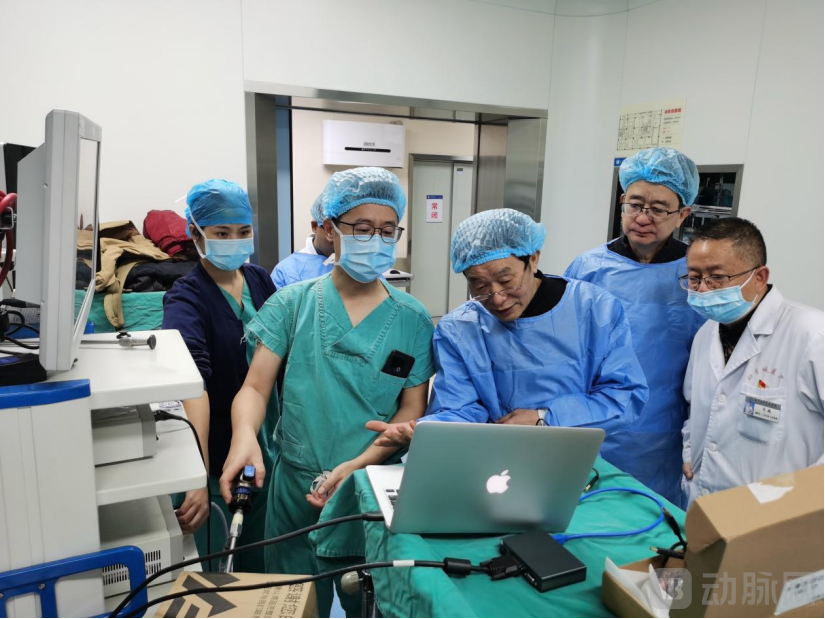 Doctor and engineer teams in discussion. Photo provided by the interviewee.
The Med-Engineering Convergence Platform Can Simplify Everything. Xiao Wei told Chengguo Bureau,No worries about finding an engineering team. As long as physicians have ideas, the platform can connect them with clinical experts and engineering specialists from research institutes to jointly evaluate projects., “Doctors propose ideas, while the engineering team assesses technical feasibility and translates the technology into initial prototypes.”
In 2023, the cardiac surgery team of Beijing Anzhen Hospital, Capital Medical University, together with the Institute of Mechanical Manufacturing Technology of the China Academy of Engineering Physics, established a joint laboratory on the platform of the Medical-Engineering Interdisciplinary Center. The three parties are collaborating to develop a “left ventricular assist device,” focusing on breakthroughs in the design of the “pump unit” and “battery.” The project is currently progressing steadily, with the design of the proof-of-concept prototype underway.
Xiao Wei believes that medical-engineering interdisciplinary collaboration should not be confined to Sichuan Province, but rather use it as a starting point to expand across China. “As long as physicians have needs, the Medical-Engineering Interdisciplinary Center can help them connect with engineering teams from the China Academy of Engineering Physics.” Currently, the center is also promoting the translation and commercialization of several projects, including small-molecule test kits, intelligent mobile CT scanners, and violet laser technologies.
Notably, the endoscopic image stabilization system, co-developed by the Director of the Obstetrics and Gynecology Department at the hospital and the China Academy of Engineering Physics (CAEP), has yielded preliminary results. After the interview, he will proceed to the operating room to evaluate the outcomes, with the potential for imminent signing of a project commercialization agreement.
Constraints: Funding Shortages and Policy Guidance
Xiao Wei defines a mature medical-engineering interdisciplinary center as one that is open, well-funded, and highly motivated. Currently, however, the development of such centers is still constrained by insufficient participation from industry funds and inadequate policy guidance.
Xiao Wei stated that fund companies typically wait until they see clear conversion prospects before making substantial investments. ““For very early-stage projects, fund companies basically don’t even look at them; we have to rely on our own support to nurture them first.”
As institutions providing healthcare services, hospitals have the core mission of ensuring the quality and safety of patient diagnosis and treatment. Their funds are primarily allocated to the maintenance of medical facilities, training of medical personnel, and upgrading of medical equipment. “We mainly build platforms, connect resources, and provide services.” To this end, the Medical-Engineering Interdisciplinary Center actively selects promising projects for external investment promotion, facilitating their translation into practical applications.
Funding is one issue, while national policy guidance presents another challenge for the interdisciplinary field of medicine and engineering. “As a public hospital, we are not permitted to establish companies, which precludes us from operating on a corporate basis.” On the hospital side, physicians’ invention patents are classified as service inventions. Hospitals must first prevent the loss of state-owned assets, yet this requirement is, to some extent, at odds with the development needs of the industry sector:“Many external collaborations could be more effectively carried out through corporate-style joint operations.”
Xiao Wei believes that the medical-engineering interdisciplinary field most urgently needs support from national policies to streamline all stages, including company establishment and product registration, thereby simplifying the translation process and shortening the conversion cycle.
Regarding the future of interdisciplinary collaboration between medicine and engineering, Xiao Wei remains optimistic. He believes that within a decade, China will establish a relatively mature model for such integration. In the coming year, Xiao Wei has a busy schedule ahead. He will be actively involved in investment promotion meetings, policy formulation discussions, and on-site assessments to identify clinical needs across various hospital departments. Furthermore, he will lead the team at the Center for Interdisciplinary Medicine and Engineering to continue advancing several key projects.
Being busy also seems to signify progress and hope.