

Mayliu Biotech Slashes Recombinant Collagen Prices by Nearly 90%, Filing IPO Prospectus
In the past two years, China’s recombinant collagen industry has seen explosive growth. International giants such as Shiseido and LVMH have made frequent moves in the Chinese market, while even Hongxing Erke, a sportswear brand, has diversified into this sector. At the end of 2023, L’Oréal launched the second generation of its Honey Cream facial moisturizer. Unlike the first generation, which highlighted “Pro-Xylane + peptides” as its key selling points, the new version claims to incorporate recombinant collagen for the first time, positioning this ingredient as its primary marketing highlight.
Frequent Major News in the Recombinant Collagen Sector: Does It Mean the Field Is Becoming Crowded? On the Contrary, Compared with the Hyaluronic Acid Industry, This Sector Is Still in Its Nascent and Rapidly Developing Stage in China.According to Frost & Sullivan data, the market share of collagen-based professional skincare products is projected to surpass that of hyaluronic acid by 2026. By 2027, the overall market size for collagen in China is expected to reach RMB 173.8 billion, with recombinant collagen products accounting for RMB 108.3 billion, representing a 62.3% share.
Although a vast blue-ocean market awaits exploration and capture by enterprises, recombinant collagen currently faces technical barriers in raw materials, formulation, purity, yield, and efficacy validation, keeping mass-production costs high. The integration of synthetic biology technologies holds promise for delivering solutions that both reduce costs and enhance efficiency in the recombinant collagen sector.According to Wall Street News, domestic companies are expected to gradually release production capacity from 2024 to 2025, changing the supply-demand imbalance in the collagen market and ushering the sector into a new phase of price competition.
Today, Hangzhou Meiliu Biotechnology Co., Ltd. (hereinafter referred to as “Meiliu Bio”), a synthetic biology company, may present the industry with a different perspective on current conditions and breakthroughs.
Reduced industry prices by nearly 90%,
It is expected to decrease significantly in the future.
Recently, Meiliu Biotech announced the successful completion of “trial production” in 5-ton fermentation tanks for multiple human-derived Type III collagen proteins ranging from 16 kDa to 120 kDa. Leveraging engineered Pichia pastoris strains, the company achieved secretory expression of the target collagens at titers of 12–16 g/L. By remodeling the cell wall of Pichia pastoris and using the surface charge of the N-terminal domain of collagen as a key parameter, Meiliu Biotech employed machine learning strategies to facilitate the “self-evolution” of multiple secretion signal peptides and the “coupled optimization” of signal peptides with collagen codons, ultimately enhancing the secretory expression levels of the target collagens in Pichia pastoris.This yield is 4–9 times that of the parent engineered strain, with product content and purity both exceeding 95%. The selling price is only RMB 10,000 per kilogram (compared to the current market price of approximately RMB 80,000 per kilogram). Based on process calculations, the market price of the company’s human-derived Type III collagen is expected to decrease significantly in the future.
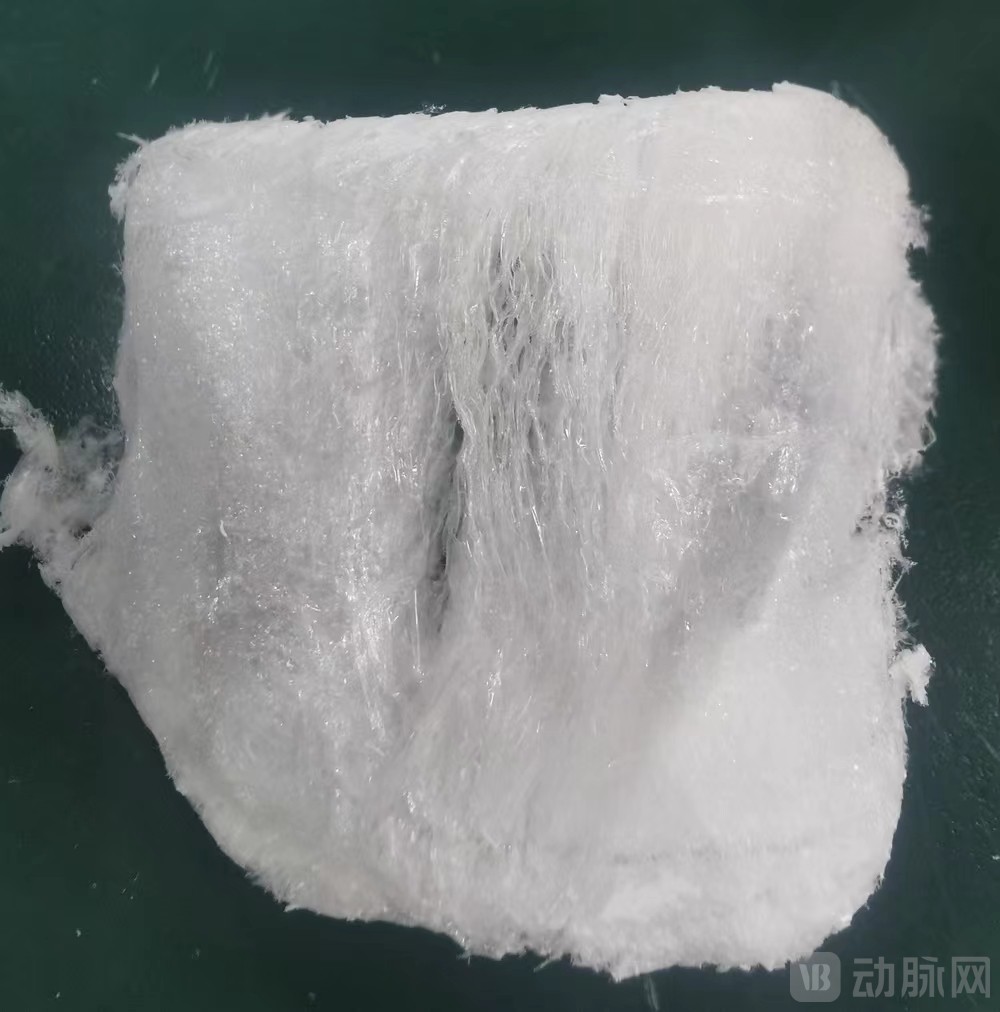
Meiliu Biotech’s Recombinant Humanized Type III Collagen Lyophilized Fibers. Image source: Meiliu Biotech
Meiliu Bio, established in September 2023, is a synthetic biology platform company focused on development and equipped with mass production capabilities. The team comprises top-tier scientific researchers from Zhejiang University, bringing extensive experience in both scientific research and industrialization. Under the team’s leadership, Meiliu Bio has become the first in China to achieve full-chain technological coverage from R&D to production, building the “Mayliu-Technology Platform.” Its proprietary chassis cell and genetic element library enables precise design, assembly, and modification on demand, providing foundational resources, data reserves, and technical iteration support for the rapid construction of efficient “cell factories” for synthesizing target compounds.
On one hand, Meiliu Bio has established a proprietary repository of over 70 chassis cell lines and a functional protein gene library comprising nearly 5,000 entries;Established models of regulatory mechanisms with varying levels of complexity, including positive feedback, negative feedback, indirect positive feedback, and feedforward regulation, tailored to different functional proteins; and accumulated extensive experience and data through iterative “Design-Build-Test-Learn (DBTL)” cycles involving functional proteins and chassis cells.
On the other hand, Meiliu Bio leverages various gene-editing tools, including CRISPR-Cas and pG:ISSI, in combination with protein engineering, synthetic biology, and microbial physiological engineering, to rapidly construct and optimize metabolic pathways in chassis cells. This approach enables the creation of an engineered strain library, significantly increasing the success rate of obtaining target production strains or consortia and comprehensively enhancing the synthesis efficiency of “cell factories.” Meiliu Bio’s R&D targets undergo a series of process refinements through small-scale trials, pilot-scale trials, and large-scale industrial trial production. The optimal strains are then rapidly scaled up for mass production in a digital industrial manufacturing system based on digital twin technology. Following separation and purification, high-purity, highly active, and quality-stable target substances are obtained, achieving “three-low” control in production: low energy consumption, low pollution, and low carbon emissions.
Meiliu Bio stated, “R&D personnel need to maintain extensive libraries of chassis cells, which requires long-term accumulation in conjunction with industrial practices, as well as a comprehensive understanding of the various characteristics of microorganisms. Furthermore, the construction of genetic element libraries demands substantial data and experiential expertise from the enterprise to successfully develop target products with high expression activity and stability.”
This has given rise to a major industry pain point in synthetic biology: many technologies pose no issues at the research stage, but numerous critical bottlenecks emerge when scaling up to mass production.
This is because, in the early stages of the synthetic biology industry, a significant portion of R&D resources was concentrated in the hands of academic researchers. Scientists tended to focus on synthesizing natural products for academic publications, while lacking further engagement in industrial development. The transition from technology to large-scale production, as well as commercial investment and operations, requires the direct involvement and guidance of technical professionals with genuine know-how.
However, this is precisely a major pain point in the industry today. Meiliu Biology told VCBeat, “An experienced industrialization professional must have a thorough understanding of every link in synthetic biology. Taking fermentation production as an example, it may seem simple, but it is actually a laborious and lengthy process that often requires staff to work in three shifts or pull all-nighters. Over time, truly industry-relevant experience is accumulated through repeated scale-up productions. Once improperly operated, this process can easily result in a complete loss of yield. Therefore, it is genuinely difficult to cultivate talent who are proficient in both scientific research and industrial application.”
Meiliu Biotech has overcome the aforementioned pain points by leveraging its extensive industry experience and high-barrier technology platforms, successfully synthesizing more than 50 diverse products that span five major sectors: consumer goods, materials, pharmaceuticals, agriculture, and industry. Furthermore, Meiliu Biotech has developed multiple product series covering a wide range of fields, including medical aesthetics and skincare, food and beverages, biopharmaceuticals, basic materials, animal feed, agrochemicals, alternative proteins, and pet food.In addition to the already mass-produced human-derived Type III collagen, Meiliu Bio’s second-generation “super-functional human-like collagen,” which combines skin wound repair with medical aesthetics, has completed pilot-scale trials. Animal studies are scheduled to commence in the near future, with mass production expected to follow shortly thereafter.
With over 20 years of in-house team experience,
Externally “listen” to downstream voices
Among the dozens of products successfully synthesized, Meiliu Bio has focused on new materials characterized by high barriers to entry, high value, and substantial existing market demand. “For instance, humanized recombinant collagen is currently applied primarily in the cosmetics industry. Its use in injectable fillers remains relatively limited due to the insufficient mechanical strength of humanized products. In the future, as an emerging material in synthetic biology, certain ultra-functional human-like collagens will enter a broader market window. The ‘functional attributes’ of collagen extend beyond basic benefits such as moisturizing, anti-wrinkle, and whitening; collagen should also emphasize special functions including anti-allergy, anti-aging, skin repair, and tissue regeneration. Therefore, Meiliu Bio’s R&D breakthrough lies in designing novel ‘ultra-functional human-like collagen’ that integrates these attributes, thereby demonstrating its ‘functionality’ across various fields such as pharmaceuticals, tissue engineering, cosmetics, and food.”
Overall, humanized recombinant collagen offers advantages such as high expression levels, good water solubility, and high biological activity. Its performance surpasses that of animal-derived collagen, holding broad application prospects in biomedical materials, cosmetic skincare, and food health supplements. However, existing recombinant humanized collagen exhibits limited functionality as an injectable filler, primarily because these materials fail to achieve adequate mechanical strength at low concentrations.The novel ultra-functional human-like collagen developed by Meiliu Bio can form a certain supporting strength under low-concentration conditions, achieving excellent shape retention.
On the other hand, Meiliu Bio’s ability to achieve such significant industrialization breakthroughs within less than six months of its establishment strongly demonstrates that it is not a company that “relies solely on PowerPoint presentations to tell stories.” It is reported that Meiliu Bio’s core personnel have an average of over 20 years of research and industrialization experience in the field of synthetic biology, with team product development expertise covering the entire process from “0” to “100.” In addition to the core members’ complementary and profound scientific and industrial experience, Meiliu Bio as a whole is a multidisciplinary team driven by R&D and technology translation. By leveraging the interdisciplinary integration and technological innovation of protein design, microbial fermentation, separation and purification, and artificial intelligence, the company has successfully developed a series of core technologies and processes in the field of synthetic biology.
In addition to its internal team capabilities, an “external factor” has also contributed to Meiliu Bio’s rapid growth: Meiliu Bio maintains close communication with downstream enterprises prior to product initiation and throughout the entire R&D and production process. By leveraging feedback from industry chain partners and dynamic market demands, the company continuously adjusts and optimizes its strategic layout. Meiliu Bio stated, “In addition to focusing on refining technologies and products, R&D personnel must actively listen to downstream stakeholders and stay aligned with the market, thereby enabling the efficient and high-quality development of products that deliver genuine value and meet real-world needs.”
More importantly, leveraging its current portfolio of dozens of products, Meiliu Bio can rapidly collaborate with industry partners to jointly drive sector development. We look forward to Meiliu Bio, powered by innovative synthetic biology technologies, joining forces with more strategic industry partners to achieve continuous breakthroughs and develop new materials that reduce costs and enhance efficiency for the market.