

Aera Therapeutics Files IPO Prospectus: Pioneering Next-Gen Gene Editing Delivery Platforms with $193M Backing

Lux Capital
Investment Institutions in the Fields of Physical and Life Sciences

GV
Google's Investment Fund

ARCH Venture Partners
Venture Capital Firms

Aera Therapeutics
Gene Editing Technology Developer
There is a “mysterious” company that has not disclosed the specific diseases it targets, nor has it provided detailed information on the therapeutic pathways of its innovative drug delivery technology. Despite lacking concrete treatment methods and applications, it has still secured substantial financing. This company is the gene-editing firm Aera Therapeutics (hereinafter referred to as “Aera”).
Aera was founded in 2021 and is headquartered in Boston. After a year and a half of operating in stealth mode, the company officially announced its launch in 2023 and completed Series A and B financing rounds led by ARCH Venture Partners, GV (Google Ventures), and Lux Capital, raising a total of $193 million.
 Investor Landscape (Image source: Aera official website)
Aera was founded by Zhang Feng, a prominent figure of Chinese descent in the field of gene editing. Born in Shijiazhuang, Hebei Province, China, in 1982, he immigrated with his parents, who worked in computer programming, to Iowa, United States, in 1993. To trace the origin of his interest in bioengineering, one must mention the film *Jurassic Park*, which was shown in his molecular biology class. It was this movie that made the young Zhang Feng recognize the programmability of biology.
 Zhang Feng (Image source: Aera Therapeutics official website)
In 1995, by chance, Zhang Feng, then a novice in biology, seized his first opportunity to program the DNA of living organisms. He subsequently built on this work to investigate whether fluorescent proteins could protect DNA from ultraviolet radiation damage. After establishing a relatively solid foundation in biology, Zhang participated in other genetics projects and won third prize in the Intel Science Talent Search, widely recognized as the most rigorous and elite high school scientific research competition in the United States. Originally established in 1942 as the Westinghouse Science Awards, the competition has earned the nickname “Junior Nobel Prize,” as many of its alumni have gone on to receive Nobel Prizes.
After receiving a full scholarship to Harvard University, Feng Zhang majored in chemistry and physics and conducted influenza virus research in the laboratory of Xiaowei Zhuang. In 2004, Zhang pursued graduate studies at Stanford University, working with Karl Deisseroth, known as the “father of optogenetics,” on the then-novel field of optogenetic technology. In 2009, Zhang collaborated with Ed Boyden to pioneer the discipline of optogenetics. He played an indispensable role in the development of optogenetics, which propelled Zhang to prominence as a “rising star” in the scientific community and laid the foundation for his subsequent research on CRISPR systems, particularly in the context of the nervous system.
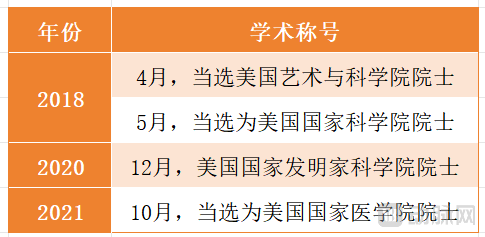
After completing his Ph.D. in 2011, Feng Zhang joined the Massachusetts Institute of Technology, where he conducted research in the Department of Brain and Cognitive Sciences at the McGovern Institute for Brain Research and at the Broad Institute.In 2013, his laboratory developed an innovative CRISPR/Cas system, significantly enhancing the reliability and efficiency of gene editing and achieving breakthrough results.In 2014, he was named one of Nature’s ten scientists of the year for 2013. In March 2016, he received the Canada Gairdner International Award. In 2017, at the age of 34, he was promoted to tenured professor at the Massachusetts Institute of Technology.Breaking Qian Xuesen’s record of attaining tenure at age 35, he became the youngest Chinese tenured professor in history and, over the following four years, was successively elected as an academician of four academies.
Beyond his academic and research achievements, Feng Zhang’s prowess in the commercial translation of scientific research is also “not to be underestimated.” To date, he has founded eight biotechnology companies, most of which are centered around CRISPR technology, progressively expanding the boundaries of its applications.
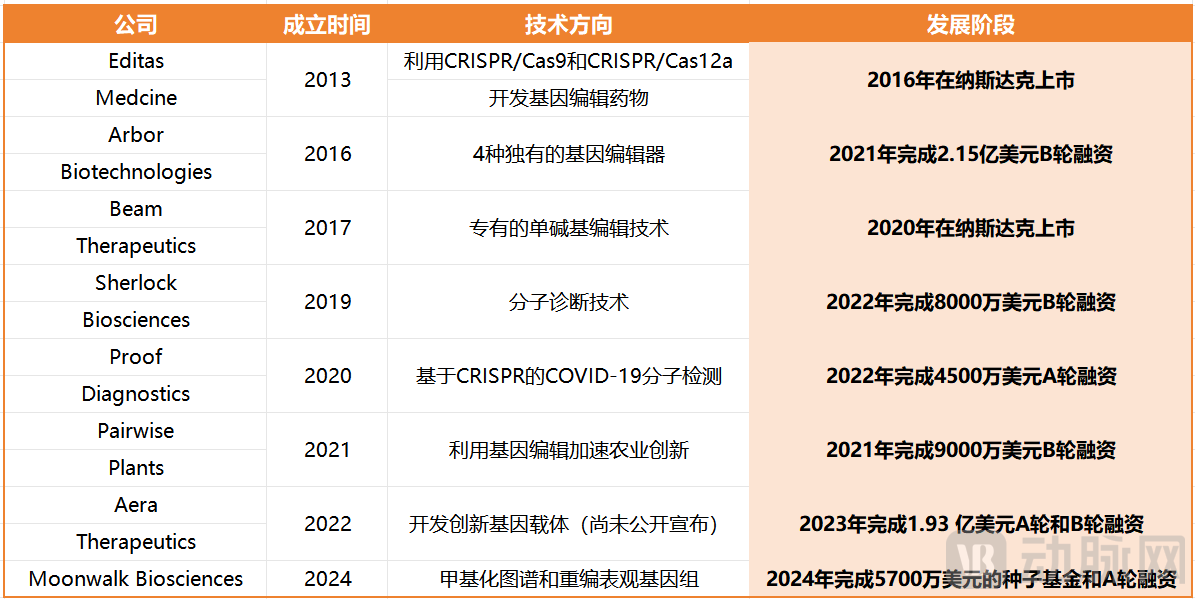 (Compiled from public data; graphic by VCBeat)
Although there is currently limited public information regarding Aera’s technology platform and drug pipeline, it is certain that the company continues to develop gene therapies based on CRISPR gene-editing technology. Gene-editing technologies have evolved rapidly, progressing from early homology-directed repair (HDR) techniques to artificially engineered zinc-finger nucleases (ZFNs), transcription activator-like effector nucleases (TALENs), and finally to clustered regularly interspaced short palindromic repeats-associated protein technology (CRISPR/Cas9). As the most widely used gene-editing platform today, CRISPR/Cas offers advantages such as low cost, high flexibility, and multiplex targeting capabilities.
Gene drugs are composed of functionalPayloadand its precise delivery into cellsDelivery Systemcomposed of two parts. The payload includes siRNA, antisense oligonucleotides (ASO), mRNA, DNA, andGene Editing Systemetc. Delivery systems include viral vectors, lipid nanoparticles (LNPs), exosomes, GalNAc conjugates, etc.
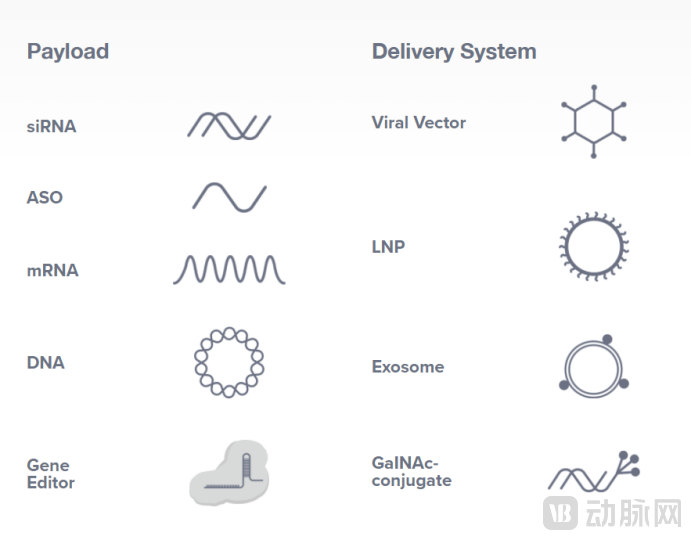 Payload and Delivery System (Image source: Aera official website)
The CRISPR/Cas system serves as the payload component in gene therapies. In early 2013, three overseas laboratories successively demonstrated that the CRISPR/Cas9 system could efficiently edit the human genome. These were led by Doudna at the University of California, Berkeley, George Church at Harvard Medical School, andProfessor Feng Zhang of the Broad Institute。
The CRISPR/Cas system enables the associated Cas protein, guided by CRISPR RNA (crRNA), to locate complementary target DNA sequences. By cleaving this DNA, the system triggers DNA repair mechanisms, thereby achieving gene editing. Therefore, delivering both the Cas protein and crRNA into cells is essential for CRISPR/Cas-mediated gene editing, making the selection of an appropriate delivery system particularly critical.
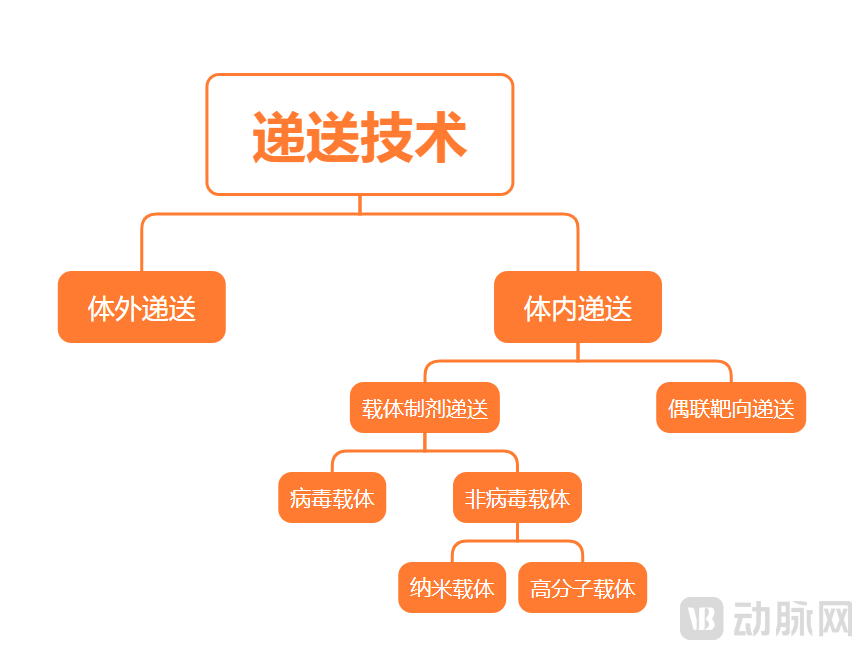
However, this has also become one of the bottlenecks limiting the application of this technology. The development of delivery systems lags behind that of payload technologies, slowing the overall progress of gene therapy development and restricting its scope of application. Drug delivery systems can be broadly categorized into ex vivo and in vivo delivery, with the primary market placing greater emphasis on in vivo delivery. However, viral vectors, used as carrier formulations for in vivo delivery, are prone to triggering immune rejection and causing adverse reactions. While non-viral vectors offer advantages such as lower cost, higher safety, and no restriction on the length of exogenous genes, they tend to undergo passive targeting to the liver, which is unfavorable for extrahepatic delivery.
Aera’s potential may lie in addressing a long-standing challenge in the field of gene editing—specific delivery.By acquiring enabled delivery systems and payload technologies, the application scope of gene therapies can be expanded to diverse tissues and domains—such as the brain, heart, and muscles, which have historically been difficult to target—rather than being limited to the liver and ex vivo cells.
Aera Therapeutics’ proprietary protein nanoparticle (PNP) delivery platform, SEND, is under development. It leverages human proteins derived from retrotransposons. These proteins self-assemble into virus-like capsid structures capable of packaging and delivering nucleic acids. Built upon PEG10, a naturally occurring RNA transport protein in the human body, the platform can be engineered to deliver diverse payloads to specific cells or organs by modifying the PEG10 protein.
The proteins used in SEND are manufactured within the human body, consisting of endogenous human proteins, thereby reducing the likelihood of immune rejection.Extremely low immunogenicity, with the potential for repeated dosing. Combining the advantages of endogenous, fully synthetic self-assembly systems with the engineering capabilities of protein-based systems canComplementing Existing Viral Delivery Vectors and Lipid Nanoparticles, to expand the pathways for delivering gene and editing therapies to cells.
Furthermore, Aera’s licensed technologies include a proprietary therapeutic enzyme platform based on the discovery of innovative, compact, and programmable gene-editing enzymes. These enzymes’ small size helps overcome current challenges in packaging and delivery associated with gene-editing systems. Aera has obtained licenses from the Broad Institute for SEND technology and for the use of novel gene-editing enzymes discovered by Feng Zhang’s laboratory.
On December 28, 2023, Sullivan published the "Blue Book on the Current Status and Development Trends of the Gene Therapy Industry." Globally, as of October 31, 2023, gene therapy drugs under development fall into three categories: gene augmentation therapies, gene editing therapies, and other gene-based therapies. Among these, gene augmentation therapies account for the largest share of the pipeline at 91.1%, while gene editing therapies and other gene-based therapies represent 4.8% and 4.1%, respectively.
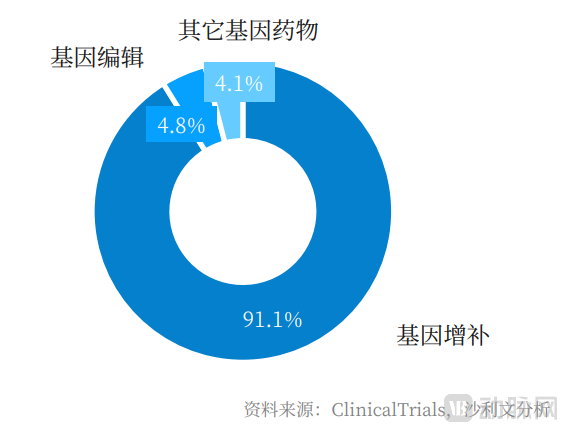 (Source: Frost & Sullivan)
Focusing on China, as ofAs of October 31, 2023, the vast majority of gene therapy products approved for clinical trials by the Center for Drug Evaluation (CDE) in China adopted the gene augmentation approach, with only one product utilizing gene editing technology having received approval for clinical registration. Gene editing technology is not the preferred modality in the application of gene therapies.
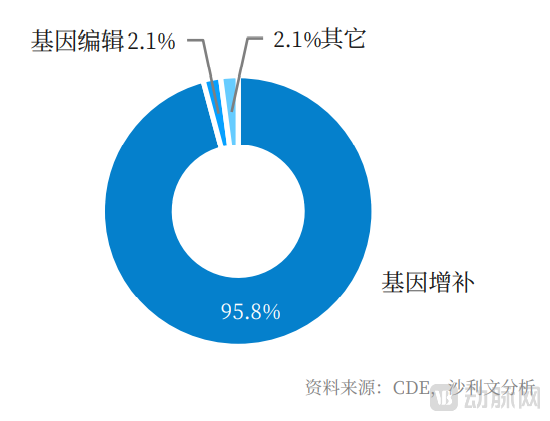 (Source: Frost & Sullivan)
However, with favorable policy developments for gene editing, the number of approved gene therapies has increased significantly. The Technical Guidelines for Long-term Follow-up Clinical Studies of Gene Therapy Products (Trial) (2021) state that,Providing Technical Guidance for Long-Term Follow-Up Clinical Studies of Gene Therapy Products Based on Gene Editing TechnologiesIn the Outline of the 14th Five-Year Plan (2021-2025) and Long-Range Objectives Through the Year 2035, issued by the State Council in 2021, gene editing technology is defined as a forward-looking strategic priority for future industries.Clarify the organization and implementation of incubation and acceleration plans for future industries in the field of gene editing。
In June 2023, Editas Medicine announced positive preliminary safety and efficacy data for its CRISPR gene-editing therapy, EDIT-301. In October 2023, Intellia Therapeutics announced that the FDA had authorized its in vivo gene-editing therapeutic product to proceed to Phase III clinical trials. In December 2023, Casgevy, the first CRISPR gene-editing therapy, received regulatory approval. Multiple domestic companies in the gene therapy sector have also deployed CRISPR gene-editing technologies and secured substantial financing, suggesting that gene editing is poised to unlock a blue-ocean market for gene therapies.
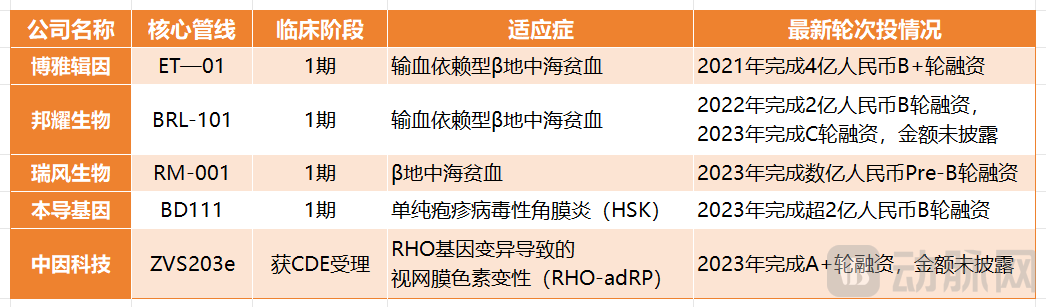
(Incomplete statistics; graphic by VCBeat)