2023 Internet Healthcare Service Insights Report: User-Driven Demand Shapes a New Service Ecosystem

JD Health
Internet Medical and Health Service Platform Provider
In 2023, the medical service system, particularly offline services, fully resumed operations, while online medical services continued to grow. Leading hospitals and internet healthcare platforms capable of delivering high-quality services saw significant growth. Beyond basic offerings such as online follow-up consultations, they continually expanded their service portfolios to meet the diverse needs of patients and users.
Amid the concurrent outbreaks of respiratory diseases across various regions in China, there has been a significant surge in demand for medical and health services among urban and rural residents, particularly children. During this period, internet healthcare has once again demonstrated its advantages in resource integration and innovative service delivery.
In recent years, the Chinese government has introduced multiple policies to encourage internet-based healthcare providers to offer convenient services—such as follow-up consultations, prescription renewals, and online medication purchases—to patients during special periods. In 2023, a series of favorable policies strongly supported the expansion of internet healthcare into broader medical and health scenarios. Furthermore, the implementation of detailed regulatory rules across various regions has enhanced industry standardization and market health.
In 2023, large medical AI models experienced rapid growth, becoming an essential choice for service providers and technology companies. Internet healthcare can leverage these large models to further enhance the proactivity and interactivity of patient services, thereby improving service continuity and treatment outcomes. Technological empowerment presents another significant development opportunity for internet healthcare.
Market performance, policy trends, and technological opportunities all indicate that internet healthcare has entered a new chapter.
At this critical juncture, VCBeat and JD Health jointly release the “2023 Internet Healthcare Services Insight Report—Exploring New Demands and Building a New Service System,” which delves into service data, examines user needs, and constructs a forward-looking framework for a new service system, aiming to provide insights for the industry.
A New Chapter in Internet Healthcare: Reassessing User Needs to Build a Matched Service System. To gain deeper industry insights, this report uses user and consultation data from JD Health, a leading internet healthcare platform, as samples to outline user profiles and analyze user needs.
Users come from diverse channels, and purchasing medication is not the primary driver for online consultations.
Sample data indicates that users of internet healthcare services are primarily concentrated in first- and second-tier cities, as well as sixth-tier cities, while the proportion of users in third-, fourth-, and fifth-tier cities is relatively small. This overall “hourglass-shaped” distribution correlates with factors such as the allocation of medical resources and patient demand for diagnosis and treatment. At present, young people constitute the main demographic for online consultation services; however, elderly users already account for a certain proportion, with the share of middle-aged and elderly users increasing year by year.
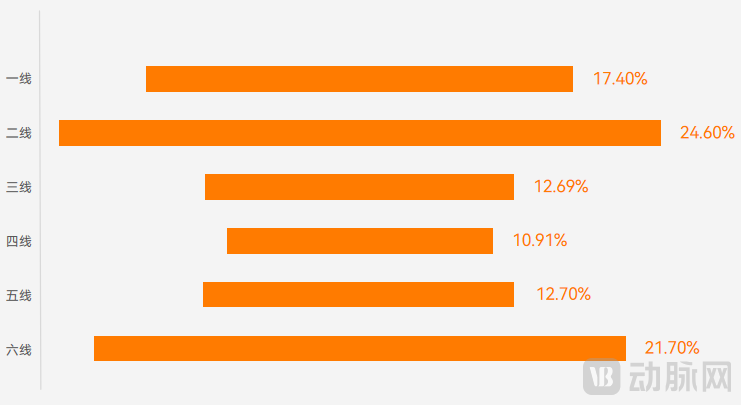
Urban Distribution of Internet Healthcare Users | Data Source: JD Health | Chart by VCBeat
An analysis of user sources for online medical consultation orders reveals diverse channels through which users initiate consultations. Notably, the proportion originating from the medication purchase channel is relatively small, indicating to some extent that online drug purchasing is not the primary driver for users to seek medical consultations.
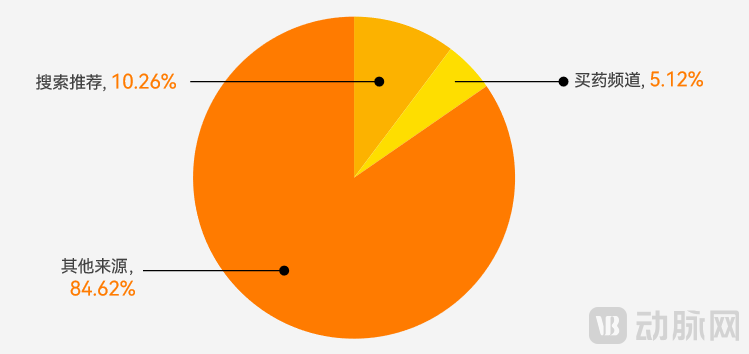
Sources of Users for Online Consultations; Data Source: JD Health; Chart by VCBeat
Self-Assessment Becomes an Aid in Clinical Consultations, with Psychological Assessments Gaining Particular Popularity
Users of online consultation services typically use the platform’s scale-based tools for self-assessment to understand their diseases, health status, and risks, or as an aid in describing their conditions during consultations; psychological assessments are particularly popular.
Assessment scales primarily cover categories such as psychology, pediatrics, and nutrition. Among these, an increasing number of users are opting for online psychological self-assessments and counseling services, with data for both services showing a growth trend. Sample data indicate that psychological assessment services now account for 99.31% of all scale-based services. Over the past two years, workplace stress and academic pressure have become hot topics, drawing significant societal attention to related mental health services. Online psychological assessments and counseling have provided users with convenient access to these services.
Consultations primarily focus on common conditions in dermatology, respiratory medicine, and obstetrics and gynecology.
The spectrum of diseases addressed in online consultations aligns with departments experiencing high service volumes, primarily focusing on common conditions in dermatology, respiratory medicine, and obstetrics and gynecology. Among these, skin diseases—represented by eczema, dermatitis, and acne—account for the largest proportion.
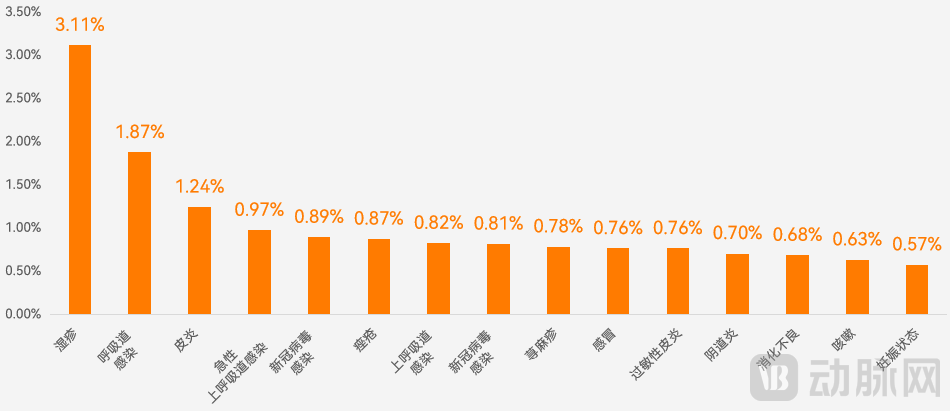
Top 15 Diseases by Online Consultation Volume; Data Source: JD Health; Chart by VCBeat Research Institute
Among the top 15 diseases by volume of online consultations in the sample data are eczema, respiratory tract infections, and dermatitis. Five of these are skin conditions, accounting for a combined 6.76% of all consultations, with eczema alone representing the highest share at 3.11%. Dermatology has long been considered one of the specialties best suited for internet-based healthcare services, as it relies minimally on in-person laboratory tests and examinations and can effectively leverage high-resolution images and video consultations. Respiratory and obstetrics/gynecology-related conditions also rank high in online consultation volumes. These diseases and health issues are either highly prevalent or have diverse intervention options, making them well-suited for online service delivery.
High Overall Cost-Effectiveness: Text-and-Image Consultations Remain the Mainstream Form of Doctor-Patient Communication
Sample data indicate that 95.42% of online consultation orders are text-and-image consultations, which represent the earliest and most common form of internet-based medical services. Text-and-image consultations enable communication anytime and anywhere, offering a high degree of flexibility. Meanwhile, various assessment scales can assist both physicians and patients in gaining a more detailed understanding of the patient’s condition.
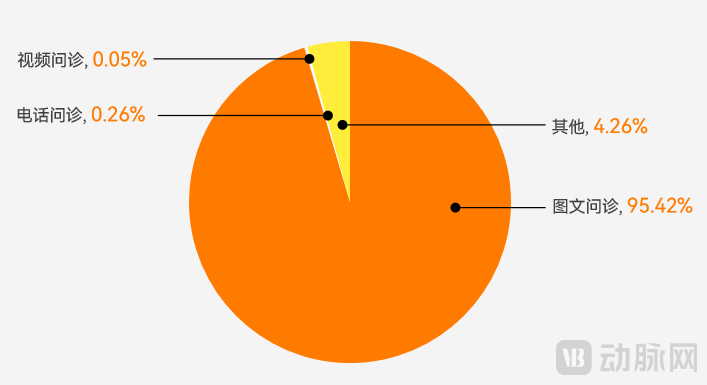
Proportion of Service Volume by Consultation Type; Data Source: JD Health; Chart by VCBeat
Sample data shows that 95.42% of online consultation orders are text-and-image consultations. Text-and-image consultations offer high flexibility, allowing users to initiate consultations anytime and anywhere, while doctors can respond according to their schedules. Communication can be either continuous or intermittent. Although telephone and video consultations enable the exchange of larger volumes of information, both require scheduled appointments with doctors and come at a higher cost. Despite the limited information capacity of text-and-image consultations, which may lead to communication deviations, they remain the choice for the vast majority of users. This is because most consultations involve common conditions, and a wide variety of diseases can be effectively addressed through text-and-image interactions.
Users have high expectations for consultation response times, making rapid consultations the primary service model.
Based on the distribution of consultation types, users have high expectations for the timeliness of consultations and lack clarity in selecting service roles.
Sample data indicate that users initiate online medical consultations throughout the day, with the highest frequency occurring between 18:00–20:00 and 20:00–22:00. During these hours, users are typically free from school or work commitments, while most hospitals have already closed their general outpatient services. In this context, internet healthcare serves as an effective complement to traditional medical services.
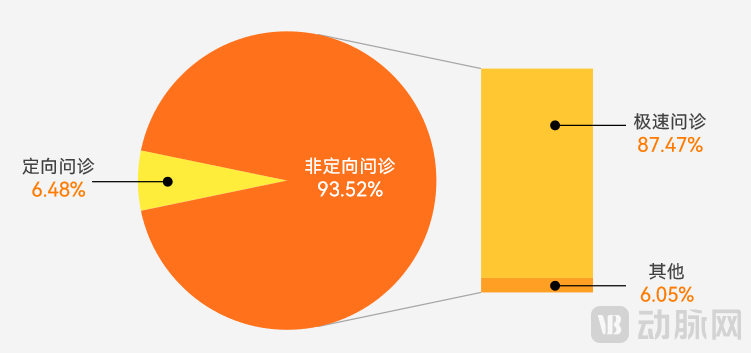
Breakdown of Targeted Consultations, Non-Targeted Consultations, and Rapid Consultations. Data source: JD Health; Chart by VCBeat
In terms of consultation types, non-directed consultations accounted for as high as 93.52%. This is primarily because users are often unclear about which medical department or specialist is appropriate for their symptoms, necessitating platform-based triage based on user-reported symptoms. Among these, rapid consultations comprised 84.47%, indicating that users not only rely on the platform to match them with appropriate service resources but also expect prompt responses to their needs.
Some Users Have Multiple Follow-up Visits, and the Habit of Using Internet Healthcare Is Taking Shape
Data on user consultation frequency indicates that habits of using internet-based healthcare services are taking shape, with users tending to seek multiple consultations for diseases or health issues within the same medical specialty.
Among the sample data, 23.76% of users generated 2–4 consultation inquiries within one year, indicating sufficient recognition of the service and platform. Meanwhile, 16.11% of users conducted 2–4 consultations within the same medical specialty over the course of a year, further suggesting that users hold the service quality in high regard, as they repeatedly sought assistance for diseases or health issues within the same specialty.
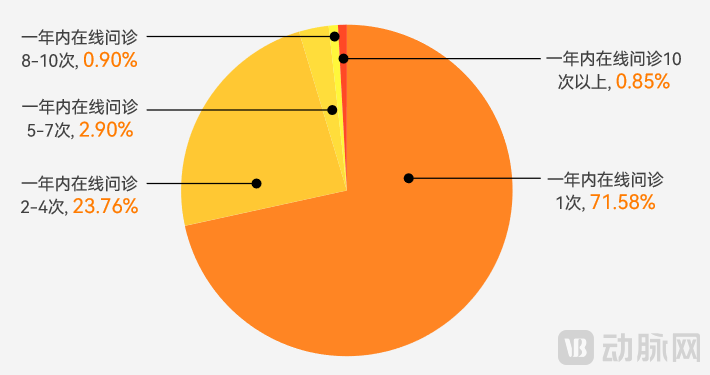
Distribution of User Consultation Frequency Within One Year; Data Source: JD Health; Chart by VCBeat.
Sample data also reveal that 13.1% of consultation orders were for convenient follow-up visits, where patients initiated follow-ups through previous orders, quickly accessed prior medical records, or supplemented their condition information on this basis, thereby enabling more efficient communication between doctors and patients. This also reflects users’ proficiency in utilizing online follow-up services.
Moreover, issuing prescriptions is not always the primary objective of online medical consultations. Following the completion of most consultation sessions, no prescription is issued, indicating that these users require more diversified services beyond prescription fulfillment.
Whether or not a prescription is issued, users may purchase physical products after consultation to address diseases or health concerns. The most purchased medications, medical devices, and health supplements are all related to the treatment of common conditions and health management.
An analysis of the latest user profiles and needs reveals new trends in the age structure of internet healthcare users, with a growing proportion of middle-aged and elderly individuals. The distinct characteristics of diseases addressed through online consultations provide clear direction for developing in-depth services. Users have high expectations for service response times, making user experience at every stage critical. Furthermore, repeat patients now account for a significant share, reflecting greater recognition of both the services and the platforms.
Internet healthcare has always been user-centric, integrating resources and delivering services around user needs. Based on the latest user profiles and demands, internet healthcare must establish a new service system that is closely tied to service speed, continuity, personalization, standardization, and ecosystem integration.
Efficient and precise doctor-patient matching, with timely response to users' needs throughout the entire process
In light of the consultation habits of internet healthcare users, it is essential to promptly address patients’ needs across the entire medical and pharmaceutical care continuum and precisely match service resources, both to ensure patient safety and to enhance user experience.
Users demand efficient and convenient access to all types of internet applications, and internet-based healthcare is no exception. Meanwhile, patients have limited ability to assess the urgency of their own conditions. Even though platforms provide guidelines on cases unsuitable for online consultations, it remains possible that patients with urgent medical needs may still initiate consultations. This necessitates timely responses from the platform.
Meanwhile, it is common for patients to be uncertain about which department or doctor to consult when seeking medical care, necessitating precise matching of service roles and content by the platform.
Fully integrate resources to build integrated services centered on specialized disciplines and specific diseases
Internet-based medical services need to break the pattern of relatively dispersed medical resources, extensively integrate and optimize resource allocation, and establish service models oriented toward continuous, specialty- and disease-specific care.
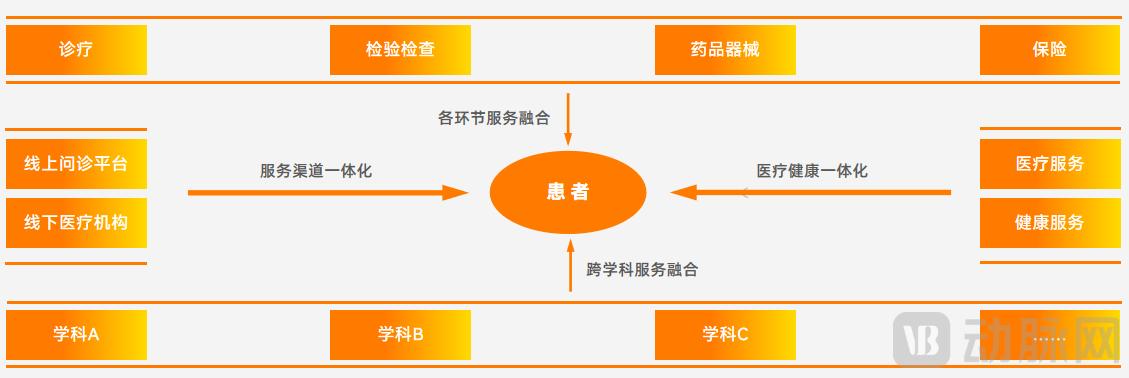
Data analysis indicates that users have a pronounced need for continuous medical care centered around disease management. The fragmented nature of traditional healthcare services struggles to meet these needs. While online consultations and follow-up prescription services transcend temporal and spatial constraints, offering innovation, they only address a portion of the demands related to disease and health issues.
The new service system should be built around the continuum of disease diagnosis, treatment, and rehabilitation, integrating corresponding service resources to break down barriers across disciplines, among medical, pharmaceutical, and insurance services, and between online and offline channels, thereby providing users with integrated, specialty- and disease-specific services.
Segment user groups and focus on key populations to match personalized medical and health services
In addition to providing integrated services centered on diseases, internet healthcare must also deliver personalized services for key populations, including pregnant and postpartum women, infants and young children, students, working professionals, and the elderly.
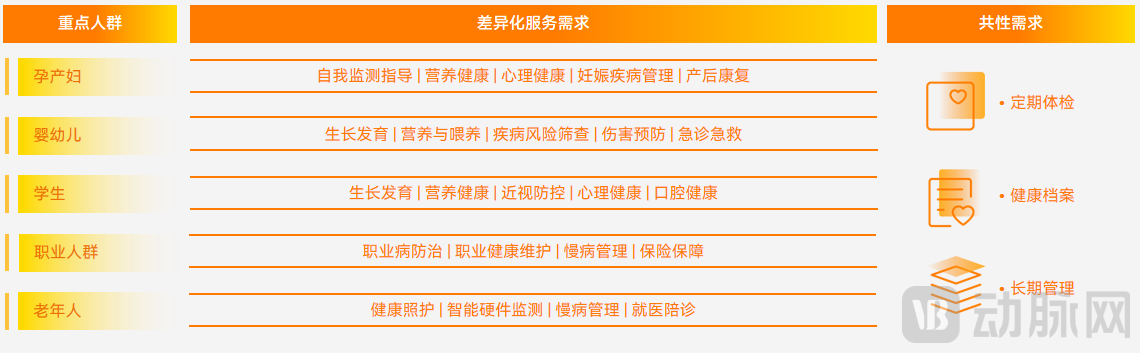
The aforementioned key populations face significant health risks. Among them, the elderly exhibit high prevalence of chronic and critical diseases, resulting in substantial consumption of medical resources; meanwhile, the health status of the working population has a direct impact on individuals, families, and enterprises.
On the one hand, personalized healthcare services are tailored to patients’ varying circumstances, such as age group, lifestyle, and health status, thereby enhancing service quality. On the other hand, personalized services enable more precise utilization of medical resources, reducing resource consumption; for users, they help promote and maintain health, lower disease risk, and reduce healthcare costs.
Accumulate Full-Process Data in Medical Healthcare to Deeply Mine Data Value
The accumulation of personal data helps physicians gain a more comprehensive understanding of patients’ conditions, conduct holistic assessments, provide critical references for disease diagnosis and treatment, and enhance the accuracy of clinical care.
The accumulation of population-level data and the mining of its value enable internet healthcare platforms to promptly capture patient feedback and optimize product and service workflows. Comprehensive, multi-dimensional data can provide larger-scale samples for medical research, facilitating in-depth exploration of disease pathogenesis, treatment regimens, and the value of internet healthcare within this context.
Seize the Opportunities of Technological Transformation and Support Innovative Services with Cutting-Edge Technology
Whether it is service innovation or data value mining, both need to be supported by technological innovation. It is necessary to leverage technological opportunities such as medical large models and 5G to serve the new service system of internet healthcare.
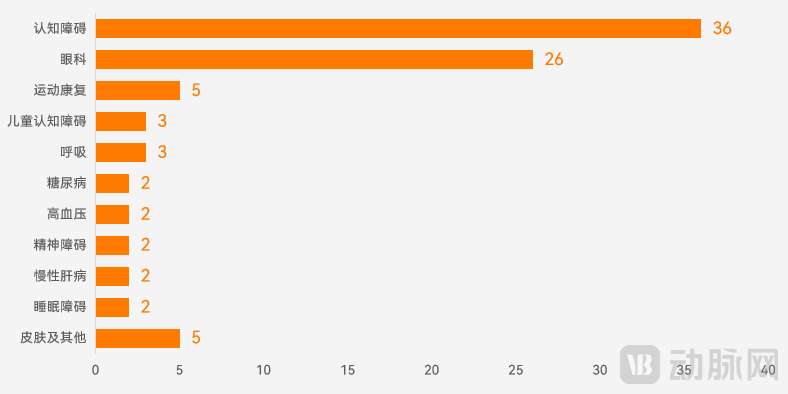
Approved Digital Therapeutics Products by Disease Classification
Source: “2023 Annual White Paper on Digital Healthcare Innovation,” chart by VCBeat Research Institute
Digital therapeutics and large language models are the products or technologies that have developed most rapidly in the past two years. As of 2023, more than 80 digital therapeutic products had been approved in China, expanding into an increasing number of disease areas. Based on the principles of digital therapeutics in treatment intervention and the relative ease of obtaining regulatory approval, the disease areas targeted by approved digital therapeutic products are highly concentrated, with cognitive disorders and ophthalmology having the largest number of approved products. Products have also been approved for respiratory conditions, motor rehabilitation, hypertension, and diabetes, showing significant overlap with the specialized disease services prioritized in internet healthcare. Medical large language models can be applied to multiple aspects of internet healthcare, including assisted diagnosis, patient services, and medical quality control.
With compliance as the fundamental premise and high-quality service as the ultimate goal
As an emerging business model, internet healthcare must always uphold standardized services as its baseline, establish quality control systems, and develop standards or consensus based on the characteristics of online services, thereby promoting the industry’s sustainable development through high-quality service.
Internet-based healthcare delivers medical services remotely, differing from traditional face-to-face consultations. Therefore, corresponding regulations and standards must be established to ensure the safety and quality of medical care. Online diagnosis and treatment require physicians to possess appropriate qualifications and experience, adhere to medical ethics and legal requirements, and avoid issues such as misdiagnosis and inappropriate treatment. In recent years, expert consensus has been developed within the industry for various disease management processes in internet-based healthcare. By leveraging the expertise of leading specialists in relevant fields, these initiatives have innovated service workflows and provided valuable guidance for the sector.
Empowering Physicians, Healthcare Institutions, and Other Partners
Overall, internet healthcare platforms collaborate with physicians and upstream pharmaceutical and medical device companies to jointly serve patients; therefore, these platforms must create substantial value for their partners.
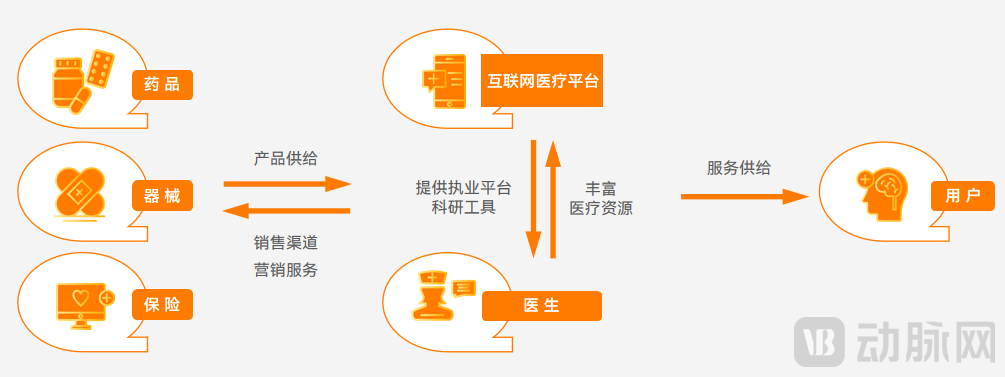
For instance, it provides physicians with efficient practice channels to expand their service scope and enhance service efficacy; it also offers research tools to help them accumulate case studies and data, thereby accelerating their professional growth. Internet healthcare platforms can also provide pharmaceutical and medical device companies with channels to reach patients, facilitating long-term patient management and improving medication or treatment adherence. Furthermore, these platforms can collaborate with insurance companies to develop innovative insurance products and explore new sales channels.
In the new environment, it is necessary to transform past highlights into consolidated capabilities, and building a new service system is one of the ways to promote this transformation. Taking JD Health as an example, this chapter demonstrates its exploration path for a new service system from multiple dimensions, including specialized disease services, segmented population services, quality control systems, and technological innovation.
In recent years, JD Health Internet Hospital has cumulatively invested over RMB 2 billion in areas such as technological research and development, quality assurance, and operational management. It has secured more than 800 high-quality patents, covering numerous cutting-edge fields including large medical models, digital therapeutics, medical scientific research, and disease prediction.
Sustained investment has driven steady growth in JD Health’s service volume and user base, while enhancing its service capabilities. In 2023, JD Health handled over 160 million medical consultations, with a 90.4% rate of initial response within 30 seconds for its Rapid Consultation service. It has accumulated more than 18 million authentic patient reviews, achieving a patient satisfaction rate of 98.1%.
Serving Specialized Patient Populations: Launch of Dermatology Hospital to Meet Diverse Skin Health Needs
In response to the need for long-term management and frequent medical consultations associated with various skin conditions, JD Health has launched its Dermatology Hospital to meet the diagnostic, therapeutic, and management needs of both common dermatological diseases and complex or rare cases.
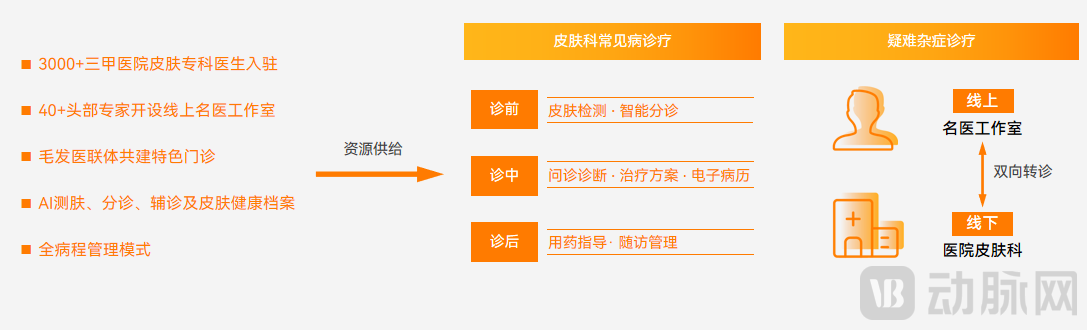
JD Health has established one of the first dermatology-focused online healthcare platforms in China, collaborating with 40 leading experts in the field of dermatological diseases to launch online renowned physician studios. Currently, more than 3,000 dermatologists from Grade A tertiary hospitals have joined the platform, and JD Health has also built a full-time team of dermatology specialists.
JD Health has fully leveraged the advantages of internet-based healthcare, including anytime-anywhere access, real-time communication, and efficient resource matching. By the end of 2023, JD Health Dermatology Hospital had cumulatively served millions of patients with various dermatological conditions.
Serving Specialized Patient Populations: Upgrading the Psychological Service Center to Enable Synergy Between Psychiatric Diagnosis and Treatment and Psychological Counseling
To address the growing demand for mental health services and the fragmentation of traditional care, JD Health has upgraded its Mental Health Service Center, integrating psychiatric diagnosis and treatment with psychological counseling to better serve users.
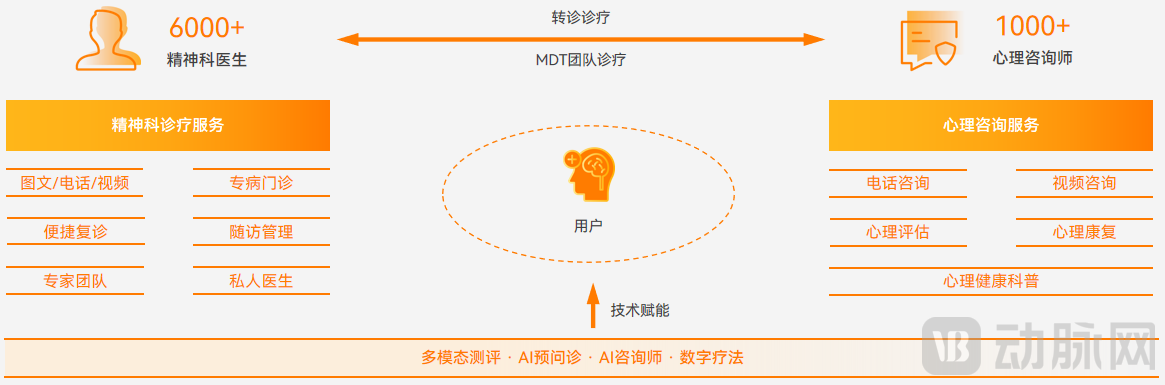
In 2023, JD Health’s Mental Health Service Center underwent a comprehensive upgrade, matching users with various psychological concerns to appropriate counselors or psychiatrists. By integrating psychological testing, assessment, counseling, and the diagnosis and treatment of mental and psychological disorders, and leveraging a bidirectional referral and integrated treatment model, the center aims to better serve its users.
As of the end of 2023, JD Health's Mental Health Service Center had cumulatively served hundreds of thousands of users.
Service Segmentation for Users: JD Family Doctor Provides Long-Term, Proactive Management for Key Populations
JD Health Continuously Enhances Its JD Family Doctor Product to Address High-Frequency Health Needs of Key Populations, Including Pregnant and Postpartum Women, Infants and Young Children, and the Elderly, Establishing a Comprehensive Matrix of Health Management Services for Multiple Priority Segments.
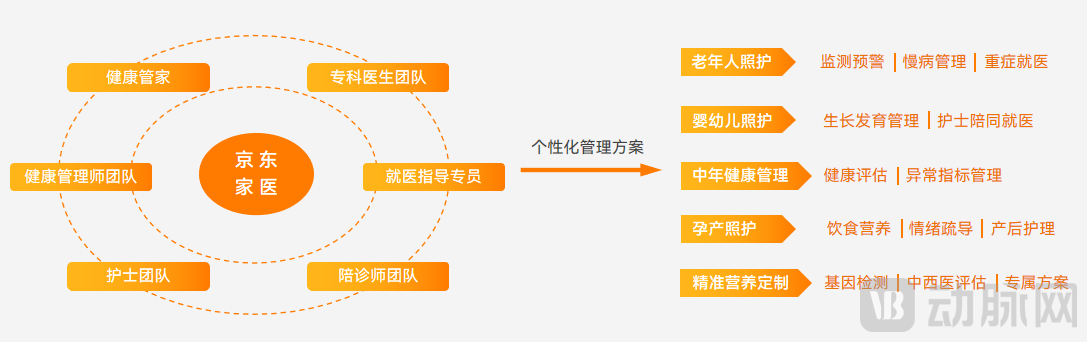
In 2023, JD Family Doctor upgraded its services by launching the “Year-Round Elderly Care” program, which provides health monitoring, chronic disease management, and medical accompaniment for critically ill patients. With this addition to its existing offerings, including infant care and maternal care, JD Family Doctor has established five specialized service categories.
JD Family Doctor integrates resources such as specialist physicians, health stewards, health managers, and nurses to provide long-term, proactive management for specific population segments. It establishes a closed-loop service ecosystem encompassing “health management + medical services + smart hardware + pharmaceuticals/health supplements,” thereby meeting users’ personalized needs.
Establish a quality control system and standardize clinical pathways to ensure medical quality.
JD Health continues to focus on building a quality control system for its internet hospitals and exploring standardized diagnosis and treatment pathways for various diseases, ensuring service quality for users and practice safety for physicians.
JD Health Internet Hospital has established a Medical Quality Management Committee to continuously refine and implement the Core Systems for Medical Quality Control of JD Health Internet Hospital and the Standardized Diagnosis and Treatment Pathways of JD Health Internet Hospital. As of the end of 2023, the Medical Quality Management Committee of JD Health Internet Hospital had appointed 8 Chief Medical Experts and 33 Distinguished Medical Experts, reached consensus on standardized diagnosis and treatment for high-frequency online diseases across various specialties, released 223 standardized diagnosis and treatment pathways, and formulated 12 medical quality and safety management systems. These quality control systems and diagnosis and treatment pathways have been integrated into daily management and services.
Technology Integrates the Entire Diagnosis and Treatment Process, Balancing Quality and Efficiency
JD Health continues to drive digital and intelligent technological transformation, launching the medical large language model “Jingyi Qianxun” as the technical foundation for building a new generation of healthcare service ecosystems, integrating it throughout the entire healthcare service process.
Supported by “Jingyi Qianxun,” JD Health has built an intelligent clinical decision support platform covering the entire care journey. In the pre-consultation phase, it enables precise patient–provider matching and disease screening; during consultation, it helps physicians simultaneously improve diagnostic and treatment efficiency and enhance patient experience; and in the post-consultation phase, it covers all scenarios across the full disease lifecycle, enabling refined patient management and data accumulation. The lifelong health records “generated” on this intelligent clinical decision support platform can effectively integrate online and offline omnichannel data, leveraging big data technologies to enhance the precision of diagnosis and treatment.
Furthermore, JD Health has launched products and solutions such as an intelligent physician assistant, a Real-World Data (RWD) platform, and a new-generation smart hospital service system, all built upon its “Jingyi Qianxun” foundation, to empower more industry participants.
The future development potential of internet healthcare is immense. Driven by the aging population trend, the scale of potential users will continue to grow. Platforms can provide patients with more efficient, convenient, and personalized medical services, while also needing to continuously break through barriers to establish a virtuous ecosystem that integrates medicine, pharmaceuticals, and insurance.
First, China’s demographic structure has reached a critical turning point in population aging. By implementing online “age-friendly adaptations” in internet healthcare—matching interaction formats or products to the needs of target users—the user base will be further expanded.
The middle-aged and elderly population is a high-risk group for chronic diseases and also the target user base for internet healthcare. According to data from the National Bureau of Statistics, by the end of 2022, China’s natural population growth rate was -0.60‰, marking the first population decline in 61 years. Accompanying this negative population growth is population aging, with the two trends reinforcing each other.
Among JD Health’s online consultation users, those aged 60 and above account for 12.83%, with the number of middle-aged and elderly users growing year by year. Internet healthcare platforms are continuously optimizing their functionalities by streamlining diagnostic and treatment processes and page layouts, introducing voice and video interaction modes better suited for older adults, and developing smart terminals to collect and manage health data for the elderly. These efforts will help extend service penetration to a broader elderly population.
Secondly, as online infrastructure reaches a certain level of maturity, internet healthcare will “return” to offline settings, focusing on localized services and forming a closed loop with online services to further meet users’ demands for efficiency and convenience.
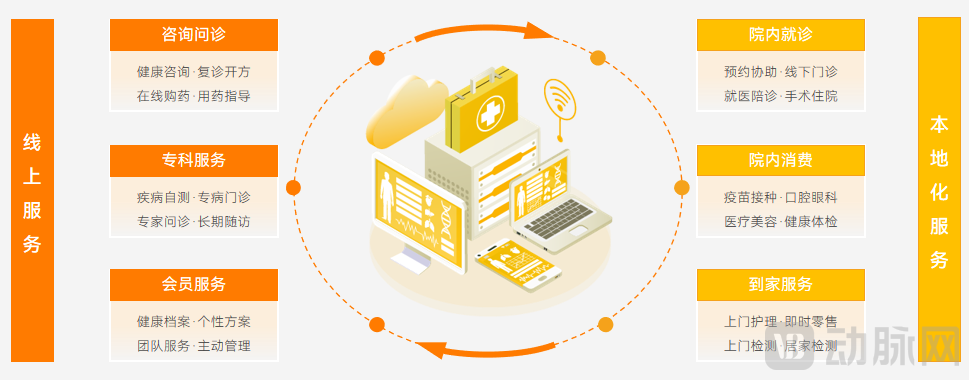
Offline services encompass three major segments: in-hospital medical consultations, in-hospital consumer healthcare, and at-home services. In-hospital medical consultations primarily focus on disease diagnosis and treatment, including outpatient visits, patient accompaniment, surgical procedures, and hospitalization, which are indispensable for the treatment of certain conditions. In-hospital consumer healthcare mainly refers to consumer-oriented medical services, such as vaccinations, dental care, ophthalmology, medical aesthetics, and health check-ups, all of which still involve essential offline components. At-home services primarily include timely in-home nursing care and medication delivery. These offline services complement and reinforce online services, thereby enhancing patient care.
Finally, the establishment of a new service system for internet healthcare cannot be achieved overnight; the path to perfecting this system is long and arduous, and there remains substantial room for innovation before a virtuous cycle integrating medicine, pharmaceuticals, and insurance can be realized.
In terms of medical services, the focus will be on deepening the integration of online and offline services, extending from disease diagnosis and treatment to health maintenance. Regarding pharmaceuticals, efforts will be made to build specialized pharmaceutical care services, ensuring efficient supply while also safeguarding medication safety and adherence to achieve better therapeutic outcomes. In terms of payment, in addition to individual out-of-pocket payments and basic medical insurance coverage, multi-dimensional healthcare data will be leveraged to foster innovation in commercial health insurance products, covering internet-based medical services. Furthermore, market education on corporate health management will be conducted to expand services covered by employer-sponsored payments.
The above is an excerpt from the main content of the report.
Please scan the QR code to add our assistant and obtain the full report. If you have already added us, please initiate a conversation: