

Jiaofa Herui Biotech's Skin Cell Transplantation Therapy Fills Domestic Commercialization Gap in Wound Repair
The skin is the largest organ of the human body and serves as a barrier for the immune system. For a long time, the pursuit and experimentation of rapid and high-quality wound healing in human skin have never ceased. With the corporate spirit of "being strong and resilient, and boundless in virtue and harmony,"Skin Regenerative Medicine CompanyJiaofa Herui Biotechnology Co., Ltd. (hereinafter referred to as "Jiaofa Herui Bio"), and is also actively advancing technological research and development in fields such as skin wound repair.
Jiaofa Herui Bio was established as a joint venture, controlled by Shanghai Herui Biotechnology Co., Ltd. with participation from Rizhao Transportation Energy Development Group. The company has built an R&D center in Pudong New Area, Shanghai, featuring over 600 square meters of cell preparation and production areas compliant with FDA cGMP Grade A+C standards, and has established multiple technically mature platforms for primary cell isolation and culture. Additionally, it has constructed a medical device production base in Rizhao City, comprising over 2,000 square meters of Class 100,000 cleanroom facilities and more than 300 square meters of Class 10,000 laboratories.
Leveraging regenerative medicine technologies, the company focuses on wound repair and dermatological aesthetics. It holds 39 independent intellectual property rights under application and 16 granted patents. The company has successfully commercialized novel products such as “Ruifu Chuang” and “Chuangtaishu,” as well as medical procedures including “in vitro cultured skin cell transplantation.”
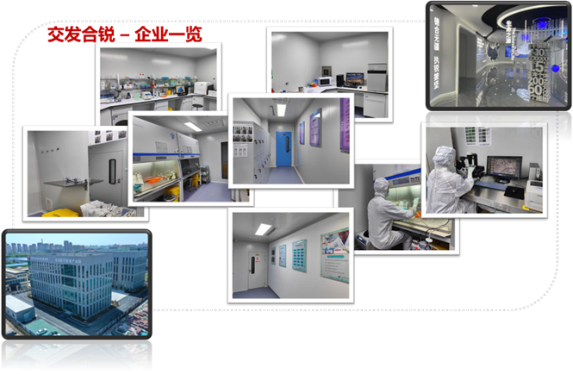
Overview of Corporate Environment
Recently, Jiaofa Herui Biotech has achieved a string of successes—
In July 2023, a novel technological platform for the commercial application of “skin organoids” was successfully established, providing pioneering solutions for disease research, drug screening, regenerative medicine, and dermatological aesthetics.
Major National Defense Science and Technology Project Undertaken in Collaboration with a Renowned Domestic Medical University in September 2023《Tissue-Engineered Full-Thickness Skin for Wound Repair》Declaration successful;
October 2023: Self-developed medical-grade soft silicone wound contact layer dressing(Chuangtaishu)with Medical Silicone Gel Wound Contact Layer Dressing(Recover)Two Products Consecutively Obtain Certifications;
In November of the same year, the company showcased its products and related academic achievements at the 2023 Annual Academic Conference of the Burn Surgery Branch of the Chinese Medical Association (CBA2023), receiving unanimous acclaim from clinical experts on site;
Of particular note is the period at the end of 2023 andThe First Affiliated Hospital of Naval Medical UniversitySigned a clinical fee-for-service contract for the “Ex Vivo Cell Culture Skin Cell Transplantation” technology service, filling a clinical gap in China and achieving a commercialization milestone for this technology domestically;
In January 2024, again with renowned experts in the field of burn and plastic surgery in China, the Department of Burn and Plastic Surgery of the Chinese People's Liberation Army General HospitalProf. Shen Chuan’an’s Team, launched clinical collaboration on autologous and allogeneic epidermal cell transplantation, and has completed the enrollment of multiple clinical cases to date.
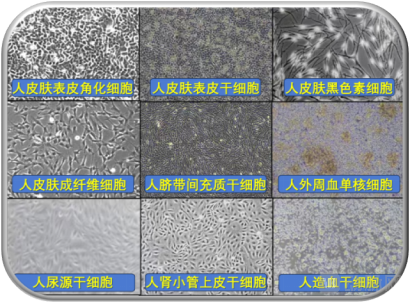
Inventory of Primary Cells Supported by Jiaofa Herui Biotech’s Multiple Culture Platforms,
Image source: Jiaofa Herui Biological Database
Recently, VCBeat held an in-depth dialogue with Kong Xiangjun, Chairman and CEO of Jiaofa Herui Biotechnology, on the theme of “Technology-Led Wound Repair and Healing.”
Overcoming Bottlenecks in Epidermal Cell Culture Technology,
Opening the Door to "Endless" Skin Sources and Rapid Healing for Patients with Extensive Burns and Trauma
Skin defects in patients with extensive burns and traumatic injuries can lead to numerous systemic complications, such as shock, severe electrolyte and fluid imbalances, visceral complications, burn wound infections, and multiple organ dysfunction syndrome. The key to addressing this issue is performing skin transplantation to achieve wound closure.
Tissue-engineered skin substitute transplantation technology based on the culture and expansion of skin cells, with"In Vitro Cultured Skin Cell Transplantation"Represented by this approach, it is a critical clinical medical technology for the treatment of extensive burns and traumatic injuries (TBSA >30%). In developed countries such as those in Europe, the United States, and Japan, this technology has undergone years of clinical validation, becoming the preferred treatment option for patients with extensive burns and trauma, and has been incorporated into commercial health insurance systems. However, constrained by various “chokepoint” core technological bottlenecks, China had previously not successfully implemented the commercial clinical application of this technology.
At present, the primary clinical approach for treating extensive burn and trauma injuries in China involves wound coverage and transplantation using autologous and allogeneic skin. These skin grafts serve as temporary substitutes for autologous skin, acting as a barrier between the wound and the external environment. This helps minimize the loss of moisture and nutrients, reduce the risk of bacterial infection, and promote wound healing.
However, autologous skin is extremely limited in patients with extensive burns and trauma; furthermore, allogeneic skin imposes an excessive burden on patients due to its limited availability and high cost; therefore,"Ex Vivo Cell Culture Skin Cell Transplantation""A Proven Therapeutic Solution for Patients with Extensive Burns and Traumatic Injuries."
“The key to rapidly obtaining a large quantity of skin cells from the extremely limited skin available in patients with extensive burns and trauma lies in the efficient isolation and proliferation of cells,” stated Kong Xiangjun. He noted that culturing epidermal cells is particularly challenging due to their high propensity for differentiation. By continuously adjusting ratios and optimizing processes, Jiaofa Herui has established a clinical-grade tissue engineering technology system that is highly efficient and free of xenogeneic components. This system requires only a minimal amount of the patient’s own normal skin (approximately 2 cm²).2), it can begin to effectively provide autologous skin cell sheets required for clinical use within 10–14 days, fully meeting the demands of clinical treatment. Compared with traditional domestic products in this field, it not only effectively shortens healing time but, more importantly, reduces scarring and significantly improves treatment success rates.
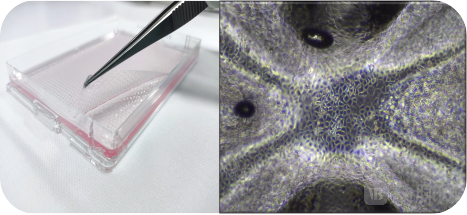
Cultivated Autologous Epidermal Cell Sheets (Source: Internal Company Data)
Furthermore, this culture system avoids the clinical risks potentially associated with animal-derived products such as serum and pituitary extracts. Compared to existing foreign technologies, it offers superior clinical safety and effectively mitigates various immune risks. Meanwhile, the autologous epidermal graft sheets provided by the “In Vitro Cultured Skin Cell Transplantation” technique feature an ultra-thin transparent film dressing that does not require replacement for 7–10 days post-transplantation; only the outer gauze needs to be observed and changed. This not only alleviates the heavy burden of dressing changes for medical staff but also significantly reduces patient pain during dressing changes.
In September 2022, the team led by Academician Xia Zhaofan from the Department of Burn Surgery at Shanghai Changhai Hospital (the First Affiliated Hospital of Naval Medical University), in collaboration with Jiaofa Herui Biotechnology, achieved the first successful wound repair for extensive burns and scalds covering more than 80% of the body surface area in China using “ex vivo cultured skin cell transplantation.” The patient achieved 100% wound healing within one month and was able to walk normally. The presentation of multiple related clinical cases at academic conferences sparked strong repercussions within the field.
Currently, Jiaofa Herui Biotech has initiated clinical collaborations with multiple renowned domestic hospitals regarding the commercial pricing of its "in vitro cell culture-based skin cell transplantation" technical services.
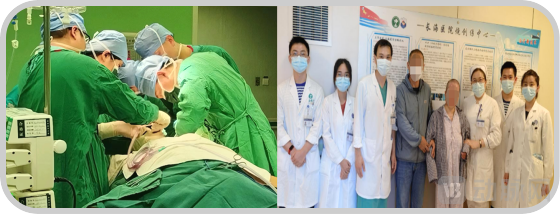
The patient showed good recovery after treatment (Source: Internal company documents & online information)
Jiaofa Herui Biotechnology’s two approved products, “Ruifuchuang” and “Chuangtaishu,” have completed the online listing process in more than ten provinces and municipalities, with active efforts underway to promote market sales.
Chuangtaishu
Suitable for superficial wounds, mechanical trauma, minor wounds, abrasions, post-surgical sutured wounds, lacerations, and first-degree or superficial second-degree burn and scald wounds.
It features a porous design that facilitates the exudation of wound fluid; prevents adhesion to the wound bed, thereby reducing pain during dressing changes; is transparent and visible, allowing for direct observation of wound progression; has a soft texture, enabling application to various body parts; reduces the frequency of dressing changes and lowers the risk of infection. Clinical trials have demonstrated that using the Jiaofa Herui Medical Soft Silicone Wound Contact Layer Dressing allows for up to 14 days without dressing changes, with no infection and favorable wound healing.
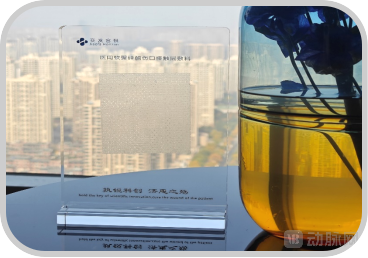
Chuangtaishu®
RuifuChuang
Suitable for second-degree burns and other superficial wounds, as well as skin graft sites (stamp grafts, meshed grafts, and sheet grafts); it can also serve as the inner lining for vacuum sealing drainage.
This dressing features a water vapor transmission rate close to physiological levels, providing an optimal environment for wound healing. Its ingeniously designed dense conical pores and three-dimensional microstructure promote granulation tissue growth while ensuring adequate drainage, effectively preventing fluid accumulation and infection. The non-adherent interface with the wound bed minimizes pain and tissue damage during negative pressure dressing changes, making it suitable for surgical wounds and outpatient dressing changes for various skin traumas.
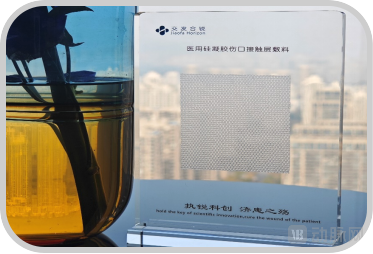
Rayful®
Leveraging its established integrated platform for medical devices and cell and tissue engineering technologies, Jiaofa Herui has also reserved several new products, with multiple medical devices currently undergoing regulatory approval processes and scheduled for phased launch over the next two years.
It is reported that the company has partnered with Shanghai Changhai Hospital, the Chinese PLA General Hospital in Beijing, and Shanghai Ninth People’s Hospital to advance the field of skin tissue cell engineering therapies.
“At this stage, our primary focus is on solidifying our technological foundation and driving innovation through basic research. We aim to first establish a strong presence in the academic realm before strategically entering the medical aesthetics sector.”Kong Xiangjun of Jiaofa Herui Biotech stated that the company provides post-procedure skin repair services for medical aesthetic institutions and cosmetics companies, as well as preparation and testing services for various 2D/3D skin cells and tissue organoids. It also supplies a variety of human-derived cells and specialized culture media to major biopharmaceutical companies.
Wound repair is a highly challenging field.
In recent years, the field of wound regeneration and repair has continued to heat up, with not only many new companies, technologies, and products emerging, but also attracting significant capital investment.
Addressing the development gap between China and foreign countries in the field of wound repair, Kong Xiangjun believes that the improvement of the domestic supply chain and the optimization of the industry ecosystem are key factors; the accelerated injection of capital has also played a promoting role; meanwhile, China's efforts in talent team cultivation and commercial transformation of scientific research achievements have finally begun to bear fruit.
Despite significant improvements in social and living conditions in recent years, along with the transformation of manufacturing from extensive models to intelligent automation, the new environment continues to give rise to various novel types of trauma. Examples include electrical injuries, burns caused by electric vehicle explosions, and burn injuries resulting from motor vehicle accidents. Furthermore, the issue of chronic wound healing in the elderly has become increasingly prevalent. These injuries cause substantial distress and suffering, necessitating the implementation of effective wound repair measures.
It is undeniable that the market for high-end dressings, devices, and consumables in the field of wound repair is still predominantly dominated by imported products. Domestic companies still need to enhance their scale and brand influence. Statistical projections indicate that the global market size for medical dressings will reach $30 billion by 2025. In recent years, the market size of China’s medical dressing industry has increased year by year, reaching RMB 21.47 billion in 2020. In particular, there is a significant market gap for “tissue-engineered skin substitutes” in the high-end segment of skin wound repair, which is driven by advanced technologies.
According to Kong Xiangjun, the market size of tissue-engineered skin substitutes in China reached RMB 3.559 billion in 2022 (a year-on-year increase of 8.24%), with an output value of RMB 2.054 billion (a year-on-year increase of 11.63%). The corresponding production volume and apparent consumption were 11.5778 million square centimeters (a year-on-year increase of 9.39%) and 19.6202 million square centimeters (a year-on-year increase of 5.86%), respectively. However, domestic supply-side products and technologies remain relatively homogeneous and scarce. In 2022, the production volume of allogeneic cell-based tissue-engineered skin substitutes in China was 2.4221 million square centimeters (accounting for a 20.92% market share), with an output value of RMB 494 million (accounting for a 24.03% market share). The corresponding product price was RMB 203.81 per square centimeter.
Jiaofa Herui Biotechnology has filled a gap in domestic clinical applications by being the first in China to commercialize clinical technical services for “in vitro cultured skin cell transplantation,” leveraging its proprietary technological and process system. In addition to its advanced clinical therapeutic advantages, it also boasts a significant price advantage (priced at RMB 18.35 per square centimeter). Statistical projections indicate that the market size for tissue-engineered skin substitutes in China will reach RMB 7.264 billion in 2028. With its first-mover advantage, Jiaofa Herui Biotechnology is poised to capture substantial market value and lead the industry trend.
References:
1. Jiaofa Herui: “Our Company Reaches a Major Milestone!”
2. “A First in China, Success! A New Tool for Wound Repair—‘Autologous Epidermal Cell Transplantation’”
3. Chinese Journal of Burns and Wound Repair “Original Article · Skin Tissue Engineering and Wound Repair | Clinical Study on Cell Sheet Therapy Containing Allogeneic Keratinocytes and Fibroblasts for the Treatment of Second-Degree Burn Wounds”