

Fudan University Huashan Hospital Files New IBD Patent for Machine Learning-Based Precision Therapy
On February 2, Huashan Hospital Affiliated to Fudan University was granted a new patent for precision medication in inflammatory bowel disease based on machine learning. This patent provides a novel method and system designed to enable precision pharmacotherapy for inflammatory bowel disease through machine learning techniques.
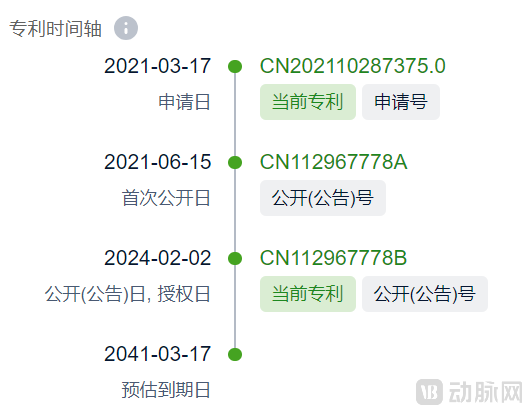
Patent Timeline, Image from Patsnap
Inflammatory bowel disease (IBD) is a chronic inflammatory condition of the intestine, encompassing subtypes such as Crohn's disease and ulcerative colitis. Due to its complex pathogenesis, long-term treatment requirements, and potential complications, the diagnosis and precision therapy of IBD have become significant areas of research.
Although conventional endoscopy can assess disease status and treatment outcomes, it is technically complex, poorly tolerated by patients, and fails to provide a comprehensive evaluation of intestinal injury. Therefore, identifying an automated, non-invasive method for assessing disease activity and therapeutic efficacy in inflammatory bowel disease holds significant importance for clinical diagnosis and precision medicine.
This patent applies convolutional neural networks to the classification of inflammatory bowel disease (IBD) severity, enabling artificial intelligence-based, non-invasive assessment of treatment efficacy by analyzing spectral CT images. This approach not only overcomes the limitations of clinical scoring methods but also demonstrates high sensitivity and accuracy, thereby facilitating treatment selection and prognostic evaluation for IBD patients, ultimately shortening treatment duration and enhancing clinical utility.
The inventor of this patent is Yu Zekuan, a young associate researcher at the Institute of Biomedical Engineering Technology, Fudan University. In addition to inflammatory bowel disease (IBD), the team has conducted extensive machine learning-based research in fields such as ophthalmic diseases and central nervous system disorders.
In the field of inflammatory bowel disease (IBD), the application of machine learning is particularly noteworthy. A research team at the University of Chicago successfully predicted the development of IBD by using machine learning models to analyze patients’ laboratory data prior to diagnosis. However, further prospective and real-world studies are needed to validate its efficacy before this technology can be translated into practical clinical applications.
Meanwhile, research institutions in China have also achieved fruitful results in the study of inflammatory bowel disease based on machine learning, publishing numerous related articles.
A team led by Professor Cui Chunhui from Southern Medical University published a paper on the identification of inflammatory bowel disease (IBD)-associated genes based on machine learning. The team obtained 135 IBD-like diseases and their associated genes, extracted features for each gene, and ultimately selected the top five through cross-validation.
A team led by Professor Qian Jiaming from Peking Union Medical College Hospital, in collaboration with Tsinghua University, published an article on recommending precision management for inflammatory bowel disease (IBD) based on omics technologies. The article points out that due to the significant heterogeneity of IBD in terms of pathogenesis, clinical manifestations, treatment responses, and prognosis, personalized and precise management of patients is required. In the era of biologics, predicting patient responses and side effects to different treatments, as well as rapidly identifying loss of response, has become an important research topic. Multi-omics is considered a promising field for studying the complex networks underlying the pathogenesis of IBD. To integrate large amounts of data, artificial intelligence technology plays an indispensable role.
Meanwhile, a growing number of research institutions and enterprises both domestically and internationally are dedicating resources to this field, leveraging artificial intelligence technologies to analyze big data from genomics, proteomics, and other omics disciplines. These efforts aim to identify biomarkers and therapeutic targets associated with the pathogenesis of inflammatory bowel disease (IBD), thereby providing a scientific basis for disease detection, diagnosis, and medication guidance.
Globally, many renowned companies and research institutions are leveraging artificial intelligence (AI) technologies to conduct research on inflammatory bowel disease (IBD). For instance, companies such as Insilico Medicine, Deep Genomics, and Genomind utilize AI to analyze large-scale datasets from genomics, proteomics, and other omics fields, aiming to identify biomarkers and therapeutic targets associated with the pathogenesis of IBD. Furthermore, institutions including King’s College London in the United Kingdom and the University of Melbourne in Australia are also carrying out IBD research based on machine learning.
In China, Yidu Cloud partnered with a renowned domestic hospital to jointly conduct a research project on inflammatory bowel disease (IBD). Leveraging Yidu Cloud’s big data platform and artificial intelligence technologies, the project integrated, analyzed, and mined patient data on IBD from the hospital, providing support for clinical diagnosis and treatment, scientific research, and patient management.
Tencent Miying also applies artificial intelligence technology to the diagnosis of inflammatory bowel disease, assisting physicians in achieving more accurate diagnoses by analyzing colonoscopy images.
However, this represents only the tip of the iceberg for artificial intelligence (AI) technology in the field of disease diagnosis. According to data from Patsnap, the growth rate of similar patents and enterprises engaged in related research has reached as high as 171% over the past three years. Numerous institutions are actively exploring the application of AI in disease diagnosis. For instance, the Characteristic Medical Center of the Chinese PLA Army, West China Fourth Hospital of Sichuan University, and Zhongshan Hospital Affiliated to Fudan University have all filed AI-related patents. These patents cover diseases such as inflammatory bowel disease, pneumoconiosis, and portal hypertension.