

Aotai Kang Files IPO Prospectus Highlighting Over RMB 1 Billion in CDMO Contracts and Leadership in Regenerative Biomaterials
Over millions of years, our evolution from early hominins to Homo sapiens and finally to modern humans has been inextricably linked to the upgrading and evolution of human tools. From clay vessels to smelted steel, and from the Spinning Jenny to the steam engine, the continuous innovation of materials has become a significant hallmark of the advancement of human civilization, as well as an essential element in the development of science and technology.
In the medical field, a significant milestone in the development of the healthcare industry is the breakthrough in biomedical materials. From first-generation bioinert materials such as bone screws and bone plates to today’s third-generation biomaterials with regenerative induction properties, each breakthrough in biomedical materials has brought about major industry transformations, spurring the emergence of new medical devices and revitalizing traditional ones.
According to data released by the global market research firm MarketsandMarkets, the global biomaterials market was valued at $105.18 billion in 2019 and is projected to reach $206.64 billion by 2024. Focusing on third-generation regenerative biomaterials, Statista reports that the global regenerative medicine market was approximately $16.9 billion in 2021 and is expected to reach $65 billion by 2028.
As one of the frontier fields in the interdisciplinary application of science and technology, regenerative medicine has always been a key area supported by China’s biotechnology research and development. Since the 11th Five-Year Plan period, when China proposed establishing a preclinical evaluation system for reproductive and regenerative medicine, to the 13th Five-Year Plan period, during which the National Development and Reform Commission and other departments issued the “13th Five-Year Plan for the Development of Strategic Emerging Industries,” listing cell- and tissue-inducing biomaterials in the “Guidance Catalogue of Key Products and Services for Strategic Emerging Industries,” and further to the 14th Five-Year Plan National Key R&D Program, which focuses on natural biomaterials such asChitosan, Silk Fibroin, Cell MatrixWith its inclusion in the Key Special Project on “Diagnostic and Therapeutic Equipment and Biomedical Materials,” regenerative medicine has clearly emerged as a frontier area prioritized in China’s national strategic layout and planning.
Overall, the regenerative biomaterials sector is booming, firmly establishing itself as a sunrise industry. This progress is driven not only by the tireless efforts of countless researchers but also by the critical support of medical device CDMOs. On October 27, 2023, the Beijing CDMO Center of Aotekang Group, a well-established CRO and CDMO enterprise founded in 2006, completed its relocation. This move significantly expanded its R&D and production facilities, enhancing capacity and efficiency in the development and manufacturing of biomedical materials, thereby truly propelling the industry to new heights.
As one of the first medical device CRO companies in China, Healtech is also a “pioneer” that has strategically positioned itself in the medical device CDMO sector ahead of its competitors.
Undertook the National Key R&D Program of the 13th Five-Year Plan and established two R&D and translation platforms for biomedical materials
Healtech, established in 2006, has witnessed the rise, standardization, and maturation of China’s medical device market, while also driving the development of both the medical device sector and the CRO industry in China. While securing a leading position in the medical device field, Healtech has strategically expanded into biomedical materials through deep incubation initiatives. The company has continuously deepened its incubation efforts, evolving from indirectly supporting innovative medical device enterprises via CRO services to directly engaging in their incubation by providing comprehensive clinical registration technical solutions, funding, and personnel.
Leveraging its decade-long expertise in the field of biomedical materials, Beijing Healtech Pharmaceutical Technology Co., LTD undertook a key national R&D project under China’s 13th Five-Year Plan—“Engineering Preparation Technologies for Low-Immunogenicity Collagen and Silk Fibroin, and Related Product Development.” The company established the Healtech CDMO Center to provide technological upgrading and new project pipeline services for manufacturing and sales-oriented enterprises. It has currently formed strategic partnerships with multiple domestic and international pharmaceutical and medical device companies, including Fosun Pharma, SL Pharma, and So-Young Group.
According to media reports, China invested a total of RMB 400 million in the research of biomedical materials during the “11th Five-Year Plan” period. During the “12th Five-Year Plan” period, this figure increased to RMB 510 million, while the research and development of advanced medical devices and biomedical materials were incorporated into the National Medium- and Long-Term Program for Science and Technology Development. From the year-on-year increase in funding to their inclusion in major national plans, every step underscores China’s determination to conquer challenges in biomedical materials and seize the strategic initiative.
Globally, the biomedical materials market is highly monopolized by developed countries. The top 30 companies by market share, including Johnson & Johnson, Medtronic, Zimmer Biomet, and Stryker, account for more than 70% of the global biomedical materials market.
At the 2014 International Forum on New Materials and Industrialization, Xi Tingfei, Chairman of the Asian Federation of Societies for Biomaterials, also highlighted several challenges facing the development of biomedical materials in China, including product structure, lack of independent innovation, raw material supply, and clinical translation. He particularly emphasized a critical challenge at that time: “China lacked production standards and manufacturers for raw materials used in biomedical materials, with major raw materials still relying on imports.”
In other words, very few companies were capable of undertaking projects under the National Key R&D Program during the 13th Five-Year Plan period. Healtech’s ability to secure such a project was attributable not only to its years of accumulated R&D experience but also to the strong capabilities of its core team. Founder and Executive Director of HealtechRao YiweiAs the sub-project leader, he brings nearly 20 years of industry experience. The Beijing CDMO Center of Healtech has filed more than 10 patent applications, with five granted. Its Chief Scientist is from Beijing Jiaotong UniversityProf. Wang HaibinAs an expert in biomaterials and regenerative medicine research, he has undertaken seven scientific and technological projects during the 12th Five-Year Plan period, received one Second Prize for Military Scientific and Technological Progress, and was selected as a Category I candidate in the first batch of Beijing Jiaotong University’s “Young Talent Development Program.” The Suzhou CDMO Center of Healtech has filed more than ten invention patent applications, with five patents granted. Its Chief Scientist is from Soochow UniversityProf. Li Mingzhong, as a young and middle-aged academic leader in the Jiangsu Province Qinglan Project, served as the project leader for the "13th Five-Year Plan" project, presided over and completed sub-projects of the National 863 Program and the National 973 Program, serves as an executive director of the Jiangsu Biotechnology Association, and has received the Second Prize of Suzhou Science and Technology Progress Award. Additionally, Technical Advisor to the Healtech Suzhou CDMO Center, Soochow UniversityProfessor Lu Shenzhou,He has presided over numerous national- and provincial/ministerial-level scientific research projects, and was awarded the Second Prize for Scientific and Technological Progress by the China National Textile and Apparel Council, as well as the 10th Jiangsu Textile Technology Innovation Award.
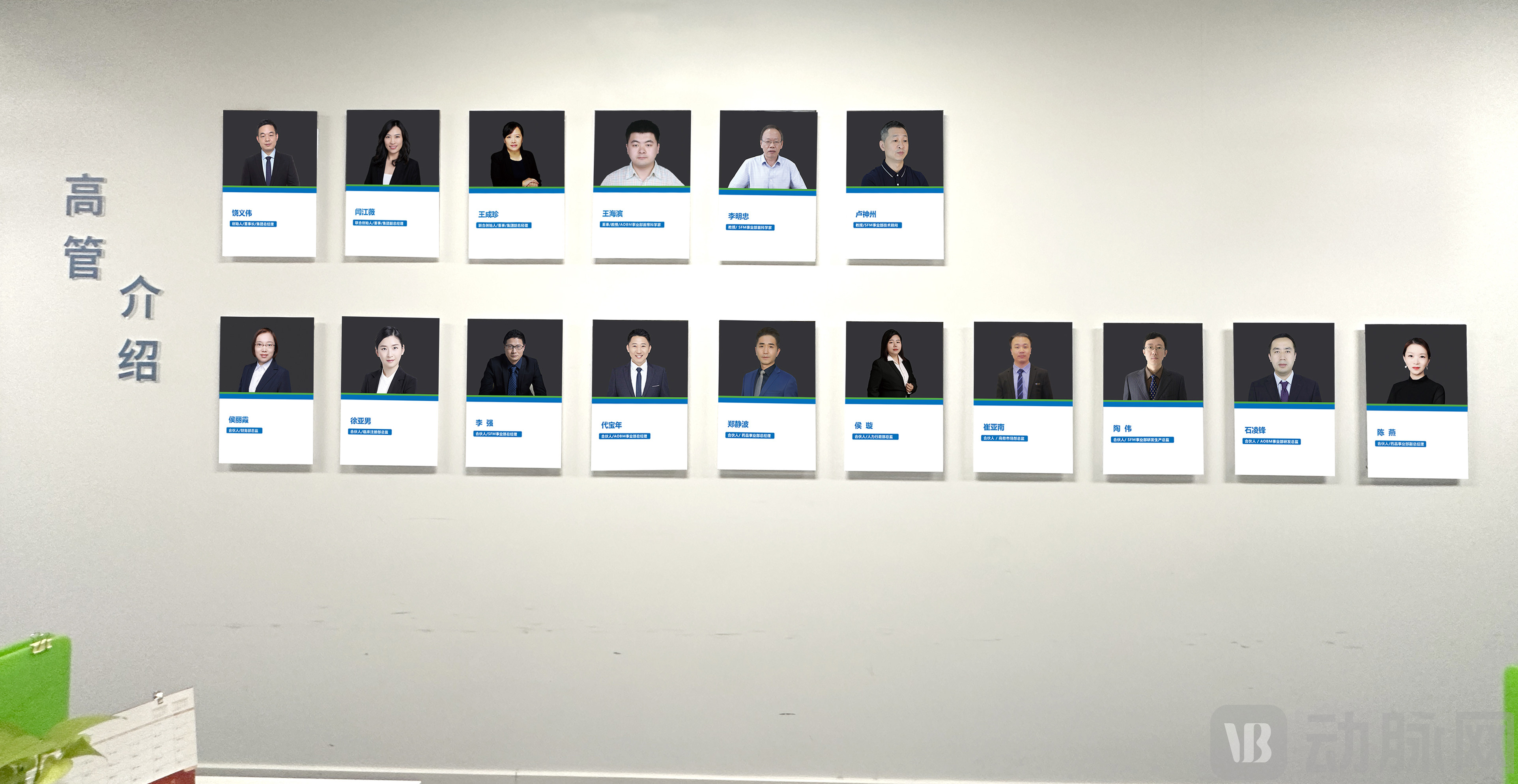
Led by a highly capable core team, the national key R&D project undertaken by Beijing Healtech Pharmaceutical Technology Co., Ltd. not only achieved breakthroughs in key national engineering technologies, but also delivered good news last May—Obtained the first Class III medical device registration certificate (National Medical Device Registration No. 20233140615) approved by the National Medical Products Administration for a domestic CDMO platform.
Major Milestone: First Class III Registration Certificate for a Domestic Medical Device CDMO Platform
On May 9, 2023, the Beijing CDMO Center of Healtech obtained its first Class III medical device registration certificate (National Medical Device Registration No. 20233140615) approved by the National Medical Products Administration. This is the first Class III collagen dressing in China prepared using extracellular matrix-derived collagen as the raw material, and also the first Class III medical device registration certificate generated through contracted R&D in the medical device CRO/CDMO industry.
It is important to emphasize that this project, an organizational repair initiative covering the full spectrum of market access activities, was completed through a strategic collaboration between Healtech’s Beijing CDMO Center and Hubei Hengan Fulin Pharmaceutical Co., Ltd. This effort was built upon research topics from the National Key R&D Program during the 13th Five-Year Plan period and followed the National Medical Products Administration’s (NMPA) August 1, 2019 issuance of the “Notice on Expanding the Pilot Program for the Marketing Authorization Holder System for Medical Devices.” Recalling the journey from the initiation of R&D in 2019 to obtaining regulatory approval in 2023, Rao Yiwei, founder of Healtech, remarked with emotion, “Against the backdrop of the COVID-19 pandemic, the entire team united, worked alongside investigators to embrace challenges, overcame numerous difficulties, successfully completed clinical trials, and obtained the Class III medical device registration certificate. This constitutes a significant milestone.”
After signing the agreement with Hengan Fulin in 2019,In just over three years, Beijing Healtech Pharmaceutical Technology Co.,LTD completed the entire process from research and development, establishment of production systems, sample manufacturing and testing, to animal studies, clinical trials, and product registration.“One point that cannot be overlooked is that, during the research and development of innovative products, ‘Healtech, leveraging its existing R&D reserves and conducting in-depth preliminary research, strives to customize the most suitable indication-specific product for its partner customer, Hengan Fulin. This approach not only enriches the client’s product portfolio but also involves collaborative academic promotion, helping this domestically unique extracellular matrix-derived collagen dressing increase the client’s market share,’ said Rao Yiwei, founder of Healtech.”
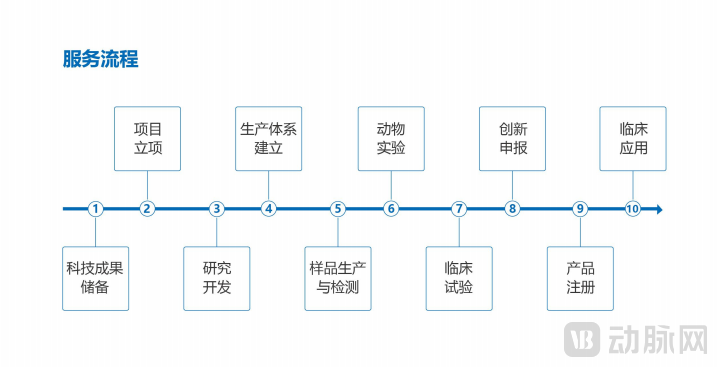 Healtech CDMO Service Process. Image provided by Healtech
While assisting clients in the development of innovative products, Beijing Healtech Pharmaceutical Technology Co.,LTD has achieved substantial gains. It has not only overcome technical bottlenecks in the industrialization of animal-derived medical materials and developed a novel degreasing and decellularization process, but also secured four authorized invention patents and completed one key research and development project under the 13th Five-Year Plan. These accomplishments have laid a solid academic foundation and established a robust intellectual property “moat” for the project.
On August 9, 2023, based on the project’s milestone breakthroughs,Beijing Healtech’s CDMO Center has successfully obtained the Class III Medical Device Production License for wound dressings (License No. Jing Yao Jian Xie Sheng Chan Xu 20230053) issued by the Beijing Municipal Medical Products Administration,This is the first Class III medical device production license issued to the Beijing Healtech CDMO Center, marking that the Beijing CDMO Center has met the regulatory requirements for the industrialized production of medical devices, possesses the conditions for medical device manufacturing, and can officially commence production.
Two domestically pioneering, globally leading technologies; cumulative R&D, production, and service contracts exceeding RMB 1 billion
When we look back at the origins of these “first” milestones, it is not difficult to see that Healtech’s R&D reserves have reached a staggering level.
Currently, Healtech operates CDMO centers in Beijing and Suzhou, while the source of the first Class III registration certificate for a domestic medical device CDMO platform isOne of Aotai Kang’s pioneering domestic and world-leading R&D reserves—extracellular matrix—is managed by the Aotai Kang Beijing CDMO Center.Extracellular matrix is a class of natural materials that induce tissue repair and regeneration. Secreted by cells, it provides mechanical support and physical strength to tissues and organs, while influencing cellular activities such as adhesion, migration, proliferation, and differentiation, as well as embryogenesis. It offers the technical advantages of high efficacy and superior safety.
Extracellular matrix (ECM) can be applied to the repair of various tissues and organs, used as surgical meshes and high-quality tissue fillers, and employed to enhance cell therapy efficacy, demonstrating broad application prospects. In addition to decellularization technology that preserves the active components of natural ECM, Beijing Healtech Pharmaceutical Technology Co., LTD utilizes alpha-Gal antigen removal technology, ECM cross-linking technology, and freeze-drying molding technology.According to the introduction, the technology platform currently has over 30 projects in its pipeline, six products in clinical stages, four technology transfers completed, and three product registration certificates obtained.
Silk fibroin is another domestically pioneered and globally leading R&D reserve of Healtech, managed by Healtech’s Suzhou CDMO Center.This is a natural high-molecular-weight fibrous protein extracted from silk, constituting approximately 70%–80% of silk’s content. It contains 18 types of amino acids, including eight essential human amino acids, with glycine (Gly), alanine (Ala), and serine (Ser) accounting for more than 80% of its total composition. Silk fibroin offers technical advantages such as high safety (good biocompatibility), strong efficacy (bioactivity), and tunable biodegradability, enabling its application in fields such as artificial skin and organs, sutures, and drug delivery carriers.According to reports, the technology platform has more than 20 projects in reserve, with five products entering the clinical stage, four technological achievements transferred, and three product registration certificates obtained.
Both the extracellular matrix and silk fibroin are patented technologies for passive medical device biomaterials, independently developed with proprietary intellectual property rights by the Healtech CDMO platform. Furthermore, leveraging its deep expertise in this field, the Healtech CDMO platform has also mastered R&D technologies for more than 80 next-generation mainstream medical materials, including collagen, PLA, PLLA, dextran, PCL, peptides, polyethylene, PVA, polyurethane, polytetrafluoroethylene (PTFE), microcrystalline calcium, hyaluronic acid, chitosan, and hydroxyapatite.
Overall, since establishing its CDMO platform in 2014, Beijing Healtech Pharmaceutical Technology Co., LTD has achieved remarkable success by leveraging its extensive R&D reserves and providing end-to-end services spanning from research and development to clinical trials, and from regulatory submissions to contracted manufacturing.:Over the past five years, while obtaining six medical device registration certificates, the company has filed more than 30 patent applications, eight of which are invention patents that have been granted, thereby establishing a robust patent “moat.” In the last three years, it has completed collaborations on more than ten projects, with the cumulative value of R&D and production service contracts exceeding RMB 1 billion.
Although China’s biomedical materials sector remains vulnerable to supply chain bottlenecks, the strong support of national policies, intensified R&D efforts by domestic enterprises, and continuous breakthroughs in core technologies point to a promising future. In this context, medical device CDMOs such as Beijing Healtech Pharmaceutical Technology Co., LTD will serve as “catalysts” within the field, continuously driving the transformation of China’s biomedical materials industry and gradually achieving import substitution with domestically produced alternatives.
References:
1. “Top 10 Most Notable Biomaterials” Insight Report, American Chemical Society’s CAS & Westlake University
2. 2014 International Forum on New Materials and Industrialization in China: R&D of Biomedical Materials Enters a Period of Opportunity, BioExplorer
3. 2023 Panoramic Overview of China’s Regenerative Medicine Industry, Qianzhan Industry Research Institute
4. Regenerative Medicine Embraces a “New Wave of Opportunity”: What Are Its Prospects?AskCI Industry Research Institute