

Aura Biosciences Advances Toward Becoming the First Global Developer of a Virus-Like Drug Conjugate (VDC) Therapy

Aura Biosciences
Targeted Anticancer Therapy Developer
Building on antibody-drug conjugate (ADC) technology, a broader range of drug conjugation modalities is gaining attention.
Virus-like drug conjugates (VDCs) are one such example, and their development is progressing at a considerable pace. This innovative conjugation approach has been primarily translated into practice based on the research findings of Dr. John Schiller from the Center for Cancer Research at the U.S. National Cancer Institute, with Aura Biosciences serving as a pioneer in the VDC field.
Aura Biosciences was founded in 2009 with the aim of developing novel virus-like drug conjugate (VDC) therapies for the treatment of multiple oncology indications. According to Aura’s design,The targeting moiety of the VDC is designed as non-infectious protein nanoparticles (VLPs) derived from the human papillomavirus (HPV) capsid to serve as an efficient delivery vehicle, while the payload consists of infrared light-activatable cytotoxic drugs.Under this design, the targeting moiety of the drug can selectively bind to the surface of modified heparan sulfate proteoglycans (HSPGs), achieving targeted delivery and binding to solid tumor cells. Upon activation by near-infrared light, the conjugated cytotoxic payload is released, destroying tumor cells and causing acute necrosis while simultaneously activating the immune system to mount an anti-tumor response.
AU-001 is the first core VDC product developed by Aura Biosciences.
Implementing Innovative VDC Therapy, Focusing on Ophthalmic and Urologic Oncology
To date, VDC remains an emerging therapy within the industry, yet Aura Biosciences has been in development for 15 years.
Since its establishment in 2009, Aura Biosciences has completed multiple rounds of financing, including an oversubscribed $80 million funding round in March 2021. Advent Life Sciences has participated in every financing round of Aura. This firm focuses on investment and financing for life sciences companies in the United Kingdom, Europe, and the United States, with a long-term track record of successful venture capital investments. With the consistent investment support from Advent Life Sciences and other investors, Aura has successfully translated its products into clinical applications.
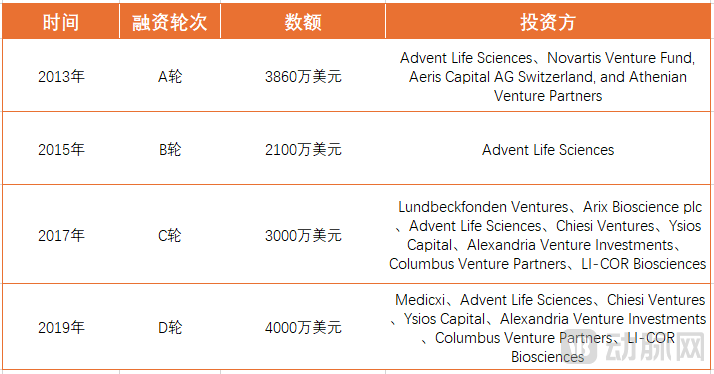
In October 2021, Aura Biosciences listed on the Nasdaq, raising $75.6 million in its initial public offering. Since its inception, the company has maintained a fundraising pace of approximately once every two years, ensuring stable cash flow and the steady advancement of its core products.
Aura Biosciences’ ability to achieve milestone results in a step-by-step manner is underpinned by its experienced management team.
Eli de los Pinos is the founding CEO of Aura, responsible for the company’s strategy and operations. Prior to founding Aura, she held key positions at Eli Lilly, where she led the European market launch of the lung cancer drug Alimta.
Jill Hopkins is the Chief Medical Officer and President of Research and Development at Aura. Prior to joining Aura, Jill served as Senior Vice President and Global Head of Ophthalmology and Exploratory Development at Novartis, as well as CEO of Gyrograph Therapeutics, a Novartis subsidiary, where she oversaw the development and commercial launch of the company’s global ophthalmology product portfolio. Jill also accumulated over ten years of experience at Genentech. These roles have endowed Jill with more than 30 years of cross-functional expertise in the field of ophthalmology.
Mark Plavsic is the Chief Technology Officer of Aura. Prior to joining Aura, Mark served as Chief Technology Officer at Fate Therapeutics and the gene therapy company Lysogene. He has also worked at multinational corporations (MNCs) such as Sanofi and AstraZeneca, bringing 30 years of global biopharmaceutical experience that spans technical operations, formulation research, and commercialization.
A complete team and clear division of labor have given Aura Biosciences a solid core, as well as clear focus and strong leadership in its targeted disease areas.
Aura focuses on ophthalmic and urologic oncology. Its first VDC candidate is being developed as a first-line treatment for early-stage choroidal melanoma.Choroidal melanoma is a rare cancer, with approximately 11,000 new cases annually in the United States and Europe. Despite the current use of radiation therapy, the long-term prognosis remains poor, with over 50% of cases ultimately resulting in death. Currently, there are no FDA-approved therapies available for this condition.
In urologic oncology, Aura focuses on bladder cancer. Bladder cancer is the most common malignant tumor involving the urinary system. In the United States, the annual incidence of non-muscle-invasive bladder cancer (NMIBC) and muscle-invasive bladder cancer (MIBC) is 81,000 cases. NMIBC and MIBC are currently treated with a combination of surgery, immunotherapy, and chemotherapy; however, a significant proportion of patients may experience disease progression requiring cystectomy.
From Aura’s perspective, its core VDC product can largely address and meet the clinical needs of these two types of diseases.
Core product bel-sar has entered Phase III clinical trials and is poised to become the world’s first VDC therapy.
Currently, Aura Biosciences has established a mature technology platform. Its novel targeted oncology platform, based on virus-like particles (VLPs), leverages HPV-derived VLPs to target a broad range of solid tumors. Meanwhile, Aura’s VDC therapy achieves tumor killing by targeting modified tumor-associated glycosaminoglycans (CAG).
Modified tumor-associated glycosaminoglycans (GAGs) are a large family of molecules found in the extracellular matrix and on cancer cell membranes. Tumors specifically modify GAGs with key sulfation motifs, providing high binding specificity for many ligands. Therefore, GAGs play a critical role in tumor development, regulating many aspects of tumor progression, including proliferation, invasion, angiogenesis, and metastasis.
Aura’s VLPs can selectively bind to modified tumor-associated GAGs, thereby eliminating tumors. This gives VDC therapy additional advantages:First, delivery is more efficient., a single VDC can deliver hundreds of capsid protein-conjugated cytotoxic molecules; moreover, VDCs target GAGs, leveraging the ability of VLPs to bind to modified tumor-associated GAGs present in many tumor types,VDC has the potential to be widely used for various types of cancer without binding to normal cells, thereby limiting off-target toxicity.; meanwhile, VDC possesses a large number of binding sites for tumor-associated glycosaminoglycans (GAGs), and this multivalency ensures robust binding of the drug to tumor cells; most importantly,VDC has a dual mechanism of action: it first induces acute necrosis of tumor cells, and then triggers an anti-tumor-specific immune response by creating a highly immunogenic environment, thereby achieving more potent and durable therapeutic effects.
Currently, its core product AU-001, namely Belzupacap sarotalan (bel-sar), has fully validated the efficacy of VDC therapy in clinical settings.
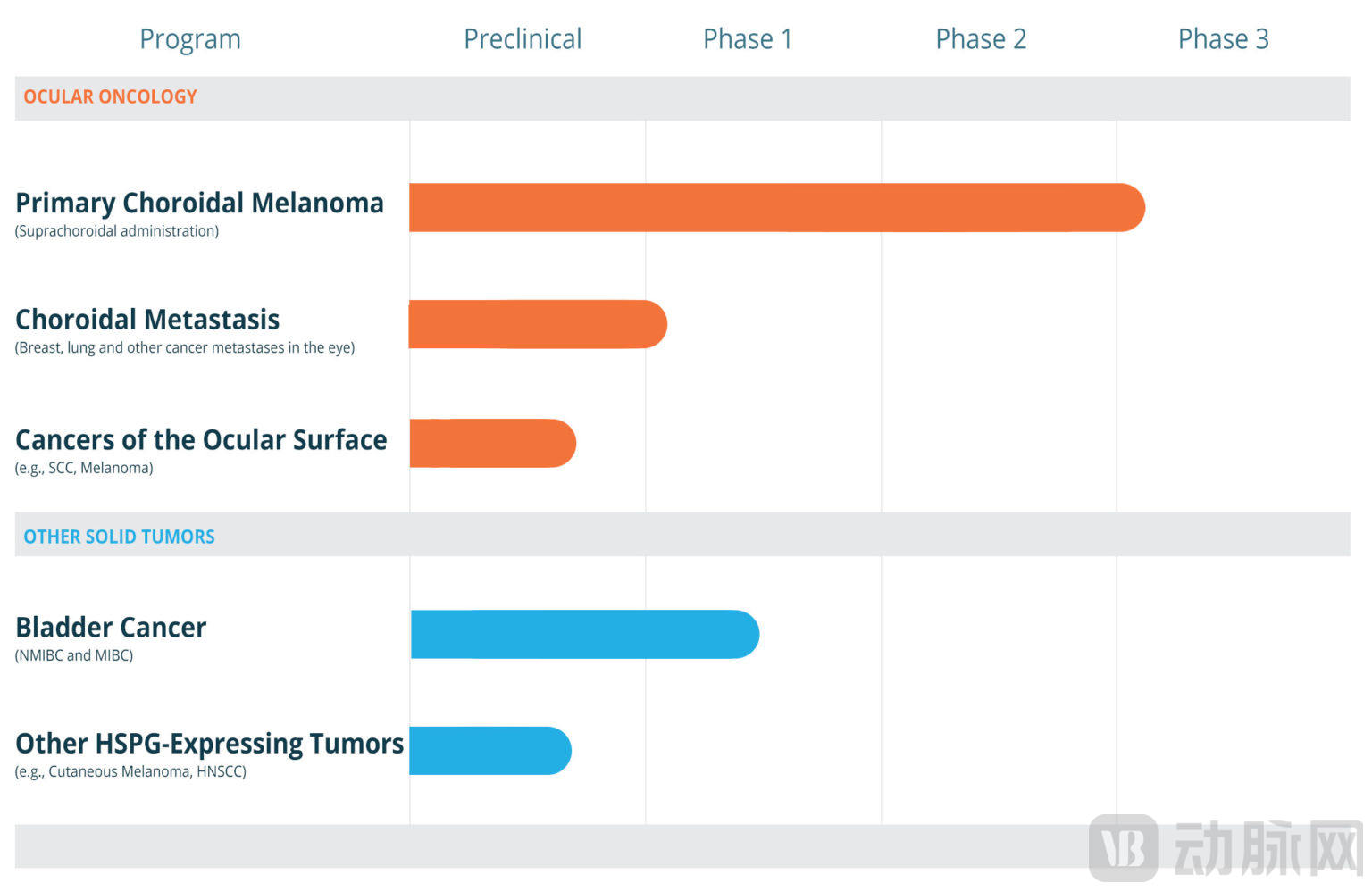
Image source: Aura Biosciences official website
The mechanism of action of this product is as follows: Bel-sar is injected into the eye, where it selectively binds to the cell membranes of choroidal melanoma cells. Once Bel-sar binds to the tumor cell membrane, it releases a potent photosensitizing agent that is subsequently activated by infrared light. Due to its targeted binding to tumor cells, Bel-sar triggers the generation of singlet oxygen upon photoactivation, leading to physical disruption of the cell membrane and thereby inducing acute necrosis of the tumor cells. This process also activates the patient’s innate and adaptive immune systems, further enabling the recognition and destruction of cancer cells with metastatic potential.
Currently, bel-sar, used for the treatment of choroidal melanoma, has been granted Orphan Drug and Fast Track designations by the U.S. FDA, and subsequently received Orphan Drug designation from the European Medicines Agency (EMA).
Aura Introduction: Bel-sar is also highly convenient for clinical use. It preserves critical ocular structures, with the potential to maintain patients’ vision and reduce other long-term complications associated with radiation therapy. Physicians can administer the drug using common ophthalmic office equipment, without the need for surgery, offering both patients and clinicians a potentially less invasive and more convenient treatment option.
At the end of 2021, Aura Biosciences announced clinical data for AU-011 in indeterminate lesions (ILs) and choroidal melanoma (CM), including final Phase Ib/II safety and efficacy results for intravitreal (IVT) injection, as well as updated Phase II safety outcomes for suprachoroidal (SC) administration.
In 2023, at the 46th Annual Meeting of the Macula Society, Aura Biosciences announced positive interim Phase II safety and efficacy data for Bel-sar as a first-line treatment for patients with early-stage choroidal melanoma. The data showed that after an average follow-up of 9 months in patients who received three treatment cycles, patients demonstrated a favorable response to Bel-sar, with tumor control rates ranging from 89% to 100%. Furthermore, Bel-sar exhibited a favorable safety profile, with only one patient experiencing vision loss, and no treatment-related serious adverse events (SAEs) or significant adverse events (AEs) were reported.
These latest clinical data strongly support the initiation of the Phase III clinical trial for Bel-sar. In December 2023, Aura Biosciences announced that the first patient had been dosed in the global Phase III CoMpass trial, with additional clinical data expected to be released in the future.
Bel-sar has also shown potential in the treatment of bladder cancer.It is reported that this drug has received FDA Fast Track designation, and a Phase I clinical trial has been initiated to evaluate the safety and tolerability of Bel-sar for the local treatment of NMIBC and MIBC.
Currently, apart from Aura Biosciences, no other pharmaceutical companies have made strategic moves in the VDC therapy space. We look forward to Aura releasing more clinical data in the future, paving a viable path for the VDC field.