

Yifeng Capital on Biopharma Investment in 2024: Navigating the Surge of BD Outbound Deals

Efung Capital
Biomedical Professional Investment Institutions
In last year’s biopharmaceutical investment market, Efung Capital was an unavoidable player.
This Shenzhen-based investment firm has specialized in biopharmaceutical investments for over a decade, with its portfolio spanning hotspots such as oncology, autoimmune diseases, and ophthalmology. In 2023, three Class 1 innovative drugs from companies backed by Efung Capital received sequential regulatory approvals, and six products were included in the 2023 National Reimbursement Drug List. Furthermore, three portfolio companies—Gaoguang Pharmaceutical, Henry Pharma, and Harbour BioMed—successively secured major license-out deals with overseas pharmaceutical companies, each valued at over USD 1 billion.
License-out is no stranger to Efung Capital. Looking back at the history of license-out deals by Chinese domestic enterprises, Chipscreen Biosciences pioneered the practice of out-licensing patents for innovative drugs in China. Its developed drug, Chidamide, entered into a licensing agreement with HUYA as early as 2006, becoming China’s first original innovative drug to license its patent for use in developed countries such as the United States and achieve simultaneous global development. Notably, the first original drug project that Efung Capital invested in was Chipscreen Biosciences.
Recently, in an exclusive annual interview with VCBeat,Zhu Pai, CEO of Efung Capital, shared his views on the current BD boom. On one hand, he looks forward to seeing Chinese biopharmaceutical companies engage in more extensive overseas collaborations in 2024; on the other hand, he rationally cautioned that license-out deals could prove to be a double-edged sword.
“Securing funding and gaining recognition from major pharmaceutical companies is important, but it may also impact a company’s valuation. This is because biotech firms are typically valued based on their global rights; however, if core markets in Europe and the United States are licensed out, leaving only the Chinese market, the company’s valuation will inevitably be adjusted.”
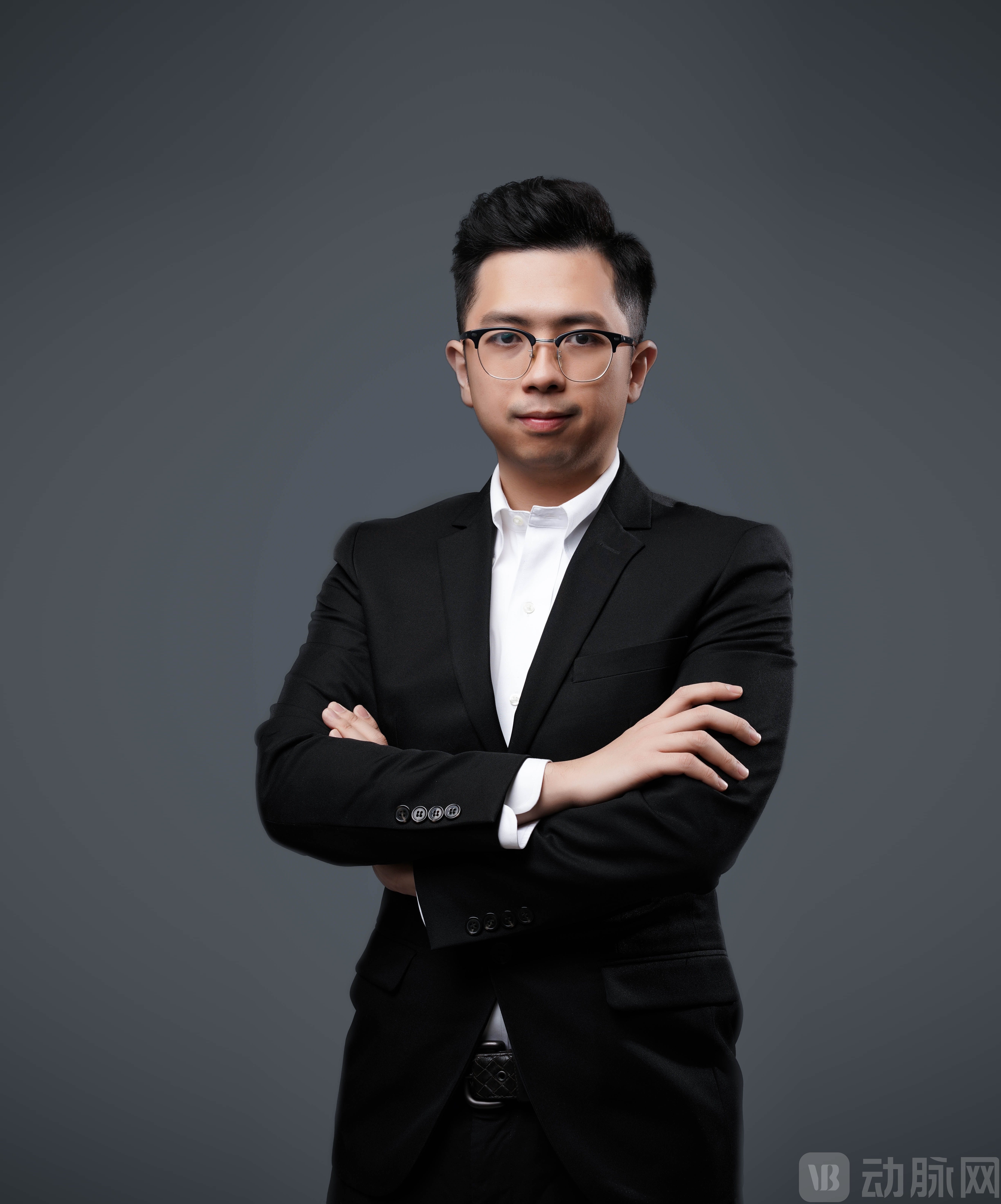
Zhu Pai, CEO of Efung Capital. Source: Photo provided by the interviewee
When it comes to the future sources of funding for Chinese biotech companies,Zhu Pai believes that financing will remain the primary means for enterprises to secure capital, and innovative drug companies require robust investment and financing support to achieve growth.In his view, the capital market plays a significant role in the development of the biopharmaceutical industry, and to some extent, may even play a decisive role.
What Changes Have Occurred in the Biopharmaceutical Industry Over the Past Year? Amidst Industry and Market Shifts, What Are Efung Capital’s Expectations and Moves for 2024, Given Its Decade-Long Commitment to Investing in Biopharmaceutical Innovation?
VCBeat: How would you summarize the past year?
Zhu Pai:In 2023, the entire healthcare market experienced an investment trough, making it quite challenging from an investment perspective. However, from the standpoint of biopharmaceutical companies, there were still commendable performances in pipeline development, commercialization progress, and external collaborations. Furthermore, influenced by various macroeconomic factors, liquidity in the Hong Kong stock market declined, IPOs were delayed, and funding in the primary market tightened, leaving financing obstacles as a critical issue for corporate development.
Relatively speaking, companies in the early and late stages have experienced smoother fundraising. Early-stage companies boast reasonable valuations, with significant early-stage investment activity observed last year. Late-stage companies, from Series C to IPO, have benefited substantially from government financial support. In contrast, mid-stage companies face more severe financing challenges, particularly those at Series B and beyond with clinical trials already in Phase I or later. Many of these companies emerged around 2019, when the biopharmaceutical financing environment was at its peak, leading to certain valuation bubbles. Additionally, some companies in the industry are under considerable operational pressure, triggering share repurchase mechanisms or valuation adjustment mechanisms (VAMs).
Overall, the industry is progressing, with domestic biopharmaceutical companies advancing every year. Cash-rich enterprises have not reduced their R&D investment despite the cooling financing environment, and the surge in overseas licensing deals last year serves as a positive signal.
VCBeat: How do you view the boom in overseas business development (BD) last year?
Zhu Pai:One backdrop to the increasing trend of Chinese biotech companies going global is that their technologies are gradually maturing and they are slowly adapting to international markets. However, expanding overseas also carries certain risks akin to “killing the goose that lays the golden eggs.” Some companies may have no choice but to relinquish overseas rights in exchange for funding, using upfront payments to support subsequent R&D activities—a survival strategy in the current environment.
License-out can be understood as a double-edged sword. Securing funding and recognition from major pharmaceutical companies is crucial, but it also impacts corporate valuation. Traditional valuation methods are based on global rights; however, if core markets in Europe and the United States are licensed out, leaving only the Chinese market, the company’s valuation will inevitably undergo adjustment.
From this perspective, companies in their early stages may be better suited for license-out deals—for instance, out-licensing their pipeline after completing Phase I clinical trials. Since company valuations are relatively low at this stage, high-quality business development (BD) transactions send a positive signal for future fundraising. For companies committed to continuous R&D, even if they retain only the China market rights, such deals can significantly boost investor confidence.
VCBeat: What types of assets have a competitive advantage in license-out deals for global expansion?
Zhu Pai:I believe that developing combination therapies for multinational corporations (MNCs) currently offers greater opportunities for overseas business development (BD), such as PD-1 bispecific antibodies, the currently hot antibody-drug conjugates (ADCs), and novel delivery technologies. While it may take some time for breakthrough innovative pipelines to achieve license-out deals, we observe that many early-stage companies in China are focusing on frontier fields and pursuing target innovation, indicating future opportunities.
VCBeat: Apart from BD, where do you think Chinese biotech companies will secure their next round of funding?
Zhu Pai: Whether in China or abroad, fundraising will remain the primary means for companies to secure capital—a proven and fundamental principle. Truly outstanding companies will have the opportunity to continue raising funds after weathering this market turbulence.
Early-stage startups enjoy significant leverage in negotiations with investors and have a higher probability of securing financing. For companies with inflated valuations, it is a viable strategy to appropriately delay fundraising until their product pipelines are more mature. The healthcare sector is undoubtedly a leading sunrise industry in China, and investment institutions will continue to inject capital into this field.
VCBeat: Correspondingly, have there been any changes in the sources of funding for investment institutions?
Zhu Pai:Currently, few market-oriented funds are willing to invest in the healthcare sector. Efung Capital is forging closer ties with government guidance funds, which boast more abundant capital but also impose greater demands for industrialization. At present, we are collaborating with government guidance funds in cities such as Shenzhen, Hangzhou, and Wuhan. These governmental funds, located in tier-1-plus cities with strong healthcare industry foundations, have provided substantial support to venture capital firms.
VCBeat: Are there significant differences in the requirements between government-guided funds and market-oriented funds?
Zhu Pai:The defining characteristic of government guidance funds is their industrialization-oriented mindset. These funds are exhibiting greater tolerance for failure and higher acceptance of emerging technologies, while placing increased emphasis on supporting the development of regional ecosystems. They aim to build complete industrial clusters around specific niche sectors; for instance, Shenzhen supports frontier technology fields such as synthetic biology and brain-computer interfaces. Overall, government guidance funds are accelerating their transformation and evolution, moving beyond their traditional role as mere instruments of industrial policy, with their professional capabilities and market orientation continuously improving.
VCBeat: Amid changes in the market environment and funding sources, what adjustments have been made to Efung Capital’s post-investment management?
Zhu Pai:In fact, it has little to do with the source of funding. The change lies in the overall tightening of post-investment management. We have significantly increased the frequency of communication with our portfolio companies, shifting from monthly to weekly or bi-weekly interactions. At the same time, we are paying closer attention to companies facing issues or difficulties, raising the priority of post-investment management for these enterprises and increasing the frequency of communication with them. We have also intensified our support in commercialization and financing assistance. Furthermore, we help portfolio companies address valuation discrepancies by coordinating and negotiating with subsequent investors to ensure the smooth progression of financing rounds.
VCBeat: Will M&A be included in the company’s subsequent financing and exit channels? What types of biotech companies are favored by acquirers?
Zhu Pai:Mergers and acquisitions (M&A) represent a promising strategic direction, offering a win-win outcome for target companies, acquirers, and investors. Publicly listed companies benefit from transparent market-based valuations. In particular, the market capitalizations of some biopharmaceutical firms listed on the US and Hong Kong stock exchanges have been suppressed due to subdued market sentiment, creating M&A opportunities this year. Notably, certain Chapter 18A-listed companies in Hong Kong hold cash reserves nearly equivalent to their market capitalizations, making them attractive targets for secondary market attention and even takeover bids. From a business perspective, companies with focused pipelines are more conducive to acquisition due to their clear scope and prominent core value. Alternatively, early-stage companies can secure acquisition by larger pharmaceutical enterprises—thereby transferring technology and innovative assets—by maintaining reasonable valuations.
VCBeat: Apart from mergers and acquisitions, what is your overall outlook for the biopharmaceutical market in 2024?
Zhu Pai:I believe that Chinese assets have currently fallen to a relatively reasonable level, making further sharp declines unlikely. Domestic companies have already instilled sufficient confidence in the market through their R&D efforts; the key going forward is whether they can achieve substantial breakthroughs in commercialization—that is, how Chinese innovative drugs can gain genuine validation in both domestic and international markets. The market capitalizations of most pharmaceutical companies listed on China’s secondary market are concentrated in the tens of billions of yuan range. If future sales performance can drive a doubling of their market valuations, it would have a significant positive impact on overall industry sentiment and investment momentum.
Of course, macroeconomic factors also warrant close monitoring and may still exert some impact on innovation-driven investments; investors should be mentally prepared for this. Consequently, we will place greater emphasis on companies with self-sustaining cash flow capabilities.
VCBeat: The overall outlook remains quite positive.
Zhu Pai:While it may be difficult to fully return to the absolute peak levels seen in 2018–2019, I remain optimistic about the market in 2024. This outlook is driven by the growing number of Chinese biopharmaceutical companies adopting global perspectives in their R&D and commercialization strategies, as well as the potentially sustained boom in business development (BD) activities. After slowing its investment pace last year, Efung Capital is expected to increase its deal activity this year.
VCBeat: What types of projects will Efung Capital favor in the future?
Zhu Pai:Our investment strategy does not focus solely on frontier technologies touted as “disruptive”; we also place significant value on incremental innovations that address clinical needs. For instance, one of our portfolio companies has developed a drug targeting the degradation of atherosclerotic plaques, leveraging liposome technology to repurpose an existing medication. While cutting-edge innovative technologies are undoubtedly important, it is crucial to avoid developing products that either lack a patient base or face intense market saturation. We are more inclined to identify projects that can rapidly transition from the experimental stage to clinical application, thereby fulfilling unmet medical needs.
Of course, we are also focusing on more challenging disease areas, such as CNS disorders like Alzheimer’s disease, which offer substantial market potential but present significant scientific hurdles. In short, Efung Capital looks forward to identifying innovative projects that can deliver genuine clinical impact.