

Peking University's Prof. Lü Wanliang Team Files Prospectus for Novel Drug Delivery Patent: pH-Responsive Virus-Like Recombinant Protein Nanoparticles for Targeted Gene Therapy in Acidic Lesions
On February 2, 2024, a patent application from Peking University titled “Application of Virus-Like Recombinant Protein Nanobodies in the Prevention or Treatment of Lesions in Acidic Environments” was published for the first time. This patented research achieves highly efficient and low-toxicity targeted gene therapy for acidic lesions, providing a novel gene therapy approach for cancer and inflammatory diseases.
The virus-like recombinant protein nanobodies prepared by this patent are pH-responsive, capable of responding to acidic or weakly acidic environments, and also possessInhibition of Breast Cancer Tumor Proliferation, andTherapeutic Effects of Inhibiting Inflammatory Cytokines and Alleviating Inflammation. Currently, this study has demonstrated the efficacy of virus-like recombinant protein nanobodies in both in vitro and in vivo gene therapy, enabling highly efficient and low-toxicity gene therapy targeted to acidic lesions.
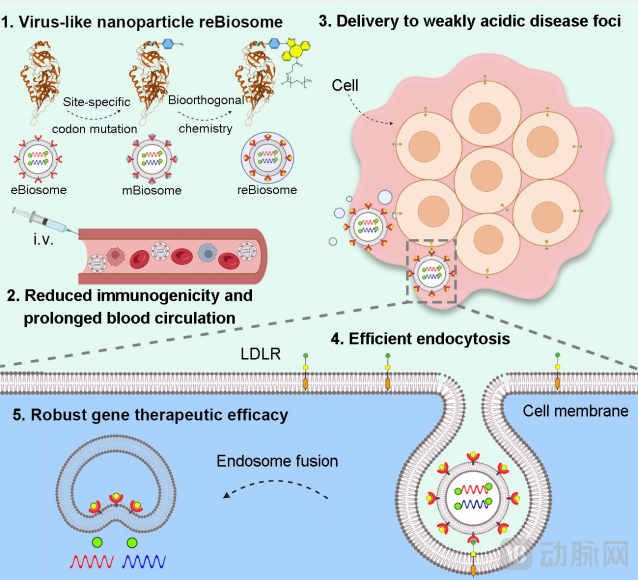
Recombinant Virus-Like Nanoparticles (Image source: Peking University Health Science Center)
The inventors of this patent areProfessor Lü Wanliang, Department of Pharmaceutics, School of Pharmaceutical Sciences, Peking Universityand his team. In addition to this patent, Professor Lü Wanliang’s team holds more than 20 additional patents in the field of targeted nanodrug delivery systems.
I. Drug Delivery Emerges as a Research Hotspot
Drug delivery systems have become a focal point in the biomedical field in recent years. Researchers both domestically and internationally are dedicated to synthesizing highly efficient drug carriers through technological innovation and exploring their potential applications in clinical therapy.
University of Washington Fred Hutchinson Cancer CenterThe team led by Kim Han-Ping successfully synthesized an adeno-associated viral vector of serotype 35 (AAV35), which has demonstrated significant efficacy in treating diseases such as hemoglobinopathies, immunodeficiencies, and cancer.
Meanwhile,The Broad Institute of MITWe have also developed an engineered Cas protein, a non-naturally occurring protein capable of robustly delivering targeted nucleic acids or polynucleotides, thereby offering new possibilities for disease treatment.
In addition,University of Southern CaliforniaThe immune receptors (SIRs) synthesized by Chaudhary Preet M.’s team have shown broad application prospects in the treatment of various cancers. Meanwhile, fusion proteins jointly developed by King’s College London and Dartmouth College have demonstrated validated efficacy in treating autoimmune diseases such as multiple sclerosis, Crohn’s disease, and inflammatory bowel disease.
2023,Shanghai Institutes for Biological Sciences, Chinese Academy of Sciences, and the Team of Professor Chen Wanjin from the First Affiliated Hospital of Fujian Medical UniversityResearch has also achieved breakthrough progress. By utilizing CRISPR/Cas9 technology, they successfully disrupted the splicing silencer located in intron 7 of SMN2, thereby increasing the expression of the SMN protein. This discovery provides new vector options for the treatment of spinal muscular atrophy.
Team of Professor Peng Min, Tsinghua UniversityThus, CAR-T cells with dual knockout of ZC3H12A and BCOR were generated using gene editing technology, addressing the technical challenge of sustaining long-term efficacy in CAR-T therapy and achieving the goal of prolonged therapeutic effect from a single administration.
Professor Zhou Qing’s Team at the Life Sciences Institute of Zhejiang UniversityDimeric proteins have also been developed for the diagnosis of autoinflammatory diseases, providing strong support for early diagnosis and treatment.
In summary, as clinical expectations for therapeutic efficacy continue to rise, the importance of drug delivery systems in new drug development has become increasingly prominent. Related research is rapidly emerging as a hotspot and frontier in the international biomedical field.
II. Drug Delivery Remains Hot in the Market
Advances in scientific research have also driven industrial progress, with some cutting-edge research findings on the verge of entering the market application phase.
June 2023,Genevant ScienceswithNovoNordiskReached a collaboration and non-exclusive licensing agreement, the two parties will combine proprietary lipid nanoparticle (LNP) technology with innovative mRNA-based megaTAL technology to jointly develop in vivo gene editing therapies for hemophilia A. This marks Novo Nordisk’s fourth new advancement in drug delivery technology in 2023, highlighting its continued investment and leading position in this field.
Meanwhile, ReCode Therapeutics has attracted attention with its innovative organ-selective lipid nanoparticle (LNP) targeted delivery system,Pfizer, Bayer, Sanofi, Amgenattracting the attention of globally renowned pharmaceutical companies and successfully raising $200 million in its Series B financing round. This fully demonstrates the market’s recognition of and high expectations for drug delivery technologies.
In China,Qide PharmaCompanies such as Qide Medicine have also achieved significant results in the field of drug delivery. Qide Medicine focuses on the research and development of enzyme-mediated site-specific conjugation technology and applies it to the development of antibody-drug conjugate (ADC) drugs. The company possesses a core portfolio of technologies, including enzyme-catalyzed site-specific conjugation technology, innovative linker technology with unique advantages, and an intelligent continuous conjugation (iLDC) platform process. Multiple drug candidates for cancer treatment have entered the preclinical research stage, bringing new therapeutic hope to cancer patients.
Furthermore,LifeVanda BiotechSignificant progress has also been made in the development of non-viral vectors. The company successfully replaced the neutral lipid DSPC in Moderna’s formulation with the anionic lipid DOPS, providing a new solution for mRNA drug delivery. Currently, Lifanda Bio has established a product portfolio spanning mRNA therapeutics for infectious disease vaccines, oncology, rare diseases, and other protein-deficiency disorders, as well as mRNA-based aesthetic and anti-aging applications, demonstrating broad market potential.
It is worth mentioning that the research achievements of domestic enterprises have also gained recognition in overseas markets. For example, RemeGen developed RC48, the first Chinese-made ADC drug, based on Seagen’s ADC technology platform. This achievement has been highly praised by Seagen, and with$2.6 billionsecured the rights to the drug for its total price. This not only demonstrates the R&D strength of Chinese enterprises in the field of drug delivery, but also enhances the reputation of China’s pharmaceutical industry in the international market.
According to statistics,In 2023, a total of 42 financing and investment transactions occurred in China’s hot drug delivery sector, with the total amount reaching RMB 6.3 billion.This data clearly demonstrates the market’s attention to and recognition of the drug delivery sector, signaling its substantial growth potential in the future.
With the rapid development of emerging fields such as nucleic acid therapeutics and gene therapy, the importance of delivery systems in the drug development process is becoming increasingly prominent. Once delivery challenges are resolved for emerging technologies including mRNA, siRNA, and CRISPR, their druggability will be significantly enhanced. Therefore, companies with a deep understanding of delivery technologies are poised to rapidly identify new opportunities for drug development and stand out in a highly competitive market.