

Baiyi Tech Secures Tens of Millions in Funding to Accelerate CDMO Services for CGM Manufacturers
The CGM market, projected to reach RMB 226.96 billion by 2030 (source: Southwest Securities), is considered a highly coveted opportunity by many medical device professionals. However, the majority of this lucrative market share remains firmly in the hands of the international giant Abbott. In contrast, although domestically approved CGM products each have their unique features, their market presence remains relatively limited.
However, the strong sales performance of CGM devices through e-commerce channels has bolstered the confidence of domestic CGM manufacturers in achieving import substitution. For instance, Silicon Bio’s CGM product achieved omnichannel order values exceeding RMB 100 million at that time; meanwhile, MicroTech Medical adopted a dual-pronged strategy leveraging both offline hospital and online e-commerce channels, driving a 785% year-on-year increase in sales revenue for its CGM products in 2022.
The impressive sales figures of approved CGM products have, to some extent, boosted industry morale and are attracting more new entrants—wagering that there is still an opportunity to carve out a niche in the market segment monopolized by foreign CGM manufacturers. However, CGM technology has long been associated with high technical barriers and complex manufacturing processes. This remains one of the primary obstacles for new players entering the field and a key reason why domestically produced CGM products currently struggle to break through the existing market monopoly.
So, is it possible to find a way to help domestic CGM manufacturers accelerate the realization of import substitution? Baiyi Technology has provided a series of solutions.
Baiyi Technology’s predecessor was Hangzhou Boyi Health Technology Co., Ltd. (hereinafter referred to as “Boyi Health”), a CDMO company in China that serves CGM enterprises.
In recent years, Baiyi Technology (formerly Boyi Health) has established collaborative partnerships with more than 20 medical device manufacturers and research institutes. It has become a full-stack technology reserve enterprise in the domestic continuous glucose monitoring system (CGMS) field, as well as a supplier of basic electrodes, membrane materials, integrated hardware and software technologies, production and processing equipment, and intelligent manufacturing systems. The company provides technical support, contract manufacturing, consulting, training, and medical device registration guidance services to major CGM manufacturers in China.
Recently, VCBeat learned that Baiyi Technology has just completed a new round of financing. The funds raised will be used to expand electrode production lines, increase electrode production capacity, and accelerate the development of automated production lines for electrodes and sensors, as well as R&D for other bioelectrode-related products. The successful financing of Baiyi Technology also means that it will establish a mass-production automated factory in Zhuhai, while the former Boyi Health will assume the functions of an R&D center.
During the interview, VCBeat expressed its curiosity about Baiyi Technology’s decision to pursue a CDMO startup path in the CGM sector. Dr. Chen Wei, the company’s founder, began by sharing his personal journey and connection with CGM technology.
In 2011, while pursuing his Ph.D. at Zhejiang University, Chen Wei participated in a key national project under the National High-Tech R&D Program (863 Program) focused on continuous glucose monitoring (CGM), thereby gaining R&D experience in biosensors, which are core to CGM technology. His undergraduate major was closely related to automated processing and assembly, and his graduate studies involved app and backend development, as well as FPGA and EDA design. Thus, from the R&D of core technologies to automated manufacturing and computer-related applications, Chen Wei’s academic background aligns closely with the underlying logic of CGM research, development, and production.
This inspired him to consider launching a venture in the CGM field. However, what truly solidified his resolve to “create” a CDMO company in the CGM sector was closely tied to the philosophy he had upheld for many years.
“From 2014 to 2018, I came to deeply realize that the blood glucose monitoring industry is not as open as the computer industry in terms of technological innovation—particularly regarding core raw materials, key processes, and automation technologies—and lacks the open-source communities and spirit seen in computing. However, I believe it is precisely this spirit of openness that has driven the rapid development of the computer industry. CGM (Continuous Glucose Monitoring) is the most valuable wearable blockbuster product following fitness bands/smartwatches, and its many underlying technologies constitute a powerful technical platform in their own right. Therefore, I am convinced that openness is the sure path for the development of the CGM industry, while a closed ecosystem will ultimately lead to its failure,” stated Chen Wei with certainty during the interview.
Guided by this philosophy, Boyi Health chose the path of CGM technology services from its inception and later officially became a CDMO enterprise serving the CGM sector.
However, as is well known, the development of continuous glucose monitoring (CGM) systems involves a highly complex and lengthy value chain, encompassing the development of insertion aids, the design and manufacturing of cannulas, the scaled production of electrode sensors, chip solution design, app and cloud backend development, clinical testing, regulatory registration, and automated manufacturing. Due to this high level of technical complexity and the intricate nature of the involved processes, there are few companies operating in the CGM sector, and contract development and manufacturing organizations (CDMOs) dedicated specifically to serving this sector are even rarer.
Yet, against this backdrop, Chen Wei stated, “Judging by the feedback from our current clients, it is fair to say that Baiyi Technology has firmly established its footing.” This naturally reignited VCBeat’s curiosity: How did Baiyi Technology overcome the aforementioned challenges and carve out a niche for itself?
From the perspective of Baiyi Technology’s product portfolio, its main products can be categorized into two groups: bioelectrodes and biosensors. The biosensor lineup primarily includes microneedle array sensors, subcutaneous implantable sensors, and in vitro diagnostic sensors. The bioelectrode product range mainly comprises skin-mountable stretchable flexible electrodes, microneedle array electrodes, stereoelectroencephalography (SEEG) depth electrodes, and neural probes. Furthermore, leveraging its algorithm R&D team, Baiyi Technology also provides wearable metabolic monitoring solutions, as well as development and technical services for management technology platforms to medical device manufacturers.
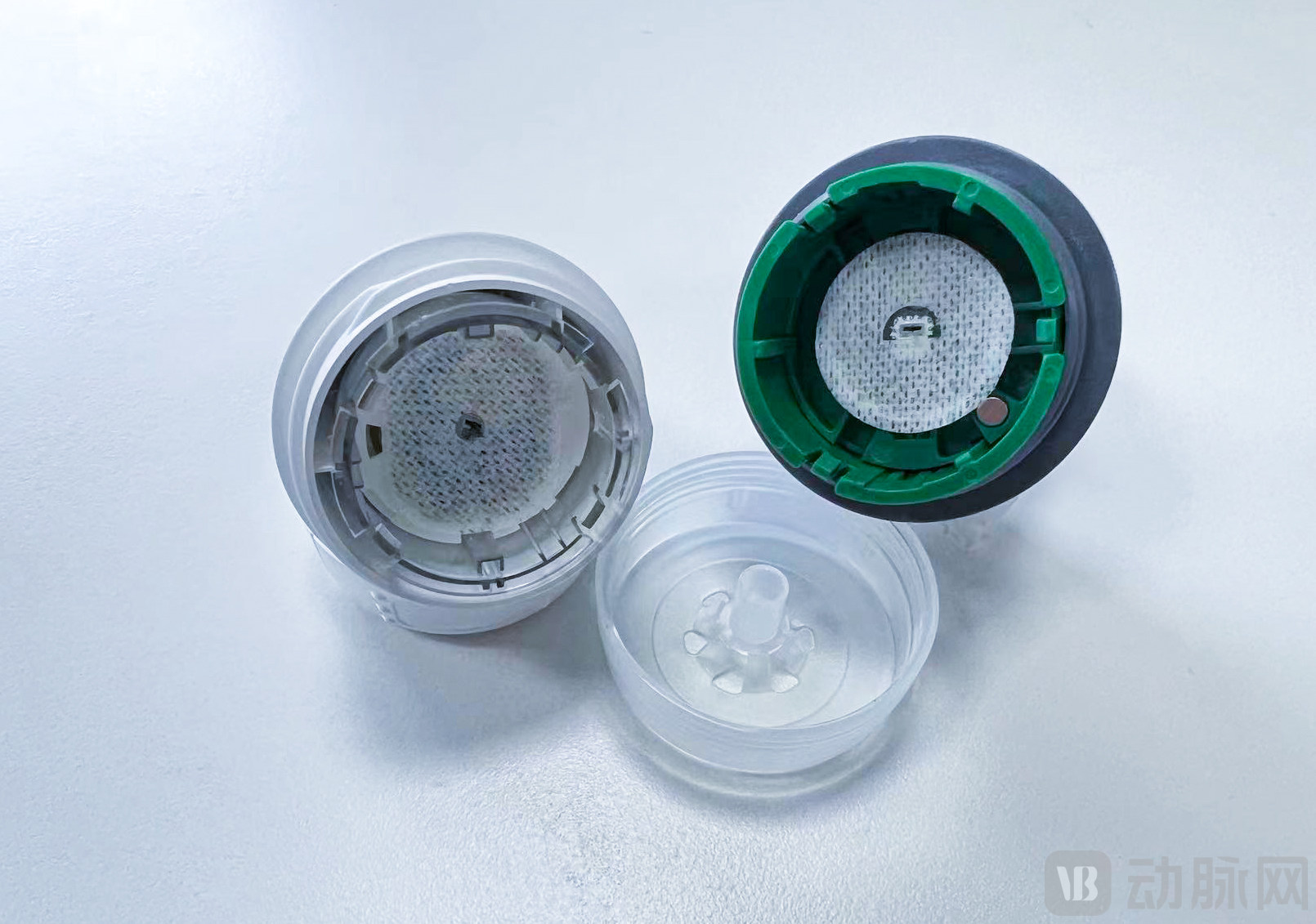
Baiyi Technology Biosensor
From the perspective of its service ecosystem, Baiyi Technology offers proprietary CGM sensor design, pilot-scale CGM sensor production line solutions, proprietary CGM system design with intellectual property transfer, and type testing, regulatory registration, and internal clinical services. Additionally, in collaboration with third-party enterprises, it provides assessments related to testing and inspection, CRO, clinical service evaluation, facility construction, and quality system establishment. Based on the services provided by Baiyi Technology, the company is engaged in a comprehensive range of services across the entire CGM value chain, including R&D and design, manufacturing, and clinical registration.
As previously established, R&D design and manufacturing are the primary factors constraining the domestic substitution of Chinese-made CGMs. So, how will Baiyi Technology help domestic CGM manufacturers overcome these challenges?
First, in terms of technical reserves, Baiyi Technology has established its own advanced intelligent manufacturing platform for bioelectrodes, a metabolic monitoring and management technology platform, an innovative platform for wearable medical devices, and an R&D platform for polymer biomaterials. Furthermore, according to Chen Wei, the PVD (Physical Vapor Deposition) technology route chosen by Baiyi Technology features extremely high entry barriers, enabling the company to secure unique technological advantages in the short term.
Moreover, in the interview, Chen Wei emphasized: “Collaborations between Baiyi Technology and medical device companies often begin at the design stage, with both parties jointly developing products that embody the company’s unique characteristics and intellectual property rights. This approach also helps avoid intellectual property disputes.”
Secondly, in terms of manufacturing, Baiyi Technology has established a 1,654-square-meter R&D and CDMO center, equipped with multi-channel electrochemical analyzers, plasma surface modification machines, electrochemical workstations, scanning electron microscopes (SEM), automated cross-linking machines, picosecond laser cutting systems, and high-precision dispensing platforms. These facilities meet the essential experimental and production requirements for the research, development, and manufacturing of CGMS.
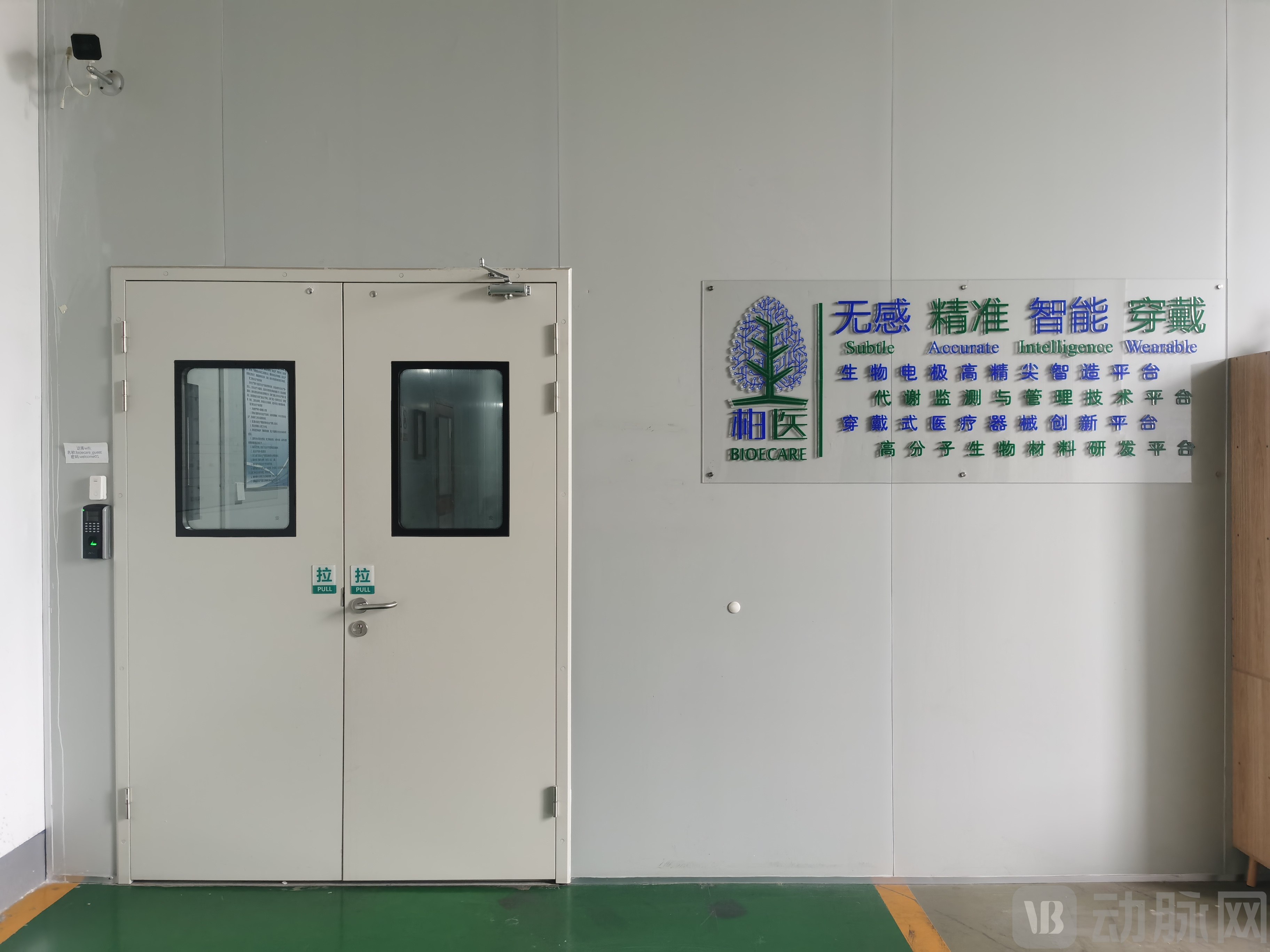
Moreover, as previously mentioned, following this round of financing, Baiyi Technology will also design and build a fully automated mass-production factory in Zhuhai, which will further help CGM manufacturers increase production capacity and efficiency.
“Centered on sensor technology and by integrating the upstream and downstream ecosystem, Baiyi Technology has completed its layout from foundational R&D to manufacturing of continuous glucose monitoring (CGM) systems, facilitating the rapid development of domestically produced CGMs through a CDMO model,” said Chen Wei. “In the future, Baiyi Technology will continue to provide sensing, circuitry, and contract manufacturing solutions for wearable medical devices and consumer electronics, focusing on the fields of metabolic monitoring and physical therapy.”