

Bilin Star Ventures: Nine Counter-Cyclical Investments in 2023 and Its Methodology for Navigating Market Cycles
Proxima Ventures, which focuses on early-stage investments in global innovative healthcare, was established relatively recently. Nevertheless, in the past few years, it has invested in and supported a cohort of companies with significant technological innovations in the medical device and life science instrument sectors, and has already built a portfolio of 16 biopharmaceutical companies. In terms of product innovation and the richness of its product portfolio, most of the healthcare innovators backed by Proxima Ventures—primarily in medical devices and life science instruments—hold leading positions in their respective niche markets.
Despite the severe capital winter in 2023,Proxima Capital remains one of the few investment firms in the market that continue to champion innovation, making nine investments throughout the year., which is particularly challenging and quite remarkable in the current context.
What strategies did Proxima Ventures adopt in 2023 to achieve its results, and what new hopes will it bring in 2024?VCBeat held a discussion with Sun Xiaolu, Founding Partner of Proxima Ventures, and the key points from the discussion are summarized below for our readers.
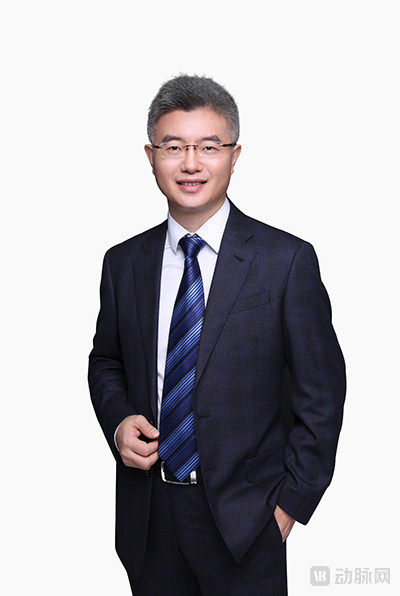
Sun Xiaolu, Founding Partner of Proxima Ventures (Image from Proxima Ventures)
VCBeat:How Has the Capital Market Changed in 2023 Compared to Previous Years?
Sun Xiaolu:The healthcare industry faced greater pressure in 2023 than ever before. Domestic IPOs were essentially in a state of “suspension,” while the market capitalization of companies listed on the Hong Kong Stock Exchange plummeted due to various factors, accompanied by a severe lack of liquidity. These developments dampened corporate aspirations for public listings, exerting a profound impact on the entire industry. In my view, this has been the most significant factor, as a major driver supporting enterprise growth stems from the dreams and ambitions of entrepreneurs and investors.
Furthermore, the industry environment has become more challenging, with factors such as anti-corruption campaigns in healthcare and centralized volume-based procurement (VBP). In particular, the scope of VBP continues to expand. Although official documents stipulate that innovative channels are exempt from VBP, developments across various regions indicate that the expansion of VBP coverage is an inevitable trend, thereby placing increasing pressure on enterprises.
Under these influences, the difficulty of securing investment returns has increased dramatically, and risks have grown substantially, leading many investment institutions to exercise extreme caution. This trend has translated to the corporate side as heightened financing pressure, making it difficult for companies to obtain new funding. Therefore, overall,I believe that the pressure in the healthcare industry may be the greatest it has been in the past decade.
In this context, many funds are shifting their strategies. We have observed that investment activities by numerous funds have slowed significantly, with some even halting investments entirely over the past year. The current trend in investment has shifted away from favoring innovation toward late-stage projects characterized by greater certainty and safety. Frankly speaking, the development of innovative healthcare enterprises has been substantially impacted.
VCBeat:In this environment, Proxima Capital’s deal activity remains quite substantial. Could you share with us Proxima Capital’s investment focus and underlying investment thesis throughout 2023?
Sun Xiaolu:As I just mentionedExits have indeed been significantly impacted; however, investment follows a different logic. Even though adjustments may be necessary for subsequent financing rounds, the overall investment opportunities are actually far more abundant than in the past.。
First, the widespread preference for late-stage projects with greater certainty and safety has significantly reduced funding opportunities for innovative enterprises, which are in even greater need of financial support. Proxima Capital is one of the few institutions in the market that remains committed to investing in innovative technologies and products; consequently, we have found that competition has actually decreased. This allows us access to a broader pipeline of investment targets and affords us ample time to engage with portfolio companies on their future development, enabling us to provide more detailed assistance in strategic planning and corporate growth design.
Secondly, changes in the market and environment have also driven the evolution of more exit strategies.Previously, we felt that the domestic M&A market was not yet mature; however, the current environment may accelerate its development to facilitate more exits.。
Historically, with the M&A market being virtually negligible, investors had essentially only one exit channel: nurturing companies to greater maturity to achieve an IPO exit, a process that entailed a very long time horizon. Even exits via equity transfers generally required waiting for new rounds of financing. However, many companies now find it difficult to go public, and founders of already-listed companies face constraints on their share reduction plans. Intensifying competition and the expansion of volume-based procurement have placed significant pressure on companies’ finances and performance.
This pressure has also led companies to become less resistant to mergers and acquisitions (M&A), prompting them to seek consolidation and restructuring through mergers with other enterprises or with portfolio companies of strategic investors. Meanwhile, increased capital inflows will support M&A integration, thereby diversifying exit options.
For investors like us who invest in global innovative technologies, there are also more investment opportunities.Since its inception, Proxima Ventures has invested in 62 companies worldwide, including assisting in the establishment of more than 20. We have observed an abundance of innovative technologies; however, we were previously unable to invest in certain enterprises due to their insufficient scale and lack of exit opportunities. Now, with the rapid development of mergers and acquisitions (M&A) and industry consolidation, we can re-evaluate these companies. By fostering multi-party collaborations to strengthen industrial chains, we aim to drive corporate growth and aggregate relevant resources to facilitate exits, thereby achieving comprehensive investment, integration, and exit strategies across the entire industry chain. Our team has conducted multiple brainstorming sessions, generating significant enthusiasm, and we have already begun exploring various new approaches.
VCBeat:What initiatives has Proxima undertaken to facilitate industrial resource consolidation for its portfolio companies, including in areas such as mergers and acquisitions and strategic partnerships? What have been the outcomes?
Sun Xiaolu:We have made numerous efforts. First, we assisted portfolio companies in securing additional funding to help realize their aspirations. To serve this objective, we adjusted our weekly meetings starting from the first week of 2023, dedicating the entire morning exclusively to discussing financing for our portfolio companies. We laid out all portfolio companies on the table, ensuring that every team member was aware of their challenges and opportunities, so that we could pool our collective wisdom and efforts. Throughout 2023, we helped 28 companies complete their financing rounds, which was no easy feat.
Throughout this process, we have also identified many new approaches. For instance, we have expanded collaborations with other funds, local governments, and listed companies, while also fostering cooperation among our portfolio companies to create favorable conditions that facilitate their access to financing.
On the other hand, in light of the increasingly stringent IPO requirements, we strive to further mature and refine our portfolio companies. While some enterprises may find it challenging to go public independently, merging them to achieve complementary strengths can pave the way for a successful IPO. For instance, we have facilitated the merger of two portfolio companies, which subsequently achieved a successful IPO.
This has also enabled us to take a more comprehensive approach when initiating the establishment of companies. We even considered integrating highly valuable existing companies into our ventures from the outset. Furthermore, we assist enterprises in acquiring other businesses. To this end, we accompany our portfolio companies on overseas visits to explore new business breakthroughs and potential acquisition opportunities. In summary, we have made numerous efforts to help our portfolio companies grow stronger.
VCBeat:You also mentioned global expansion, which is currently a hot topic. Could you share some insights from Proxima’s experience in assisting its portfolio companies with their overseas exploration?
Sun Xiaolu:Expanding overseas is indeed a significant trend; however, we believe companies must clearly define their objectives for going global. Some enterprises, facing fierce domestic competition, consider exporting to overseas markets as an alternative. While this is a viable direction, the international market may be even more intensely competitive. Without clear goals, overseas expansion may yield unsatisfactory results.
Proxima Capital primarily invests in highly innovative enterprises. We have supported 52 globally first-in-class products. In addition to the Chinese market, our portfolio companies naturally consider overseas markets as well. Some of these companies proactively conduct clinical trials for their innovative products in developed regions, such as the United States and Europe, to expand their market presence. Others collaborate with multinational giants to explore international markets, while some also target relatively more accessible markets, such as Southeast Asia.
Overall, our portfolio companies’ international expansion is driven by the actual characteristics of their products and target populations, rather than being a passive response to fierce domestic competition as I just mentioned. Given the innovative nature of our investee companies, competition within China is not actually that intense.
The Proxima team has been actively sourcing investment opportunities worldwide, frequently organizing on-site visits and collaborative discussions in the United States, Europe, Israel, and other regions. Together with many of our portfolio companies, we have explored diverse models of international cooperation, accumulating unique expertise in building cross-border teams and developing multinational corporations. In 2023, five of our colleagues conducted nearly a month of due diligence in the United States, while four others spent over two weeks in Europe. Beyond evaluating investment prospects, we also accompanied founders from our portfolio companies on these field visits to identify opportunities for collaboration and even acquisitions.
VCBeat:What characteristics do you predict for the healthcare investment market in 2024? How should companies respond to these opportunities and challenges in 2024?
Sun Xiaolu:If the broader context of the “China-US Financial War” in 2024 persists, the entire investment market will continue to face significant pressure. Investors are likely to favor more mature, certain, and secure investment opportunities, posing substantial challenges for innovative startups.
Therefore, I believe theseWhile innovative enterprises must maintain long-term visions, they also need to make short-term adjustments and exhaust all possible avenues to secure suitable investors and obtain adequate funding.Valuation is relatively less important; the most critical factors are finding the right partners and securing sufficient funding. Only in this way can one navigate through market cycles and gradually realize their dreams.
Of course, if the capital market undergoes adjustments, such as changes in IPO rules, the situation may differ. Companies also need to adapt to the changing environment. I believe that, overall, enterprises should plan their business development more prudently and closely monitor their cash flow at all times.
Enterprises need to assess their financial status, constantly monitor their cash flow, and prioritize securing cash as the primary objective when raising funds., valuations are expected to remain temporarily “stagnant,” but “survival” should be the central theme for 2024. Conversely,For investors, 2024 will be the optimal time to invest, as corporate valuations may become somewhat undervalued, presenting an excellent opportunity for long-term profitability.。