

AI-Powered Neurotechnology Revolutionizes Essential Tremor Treatment: Fasikl Files IPO Prospectus

Fasikl
Neural AI Technology Developer
In the field of medical technology, a revolutionary AI-driven electronic therapy is reshaping the future of essential tremor treatment and bringing hope to tens of millions of patients worldwide. Essential tremor is not merely a disease; it profoundly impacts patients’ daily lives and even their mental health. Aunt Wang’s experience epitomizes this reality, with her story reflecting the authentic struggles of countless patients facing similar challenges.
Aunt Wang recalled, “The embarrassment I encountered while buying groceries at the farmers’ market was unforgettable. The vendors would jokingly ask, ‘Ma’am, are you just reluctant to part with your money?’ They did not understand the real reason behind my slow movements.” She also mentioned the awkwardness she experienced during family meals: “I am reluctant to dine at my son’s home, fearing that I will bring shame to my family.” Aunt Wang’s life has been filled with limitations due to hand tremors, which have significantly restricted her freedom.
Although Aunt Wang was fortunate to receive meticulous care from her husband, many patients living alone face even more severe predicaments.
Essential tremor is becoming increasingly common in daily life. According to statistics from the International Essential Tremor Foundation, approximately 4% to 5% of adults aged 40 to 60 are affected by this condition. Among individuals over the age of 60, this prevalence rises to 6.3% to 9%, with the number of affected individuals continuing to increase and symptom severity progressively worsening with advancing age. These data reflect the broad impact of essential tremor on both individuals and society, underscoring the urgent need for effective treatments to improve patients’ quality of life.
Currently, the primary treatment modalities for essential tremor mainly include pharmacological therapy and surgical intervention, with pharmacological therapy generally regarded as the first-line option. However, the efficacy of pharmacological therapy is often suboptimal and may induce a range of adverse effects, such as bradycardia, asthma exacerbations, and dizziness. Long-term use can also lead to drug tolerance. These limitations result in only approximately one million patients continuing to receive treatment. Although surgical intervention demonstrates more significant therapeutic efficacy, the associated trauma, high risks and costs, as well as potential postoperative complications, mean that the burdens and risks borne by patients far outweigh the anticipated therapeutic benefits. Consequently, only a few thousand patients opt for such surgeries each year.
Against this backdrop, Aunt Wang and countless patients like her battle their progressively worsening conditions every day, hoping to find a treatment that can alleviate their suffering.
Thanks to the relentless research of cross-disciplinary experts and advancements in medical technology, the field of essential tremor treatment has witnessed a revolutionary breakthrough—FelixTM NeuroAITMWristband. This technology, launched by Fasikl, represents the forefront of a new generation of AI-based closed-loop neuromodulation. It provides round-the-clock relief from patients’ tremor symptoms, significantly improving their motor function and quality of life. This innovative therapeutic approach offers patients a safe and effective alternative that does not rely on medication or high-risk surgery, ushering in a new chapter in the treatment of essential tremor.
Felix has completed Phase II clinical trials involving more than 50 patients across multiple hospitals in the United States and China. This achievement marks the first time that artificial intelligence technology has fully taken over the treatment process for essential tremor, with its significant efficacy practically validated in patients’ daily lives. The U.S. Food and Drug Administration (FDA) has further authorized Fasikl to conduct Phase III clinical trials and related procedures using its proprietary artificial intelligence technology, NeuroAI. With Felix’s market launch in 2025, it is expected to become the first AI-powered electronic device offering a non-invasive therapeutic solution for degenerative neurological diseases. Detailed trial results and progress will be announced by the lead research teams from China and the United States through academic journals and professional conferences; specific information remains withheld for now.
At Sir Run Run Shaw Hospital, Zhejiang University School of Medicine, Chief Physician Dr. Lü Wen and his team, as members of the Phase II clinical study, conducted a long-term efficacy evaluation of the Felix therapeutic technology. They focused on investigating the potential of Felix to delay the progression of essential tremor and even achieve a cure for the disease. During this process, four fortunate patients were selected to participate in a 150-day Felix treatment program outside the Phase II trial. These four patients involved in the Sir Run Run Shaw Hospital study experienced significant improvements in quality of life, with marked alleviation of both hand and head tremors.
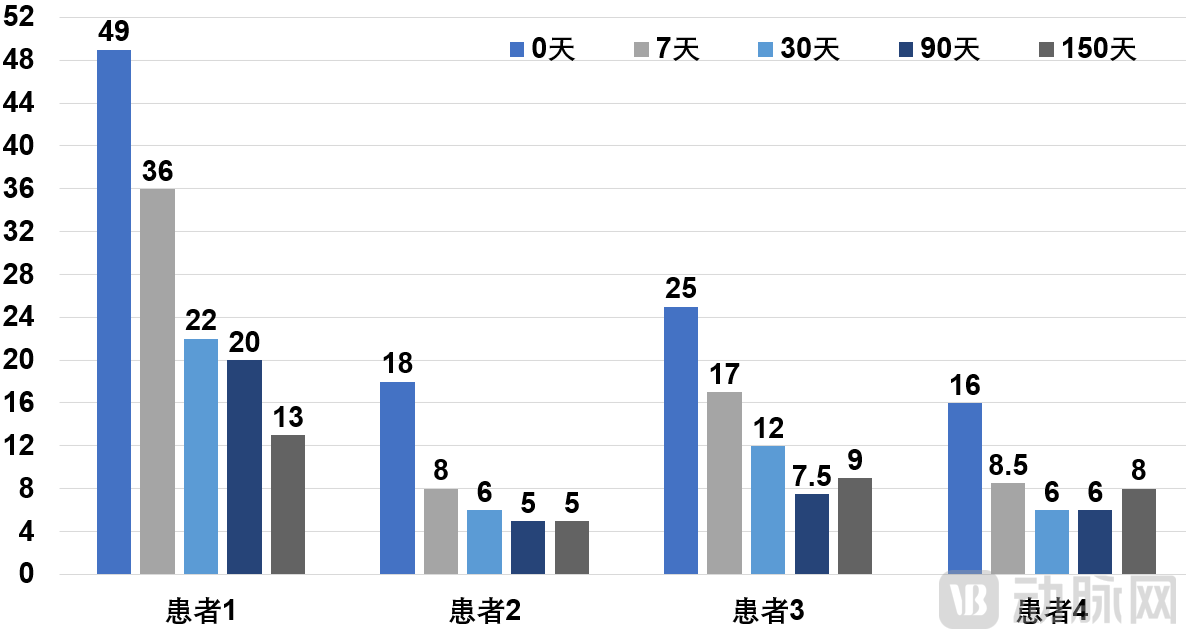
The m-ADL score is a tool used to assess the extent of limitation in patients’ activities of daily living; a higher score indicates greater symptom severity, with a theoretical maximum of 52 points. The first bar chart (leftmost) in the figure shows the pre-treatment m-ADL scores, serving as baseline reference values. The second through fifth bar charts, from left to right, represent the m-ADL scores at 7, 30, 90, and 150 days post-treatment, respectively. These charts visually demonstrate changes in the degree of functional limitation in daily activities as treatment progresses, reflecting the therapeutic efficacy in improving symptoms of essential tremor.
In an interview with VCBeat, Dr. Lü Wen, Chief Physician, shared the significant progress achieved by the Felix project in clinical research. She emphasized that Felix has made a major breakthrough in the non-invasive treatment of neurological disorders, demonstrating superior efficacy compared to conventional pharmacological therapies while being free of side effects. Felix is particularly suitable for treating unilateral and bilateral hand tremors, and it also shows notable effectiveness in alleviating head tremors. Dr. Lü pointed out that long-term use of Felix not only provides sustained symptom improvement but also maintains its therapeutic effects even 10 days after discontinuation of treatment, a finding that is particularly noteworthy.
Chief Physician Dr. Lv Wen further clarified that the benefits of Felix treatment extend far beyond simple statistical data. Equally important is that this therapeutic regimen not only significantly improves patients’ overall health status but also substantially enhances their quality of life. It effectively helps patients overcome the shame associated with the disease and markedly alleviates negative emotions such as anxiety and depression, thereby fostering more harmonious family and social relationships. The full potential of Felix will be fully realized following its commercial launch and widespread adoption. The positive outcomes already observed in Phase II clinical trials have not only greatly encouraged participating healthcare professionals and patients but also brought unprecedented new hope to the broader population affected by essential tremor.
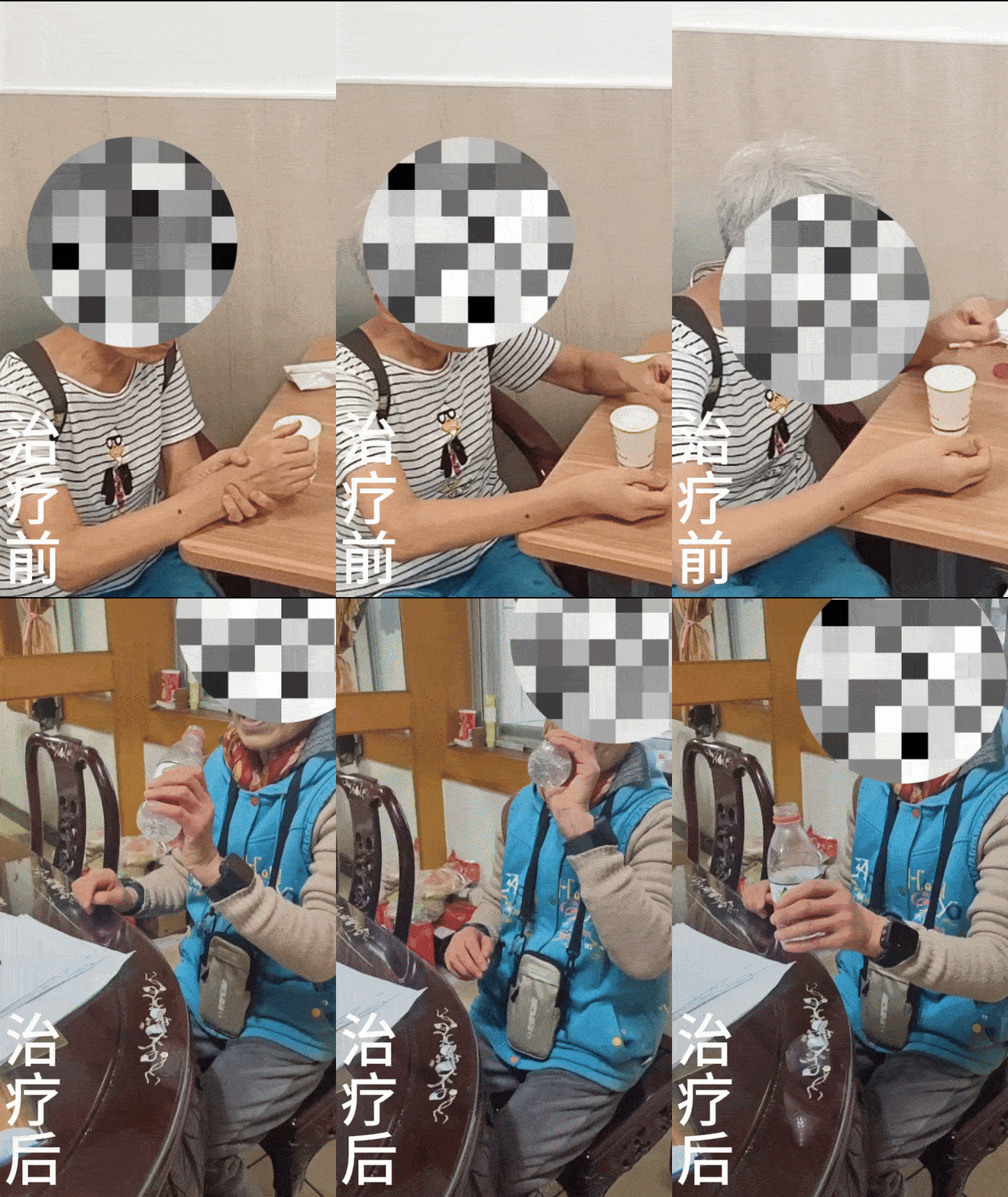
Aunt Wang’s story serves as a vivid testament to the efficacy of Felix’s therapeutic technology. As one of the first patients enrolled in the long-term efficacy study of Felix, she has experienced a significant improvement in her quality of life following treatment. Her ability to independently perform activities of daily living has filled her with immense pride.
“After receiving treatment, I can now do many things independently without needing help from others,” Aunt Wang shared excitedly. “My life has completely changed; I can freely go out to buy groceries, take walks, and meeting up with friends is no longer an issue.” She also mentioned that even unfamiliar people in her neighborhood have noticed the change. “Everyone says I look great—my complexion, appearance, and gait have all improved significantly.”
Aunt Wang’s husband has also felt the positive impact of the treatment. “Since she began receiving Felix therapy, the improvement has been very noticeable. The effects were rapid at the start of treatment, and her condition has continued to improve over time, with daily progress,” he recalled. “Previously, she was highly dependent on me due to severe tremors in her hands, feet, and head. But now, she hardly needs my assistance anymore, which has given me a different sense of freedom.” He joked that Aunt Wang’s independence had granted him newfound freedom as well.

During the interview, Aunt Wang proudly demonstrated how to use a toothbrush for thorough oral hygiene—a daily task she had previously been unable to perform independently due to hand tremors. Even more encouragingly, Aunt Wang has been able to return to her normal daily life, including cooking, doing housework, and caring for her family. These changes have made her feel as though she has been given a new lease on life.
“This is nothing short of a medical miracle,” exclaimed Aunt Wang. For her and her family, Felix has not only alleviated her symptoms but, more importantly, brought hope—demonstrating that quality of life can be significantly improved and that a cure for the disease may be within reach. Once commercially available, this “miracle” therapy could fill current treatment gaps and offer renewed hope to millions of patients suffering from tremor disorders.
What is hailed as a medical miracle represents, for researchers at the forefront of scientific inquiry and technology developers, an innovation journey fraught with challenges and hardships.
Over the past decade, the global scientific community has been seeking drug- and surgery-free alternatives—known as electroceuticals. In response to the complex challenges and significant demand in this field, Professor Zhi Yang of the University of Minnesota, co-founder of Fasikl, has pioneered new research directions leveraging his keen insights and deep expertise. He established a laboratory dedicated to neuroelectronics at the University of Minnesota in the United States and, five years ago, co-founded Fasikl with colleagues. Through relentless efforts, they ultimately developed the Felix NeuroAI wristband.
The successful development of the Felix NeuroAI wristband is not only a major breakthrough in the treatment of essential tremor, but also a milestone in the innovation and advancement of medical technology. This product demonstrates the powerful capability of scientific research and technological development in addressing complex medical challenges, offering a vivid embodiment of the principles of “cleanliness,” “efficiency,” and “absence of side effects” in the field of medical devices.
As Steve Jobs advocated, true innovation must be closely aligned with market and user needs. Adhering to this philosophy, the Fasikl team has developed a medical device that meets market demands while remaining easy to operate, by gaining deep insights into the specific needs of patients with essential tremor and leveraging cutting-edge technology. This patient-centric innovation strategy not only brings tangible hope and improved quality of life to individuals affected by essential tremor, but also drives overall progress in the field of medical technology, demonstrating the significant value of user-need-oriented product development.
Fasikl, founded in 2019 and headquartered in Minnesota, USA, specializes in developing advanced products that decode, modulate, and reconstruct neural signals to treat motor neurological disorders. The company’s AI-powered wristband, the Felix NeuroAI Wristband, indicated for essential tremor, has successfully entered pivotal Phase III clinical trials. In addition to Felix, Fasikl is developing MindForce, a brain-computer interface technology that has received two Breakthrough Device Designations from the U.S. FDA for the treatment of post-amputation pain and for thought-controlled peripheral devices, such as robotic arms and computers. MindForce was also selected as one of the 15 technologies globally included in the FDA’s Total Product Life Cycle (TAP) Advisory Program in 2023. Fasikl is committed to advancing neuro-AI technologies, aiming to improve patients’ quality of life through innovative treatments for motor neurological disorders.