

Onera Health Secures Over $30M in Series C Funding to Advance At-Home Clinical-Grade Sleep Diagnostics

Onera Health
Sleep Diagnostic Device Developer

Gimv
Private Equity Firm

EQT Partners
Private Equity Investment Firm

Innovation Industries
Venture Capital Firms

Invest-NL
Investor in Environmental Protection and Ecology

Imec.xpand
Value-Added Venture Capital Fund

BOM
Early-stage investment firms

15th Rock
Human Enhancement and IT Investment Firms
Onera Health, founded in 2017, is a biotechnology company headquartered in Eindhoven, the Netherlands. Its mission is to improve human sleep quality through the research and development of sleep diagnostic devices. Onera’s technological hallmark lies in bringing clinical-grade sleep diagnostics into patients’ homes, with its patch-based technology gaining industry recognition.
On January 16, 2024, Onera Health announced the completion of a Series C financing round exceeding €30 million (approximately RMB 230 million). The round was co-led by EQT Life Sciences and Gimv, with participation from existing investors Innovation Industries, Invest-NL, imec.xpand, BOM, and 15th Rock. To date, Onera Health’s publicly disclosed total funding has surpassed €55 million.
It is reported that this funding will help Onera Health accelerate the production, commercialization, and promotion of its products, meet market demand for its wireless end-to-end solutions, and expedite regulatory approvals for its sleep polygraphy system in Europe and the United States. In addition, the company plans to use these funds to speed up the approval process for its second-generation polysomnography (PSG) system in Europe and the U.S., further optimize its product portfolio, and enhance user experience. With the successful completion of its Series C financing, Onera Health is poised to set a new industry benchmark in sleep medicine, enabling more patients to benefit from advanced home-based PSG testing technology.
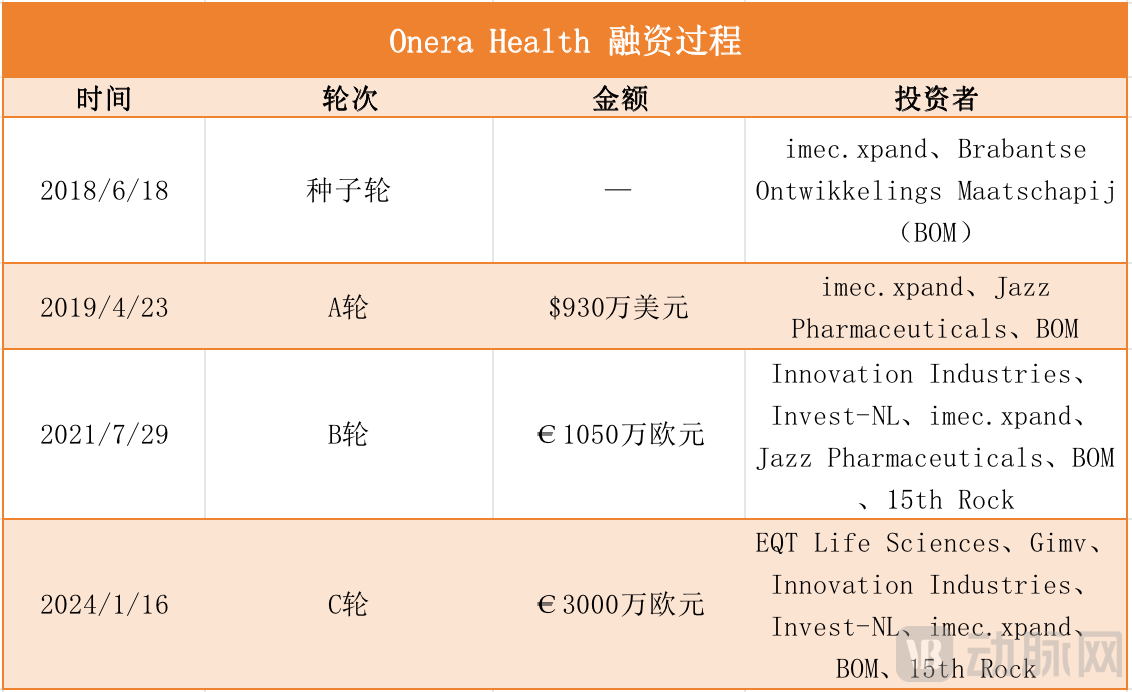
Onera Health Financing Process | VCBeat
Why Has Onera Health Attracted So Many Investors? And How Has It Established a Firm Foothold in the Field of Sleep Medicine? Join Us to Explore What Makes Onera Health Unique.
Onera Health’s founding team brings together medical experts and engineering professionals with deep professional backgrounds.
Ruben de Francisco, Founder and CEO, has an engineering background. He earned his Ph.D. in signal processing from Telecom ParisTech, a top French engineering school, and previously served as Project Manager for Wearable Healthcare at imec, Europe’s largest non-profit semiconductor research center.
Pieter Ermers, Founder and Vice President of R&D, also brings extensive experience in the medical device industry. He previously served as a Senior Engineer at Mind Media BV, where he was responsible for updates and amendments to FDA 21 CFR Part 820 (Quality System Regulation) and oversaw multiple QSIT (Quality System Inspection Technique) inspections.
Another founder with an extensive medical background is Hartmut Schneider, M.D., who began his medical career in the field of sleep medicine in 1987. As a clinical and scientific expert in sleep and respiratory medicine, he worked at the Johns Hopkins Sleep Disorders Center, one of the most renowned research groups in sleep and respiratory medicine. This further underscores Dr. Schneider’s profound expertise in the field of sleep medicine.
Currently, traditional polysomnography (PSG) is considered the gold standard for sleep diagnostic monitoring, but its adoption rate remains low.
On the one hand, PSG equipment is bulky and expensive, generally requiring patients to wait a long time for an appointment. Furthermore, PSG requires patients to wear more than 20 electrodes while sleeping in the hospital to monitor parameters such as electrocardiogram (ECG), electromyogram (EMG), electrooculogram (EOG), and blood oxygen saturation, which poses considerable inconvenience to patients. Additionally, the “single-night test” approach carries a risk of misdiagnosis.
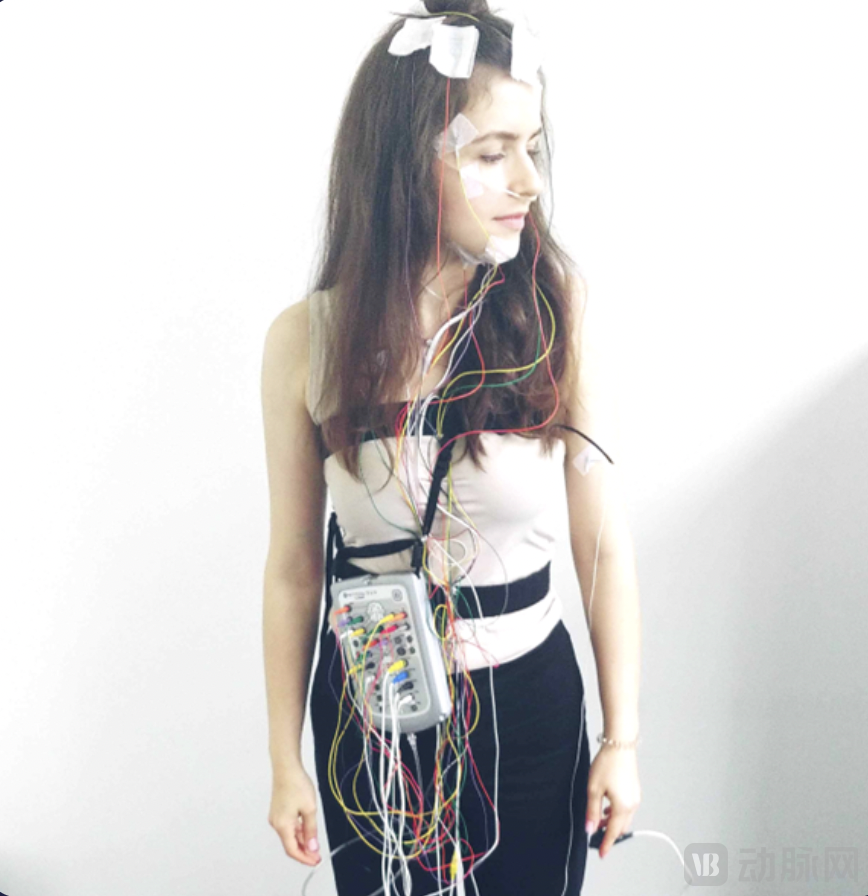
Traditional PSG Examination Image Source: Onera Health Official Website
Therefore, it is more important to identify a sleep monitoring solution that minimizes sleep disruption for patients, is cost-effective, easy to operate, and suitable for large-scale population screening.
Onera Health’s monitoring solution for patients with sleep disorders enables continuous monitoring and diagnosis anytime, anywhere. By conducting polysomnography (PSG) tests through Onera, physicians can maximize patient comfort while minimizing clinical workload.

Traditional PSG vs. Onera PSG | VCBeat
Onera STS is a medical-grade home sleep testing system launched by Onera Health. Leveraging innovative polysomnography (PSG) technology and an easy-to-use patch-based wireless testing method, Onera STS effectively monitors users’ cardiac activity, respiration, body movements, snoring, brain activity, and eye movements, enabling physicians to promptly diagnose, monitor, and treat patients with sleep disorders.
It is worth noting that the Onera STS workflow is remarkably simple, requiring only five steps to complete the entire sleep monitoring and subsequent treatment process:
Step 1: Clinicians request a PSG test via Onera’s digital health platform;
Step 2: Onera hands the Onera STS sensor to the patient, who takes it home for self-use;
Step 3: The patient undergoes a PSG test using the Onera STS, with results transmitted back to Onera via sensors;
Step 4: Onera STS processes and analyzes the received data, and generates corresponding reports;
Step 5. Clinicians review the report and provide personalized treatment plans for patients.
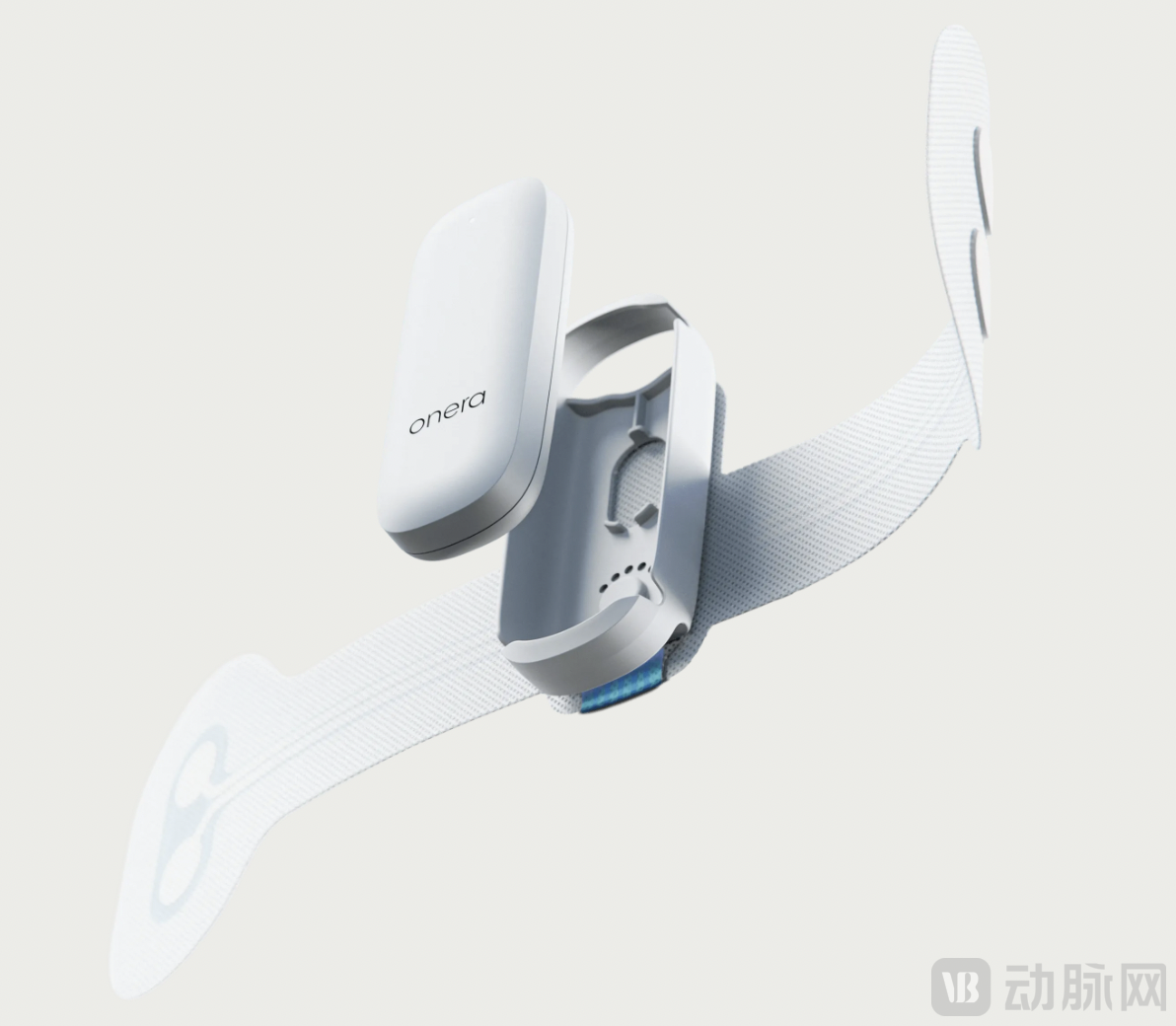
Onera STS Image source: Onera Health official website
The patch-based Onera STS is simple and easy to use. It requires wearing four comfortable patches on the forehead, upper chest, abdomen, and calves, with sensor setup completed within five minutes. Under the guidance of doctors or technicians, patients can use it independently at home without restricting their freedom of movement throughout the night. Compact, lightweight, and reusable, the Onera STS leverages advanced technology and intelligent design to capture clinical-grade sleep data.
The recorded data include electroencephalography (EEG) to reflect changes in brain activity, electromyography (EMG) to measure upper airway muscle activity, and electrooculography (EOG) to record eye movements. Other physiological data include respiratory measurements, electrocardiography (ECG), leg EMG, sound pressure (for snore detection), body movement, and body position.
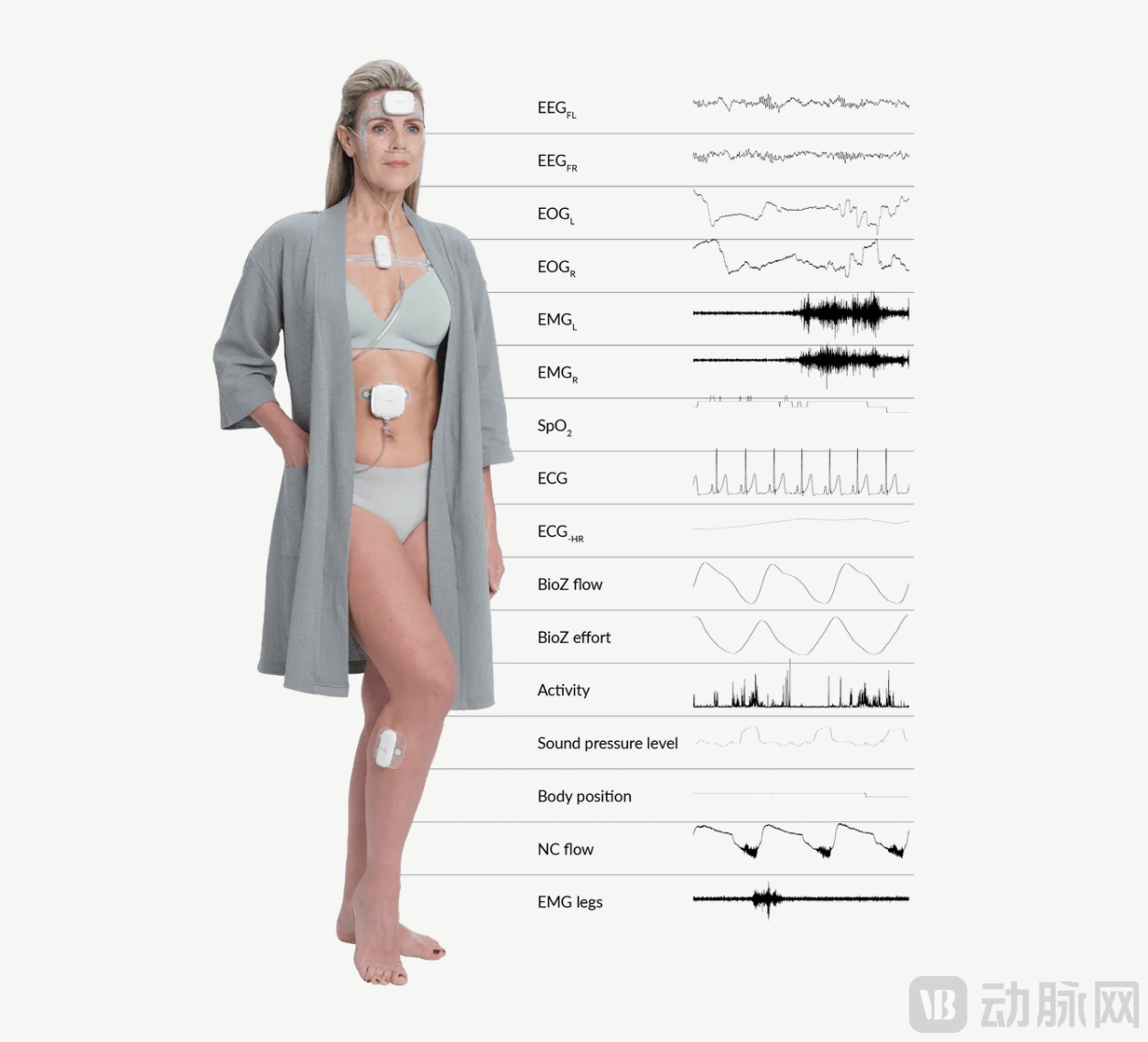
Data Recorded by Onera STS. Image Source: Onera Health Official Website
Onera STS enables an end-to-end solution, allowing patients and physicians to conduct polysomnography (PSG) tests and access relevant health data anytime, anywhere. From the initial PSG setup to the upload of medical-grade signal datasets for processing and analysis, and finally to the generation of accurate, comprehensive, and easy-to-read PDF reports accessible 24/7, all can be achieved through the single Onera STS platform.
Onera STS received CE certification in 2021 and FDA 510(k) clearance in 2022.
As early as the 1980s, sleep research had already begun to emerge. The growing market demand has driven the continuous emergence of global sleep medicine companies, with various businesses successively entering the sleep medicine and services industry. In general, sleep medicine is primarily divided into two major sectors: in addition to the sleep monitoring sector, it also includes the sleep aid sector.
In the sleep aid sector, which encompasses basic sleep products such as mattresses and pillows, companies like Sleemon, De Rucci, and Xi Yue Technology have emerged. These enterprises initially focused on traditional home furnishings but have continuously expanded into the field of sleep medicine amid intense market competition. Beyond basic sleep products centered on bedding, numerous companies are also deploying medical products designed to improve sleep quality and treat sleep disorders.
As public awareness of sleep medicine grows, demand for sleep medicine services continues to expand. This has fostered a trend of collaboration between home goods companies and technology firms, giving rise to new sectors such as digital therapeutics and lifestyle medicine.
The growing popularization of sleep medicine in recent years, coupled with advancements in Internet of Things (IoT) technology, has spurred the development of a wider range of sleep-related products and services, prompting companies to gradually establish their presence in the field of sleep medicine. In addition to basic sleep products such as mattresses and pillows, many enterprises are now focusing on medical devices designed for sleep monitoring and the treatment of sleep disorders.
As for sleep monitoring products similar to Onera STS, many domestic companies have entered the field.
Yunrui Intelligence has developed the “Sleep Cat’s Eye,” a home-use, medical-grade EEG sleep monitor about the size of a one-yuan coin and weighing 5.2 grams, by leveraging dozens of self-developed patents in biosensing technologies and core algorithms. Rouling Technology has introduced an EEG sleep monitor made from 5mm ultra-thin, ultra-light flexible materials, enabling imperceptible wear.
Berry Electronics has developed the Berry PM50 series of multi-channel respiratory monitors, which selectively utilize a subset of polysomnography (PSG) parameters and offer advantages such as compact size and convenient portable analysis. Qinglei Technology applies millimeter-wave radar technology to medical-grade vital signs monitoring; its sleep apnea recorder enables data fusion and AI analysis in the cloud. Yunweikang’s third-generation Yunweikang AI Sleep Screening System requires only a coin-sized monitoring terminal and auxiliary diagnostic software to perform home-based sleep monitoring.
Keeson Technology and Jiuai Technology have also launched the “Ai Fangxin” (Love with Peace of Mind) series of smart health beds. Leveraging multiphase sensing and intelligent monitoring technology, these beds enable precise tracking of vital signs during sleep. They offer specialized features such as sleep onset assistance, snoring relief, apnea warnings, and emergency response triggers, thereby minimizing the risk of accidents caused by sudden health issues during sleep.
Explorations by major enterprises in sleep medicine have brought new possibilities to the entire industry, indicating considerable growth potential for the sleep medicine sector. In the future, as the localization rate of medical device products increases, the market for sleep-disordered breathing in China is expected to expand further. This has heightened users’ anticipation for the launch of new products, after all, everyone’s wish is to get a good night’s sleep.