

Xi'an Jiaotong University First Affiliated Hospital Achieves Another International First with Innovative Magnetic Compression Anastomosis Technique
Recently, the First Affiliated Hospital of Xi’an Jiaotong University (hereinafter referred to as “the First Affiliated Hospital of Xi’an Jiaotong University”) successfully performed an internationally pioneering magnetic compression anastomosis procedure. By employing a transoral magnetic ingestion approach, this technique ingeniously achieved magnetic anastomosis for ileal-colonic bypass, effectively treating postoperative intestinal anastomotic strictures in patients with Crohn’s disease.
According to Yan Xiaopeng, an associate researcher at the hospital, magnetic anastomosis technology offers a new solution for treating complex gastrointestinal strictures, thanks to its significant advantages such as safety and minimal invasiveness. This technology not only addresses severe strictures that are unmanageable with conventional endoscopy but also avoids the high risks and postoperative uncertainties associated with traditional open abdominal surgery.
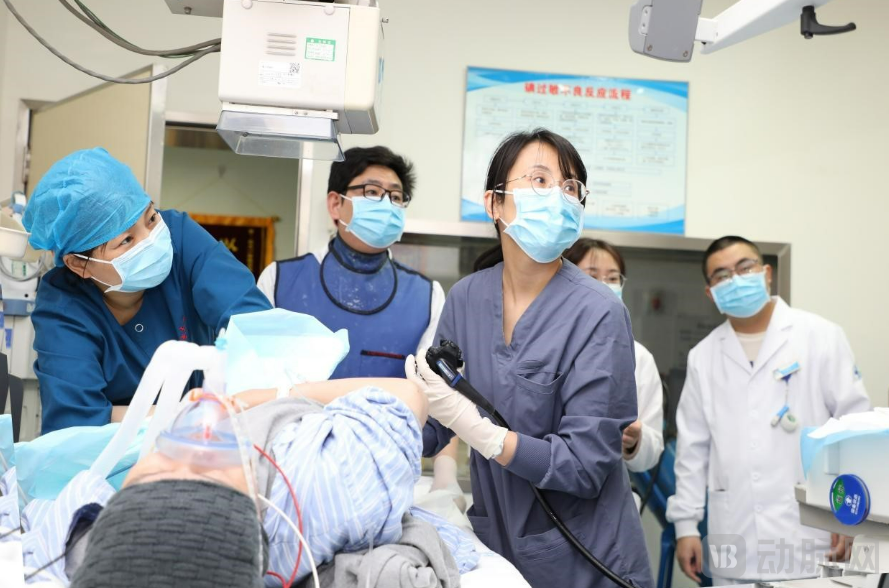
Image from the official website of Xi'an Jiaotong University Health Science Center
For patients without a stoma, the magnetic surgery team proposed an innovative approach involving oral ingestion of magnets. Under meticulous care and close monitoring by medical staff, the patient successfully transported the ingested magnet to the proximal side of the intestinal stricture within two weeks. Subsequently, the medical team successfully delivered the parent magnet to the distal side of the intestinal stricture via colonoscopy, observing automatic alignment and attraction between the magnets at both ends of the affected bowel segment. After one week, the anastomosis was successfully established, and the magnets naturally detached and were expelled through the anus, marking the successful completion of the entire treatment process.
This innovative surgical technique has not yet been publicly reported either domestically or internationally, marking another significant step forward by the First Affiliated Hospital of Xi’an Jiaotong University in the field of magnetic surgery.
As an innovative non-surgical treatment method, the core of magnetic compression anastomosis technology lies in placing the target compressed tissue between magnets, utilizing the mutual attraction between the magnets to generate mechanical compression. This causes the compressed tissue to gradually undergo necrosis due to ischemia, thereby promoting layered healing of the adjacent tissues at the outer edge of the compressed area, ultimately forming an anastomosis.
Since Japanese researcher Obora proposed sutureless microvascular magnetic ring compression anastomosis in 1978 and achieved success in animal experiments, magnetic compression anastomosis technology has gradually garnered attention. In 2003, experimental studies by Ventrica, Inc. in the United States further advanced the development of magnetic vascular anastomotic devices. In China, the First Affiliated Hospital of Xi’an Jiaotong University has been conducting animal experiments using magnetic vascular anastomotic devices since 2004, subsequently achieving multiple international “firsts” and domestic “first cases.”
In 2012, Professor Lü Yi’s team at the First Affiliated Hospital of Xi’an Jiaotong University performed China’s first “magnetic compression anastomosis for strictured bile ducts,” successfully addressing the clinical challenge of biliary strictures that previously required repeated or multiple open abdominal surgeries. Furthermore, using “magnetic compression anastomosis for strictured esophagus with endoscopic reconstruction,” a 44-month-old child suffering from chemical burn-induced esophageal stricture successfully underwent endoscopic surgery and achieved a favorable postoperative recovery.
In 2014, the First Affiliated Hospital of Xi’an Jiaotong University achieved another breakthrough by clinically applying the world’s first “magnetic compression anastomosis for rectovaginal fistula repair.” This innovative project benefited from the continuous expansion of the Ministry of Education’s Innovation Team on “Research on Key Technological Innovations in General Surgery” at the hospital, as well as the application of innovative magnetic surgery techniques.
In November 2021, the team led by Lü Yi from the First Affiliated Hospital of Xi’an Jiaotong University, in collaboration with the team led by Tang Jingda from the School of Aerospace Engineering and the team led by Suo Zhigang from Harvard University, jointly published their collaborative findings on “magnet-assisted hydrogel adhesion” for vascular anastomosis in *Bioactive Materials*, a top-tier journal in the field of biomedicine. This technique utilizes magnetic assistance to achieve rapid vascular connection, while the hydrogel provides the necessary contact area and external pressure to form a robust bond. After removal of the magnets, no secondary suturing is required; the vascular anastomosis remains secure with unobstructed blood flow, and animals demonstrated favorable postoperative recovery.
In June 2022, the Department of General Surgery at the First Affiliated Hospital of Xi’an Jiaotong University, in collaboration with the Surgical Dream Factory, pioneered the successful implementation of the “transanal total mesorectal excision with magnetic compression anastomosis” on an international scale. This approach ensured the efficacy of tumor resection while eliminating complications such as anastomotic stenosis and bleeding, as well as the lifelong presence of foreign anastomotic materials in the body.
In June 2023, the Department of Pediatric Surgery at the First Affiliated Hospital of Xi’an Jiaotong University, in collaboration with the Neonatal Ward, the Department of Anesthesiology and Perioperative Medicine, and the Department of Radiology, successfully performed a minimally invasive procedure using thoracoscopy combined with magnetic anastomosis technology on a neonate just three days old who had been diagnosed with congenital esophageal atresia with tracheoesophageal fistula. This case represents the first such procedure of its kind worldwide.
Since 2002, the Magnetic Surgery Research Team at the First Affiliated Hospital of Xi’an Jiaotong University has been dedicated to the research and development of magnetic surgery technologies. The team has received funding from multiple sources, including the Key Program of the National Natural Science Foundation of China, the Clinical Key Discipline Construction Project of the National Health Commission, the Innovation Team Development Plan of the Ministry of Education, and the Major Science and Technology Coordination Project of Shaanxi Province, with total funding exceeding RMB 16 million.
Leveraging this technology, the hospital’s magnetic surgery team has successfully treated more than ten patients with complex colorectal, esophageal, and biliary strictures.
Currently, neodymium-iron-boron (NdFeB) permanent magnets and samarium-cobalt (SmCo) permanent magnets are third-generation rare-earth magnetic materials that have been applied clinically and can be implanted in the human body. Among them, NdFeB permanent magnets are more widely used in clinical applications due to their high magnetic energy product, low cost, ease of processing and molding, and excellent biocompatibility.
According to the “In-Depth Market Research and Investment Prospect Forecast Analysis Report on the Magnetic Anastomosis Industry (2023–2028)” released by New Thinking Jie Industrial Research Center, countries such as Japan and the United States started research on magnetic anastomosis technology relatively early and have already applied it in clinical practice. However, as a novel anastomosis technique, magnetic anastomosis has not yet achieved large-scale adoption; globally, the number of magnetic anastomosis procedures and the supply of related devices remain relatively limited.
GI Windows Surgical, a medical device R&D company focused on the development of anastomosis technologies for delivery and tissue fusion. The company announced in February 2023 that its Self-Forming Magnet (SFM) technology had entered the clinical trial phase. SFM technology is a novel surgical anastomosis technique based on magnetic compression, which was granted Breakthrough Device designation by the FDA in 2020.
To date, GI Windows Surgical has successfully raised $43 million from strategic investors including GE, Johnson & Johnson (U.S.), Sonder Capital, and JC Investco to support product development and clinical research of its patented magnetic anastomosis technology.
In China, the First Affiliated Hospital of Xi’an Jiaotong University has been researching the application of neodymium-iron-boron magnets in magnetic anastomosis since 2003 and has successfully implemented multiple clinical applications of magnetic surgery.
In January 2016, researchers at the Surgical Dream Factory of the First Affiliated Hospital of Xi’an Jiaotong University announced the successful development of a revolutionary 3D-printed biodegradable magnetic anastomosis ring technology. This technology enables the printing of magnetic anastomosis rings with complex shapes and personalized customization, which can naturally degrade within the body.
To date, Xi’an Jiaotong University has been granted multiple invention patents in magnetic surgery, with its magnetic compression technology receiving the First Prize of the Ministry of Education’s Award for Technological Invention. These original contributions have positioned China at the forefront of international research and development in magnetic compression anastomosis technology and have had a profound impact on advancing the field of magnetic surgery.