

Lanzhou University Bets on Innovation Commercialization for a Comeback as a Leading Northwest '985' University
In 2023, Yan Chunhua, President of Lanzhou University, made a special trip to Shenzhen for the university’s annual alumni conference.
The purpose of his trip was not merely to attend an alumni reunion. At the conference, leaders from Lanzhou University engaged in in-depth exchanges with relevant Shenzhen municipal departments and enterprises on multiple fronts, including industry-academia-research collaboration, university-local government partnerships, talent and intelligence recruitment, and investment promotion. In an interview, he stated:“We have established an important ‘fulcrum’ for industry-academia-research collaboration in Shenzhen.”
Affected by economic and geographic factors, the 985 university located in the remote northwest was shrouded in a sense of tragedy due to brain drain from the 1990s to the early 2000s, earning it the tongue-in-cheek title from netizens as “the most aggrieved among China’s Top Ten Universities.”
As the core faculty of Lanzhou University departed in droves, Xue Desheng, who once served as Dean of the School of Physics and Director of the Research Office at Lanzhou University, recalled that when he assumed office in 2006, “the entire School of Physics was left empty.”
Even teaching students has become problematic, let alone producing scientific research outcomes. In recent years, Lanzhou University’s greatest aspiration has been:Attract Talent, Export Achievements.
Recruiting Talent Without Constraints
According to The History of Lanzhou University, the number of faculty members at Lanzhou University decreased by 255 between 1984 and 1985. This period marked the most severe brain drain in the university’s history, with some universities in eastern China even assigning dedicated personnel to stay long-term in hotels near the campus specifically to recruit talent.
Consequently, during his tenure as President of Lanzhou University (March 1985–April 1993), Hu Zhide made exceptional promotions for 91 faculty members under the age of 35 to senior professional titles, thereby raising their ranks and salaries. Despite these efforts, the brain drain at Lanzhou University could not be plugged. From 1991 to 1994, the university lost 219 faculty members; between 2000 and 2004, it lost nearly 40 additional staff members holding associate senior professional titles or higher.
In 2016, Lanzhou University once again dispatched relevant staff to conduct visits and surveys. It was then that they clearly recognized the crux of the brain drain at the time: faculty members lacked motivation and confidence in the university’s development, and the institution did not place sufficient emphasis on building its talent pool.
Subsequently, the university promptly implemented reforms across multiple dimensions, including talent recruitment, compensation, and performance evaluation.。
Recruitment is not limited to attracting external talent. In 2016, Lanzhou University launched its first faculty postdoctoral program, offering an annual salary of RMB 180,000 and providing outstanding postdoctoral fellows with the opportunity to be retained as faculty members upon completion of their terms. The compensation package aims to ensure a more dignified standard of living for scientists and educators. Young researchers are employed under an annual salary system, with pre-tax annual salaries ranging from RMB 250,000 to RMB 300,000.
In talent promotion and professional title evaluation, Lanzhou University has once again broken established rules. It has created the position of “Young Professor” for young talents developed within the university, who are directly appointed as professors upon passing the assessment; it has established the position of “Young Researcher” for recruited young talents; and it evaluates and awards the “Cuiying Scholar” title without restrictions on whether candidates are from domestic or overseas institutions, their current professional titles, or their seniority.
Not only has Lanzhou University improved its “hard benefits,” but it has also advanced its research support in tandem.
In building research and innovation teams, Lanzhou University implements a Principal Investigator (PI) system, granting chief experts greater authority over the allocation of personnel, funding, and resources, decision-making on technical routes, and performance evaluation of team members. In terms of platform infrastructure, facilities such as the State Key Laboratory of Applied Organic Chemistry, the Frontiers Science Center for Rare Isotopes, the Key Laboratory of Magnetism and Magnetic Materials of the Ministry of Education, and the Key Laboratory of Cell Activities and Stress Adaptations of the Ministry of Education provide support for fundamental research.
Since 2020, Lanzhou University has recruited 423 full-time high-level talents; the number of academicians has increased by seven, including two elected from among its own professors and five appointed as adjunct members, bringing the total number of academicians to 23; additionally, 81 individuals have been selected for national major talent programs, and 186 for provincial-level talent projects.
President Yan Chunhua said,It is necessary to provide better services for young intellectuals and faculty members, and in addition to salary income,“Dignity” is, more importantly, a form of respect; it makes teachers feel valued, thereby enabling the solid retention of talent.。
Policy Guidance: Breakthrough in Achieving Commercialization of Outcomes Valued at Tens of Millions
The aggregation of talent has laid a solid foundation for innovation and technology transfer at Lanzhou University. However, for Lanzhou University, which is deeply committed to transformation, the key to success lies in promoting the commercialization and external application of outstanding scientific research achievements. In 2016, after repeated deliberations and revisions by the Office of Scientific Research of Lanzhou University, the “Administrative Measures for the Transformation of Scientific and Technological Achievements of Lanzhou University (Revised Draft)” was finally formulated.
1“Revenue + Professional Title”: Dual Incentives for the Commercialization of Research Achievements
For researchers engaged in the commercialization of their findings, Lanzhou University has established “attractive” incentive policies: where scientific and technological achievements are commercialized through assignment or licensing to third parties, the resulting cash proceeds shall be distributed between the achievement creators and the University at a 9:1 ratio; where such achievements are commercialized through equity contributions in the form of technology, the technical equity may be held by the achievement creators and the University respectively, with a maximum distribution ratio of 9:1.
High returns are more likely to stimulate researchers' enthusiasm for technology transfer.
This policy not only applies to researchers; Lanzhou University also ensures the distribution of benefits for leadership cadres involved in the transformation of scientific and technological achievements, stating that they “may receive cash rewards in accordance with relevant national regulations, but in principle shall not receive equity incentives.” This measure further strengthens the emphasis placed by university and departmental leaders on the transformation of achievements.
In addition to monetary rewards, Lanzhou University has incorporated technology transfer performance indicators into its professional title evaluation and appointment system, emphasizing the practical application value of research outcomes to facilitate career advancement for faculty members engaged in technology transfer activities at the university.
In terms of honorary recognition, Lanzhou University has also established the Contribution Award for the Transformation of Scientific and Technological Achievements, which annually commends and rewards individuals who have completed such transformations, as well as entities and individuals that have made outstanding contributions to the process.
2Supporting Technology Transfer Services, with a Focus on Patent Valuation and Protection
For many researchers, greater emphasis is placed on high impact factors and the quantity of publications, while the evaluation and feasibility assessment of patents are often overlooked. Lanzhou University is taking initiatives from within the university to break this stereotype.
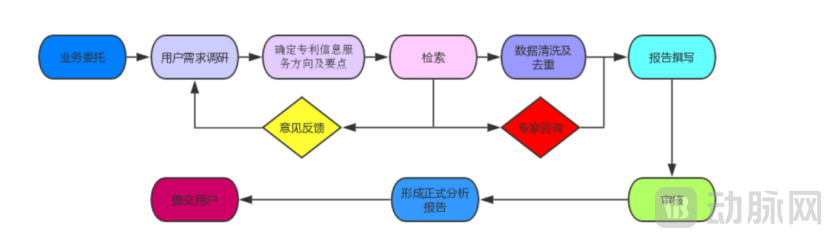
Intellectual Property Service Process, from the Intellectual Property Information Service Center of Lanzhou University
In 2018, Lanzhou University established the Intellectual Property Information Service Center to provide end-to-end services for the creation, utilization, protection, and management of intellectual property at the university, thereby addressing researchers’ shortcomings in patent applications.
Moreover, Lanzhou University has established a special intellectual property fund to support the protection of various forms of intellectual property, including patents, standards, software copyrights, artistic work copyrights, new plant varieties, and new drug certificates, as well as to carry out tasks such as technological achievement evaluation, appraisal, and feasibility studies. This approach helps reduce the emergence of “dormant patents” at the source and enhances the value of researchers’ patents.
By significantly revising its policies, Lanzhou University aims to send a clear message to researchers:"The school strongly encourages the commercialization of research achievements."。
Major scientific and technological achievements incubated at Lanzhou University are also making their way to the market. For example, Professor Gu Long, Head of the Department of Nuclear Engineering and Nuclear Technology, founded Ruisike, pioneering the development of next-generation proton and boron neutron capture therapy solutions that differ from traditional technical routes; Professor Xue Jijun of the Department of Chemistry established Gansu Haotian Chemical Technology, focusing on CDMO services in medicinal chemistry.
In 2019, Lanzhou University successfully completed the largest single-contract technology transfer in its history. The project involved the commercialization of an original analgesic peptide drug developed through the collaboration between Professor Fang Quan and Academician Wang Rui, with a contract value comprising milestone payments of RMB 33 million plus sales royalties.
This marks Lanzhou University’s first breakthrough in achieving zero-to-one commercialization of scientific and technological achievements valued at over RMB 10 million.
Off-site Research Institutes: Seeking Fertile Ground for Commercializing Achievements
In 2021, the Shenzhen Institute of Lanzhou University (hereinafter referred to as “LZU Shenzhen Institute”) was established. On December 26 of the same year, the inaugural meeting of its Council and the unveiling ceremony for the School-Enterprise Cooperative Research Center were held in Shenzhen.
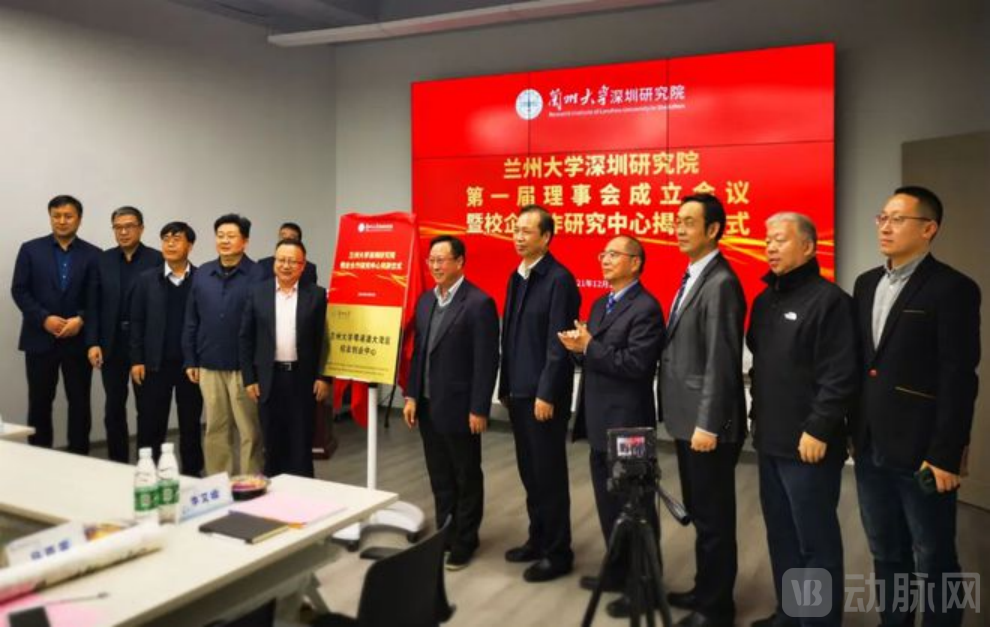 Image source: Guoxin Nanfang Intellectual Property Research Institute
Disadvantaged by its geographic location, the primary purpose of Lanzhou University’s collaborations with developed regions is:Leverage the university’s leading disciplines to apply technological achievements in practice.
On one hand, Lanzhou University leverages its strengths in fundamental research. Taking chemistry as an example, as one of the university’s flagship disciplines, the Department of Chemistry has created the legendary achievement of “eight academicians from a single department,” underscoring its formidable academic prowess. Academician Liu Youcheng successfully synthesized polyphenylacetylene conjugated polymers with semiconductor properties, pioneering organic semiconductor research in China. Academician Chen Yaozu devoted his career to research in organic mass spectrometry, structural analysis of natural products, micro-system identification of organic compounds, and spin-labeling analytical methods. As of March 2016, chemistry was the only discipline at Lanzhou University ranked within the top 1‰ globally by Essential Science Indicators (ESI).
Beyond chemistry, multiple disciplines at Lanzhou University—including physics, mathematics, computer science, resources and environment, nuclear science, biomedicine, prairie science, and geography—are conducting research programs through the Lanzhou University Shenzhen Research Institute.
It is reported that the Shenzhen Institute of Lanzhou University has established three major innovation and R&D platforms in biomedicine and biomaterials, new materials with special functions and energy chemistry, and digital brain-computer interface technology, along with six applied science and technology R&D entities and four service support entities. In the future, it plans to collaborate with the Guangming District Government to jointly establish the Biomedicine and Biomaterials Innovation Center of the Shenzhen Institute of Lanzhou University.
In this way, Lanzhou University can rapidly translate its current key disciplines and specialties, along with skill-based achievements, into tangible outcomes.
On the other hand, it involves integrating with Shenzhen’s industries to strengthen and extend the industrial chain, thereby maximizing the value of industry-academia-research collaboration. In an interview, President Yan Chunhua once stated that Shenzhen is a hub where wisdom converges and enterprise growth is empowered.
Here, China’s most open policy environment prevails, home to a host of industry giants and innovative enterprises. This means that scientific and technological achievements here are by no means lacking in opportunities to engage with the market.
Since 2019, Lanzhou University has collaborated with numerous enterprises in Shenzhen in fields such as gene technology, biomedicine, new materials, chemistry and chemical engineering, big data storage, integrated circuits, and radiopharmaceuticals, signing a total of 68 agreements with project funding exceeding RMB 20 million.
During the Shenzhen Alumni Association event, Lanzhou University also held launch ceremonies and signing ceremonies for related projects to promote the commercialization of research achievements. At the meeting, Yan Chunhua stated, “What Lanzhou University aims to do is to work together to make investment promotion substantive, ensure the implementation of signed projects, foster fruitful outcomes from grounded collaborations, and proceed with solid steps at every stage.”
Even with the export channels established, the road ahead will not be easy; Lanzhou University still needs to make greater efforts. It must engage with enterprises to understand their needs, strengthen its scientific research capabilities and expand its research teams, and explore the critical steps in translating research achievements from “0 to 1” and from “1 to 100.”
In short, this university, deeply rooted in Northwest China, has a vision that extends far beyond the region.