

Pioneer of Wearable mHealth Technology Files IPO Prospectus: Two Decades of Standardizing Medical-Grade Smart Wearables
“Pioneers” of Wearable Mobile Health Technology
At every major conference he attends, Professor Zhang Yuanting—Academician of the International Academy of Medical and Biological Engineering, Professor at The Chinese University of Hong Kong, Founder of the Hong Kong Institute of Medical Engineering, and Visiting Professor at the Oxford Suzhou Centre for Advanced Research—emphasizes the urgent need for early screening and prediction of cardiovascular diseases.
At the 2023 Future Medical Technology Conference, Zhang Yuanting also noted that despite the rapid advancement of medical technology, the incidence and mortality rates of cardiovascular and cerebrovascular diseases in China and worldwide continue to rise year by year. In particular, the time from the sudden onset of acute heart disease or stroke to death can be as short as five to six minutes.
“Currently, most attention is focused on the late-stage treatment of diseases. However, the majority of cardiovascular and cerebrovascular events occur and result in death outside of hospitals. Patients also remain at home after diagnosis and treatment, where home care facilities are inadequate, remote patient monitoring systems are lacking, and early disease prevention and control measures are insufficient.”
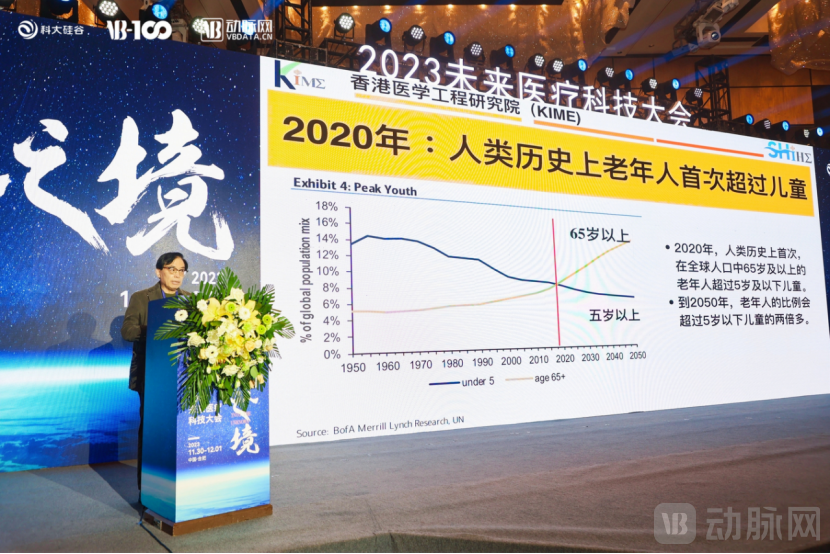 Zhang Yuanting Shares Achievements at Future Medical Technology Conference, Source: VCBeat
This has become a serious issue of global concern. Cardiovascular disease has long been the leading cause of death worldwide. According to statistics released by the World Heart Federation, 20.5 million people died from cardiovascular diseases in 2021, accounting for approximately one-third of all global deaths. Over the past three decades, the number of deaths from cardiovascular diseases has increased worldwide, largely due to population aging and growth.
“It is well known that hypertension is the most significant risk factor for cardiovascular and cerebrovascular diseases; however, the platforms and devices used for its measurement remain unsatisfactory.”
The rising annual mortality rate from cardiovascular and cerebrovascular diseases, coupled with a severe shortage of risk detection equipment, has driven Zhang Yuanting to dedicate himself to developing a new screening method for major diseases and establishing an ecosystem for their prevention and control. “Early screening and prevention are critically important; they represent the fundamental approach to addressing sudden cardiac death,” Zhang asserts. He is convinced that leveraging collected multimodal health information to enable strategic early focus—facilitating early detection, early diagnosis, early intervention, and early rehabilitation—can significantly reduce the mortality rate associated with sudden cardiovascular events. “When sudden blood pressure spikes or physiological parameter instability occur, mobile health systems based on intelligent wearable technology can immediately issue alerts and promptly coordinate with nearby hospitals.”
For over two decades, Zhang Yuanting has been dedicated to research on intelligent wearable devices. As early as 2000, he presented a simulation and mobile health experimental protocol leveraging wireless connectivity between mobile phones and the Internet at an IEEE-EMBS topical conference. This protocol not only enabled SMS, voice, and data transmission but also achieved the first-ever acquisition and display on mobile phones of physiological data stored on the Internet, such as electrocardiogram (ECG) and blood pressure readings. His pioneering work in mobile health technology earned the Best Paper Award from the IEEE Engineering in Medicine and Biology Society (EMBS).
In 2004, Zhang Yuanting, together with British scientist Robert S. H. Istepanian and American scientist Emil Jovanov, provided an early definition of “mHealth” in the IEEE Journal of Biomedical and Health Informatics, marking the first time internationally that wearable technology was introduced into mHealth. This year, the journal has decided to publish a special 20th-anniversary issue to commemorate their milestone contributions to mHealth and to further promote the comprehensive and in-depth development of its technologies.
The media hailed him as the “pioneer” of wearable mobile health.
In 2000, foreign investment poured into the Chinese market, providing technical support for the development of China’s internet communications and biosensor industries, thereby advancing network and sensor technologies.
Zhang Yuanting was among the earliest scholars to research wearable medical devices. At the outset, he felt rather isolated, as exploration in the field of wearable medical devices within China’s academic community was virtually barren. Everything awaited their pioneering efforts. It was common to encounter obstacles and resource shortages along the way. Yet this pioneer was driven by a profound interest.
Dr. Zhang Yuanting’s master’s and doctoral research focused on electronic communication technology and the modeling of bioelectric signals in neural and muscular communication systems, respectively. “I developed a passion for radio communication during my early undergraduate years, became interested in large-scale integrated circuits while pursuing my master’s degree, and maintained a strong interest in signal transmission within biological neural networks and bio-communication throughout my doctoral studies.”
During his master’s and doctoral studies, Zhang Yuanting simultaneously acquired expertise in both software and hardware development for weak signal detection and transmission. In the early 1980s, when transistor circuits were flourishing and integrated circuits were just emerging, his master’s research on the theory and technology of using parallel-connected CCD integrated circuits to reduce charge transfer noise filled a critical gap. His work received affirmation from Professor Mao Erke of Beijing Institute of Technology, a national-level expert in radar and information processing technologies, who served as the external chief reviewer of his thesis.
Later, during his tenure at The Chinese University of Hong Kong, when he shifted his focus to the development of wearable medical devices and mobile health technologies, he also regarded this transition as a continuation and application of his interests.
In 2018, a journalist asked Zhang Yuanting, “Which technologies are highly valuable but have been overlooked by the industry?”
Zhang Yuanting blurted out, “Sensors!”
In the field of medical devices, Zhang Yuanting looks forward to combining biosensor technology to create a revolutionary new medical device that meets broad market demand for health solutions. “From the perspective of physiological parameter monitoring, the only aspect I am less satisfied with is blood pressure measurement equipment. The inflatable/deflatable cuff is not only inconvenient for portability and use, but also makes it difficult to achieve beat-to-beat continuous blood pressure monitoring.”
In 1733, Stephen Hales performed the earliest direct arterial blood pressure measurement. Since then, advancements in blood pressure monitoring technology have led to the development of the mercury sphygmomanometer with a cuff and the Korotkoff sound auscultation method, which together constitute the current gold standard for clinical blood pressure measurement. The electronic sphygmomanometer introduced in 1973 and the oscillometric method for automatic blood pressure measurement developed in 1980 remain widely used today. In the 1960s, the advent of electronic pressure transducers enabled the widespread clinical application of invasive blood pressure monitoring techniques.
However, “imprecision, discontinuity, lack of timeliness, inconvenience in use, and inability to predict cardiovascular and cerebrovascular diseases” remain the critical shortcomings of current cuff-based blood pressure measurement devices.
Zhang Yuanting aims to overcome these shortcomings by revolutionarily developing a cuffless, non-intrusive smart measurement device.“After more than 20 years, Zhang Yuanting still believes: ‘The market and technological significance of unobtrusive, medical-grade blood pressure monitoring devices is substantial, attracting widespread attention from both academia and industry; however, large-scale clinical application has yet to be realized, and continued efforts are still required!’”
Disruption: Wearable Cuffless Blood Pressure Monitor
Regarding research on unobtrusive, continuous blood pressure monitoring using wearable devices, Zhang Yuanting’s primary objective is to further enhance measurement accuracy and expand multimodal databases based on wearable technology. By integrating blood pressure data with genetic parameters, blood biochemical markers, and imaging parameters, this approach aims to enable early prediction and prevention of major diseases, particularly cardiovascular and cerebrovascular disorders.
So-called non-invasive, cuffless blood pressure measurement (also known as Tonoarteriography) enables continuous, real-time, beat-to-beat blood pressure monitoring, thereby improving remote and mobile surveillance for patients with cardiovascular, cerebrovascular, and hypertensive conditions. This technology allows for the acquisition of relevant health data even during sleep. The cuffless design facilitates its integration into various wearable platforms that enable anytime, anywhere blood pressure measurement, such as smartwatches, eyeglasses, smartphones, textiles, electronic skin, and skin-conformable flexible devices.
“Wearable blood pressure monitoring, 24-hour continuous measurement, non-intrusive detection, and minimal impact on daily life” are the key features of this type of blood pressure monitoring device. Early diagnosis and prediction of cardiovascular diseases can be achieved through precise blood pressure parameter measurement and multimodal information fusion.
Once cuffless wearable blood pressure measurement became feasible, Zhang Yuanting identified the battery as one of the greatest challenges in this research.
Due to the compact size of wearable devices and their limited battery capacity, their battery life is relatively short, forcing users to replace batteries frequently. “The devices consume a lot of power, running out of juice in just a few hours,” Zhang Yuanting told Chengguo Bureau. About two decades ago, when chargers for wearable devices were not yet available, battery life had already become one of the key research focuses for scholars.
Some scholars have focused on breakthroughs in battery material technology, developing four types of devices: energy harvesters, lithium-ion batteries, thin-film batteries, and graphene batteries. Among these, graphene batteries are considered to have the highest energy density and the strongest charge storage capacity of all current battery types.
Another group of scholars, including Zhang Yuanting, has chosen to focus on reducing the overall power consumption of wearable devices. They argue that since wearable devices are primarily used for the acquisition, processing, and wireless transmission of physiological signals, traditional integrated circuit design methods and techniques—which prioritize high speed and large scale—are not entirely suitable for wearables. Instead, wearable devices require chips characterized by “three lows”: low power consumption, low frequency, and low noise.
In 2008, Zhang Yuanting’s team launched the world’s first PPG detection chip, pioneering the design goal of a “triple-low” chip—characterized by low power consumption, low noise, and low frequency—for wearable devices.
In 2011, Zhang Yuanting’s team proposed a novel low-power design method for integrated circuits used in blood oxygen saturation detection. By adopting a front-end processing strategy that performs current filtering prior to logarithmic amplification, the circuit structure was simplified and power consumption reduced. Under identical detection conditions, the duty cycle of the LED drive pulse current was decreased from the original 3% to 0.3% or even lower, thereby reducing the power consumption of the LED module—the primary contributor to the detection system’s overall power usage—to one-tenth or less of its original value.
The final simulation results show that, with a 1.8 V supply voltage and an input current of 2.7–15 μA, the total current consumption of the chip is only 22–80 μA.
Zhang Yuanting spent considerable time in the early stages merely addressing the power supply issues of wearable devices. Against the backdrop of intense focus on the miniaturization of wearable devices and battery energy storage, the issue of “accuracy in physiological parameter measurement” could be considered an oversight on Zhang Yuanting’s part.
“At that time, the measurement error for systolic blood pressure was already below 10 mmHg. I believed that with further effort, it would be easy to reduce the variance to 8 mmHg, allowing cuffless, continuous blood pressure monitoring devices to obtain FDA clearance in the United States.”
Yet, this mere 2 mmHg difference proved an insurmountable challenge for Zhang Yuanting and his team. “We were stuck at that point, unable to meet the standard.”
To address the issue of accuracy, numerous scholars have proposed various blood pressure estimation models, including those applying the Navier-Stokes equations, the Moens-Korteweg (M-K) formula, a combination of heuristic modeling and regression techniques, or data-driven approaches such as machine learning for predictive modeling.
However, what Zhang Yuanting requires is a method for cuffless blood pressure measurement that can deliver accurate and reliable results across varying activity levels, body postures, temperature and humidity conditions, and among different individuals.
To this end, Zhang Yuanting’s team pioneered the bold application of machine learning algorithms, employing multi-layer neural networks to learn higher-level feature representations, thereby improving the accuracy of blood pressure estimation.
During his doctoral studies, Zhang Yuanting was exposed to artificial intelligence (AI) technology, though he did not delve deeply into it at the time. The reason was straightforward: “My personal focus was on conducting research directly related to health and medicine, specifically on biocommunication channel models for the transmission of bioelectrical signals within neural networks and between these networks and the muscular system. Artificial intelligence is fundamentally a matter of computer algorithms that mimic the brain’s nervous system, emphasizing the ‘artificial’ aspect while paying insufficient attention to the ‘human’ or ‘biological’ dimension. At that time, my thinking was that once computer science experts had advanced AI to the point where it could perform precise and effective predictions or classifications, I would then leverage it to address challenges in healthcare and medicine.”
Since 2011, artificial intelligence has advanced at a breakneck pace. In 2023, the emergence of generative AI, exemplified by ChatGPT, once again propelled AI technology to the forefront of innovation. As AI becomes increasingly integrated into the healthcare sector, Zhang Yuanting has likewise observed that predicting major diseases, such as cardiovascular and cerebrovascular disorders, requires not only vast amounts of data but also multimodal data with substantial information content. Traditional mathematical models struggle to achieve precise classification and prediction, whereas artificial intelligence can effectively handle these complex tasks.
As early as 2009, in the National Major Basic Research Program (“973” Program) under his leadership, he proposed using machine learning methods to address the challenges in predicting cardiovascular and cerebrovascular diseases. In 2016, Zhang Yuanting’s team was the first to demonstrate with experimental data that machine learning methods surpassed all mathematical models based on biomechanical mechanisms in the accuracy of cuff-less blood pressure estimation.
In 2023, Zhang Yuanting’s team finally achieved a breakthrough in data accuracy.Laboratory postdocs and researchers employed AI methods to obtain blood pressure data from 660 subjects in public databases, including two-thirds with hypertension and one-third healthy individuals. The final results showed that the absolute error of blood pressure estimation was less than 5 mmHg.
“These test results from over 600 participants represent, in my view, the most accurate blood pressure estimation data currently available.” At the conference, Zhang Yuanting shared this good news with the audience.
With both major technical challenges overcome, Zhang Yuanting plans to further conduct extensive clinical trials and promote the industrialization of the technology.
Technology commercialization requires consideration of every aspect.
The industry has responded enthusiastically to research on wearable devices. According to a report by LeadLeo, the market size of China’s wearable medical devices has continued to expand in recent years. Driven by favorable policies and advancements in information infrastructure such as 5G and the Internet of Things (IoT), the market size grew from RMB 4.89 billion in 2017 to RMB 14.37 billion in 2021, representing a compound annual growth rate (CAGR) of 30.9%. The CAGR is projected to be approximately 18.1% from 2022 to 2026.
Zhang Yuanting’s original intention in designing unobtrusive smart wearable blood pressure monitoring devices was to address the challenges of chronic disease management underlying the vast market scale. Today, wearable medical devices are gradually influencing residents’ daily lives and being applied across various scenarios, including the prediction and prevention of cardiovascular and cerebrovascular diseases, hypertension control, and diabetes management.
At the conference, this nearly 70-year-old professor was the most “tech-savvy.” During his presentation, he used the smartwatch on his wrist to control slide transitions on his smartphone’s PowerPoint. In fact, he has been using a smartphone and smartwatch for presentations and lectures since 2015, and for over a decade has rarely relied on a computer for PowerPoint deliveries.
Zhang Yuanting told VCBeat,Technically, implementing this functionality is not difficult; development may take only a few months. However, widespread adoption of the device will require time. In medical settings, the development and promotion of wearable devices face even greater challenges.
“First, each physiological parameter measurement has its own specific requirements, and the R&D time needed varies for different parameters.” For example, addressing heart rate issues can be completed in as little as 2–3 months, whereas resolving cuffless blood pressure measurement—whether to estimate arterial blood pressure trends or achieve full functionality—took Professor Zhang Yuanting’s laboratory approximately one year.
Secondly, compared with R&D, the promotion and adoption of medical-grade products suffer from significant lag. More than two decades ago, Zhang Yuanting’s team overcame the technical challenges of wireless, precise heart rate measurement on finger rings; it was only in recent years that he saw related products hit the market. Yet after more than twenty years, there are still no commercially available devices for non-invasive, medical-grade, precise blood pressure measurement.
“The biggest difference from other electronics industries is that this medical-grade wearable product often requires approval from the National Medical Products Administration.”
1Smart Wearables: The “SUPERMINDS” Concept Is the Trend
In 2015, Zhang Yuanting served as a Sensor Systems Architect and Consultant in the Sensing Hardware and Health Technologies Department at Apple Inc. in Silicon Valley, USA. During his three years at Apple, Zhang witnessed firsthand how a world-class company develops products. “As an internal employee involved in technical product R&D, my greatest takeaway was that product development requires consideration of far more aspects than tackling core technological challenges in a university laboratory.”
“It’s just a small watch, yet I can see that the company has invested immense talent, effort, and time with rigorous standards. Whether in terms of functionality, precision, or design, they have strived for perfection.”
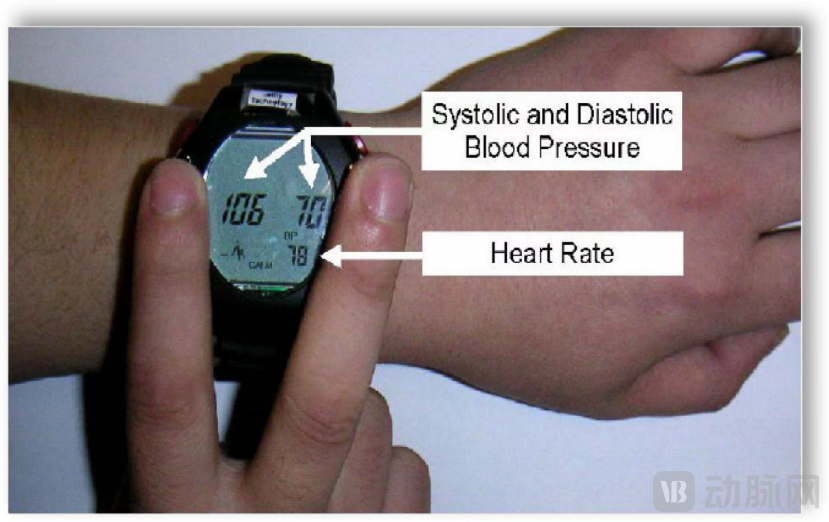 The World’s First Cuffless Blood Pressure Monitoring Watch, Photo Provided by Interviewee
In 2006, Zhang Yuanting developed the world’s first wearable cuffless blood pressure monitoring watch. Furthermore, his laboratory at The Chinese University of Hong Kong expanded this technology to various other platforms, including clothing, eyeglasses, rings, mobile phones, mattresses, and chairs.
Even so, the cuffless blood pressure testing technology has yet to achieve mass industrialization. When asked about the underlying reasons, Zhang Yuanting stated, “I do not want to launch a blood pressure monitoring device that has not yet met medical-grade standards.”
Years ago, he proposed wearable devices“SUPERMINDS”The “Five Characteristics and Five Transformations” design concept—safety, non-intrusiveness, personalization, efficiency, robustness, miniaturization, intelligence, connectivity, digitalization, and standardization—aims to facilitate the earlier and better integration of smart wearable medical products into people’s lives.
Taking non-intrusive measurement as an example, they have developed novel fabric sensors that can be placed on a mattress. Patients wearing normal pajamas can lie in bed to obtain data such as blood pressure, electrocardiogram (ECG), and respiration. Additionally, flexible sensors for physiological parameters like blood pressure and ECG have been designed to be adhesive, “much like a bandage.”
 Zhang Yuanting Receives the 2023 IEEE Engineering in Medicine and Biology Society William J. Morlock Award; Photo Provided by Interviewee
In recognition of his pioneering research in wearable technology, the IEEE Engineering in Medicine and Biology Society (IEEE-EMBS) awarded Zhang Yuanting the William J. Morlock Award—the oldest award in the field of biomedical engineering—at its 2023 Annual International Conference. He thus became the only scholar from Asia to receive this honor in the more than 60 years since the award’s inception.
2The Key to Translating Research Achievements into Practical Applications Lies in “Integration and Convergence”
Industrialization is inseparable from the product's"Secondary Development"Zhang Yuanting has always maintained that core technologies are generally developed in universities. However, university laboratory prototypes are often far from being market-ready products and fail to meet customer needs. Secondary development is therefore crucial. Universities should focus on foundational and core technology research and academic publications, as they are not well-suited for product development. Meanwhile, companies often struggle to master these core technologies independently and require technical support from scientific researchers.
On August 29, 2023, the State Council issued the “Development Plan for the Shenzhen Park of the Hetao Shenzhen-Hong Kong Science and Technology Innovation Cooperation Zone,” aiming to cultivate a cohort of world-class innovation platforms and R&D centers of top-tier technology enterprises in the Hetao area at the Shenzhen-Hong Kong border, thereby establishing it as a global scientific research hub.
Seizing this rare opportunity, Zhang Yuanting is leveraging the advantages of the Guangdong-Hong Kong-Macao Greater Bay Area and international cooperation in the Hetao region to establish the initial framework of an early prevention and control ecosystem for cardiovascular and cerebrovascular diseases. “The goal is to break down information silos, foster deep integration and joint development of core technologies between industry and academia as well as across disciplines, build an ecosystem, lead the development of the emerging medical and health industry, and contribute to the cause of human health.”
He still favors the concept of “Convergence: The Third Revolution” proposed by Professor Phillip Sharp of MIT—The Convergence of Life Sciences, Physics, Mathematics, Digital Technologies, and Engineering in Healthcare。
How can different technologies and disciplines be integrated into a unified whole to create new pathways and opportunities, thereby establishing an ecosystem for the early prediction, early diagnosis, and early intervention of major diseases? According to Zhang Yuanting, this is a challenging and difficult endeavor. He currently aims to start with hypertension control and the prevention and treatment of cardiovascular and cerebrovascular diseases, leveraging existing research platforms to integrate talent and technologies from multiple disciplines and fields.
This is yet another pioneering endeavor. Zhang Yuanting stated that over the next 15 years, he will continue to promote the development of health engineering guided by integration and convergence, with intelligent wearable mobile health technology at its core, so as to establish a closed-loop ecosystem for the prevention and control of cardiovascular and cerebrovascular diseases—connecting individuals, families, and hospitals (connected health), known as the Health “Mission” Platform.
As the first phase of this platform, the team aims to collaborate closely with hospitals, medical device companies, and mobile terminal equipment manufacturers over the next three to five years. Leveraging generative artificial intelligence and wearable technology, they will develop a personalized AI doctor that integrates real-time physiological parameters, biomarkers, and vascular imaging markers. This initiative is designed to assist physicians in conducting comprehensive screening, early prediction, and early intervention for cardiovascular and cerebrovascular diseases, particularly focusing on vulnerable plaques and high-risk patients.
Perhaps, at an important conference, you will also hear him discuss the latest developments in unobtrusive smart wearable devices, the ecosystem for the prevention and treatment of cardiovascular and cerebrovascular diseases, and the integrated development of the Hetao region.