

Accelus Secures $20M Debt Financing to Expand Global Footprint of FlareHawk® and Advance Minimally Invasive Spine Solutions

Accelus
Minimally Invasive Spine Surgery Technology and Solutions Provider

Symbiotic Capital
Private Equity Investment Firm
On January 18, 2024, Accelus, a startup specializing in minimally invasive spine surgery, announced the completion of a $20 million (RMB 140 million) debt financing round led by Symbiotic Capital. Accelus plans to use these funds to advance its FlareHawk expandable interbody fusion system.®Expand in the global market while accelerating the company’s clinical research and product development.
Accelus, founded in 2021 and headquartered in Palm Beach Gardens, Florida, USA, is a provider of minimally invasive spine surgery technologies and solutions. Accelus is committed to offering spinal surgeons a range of therapeutic options. Its surgically robotic system is designed for use in Transforaminal Lumbar Interbody Fusion (TLIF), Posterior Lumbar Interbody Fusion (PLIF), endoscopy-assisted percutaneous procedures, and lateral approach spine surgeries.
Spinal disorders have become one of the common conditions posing a threat to human health. The number of patients with spinal diseases is increasing year by year, and the age of onset is trending younger.
According to World Health Organization estimates, the incidence of spinal cord injury ranges from 40 to 80 cases per million people. As population aging intensifies, spinal conditions such as disc herniation, spinal stenosis, and degenerative disc disease have become more prevalent. Patients’ growing demands for intraoperative comfort and faster postoperative recovery are further driving the expansion of the minimally invasive spine surgery market.
On the global market, numerous orthopedic robotic products in the field of spinal surgery have been launched and applied in clinical practice. These include Zimmer Biomet’s ROSA Spine, Globus Medical’s ExcelsiusGPS, and Medtronic’s Mazor X. Stryker has also acquired Mobius and its Cardan robot, further integrating an all-in-one robotic platform for minimally invasive spinal surgery. Observing the strategic moves of these international giants, it is evident that the latest global trend is the integration of “intraoperative 3D imaging + surgical robots + artificial intelligence + proprietary consumables” in minimally invasive spinal procedures.
In China, the trauma, spine, and joint segments of the orthopedic implantable medical device market were established earlier and each represent a multi-billion RMB niche market. Compared with the compound annual growth rate (CAGR) from 2012 to 2015, the spine and joint sectors are showing an accelerating growth trend. According to Life Science Intelligence, there were 9.66 million orthopedic surgeries performed in China in 2018, making it the third most common type of surgical procedure. Among these, spinal surgeries reached 2.065 million cases, with more than 10 million patients awaiting surgery.
So, the question arises: in what aspects should treatment protocols for minimally invasive spine surgery be refined to better serve patients requiring such procedures?
Compared with traditional spinal surgery, minimally invasive spine surgery (MISS) features smaller incisions, shorter postoperative recovery periods, and better clinical outcomes, making it the primary direction of development in the field of spinal surgery. However, MISS is technically demanding. Given the proximity of the spine to critical nerves and blood vessels, even millimeter-level errors can lead to catastrophic consequences. Therefore, minimally invasive procedures through small incisions require more refined and precise techniques, as well as greater operational stability, to prevent damage to healthy tissues surrounding the lesion.
Fortunately, in recent years, the continuous improvement of equipment, technologies, and surgical techniques in the field of minimally invasive spine surgery has provided momentum for its development. This progress ranges from the initial single-channel anterior endoscopic technique to lateral and posterior endoscopic approaches, and further to the development of unilateral biportal endoscopy (UBE) with preoperative positioning for spine surgery.
From a technical perspective, the use of specialized instruments and imaging technologies such as X-ray, ultrasound, or MRI in minimally invasive spine surgery enables surgeons to visualize the patient’s spinal anatomy, thereby reducing significant tissue damage associated with large incisions. Furthermore, advancements in imaging technologies, including 3D printing and augmented reality, have enhanced the accuracy and precision of minimally invasive spine surgical procedures.
The introduction of robot-assisted surgery represents another recent advancement, enabling physicians to place screws and other spinal instrumentation with greater precision. Robotic surgery offers the advantages of enhanced accuracy and minimally invasive techniques, resulting in smaller incisions, reduced operative time, and decreased intraoperative blood loss, thereby providing significant clinical benefits.
Accelus is deeply committed to advancing minimally invasive spine surgery in this direction.
The Accelus team not only emphasizes clinical practice and scientific research but also collaborates closely with leading academic experts to jointly advance the development of minimally invasive spine surgery.
On April 18, 2022, Accelus appointed Kevin Foley as Chief Medical Officer. In addition to serving as Professor of Neurosurgery, Orthopedic Surgery, and Biomedical Engineering at the University of Tennessee Health Science Center, Dr. Foley holds the position of Chairman at the Semmes Murphey Clinic in Memphis, Tennessee.
Kevin Foley spent decades focusing on developing solutions to leverage computer image guidance to enhance the safety, efficiency, and accuracy of spinal surgery. Through his persistent efforts, he ultimately developed the Remi robotic navigation system for Accelus.
As a navigational robotic targeting system for spinal surgery, the Remi robot is designed to assist surgeons in placing screws within the narrow bony corridors of the patient’s vertebrae. In spinal surgery, misplaced screws can damage surrounding spinal nerves and exacerbate patient pain; therefore, accurate screw placement is critical. This precision represents the core technological advantage of the Remi robot.
Currently, the Remi robot has been acquired by surgical equipment manufacturer Alphatec Holdings for $55 million (equivalent to RMB 400 million). Kevin Foley’s medical background has made significant contributions to both the development and acquisition of the Remi robot.
The Accelus team continues to initiate research on other systems for minimally invasive spine surgery.
Accelus offers a portfolio of implants, instruments, and technologies that enable surgeons to address complex pathologies, while continuously developing new products to tackle clinical challenges in spine surgery through innovation. To date, Accelus has conducted research and development across four key areas—posterior lumbar interbody fusion, lateral lumbar interbody fusion, posterior fixation, and biologics—and has sequentially launched related products.
1
FlareHawk®It is a multi-directional, expandable lumbar interbody fusion device, combined with the Adaptive Geometry™ technology held by Accelus. In minimally invasive spine surgery, FlareHawk®After passing through the neural corridor with a smaller profile, it can simultaneously increase width, height, and lordosis.
FlareHawk®Offers a variety of insertion profiles and placeholder options to help accommodate patient- and level-specific neural corridors. The device is currently available in three sizes, allowing for insertion at widths of 7 mm, 9 mm, and 11 mm. Once inside the patient’s body, FlareHawk®Simultaneous medial and lateral expansion allows the original dimensions to expand to widths of 11 mm, 14 mm, and 17 mm. Concurrent cranio-caudal and mediolateral expansion is designed to provide sagittal and coronal plane correction, restore intervertebral foramen height, and enhance fusion stability.
FlareHawk®Possesses hardness, inertness, and biocompatibility comparable to bone. Meanwhile, a high-vacuum process creates a uniform, pore-free titanium layer 0.5 micrometers thick, enabling the mixing of titanium and PEEK atoms at the bonding interface. This achieves strong adhesion between titanium and PEEK without compromising fluoroscopic visibility for physicians. The combination of PEEK and titanium brings the elastic modulus closer to that of bone and overcomes the limitations associated with PEEK’s inertness and restricted osseointegration. Furthermore, the roughened titanium surface enhances bone-to-implant fixation.
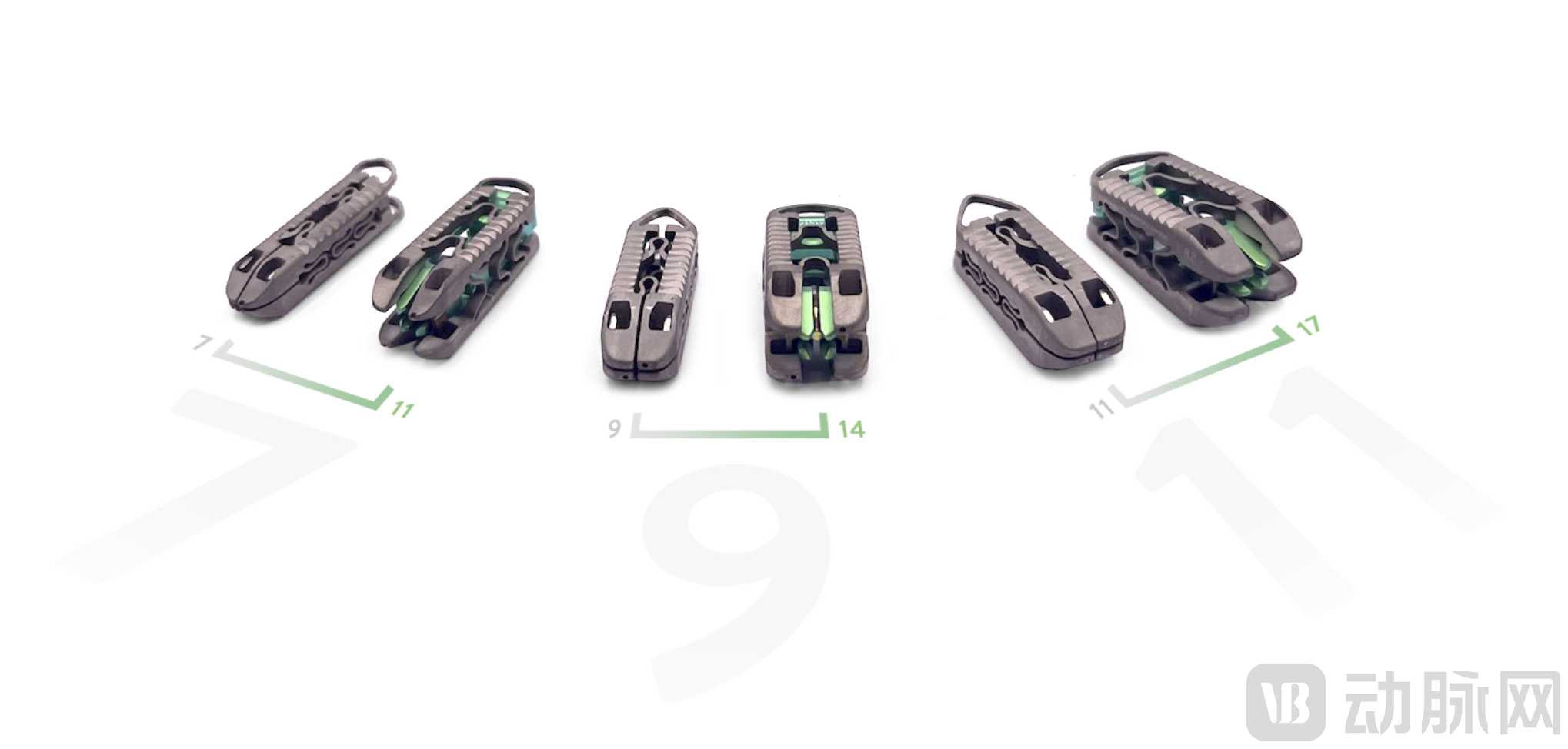
FlareHawk®
2
LineSider® The spinal system is available in three types: open, cortical, and MIS, designed to provide surgeons with a variety of surgical approaches and to customize the most appropriate construct based on the patient’s anatomy and pathology.
Open-Style LineSider®Durable and robust implants and instruments for addressing complex pathologies. Cortical-style LineSider®The head resembles a tulip, with a slender profile and low height, facilitating mid-procedure entry. The MIS is designed to optimize seamless percutaneous access.
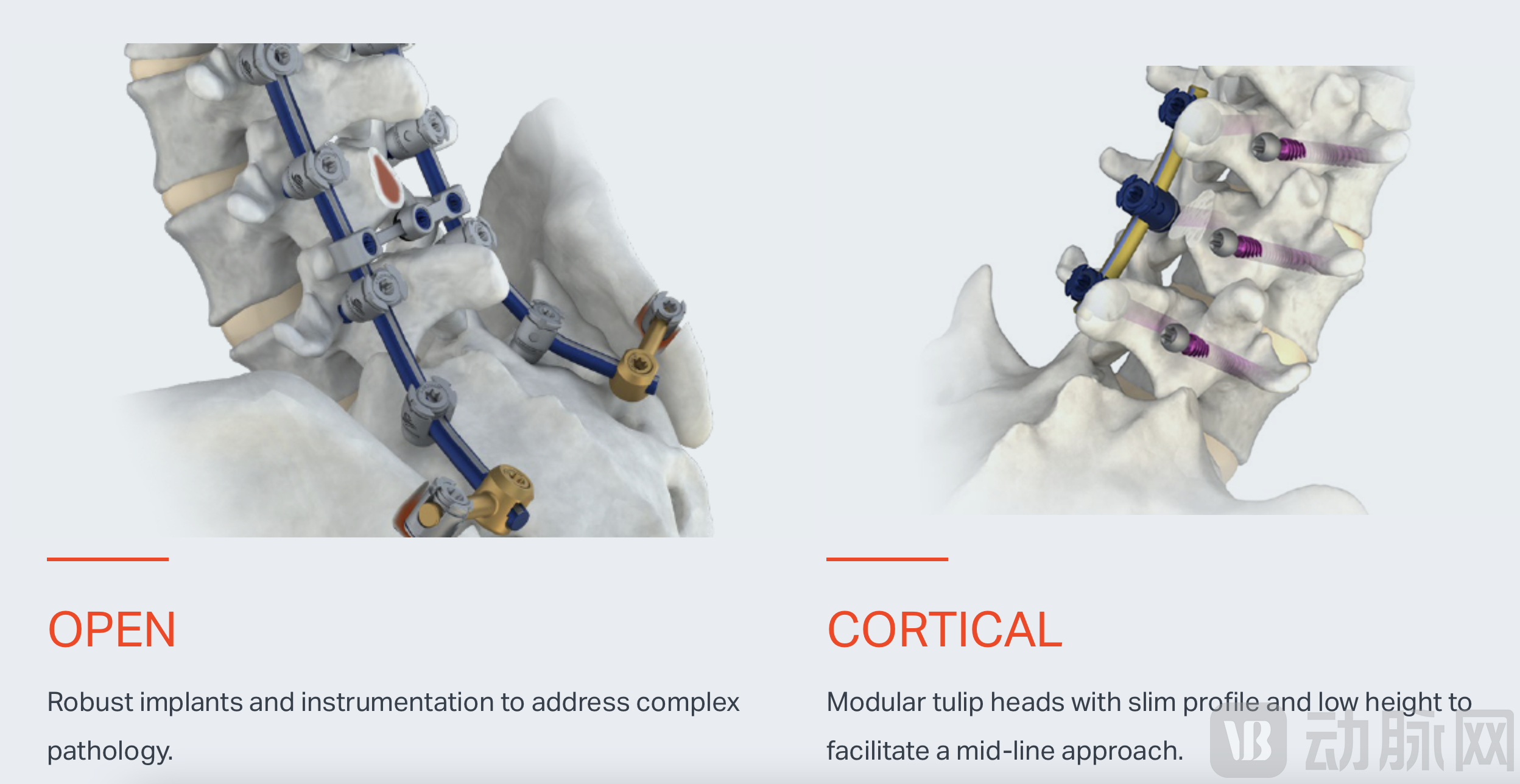
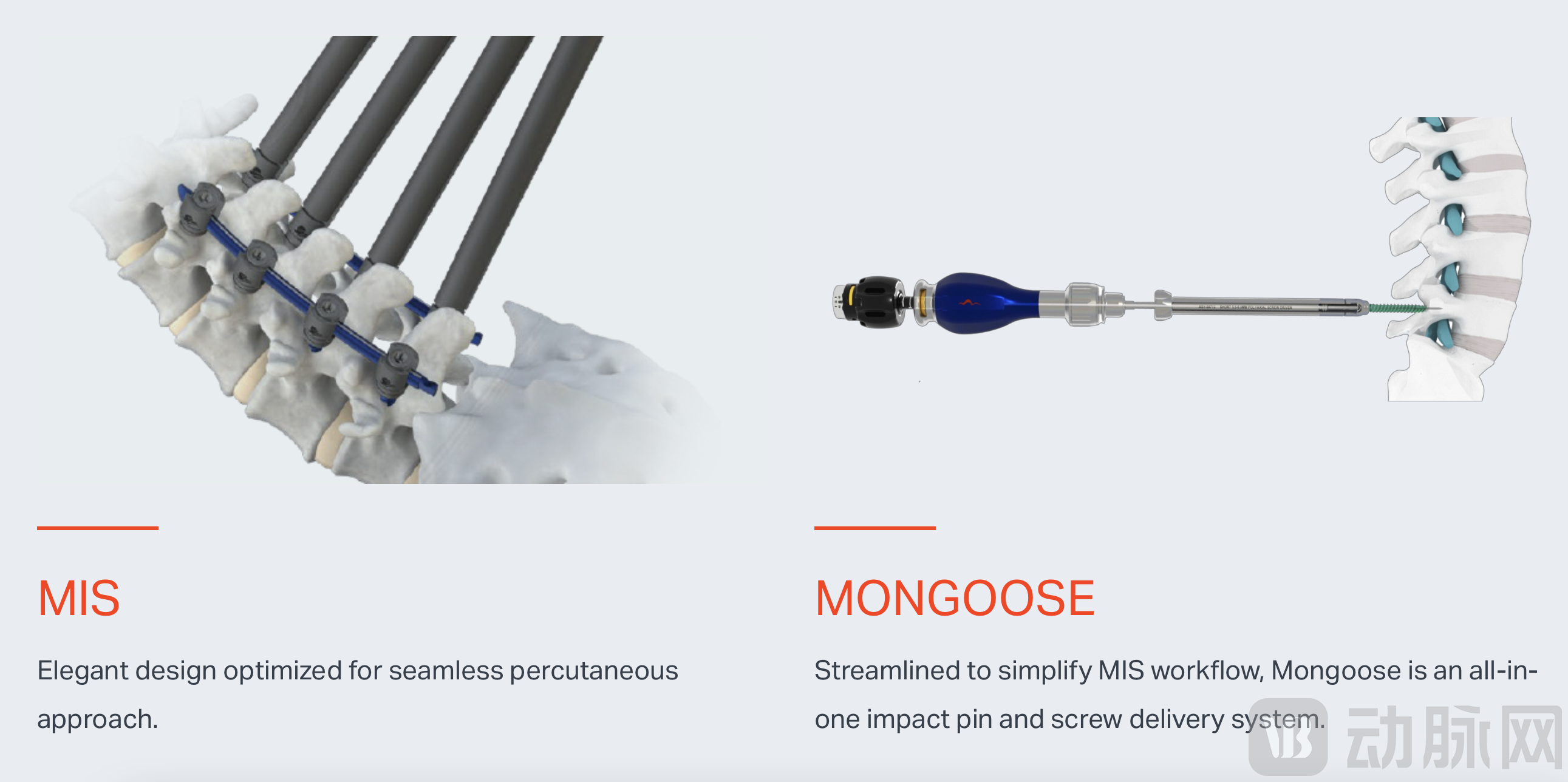
LineSider® Spinal System
3
Toro Lateral (Toro-L), an interbody fusion system, is a biplanar expandable lateral implant featuring 3D-printed endplates that enables direct delivery of bone graft through the inserter during minimally invasive surgery. It is designed to maximize disc space height while minimizing neural retraction. As a bidirectionally expandable implant, it works in conjunction with innovative disc preparation instruments to allow the entire procedure to be performed through a slender tubular retractor, representing an approach that prioritizes preservation of patient anatomy via a lateral access route.
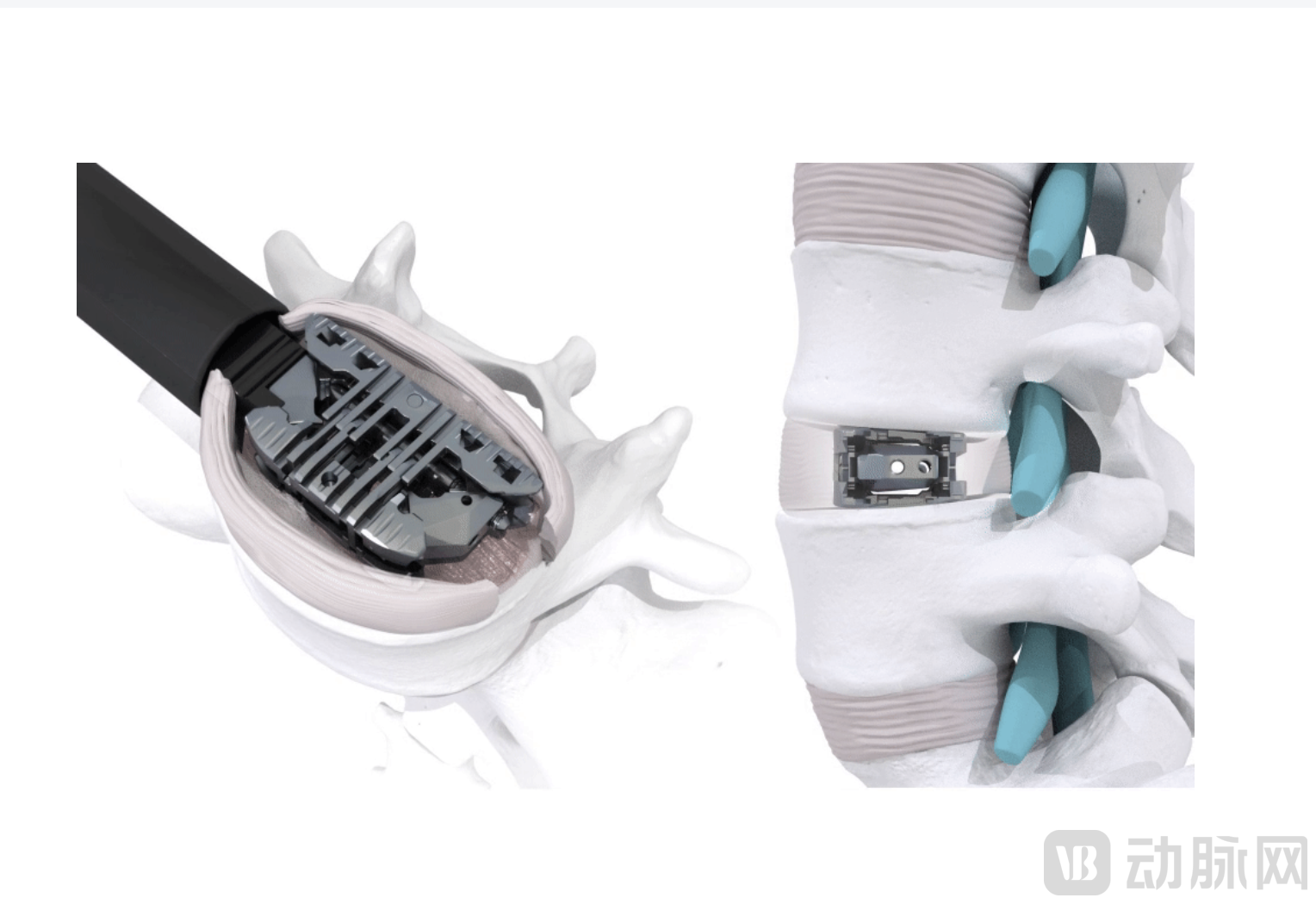
Toro Lateral
4
BioNest®It is an allograft composed of finely processed cortical fibers of demineralized bone matrix (DBM). It only needs to be hydrated and delivered to the surgical site via a graft funnel.
Each batch of BioNest cortical fibers undergoes independent testing using both in vivo and in vitro methods. The cortical fibers are designed with flowability in mind; they are processed into a fine consistency to facilitate delivery to the surgical site and enable endplate-to-endplate bone formation.
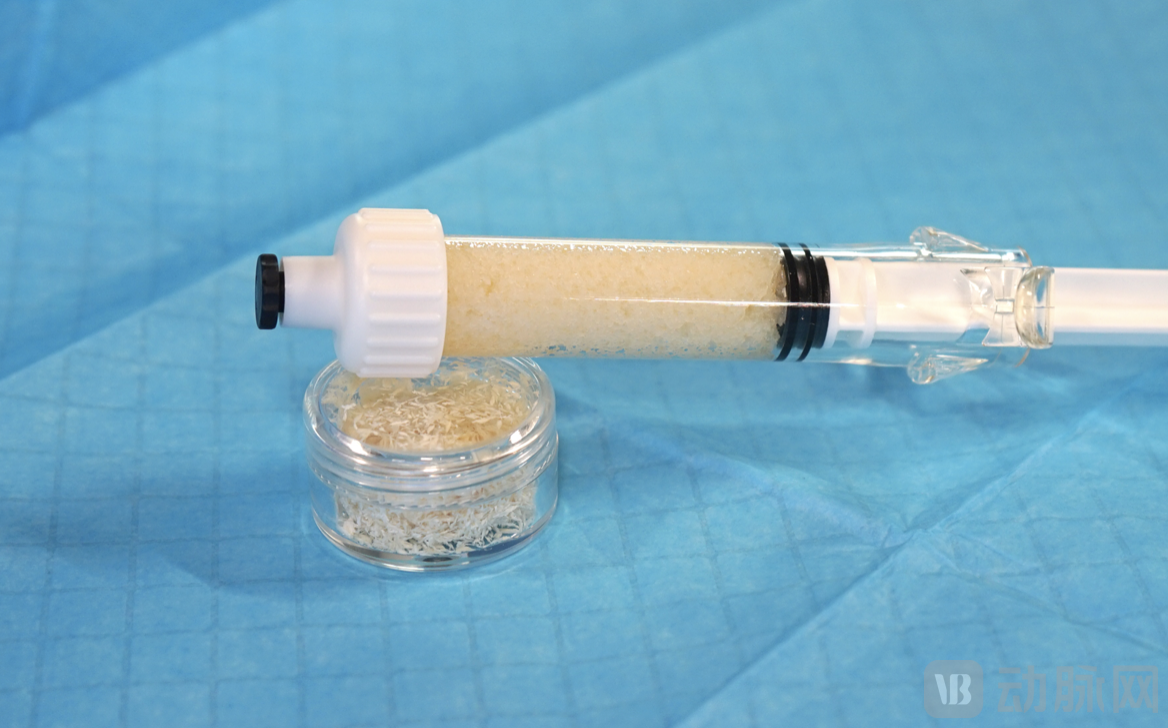
BioNest®
Among existing products, FlareHawk®Toro-L has received FDA clearance through the 510(k) pathway.
According to Data Bridge, the global market size for spinal surgery robots was approximately USD 80 million in 2017 and is projected to grow to USD 320 million by 2026, representing a compound annual growth rate (CAGR) of 17.5% from 2017 to 2026. Currently, the overall market remains relatively small, primarily constrained by factors such as the high cost of surgical robots and the limited number of trained specialist surgeons.
After successfully developing the Remi robot, Accelus remains committed to advancing minimally invasive spinal surgery technologies, driven by its confidence in the promising future of spinal surgical robotics. It is believed that the market size for spinal robots will continue to grow steadily as awareness of robotic surgery increases and procedural costs decline.