

CardioSignal Files Prospectus for IPO: Smartphone-Based AFib Detection Cleared as Class IIa Medical Device in 15 Countries

CardioSignal
Developer of Cardiac Disease Detection Solutions
Atrial fibrillation (AF), as the most common sustained arrhythmia, represents a pressing challenge currently facing the global field of cardiology.
According to data presented in the article “Epidemiology of Atrial Fibrillation in the 21st Century,” the incidence of atrial fibrillation is rising substantially. In Europe, atrial fibrillation affects more than 11 million people, with nearly 900,000 new cases diagnosed annually. The “Chinese Guidelines for the Diagnosis and Management of Atrial Fibrillation (2023)” indicate that there are approximately 12 million patients with atrial fibrillation in China.
Although clinical practice currently has the capability to cure atrial fibrillation, long-distance travel to hospitals for electrocardiogram (ECG) examinations may impose excessive cardiac load on patients with heart disease, thereby exacerbating their condition.
The advent of wearable devices such as the Apple Watch and Huawei Watch enables patients to monitor their cardiac status at any time. However, unlike medical monitoring devices with similar functionalities, consumer-grade smart bands and sports watches have not obtained certification from regulatory bodies such as the FDA, CE, or NMPA; therefore, the data they collect cannot serve as a basis for clinical diagnosis.
Is there a method that can both support clinical decision-making and enable cardiac monitoring without the need for additional wearable devices?
CardioSignal has completed this exploration: patients can undergo cardiac testing using only a smartphone.
Following its exploration of this innovative cardiac detection technology, CardioSignal has recently achieved new progress in fundraising. On January 24, 2024, CardioSignal, a developer of early detection technologies for heart disease, secured $10 million in Series A financing. The round was led by DigiTx Partners, with participation from Sandwater and Maki.vc. The Series A investment will provide funding for further clinical validation and commercial expansion of CardioSignal’s breakthrough technology. Previously, CardioSignal had raised €2.2 million in its seed round.
CardioSignal employs gyrocardiography technology. This is a patented technology that uses motion sensors to detect signs of heart disease, aiming to provide patients with prevention and treatment plans through early cardiac detection.
Gyrocardiography is based on over a decade of academic research and has been validated by more than 20 peer-reviewed publications. It is now compatible with any handheld device equipped with the necessary sensors—gyroscopes and accelerometers—that can be placed on the chest to detect specific rotational movements of the heart and generate signals for six-channel analysis.
Nowadays, motion sensors are built into smartphones, which also provides critical support for the development of CardioSignal. The application developed by CardioSignal directly monitors atrial fibrillation through smartphones: patients only need a mobile phone to achieve self-monitoring of the heart, remote care, and instant diagnosis within one minute.
Currently, CardioSignal has been validated in clinical studies on atrial fibrillation and heart failure, and the application has been available as a Class IIa medical device in 15 countries.Medical-grade devices are used to detect signs of atrial fibrillation.
In the official atrial fibrillation detection results,CardioSignal app demonstrated 95.3% sensitivity, 96.0% specificity, and 96% accuracy.
Using CardioSignal is simple. Patients need only lie down in a comfortable position, tap “Start” in the app, and place the phone on their chest while remaining relaxed. CardioSignal then uses two sensitive motion sensors to analyze cardiac motion. Heart assessment results are available in just one minute. The entire measurement process involves no skin contact, ensuring patient comfort.
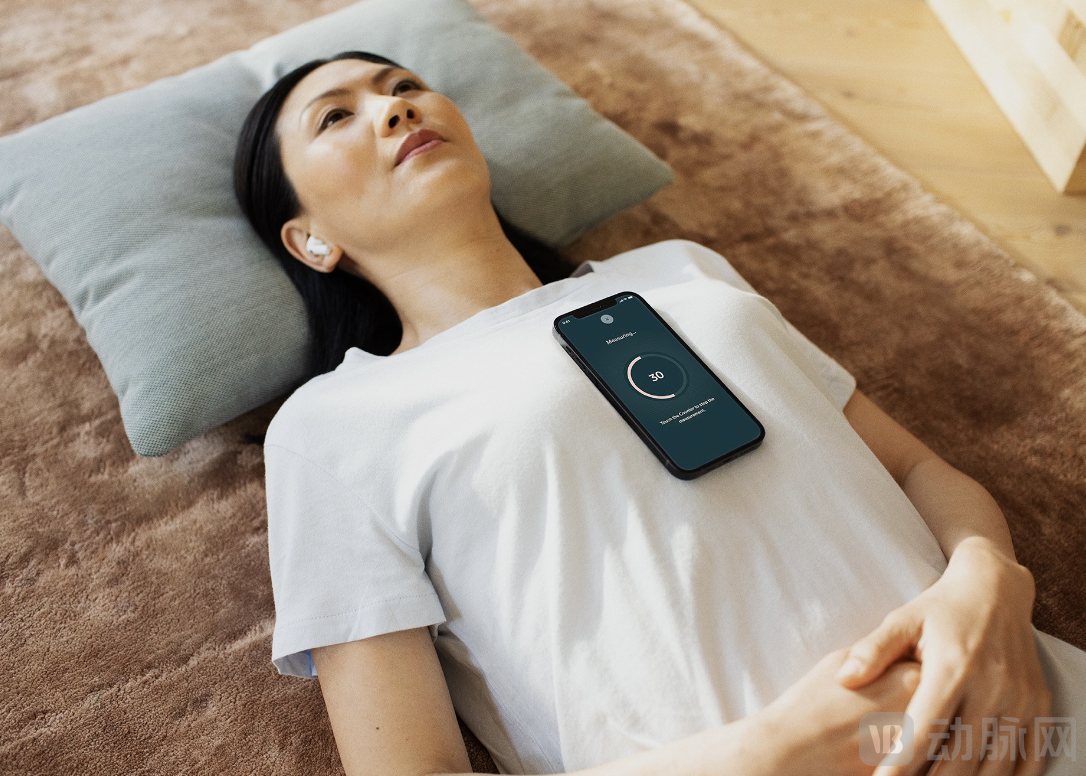
User undergoing cardiac testing with CardioSignal. Image source: CardioSignal
Meanwhile, all measurement results are displayed in the CardioSignal software and recorded in the personal health report. If atrial fibrillation is detected in two consecutive measurements, CardioSignal will alert the patient to seek a cardiac health assessment from a healthcare professional.
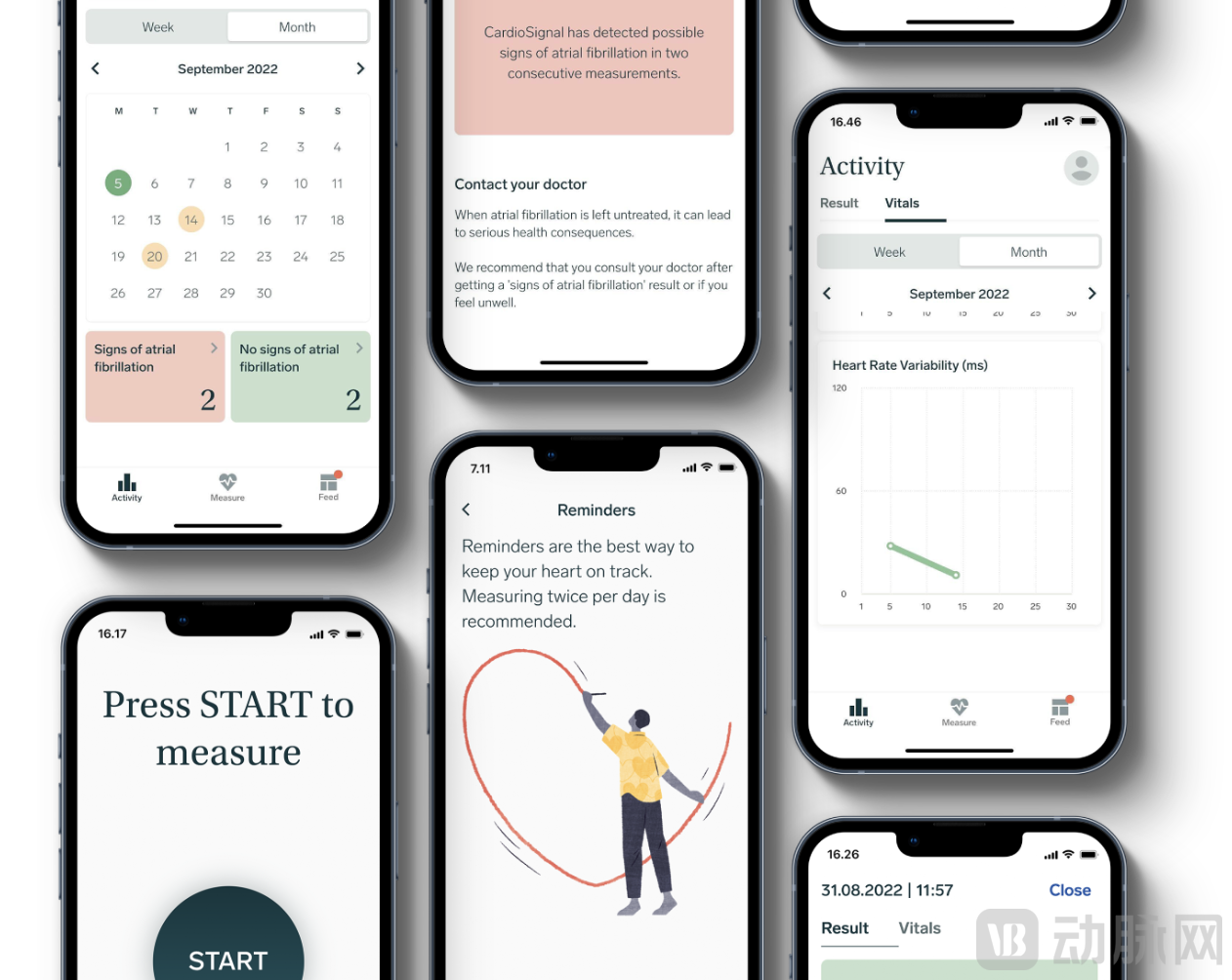
CardioSignal User Interface
The convenience of CardioSignal not only benefits patients who wish to perform cardiac monitoring at home, but also alleviates the workload of hospital medical staff. For a large number of high-risk patients, a one-minute cardiac test can shorten hospital stays and help reduce subsequent complications and readmissions caused by atrial fibrillation.
Currently, CardioSignal is compatible with 4,000 sensor-equipped Android smartphones and iPhones, and has been chosen by over 160,000 users for cardiac assessment.
CardioSignal has come this far thanks to the unwavering commitment of its two founders to advancing research and innovation in cardiology.
CardioSignal’s current technology originated as a research project at the University of Turku in Finland. In 2017, the research team founded CardioSignal to commercialize these academic findings into a technological product. The team was led by Juuso Blomster, the founder of CardioSignal.
Juuso Blomster also serves as the company’s Chief Executive Officer. As a cardiology specialist and Professor of Cardiology at the University of Turku, he has published 55 articles related to cardiology.
Prior to founding CardioSignal, Juuso Blomster served as Chief Medical Officer at AstraZeneca, specializing in cardiovascular and metabolic diseases. In addition to his expertise in cardiology, Mr. Blomster has extensive professional experience in the medical and pharmaceutical industries. These experiences laid the medical foundation for the establishment of CardioSignal.
Another co-founder, Mikko Pänkäälä, also graduated from the University of Turku. In addition to holding a Ph.D. in Electrical and Electronic Engineering, he has conducted in-depth research into biomedical applications, cardiovascular diseases, and sensor technologies. This research experience played a pivotal role in Mikko Pänkäälä’s development of patented technologies at CardioSignal.
It is precisely for this reason that CardioSignal has been able to stand out among the many companies engaged in the research and development of cardiac detection technologies.

The Two Founders. Image Source: CardioSignal
In the future, CardioSignal will continue to conduct clinical validation for various heart conditions, including heart failure, aortic stenosis, coronary artery disease, and other development efforts related to pulmonary hypertension.
CardioSignal’s innovative technology underscores the vast potential of smartphones in the medical field. With the rapid advancement of artificial intelligence and big data, smartphones are poised to play an increasingly pivotal role in future health management. CardioSignal’s products effectively address critical pain points in healthcare by leveraging this trend, delivering a more convenient, efficient, and personalized health experience for patients with atrial fibrillation.
Atrial fibrillation detection via smartphones demonstrates the immense potential of mobile health, offering valuable insights and opportunities for China. Healthcare enterprises should focus on migrating other complex medical testing or diagnostic processes to mobile devices, which will not only advance medical technology but also deliver superior healthcare services to patients.
References:
Kornej et al (2020). Epidemiology of Atrial Fibrillation in the 21st Century