

Kento Fluidics, China's IVD Fluidic Components Leader with 38%+ CAGR, Files for STAR Market IPO
In the past few years, the IVD market has witnessed explosive growth. With the vigorous development of downstream enterprises, the industrial status and attention of companies in key upstream segments have also increased significantly compared to the past. Shenzhen Keyto Fluid Control Co., Ltd. is one such company.
At the end of 2023, Keyto Fluid, a leading domestic manufacturer of IVD fluidic components, filed its prospectus for an initial public offering on the STAR Market, positioning itself to become the first listed company specializing in domestically produced IVD fluidic components.
Shenzhen Keyto Fluid Control Co., Ltd., established in 2010, specializes in the R&D, manufacturing, and sales of precision components and consumable accessories for microfluidic control. Its main products include micro valves, precision pumps, and flow path components that enable precise control of microfluidics.Widely applied in fields such as in vitro diagnostics, respiratory anesthesia, and hemodialysis, with gradual expansion into life science instruments and environmental monitoring.
According to Frost & Sullivan data, as of 2022, its market share in the microfluidic precision control components market was 2.2%, ranking among the top five domestically.No. 1 among domestic brands.
The microfluidic precision control components manufactured by Shenzhen Keyto Fluid Control Co., Ltd. are typically used to achieve precise control over the “volume” or “state” of fluid flow, representing typical key foundational industrial components. Due to high technical barriers, the market has long been dominated by multinational corporations such as SMC and IDEX.
Driven by multiple factors, including national policy support for the domestication of key core components, growing demand in downstream application fields such as medical devices and life sciences, and continuous technological advancements by local manufacturers, such asKeyto Fluid, Hengyongda, Jurui ElectricDomestic companies have already achieved technological breakthroughs in certain key components and are expected to capture a larger share of the industry in the future.
In light of this, VCBeat uses the prospectus of Shenzhen Keyto Fluid Control Co., Ltd. as a starting point to provide an industry overview of its core components for reference by the sector.
Shenzhen Keyto Fluid Control Co., Ltd. specializes in critical fluidic components for medical devices. Its core management and technical personnel hail from Mindray, a global leader in medical equipment, and bring years of R&D and management experience in the IVD (In Vitro Diagnostics) sector.
Keyto Fluid Control has three subsidiaries: Shenzhen Keyto Precision Technology, Chengdu Kaitu Medical, and Shenzhen Weite Molding. It has undertaken numerous national and municipal-level scientific and technological projects focused on key components of medical devices, overcoming many critical bottlenecks in fields such as respiratory anesthesia and gene sequencing. In 2021, Keyto Fluid Control was recognized as a national-level “Specialized, Refined, Differential, and Innovative” (SRDI) “Little Giant” enterprise.
After more than a decade of accumulation, Keyto Fluid Control offers over 4,000 product models, establishing a diversified product portfolio primarily comprising valves, pumps, manifold selection and switching systems, as well as accessories and consumables. Among its extensive product lines,Micro valves and precision pumps are its two most important product lines. From 2020 to the first half of 2023, the operating revenue from these two product lines accounted for more than 90% of the company's total revenue.
Micro-valve products are fundamental automated components for controlling fluid pathways, primarily used to regulate the direction, flow rate, velocity, and other parameters of the medium. Precision pump products are mainly employed to control fluid flow in microfluidic control systems. By generating a pressure differential at the liquid outlet through various driving mechanisms, they achieve directional liquid handling, serving as the primary driving components in microfluidic control systems.
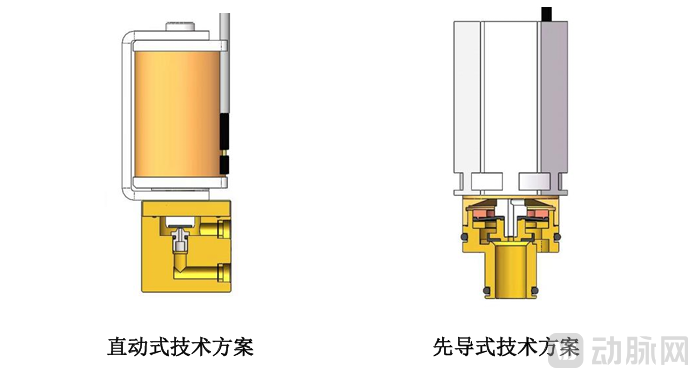
Keyto Fluid’s Self-Developed Pilot-Operated Proportional Solenoid Valve for Ventilators (Image source: Prospectus)
The aforementioned two categories of key components are widely used in medical devices such as in vitro diagnostic equipment, hemodialysis machines, and respiratory anesthesia machines, as well as in scientific research equipment including automated laboratory pipetting systems, gene sequencers, chromatographs, mass spectrometers, flow cytometers, and bioreactors.Keyto Fluid is also one of the few domestic brands capable of mass-producing pneumatic pipetting ADPs, proportional valves for ventilators, and bonded manifolds for gene sequencing instruments.
Notably, Shenzhen Keyto Fluid Control Co., Ltd. has also achieved significant breakthroughs in the field of bonded manifold plates, a core component of gene sequencers. Through long-term independent R&D, Keyto has mastered molecular bonding processes for diverse materials and developed its own production equipment, becoming a key supplier to industry leaders such as MGI Tech, Genemind, and Sailu Medical.
In recent years, driven by the growing domestic demand for downstream in vitro diagnostic (IVD) instruments, Shenzhen Keyto Fluid Control Co., Ltd. has achieved rapid growth in both revenue and net profit. Its operating revenues in 2020, 2021, and 2022 were RMB 139 million, RMB 180 million, and RMB 267 million, respectively. The compound annual growth rate (CAGR) from 2020 to 2022 reached 38.52%, maintaining a strong momentum of rapid development.
Although complete data for 2023 is not yet available, historical experience indicates that the second half of the year is typically the peak period for product delivery; therefore, it can be inferred that its full-year revenue will be slightly higher than that of 2022.
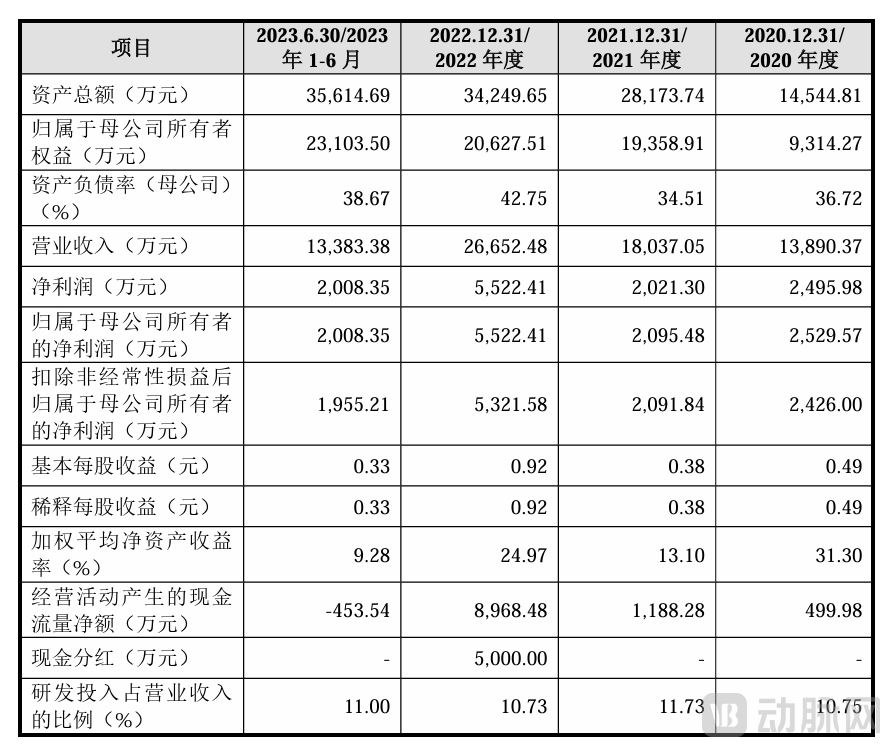
Revenue Performance of Keyto Fluid (Image Source: Prospectus)
During the reporting period, the gross profit margins of Keyto Fluid’s core business were 54.26%, 51.41%, 56.20%, and 53.01%, respectively. Further breaking down by specific product segments,Microvalves and precision pumps are its core products, accounting for over 90% of total revenue and contributing more than 85% of the combined gross profit.
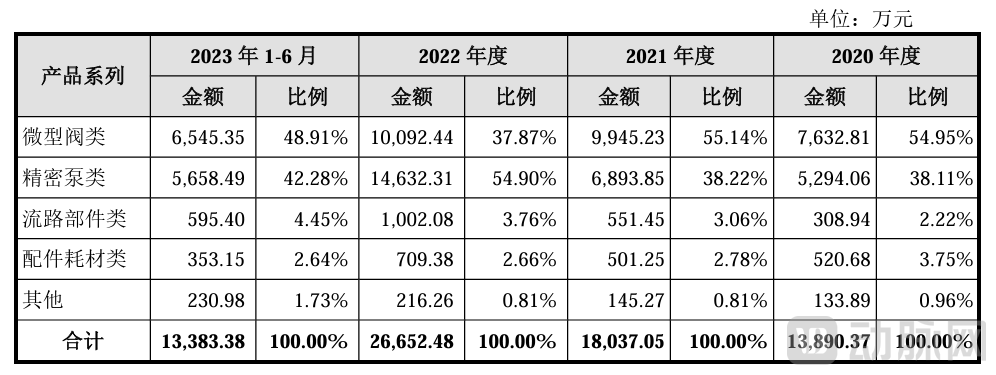
Revenue Breakdown of Keyto Fluid’s Five Product Lines (Source: Prospectus)
The strong revenue performance indicates that Shenzhen Keyto Fluid Control Co., Ltd. has certainly done some things right. Specifically, first, leveraging its long-term accumulation in the industry of microfluidic precision control components, the company has established a comprehensive technology platform spanning the entire R&D and manufacturing process; second, its product technology level is leading in China,As of June 30, 2023, Shenzhen Keyto Fluid Control Co., Ltd. has obtained 92 domestic patents and 18 software copyrights, with some of its products being among the few domestically produced items in China capable of mass production.
However, we also note that Shenzhen Keyto Fluid Control Co., Ltd. faces numerous risks. For instance, microfluidic precision control components are characterized by customization and have lengthy product validation cycles. Moreover, customers’ performance requirements for domestically produced products are no less stringent than those for top-tier international brands. If the company fails to accurately grasp the application needs of downstream customers, or if its products fail to pass customer validation or progress falls short of expectations, this will adversely affect its market competitiveness and future operational performance.
Additionally, the prospectus reveals that Shenzhen Keyto Fluid Control Co., Ltd.’s selling expenses from 2020 to the first half of 2023 were RMB 8.485 million, RMB 13.265 million, RMB 19.165 million, and RMB 11.294 million, respectively, accounting for 6.11%, 7.35%, 7.19%, and 8.44% of its operating revenue. The company’s selling expense ratio was higher than that of comparable companies in the same industry.
Shenzhen Keyto Fluid Control Co., Ltd. adopts a direct sales model to identify potential customers by participating in major domestic and international exhibitions or conducting direct client visits. This approach enables the company to promptly understand and respond to customer needs, thereby fostering long-term and stable partnerships. It has established collaborations with well-known brands in the fields of medical devices, life science instruments, and environmental monitoring equipment, such as MGI Tech, Dirui Medical, Snibe, Pumen Technology, Maccura Biotechnology, FPI, and Lihe Technology. The company’s relatively high sales expense ratio is primarily attributed to the diversification of its main product categories and application areas, low customer concentration, and consequently higher customer maintenance costs.
In response to these challenges, Shenzhen Keyto Fluid Control Co., Ltd. is also implementing countermeasures. According to its prospectus, the company will focus on three key areas: first, continuously enhancing production capacity to improve delivery capabilities; second, prioritizing R&D investment to expand its product portfolio; and third, establishing an effective sales network to strengthen brand building.
In the use of proceeds from this fundraising, it is explicitly stated that RMB 518 million will be invested in the construction of Keyto Fluid's production base, RMB 175 million in the construction of R&D centers in Shenzhen and Chengdu, and RMB 150 million to supplement working capital.
Shortly before Shenzhen Keyto Fluid Control Co., Ltd. submitted its prospectus, Aweite, another domestic core components company, officially listed on the Beijing Stock Exchange. On its first day of trading, its stock price surged by over 1,200% during intraday trading, setting a new record for the highest first-day gain among new listings on the Beijing Stock Exchange.
Aweite is a manufacturer of precision mechanical components, specializing in machined parts and assemblies. Its products are used in scientific instruments such as mass spectrometers and chromatographs, with Thermo Fisher Scientific serving as its largest customer for three consecutive years from 2020 to 2022. In the medical device sector, its end-use applications include medical imaging equipment and CT scanners, with Carestream Health, a globally renowned imaging company, ranking as its second-largest customer for three consecutive years.
Furthermore, Wandong Medical announced the establishment of a wholly-owned subsidiary to undertake R&D and production projects for core components; Sirui New Materials, a supplier of core components for medical imaging equipment, announced an investment of RMB 1.3 billion to bet on the R&D and industrialization of core components for medical imaging. Although these companies operate in different niche sectors, they are all striving to localize the core components of medical devices.
Does this mean that the market for core components of domestically produced medical devices is about to explode? Taking the micro-fluidic precision control component market, where Shenzhen Keyto Fluid Control Co., Ltd. operates, as an example, there are still many challenges.
First, the strong defense mounted by international giants such as SMC, IDEX, Bürkert, Tecan, and Norgren.Leveraging their superior product performance and diverse portfolios, strong brand influence, sales capabilities, and extensive channel networks, industry giants have established a competitive advantage across the entire industrial chain, spanning from upstream component research and development to downstream industrial applications.
Second, domestic enterprises are relatively deficient in technological R&D capabilities, lean manufacturing proficiency, and the development of interdisciplinary talent teams.This industry is technology-intensive, with different instrument types and application scenarios imposing distinct requirements on corresponding components. Consequently, personnel involved must possess advanced professional knowledge, technical expertise, and extensive practical experience throughout the entire process from research and development to production.
Microfluidic control components are typically customized, requiring companies to engage in new product development, optimization of manufacturing processes, and scaled production based on diverse customer requirements. It is difficult for new entrants to produce products with stable quality, superior performance, and cost advantages within a short period.
Moreover, strong customer stickiness makes it difficult for domestic enterprises to expand their market share.Precisely because the products require customized production, and the quality and technological sophistication of microfluidic precision control components directly impact the performance of downstream equipment, both parties undergo systematic evaluation and audits prior to collaboration. Absent significant issues, downstream customers are unlikely to change their component suppliers.
Overall, domestic core component manufacturers started late and still lag significantly in technical capabilities, production experience, product diversity, and brand building, remaining in a phase of rapid catch-up.
Nevertheless, policy guidance, pressures from global supply chain instability, the allure of relatively high industry profit margins, and vast market growth potential are all accelerating the rise of domestic core component manufacturers such as Shenzhen Keyto Fluid Control Co., Ltd., Hengyongda, and Jurui Electric. Amidst the sweeping transformation of China’s domestic core component industry, companies operating within this sector are poised to enter a new cycle of development.