

The 'Tiantan Speed': Innovation and Translation at Beijing Tiantan Hospital
Late October 2023, No. 119 West Nanhuan 4th Road, Fengtai District.
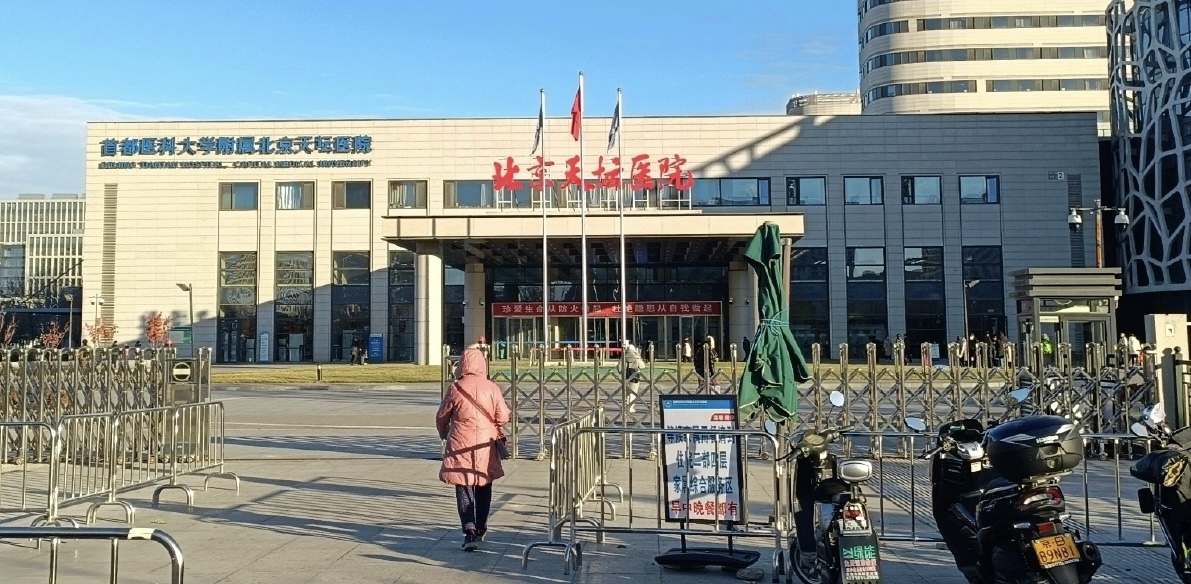
The view here is expansive, far removed from the dense high-rises of the city center; on clear days, visibility extends for dozens of kilometers. Traffic flows steadily along several major arterial roads, with vehicles of all sizes moving in an endless stream yet rarely encountering congestion. This reality stands in stark contrast to the stereotypical impression conveyed by the six large red characters prominently displayed on the building’s façade.
"Beijing Tiantan Hospital"
At this very moment, in one of the conference halls at the new campus, several attending guests are exchanging pleasantries and catching up.
“The new campus is really huge!”
“Yeah, I was worried about traffic jams on the way to the hospital, so I left extra early, but surprisingly, there was no traffic at all.”
“Do you have all the materials?”
As they talked, the group passed around event materials.
Following the opening remarks by Professor Wang Yilong of Tiantan Hospital, an Innovation and Translation Competition is set to commence.
Image source: Beijing Tiantan Hospital
On October 20, 2023, Beijing Tiantan Hospital hosted its inaugural Medical Technology Innovation and Translation Competition, offering a glimpse into the rising momentum of innovation translation at this nearly 70-year-old institution.
When it comes to top-tier tertiary hospitals in first-tier cities, besides their excellent diagnostic and treatment capabilities, another keyword that comes to mind is "crowded."
The same held true for Tiantan Hospital. Its old campus was located beside Tiantan Park on the South Second Ring Road in Beijing, where narrow roads led to perennial traffic congestion. At that time, each ward had only one restroom, shared by both medical staff and patients. As a nationally renowned specialized hospital, its Department of Neurosurgery had a mere 25 operating rooms.
This congestion affects not only patients’ healthcare experience and the working environment of medical staff, but more importantly, it constrains the overall innovative development of hospitals.
In late September 2018, after months of preparatory drills involving hundreds of scenarios of varying scales for emergency response, Tiantan Hospital commenced and completed its relocation and the opening of outpatient services at its new campus within one week.
Following the relocation to the new campus, the Department of Neurosurgery alone has 46 operating rooms, and hybrid operating suites have been established to support intraoperative MRI. Meanwhile, the total number of hospital beds has reached 1,650, significantly enhancing patient admission capacity. The expanded campus has also facilitated the growth of new departments, such as the Heart and Great Vessel Disease Center, which integrates resources from cardiology and cardiac surgery, as well as comprehensive disciplines including internal medicine, surgery, obstetrics and gynecology, and pediatrics.
With the successful relocation in 2018, Beijing Tiantan Hospital has successfully transformed from a “specialty-focused, limited general care” model into a regional medical center characterized by “strong specialties and comprehensive general care.”
After the new campus began operations, Tiantan Hospital once again started to accumulate momentum for its next transformation.
Leveraging its significantly expanded footprint, scale, patient volume, medical and nursing staff, and departmental infrastructure compared to the old campus, Beijing Tiantan Hospital has further optimized its comprehensive disciplinary structure as a National Medical Center, refined the development and management of a commensurate talent pipeline, and strengthened institutional consensus and commitment to innovative development.
As the overarching philosophy for innovative development, Beijing Tiantan Hospital“Clinical Neurology + X”Guided by this principle, we will, on the one hand, promote interdisciplinary collaboration within the hospital, explore new possibilities for integrated disciplinary development, and implement categorized construction and management based on disciplinary attributes. On the other hand, we will foster synergistic development between internal and external disciplines, creating innovative growth points through interdisciplinary integration and collaborative partnerships.
In terms of mechanisms, Beijing Tiantan Hospital has gradually completedNational Pilot Unit for High-Quality Development of Public Hospitals、Pilot Hospitals for the Establishment and Improvement of the Modern Hospital Management System by the StateandNational Medical Center (Translational Medicine Center)Three national-level pilot programs, andPilot Program for the Reform of the Science and Technology Innovation System in Beijing HospitalsandInternational Medical Pilot Programimplementation work.
In 2022, the Fourth Meeting of the Second Committee of the Party at the Hospital explicitly proposed “the hospital’s transformation and development,” marking Tiantan HospitalThe Transition from a “Healthcare” Center to a “Medical” Center, Research-Oriented Hospital, and High-Quality Development。
The determination and achievements of Tiantan Hospital in its transformation and development are not to be underestimated.
According to the latest data from the "China Hospital Innovation and Transformation Ranking," Tiantan Hospital completed 17 technology transfer transactions in 2022, received 357 patent grants (including 79 invention patents), and achieved nearly RMB 50 million in transformation contract value, ranking 18th nationwide.
These achievements are inseparable from every hospital bed and every research paper.
Following the relocation, the number of hospital beds at Tiantan Hospital increased from 950 to 1,650. During the first three months of its trial operation, patient volume had already grown by nearly 25% compared to the same period in 2017. In recent years, the hospital has averaged approximately 2.15 million outpatient and emergency visits annually.1.5 times that before the relocation; 80,000 Level-4 surgeries, with an average of 16,000 per year,1.78 times that before the relocation; Number of Neurosurgical Procedures in 20232.38 times that before the relocation.
A more robust patient intake undoubtedly provides a stable foundation for the hospital’s innovative research.
Backed by a series of leading institutions—including the Beijing Neurosurgical Institute, the Center for Neurosurgery, the Center for Neurocardiology, and the Center for Neurology—and supported by top-tier neuroscience experts across China, Beijing Tiantan Hospital is able to frequently conduct a range of activities such as clinical diagnosis and treatment, clinical research projects, and advanced training. This provides a solid foundation for the identification and resolution of clinical issues, as well as for the design and advancement of clinical scientific research.
With the support of hardware,Tiantan Hospital Has Made Remarkable Progress in Scientific Research in Neurosurgery and Other Fields。
According to the Medline database, in the 2023 ranking of total impact of SCI papers in neurosurgery,Tiantan Hospital Ranks First Globally, with a cumulative impact factor exceeding 1,200, surpassing leading clinical centers such as West China Hospital, Mayo Clinic, and Brigham and Women’s Hospital. Notably, from February 9 to 11, three different teams at Tiantan Hospital consecutively published their findings in NEJM, JAMA, and The Lancet, respectively.
In the field of cerebrovascular disease, the CHANCE series of studies published by Professor Wang Yongjun in the NEJM and JAMA have rewritten international clinical practice guidelines for cerebrovascular diseases. The CHANCE dual antiplatelet therapy reduced the risk of recurrence in non-disabling ischemic cerebrovascular disease from 11% to 8.2%, preventing more than 30,000 stroke cases annually in China.
At the 2023 International Stroke Conference, four of the 24 latest research advances from global clinical trials and subgroup analyses originated from Beijing Tiantan Hospital. Among these, the ANGEL-REBOOT study, jointly led by Professor Miao Zhongrong and Professor Gao Feng from the Department of Interventional Neurology at the Neurology Center, represents a world-leading achievement.
World-class specialized disciplines, without a doubt.
As a traditional center of excellence with strong specialized disciplines, Tiantan Hospital has demonstrated adaptability in innovation translation,Fast, Accurate, and Decisive。
In 2021, Tiantan Hospital received, includingState Council Pilot Program for High-Quality Development of Public Hospitals、NDRC: First Batch of Pilot Guidance Programs for the National Center for Neurological Diseases, andBeijing Pilot Program for Technological Innovation and Achievement Commercializationpilot projects at the national level and in Beijing.
To meet new development demands, Tiantan Hospital has restructured its internal management framework.Established an Intellectual Property Management Committee and an Intellectual Property Management OfficeSubsequently, the role of the Science and Technology Department beyond its traditional scientific management functions was clarified, and it was entrusted with the responsibility of managing cross-disciplinary projects at the National Medical Center.
These reforms have streamlined the internal management processes of Tiantan Hospital regarding innovation and translation, while also facilitating the establishment of a collaborative translation platform.A wholly-owned medical limited liability company was established to provide an equity management platform for the capitalization of the hospital’s independent intellectual property rights as equity contributions.。
With robust infrastructure in place, strong specialized clinical capabilities have a clear pathway for translation.
PINS Medical: Pioneer in Deep Brain Stimulation, was jointly incubated by Beijing Tiantan Hospital and Li Luming, the current president of Tsinghua University. To date, PINS Medical’s core product, the vagus nerve stimulator, has been implanted in over 5,000 cases, benefiting patients while generating substantial licensing revenue for both the university and the hospital.
Vance Medical: A Vascular Interventional Robotics Company, led by Professor Li Youxiang, a neuro-interventional expert at Tiantan Hospital, secured nearly RMB 100 million in angel financing in 2023 and obtained China’s first NMPA registration certificate for a vascular intervention robot. Subsequently, Wansi signed multiple patent licensing agreements with Tiantan Hospital, including those for the “High-Precision Minimally Invasive Vascular Intervention Surgical Robot.”A total of 14 intellectual property rights are involved, with a contract value reaching tens of millions of yuan.。
At“Clinical Neurology + X”Under the guidance of experts, Tiantan Orthopedics has also achieved remarkable success in the diagnosis and treatment of complex cervical spine disorders. The development of innovative osteotomy techniques for correcting cervical deformities, along with specialized surgical instruments, has resulted in six patents. Furthermore, the newly developed instrumentation for cervicothoracic osteotomy and correction has been selected for the Capital Medical Science and Technology Innovation Achievement Transformation Promotion Program.
If you have had the privilege of visiting the old campus of Tiantan Hospital and now stand at its new campus, imagining how the management team managed to complete a relocation and resume outpatient services on such a massive scale in just six days, you will be astonished by Tiantan Hospital’s breathtaking execution capability and speed.
Likewise, when you experience how a highly specialized clinical center rapidly adapted, seamlessly integrated, and swiftly returned to its proper trajectory after transformation—demonstrating unprecedented acceleration over the subsequent six years—you will realize that the surge in innovation translation seen in the past two years is merely the vanguard of Tiantan Hospital’s rapid ascent.
Tiantan Hospital’s future innovations and breakthroughs are highly anticipated.