

30,000 Participants Over 20 Years: Jia Jianping Team at Xuanwu Hospital Achieves Major Breakthrough in Alzheimer’s Disease Biomarker Research
February 22,Xuanwu Hospital’s Jia Jianping Teampublished online in The New England Journal of Medicine (NEJM) under the title“Biomarker Changes During 20 Years Preceding Alzheimer’s Disease”article.
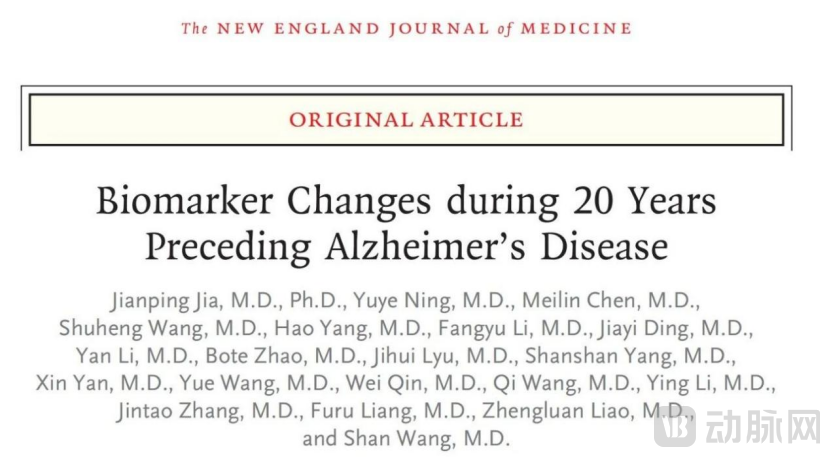 Paper screenshot (image source: the NEJM)
Alzheimer’s disease (hereinafter referred to as AD) can be primarily classified into two types: familial Alzheimer’s disease (hereinafter referred to as FAD) and sporadic Alzheimer’s disease (hereinafter referred to as SAD). However, since there is no clear genetic evidence for SAD, and the Aβ in the two types of AD differs,Therefore, most studies on AD biomarkers have been conducted in FAD, and the two forms of AD cannot share a common biomarker prediction model.. Consequently, it is difficult to conduct research on early diagnosis, precise prevention and control, and drug development for SAD.
To address this clinical pain point,The Jia Jianping team selected over 30,000 participants with normal cognition.(Subsequently, some participants withdrew due to reasons such as an AD diagnosis, death, or loss to follow-up, resulting in a final enrollment of 648 individuals.)A 20-year, multicenter, nested case-control study on SAD biomarkers was conducted.It is reported that this isThe largest scale and longest follow-up duration in the world to dateA Longitudinal Cohort Study Reflecting Changes in Pre-diagnostic Biomarkers of Alzheimer’s Disease.
This study is the first to reveal the dynamic changes in cerebrospinal fluid and imaging biomarkers during the transition from the asymptomatic to the symptomatic phase of Alzheimer’s disease (AD). It comprehensively elucidates the earliest key nodes of physiological and pathological changes in AD pathogenesis, providing a temporal window to guide the development of novel anti-AD drugs targeting pathological proteins such as amyloid-β (Aβ), and offering robust evidence for ultra-early diagnosis and precision intervention in AD. Furthermore, this represents the first time that a research article from China’s AD field has been published in the prestigious New England Journal of Medicine (NEJM).
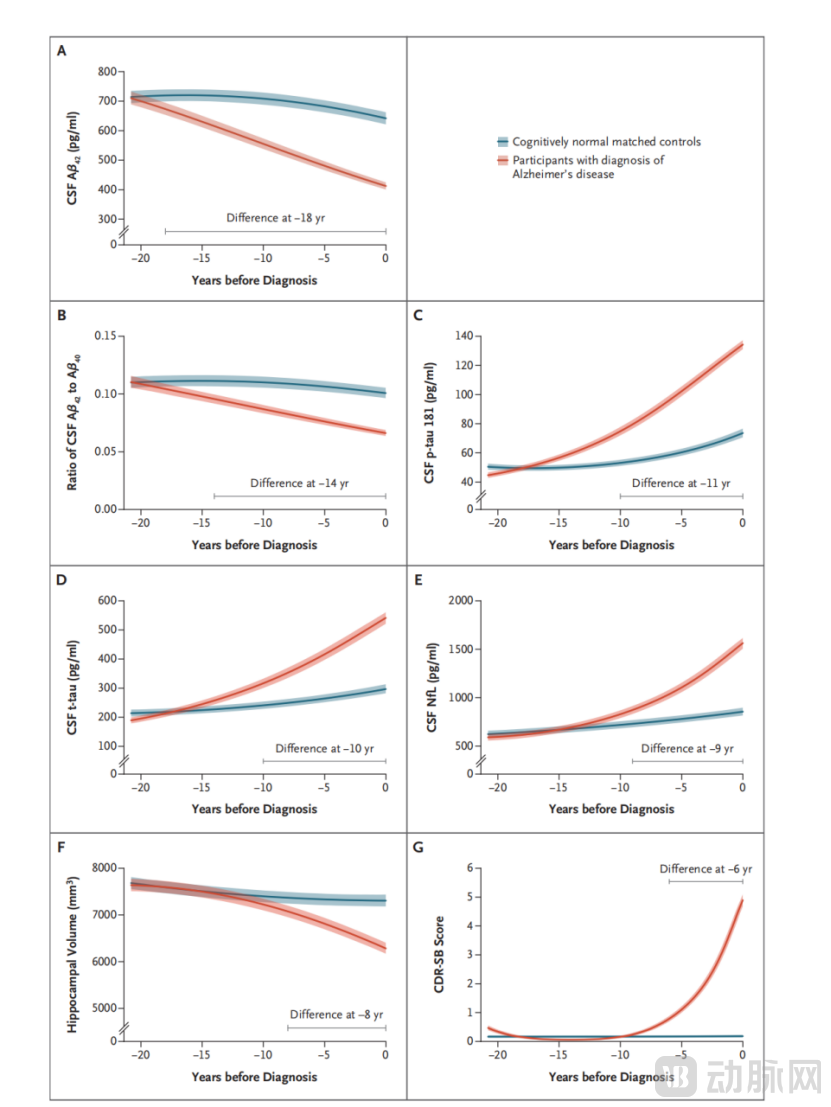 Temporal Trajectories of Changes in Different AD Biomarkers (Image source: NEJM)
I. Alzheimer's Disease Biomarkers Are Primarily Categorized into Three Major Classes
With the accelerating progression of global aging, Alzheimer’s disease (AD) biomarkers have garnered significant attention. As of 2022, research on AD biomarkers primarily falls into three major categories: fluid biomarkers, imaging-based biomarkers, and biomarkers in urine and saliva.
AD'sLiquid BiomarkersIt mainly includes cerebrospinal fluid (CSF) biomarkers and blood biomarkers.
Cerebrospinal fluid (CSF) biomarkers are relatively limited in variety, and related research has primarily focused on the iteration of detection methods. For instance, in 2016, Clifford et al. first proposed the “A/T/N” framework, where “A” refers to amyloid-beta (Aβ) biomarkers (amyloid PET or CSF Aβ42), “T” refers to tau biomarkers (CSF phosphorylated tau [p-tau] or p-tau PET), and “N” refers to biomarkers of neurodegeneration or neuronal injury ([18F]-fluorodeoxyglucose PET, structural magnetic resonance imaging, or CSF total tau [t-tau]). This approach was accepted and promoted by the International Working Group on Alzheimer’s Disease in 2018.
andBloodLiquid BiomarkersThe types of samples continue to evolve. In November 2022, a review article titled “Overview of the blood biomarkers in Alzheimer’s disease: Promises and challenges” was published in Revue Neurologique. This review highlights that blood-based biomarkers can be categorized into amyloid biomarkers, tau biomarkers, biomarkers of neuronal injury, biomarkers of neuroinflammation, markers reflecting metabolic changes, as well as other biomarkers such as neural protein particles and hepcidin.
AD imaging biomarkers primarily refer toDiscovery of Biomarkers Through Imaging TechnologiesThis is also one of the important directions in AD biomarker research. In March 2023, Professor Li Qian’s team from the Second Affiliated Hospital of Harbin Medical University published a review article titled “Neuroimaging modalities in the detection of Alzheimer’s disease-associated biomarkers” in *Psychoradiology*, summarizing the detection of potential biomarkers for mild cognitive impairment and Alzheimer’s disease using various imaging techniques.
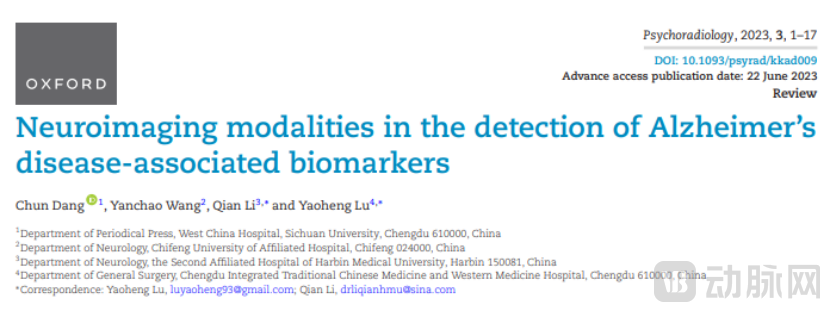 Paper screenshot (Image source: Psychoradiology)
This review summarizes the changes in potential biomarkers of Alzheimer's disease (AD) under various imaging modalities, including magnetic resonance imaging (MRI), structural MRI, and task-based functional MRI, ultimately concluding thatHippocampal and entorhinal cortex atrophy are potential biomarkers for Alzheimer's disease and mild cognitive impairment.Additionally, other biomarkers include cerebral cortical changes (such as gray matter loss in the frontal, parietal, and temporal lobes), subcortical regions (such as atrophy of the amygdala and olfactory bulb), and cerebellar atrophy.
Compared to the first two types of AD biomarker studies,Research on biomarkers in urine and saliva is relatively scarce.Researchers have proposed that sphingolipids, formic acid, and AD7C-NTP in urine can serve as biomarkers for Alzheimer’s disease (AD). For instance, Professor Li Liang employed high-performance chemical isotope labeling (HP-CIL) metabolomics to conduct a comprehensive metabolomic analysis of urine samples from individuals with normal cognition (CN), mild cognitive impairment (MCI), and Alzheimer’s disease (AD), aiming to identify potential biomarkers associated with AD.
II. Research on AD Biomarkers Enters the “Personalized” Era
In addition to research on traditional major categories of biomarkers, an increasing number of researchers have begun to focus on the “personalization” of Alzheimer’s disease (AD) biomarkers in recent years.
In 2022, the team led by Shen Yong from the First Affiliated Hospital of USTC published significant research findings in the prestigious journal Alzheimer's & Dementia. This study established an A/T/N framework suitable for the diagnosis of Alzheimer's disease (AD) in the Chinese population.
Based on a longitudinal cohort of comprehensive clinical biomarkers for Alzheimer’s disease (AD) within the A/T/N framework, Shen Yong’s team systematically evaluated the levels of core biomarkers in middle-aged and elderly Chinese individuals with AD. By integrating clinical prediction models with machine learning, they identified multiple biomarkers and established a diagnostic model for AD biomarkers.Proposing New Blood-Based Diagnostic Criteria for Alzheimer’s Disease Tailored to the Chinese Population.
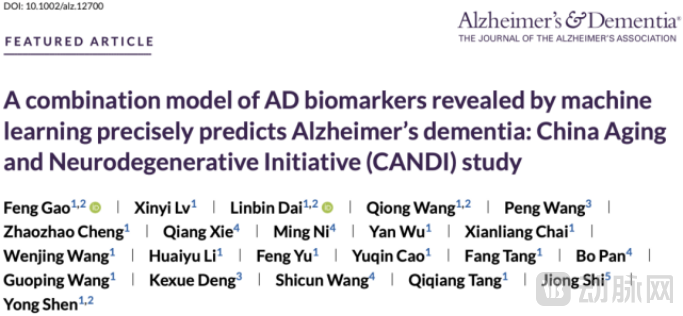 Paper screenshot (Image source: Alzheimer's & Dementia)
Furthermore, in January 2024, Professor Wu Zhiying from Zhejiang University, Professor Guo Tiannan from Westlake University, and Professor Jia Jianping from Capital Medical University jointly published a study on biomarkers for the early diagnosis and staging of Alzheimer’s disease (AD) in The Innovation. The study not only developed a proteomic panel comprising 19 cerebrospinal fluid proteins and 8 serum proteins for the early diagnosis of Alzheimer’s disease (AD), but also elucidated the dysregulation of 21 cerebrospinal fluid proteins and 18 serum proteins across different stages of AD.This study lays the foundation for the staged diagnosis, treatment, and screening of Alzheimer’s disease (AD), thereby providing personalized medical solutions for patients at different stages of AD.
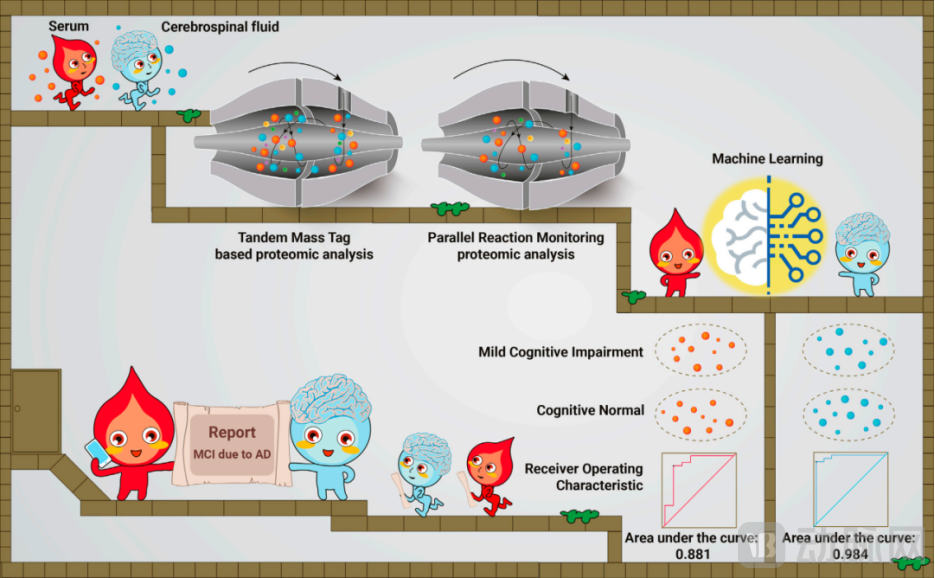 Graphical Abstract of the Paper (Image source: The Innovation)
Notably, in this study, the team usedDomestic Single-Molecule Immunoassay Instrument with Independent Intellectual Property RightsIt is evident that advancements in Alzheimer’s disease (AD) biomarker research are inextricably linked to the innovation and iterative development of medical devices, while such innovations in medical devices and progress in cutting-edge scientific research will jointly drive the development of the healthcare industry.