

Organoid Intelligence Equipment and Chip Rising Star Heiyu Science Completes Pre-A Financing, Advancing Automated Platforms and Commercialization

DarkJade Sciences
Developer of Organoid Intelligence Devices and Chips

TigerYeah Capital
Equity Investment Institution

Hypercycle Ventures
Private Equity Investment Institution

HongShan
Business Consulting, Enterprise Management Consulting Investment Institutions
VCBeat has learned that,Heiyu Science: A Globally Leading Developer of Organoid Intelligence Devices and ChipsRecently completed Pre-A round of financing. Participants in this round includeHypercycle Ventures, Founder H Fund, Guoshun Investment (under Hangzhou Capital), and industrial investors, under TigerMed, an existing shareholderTigerYeah Capital, HongShanContinuous infusion.Shendu CapitalServed as the financial advisor for this round.
This round of funding will be primarily allocated to equipment manufacturing, regulatory registration and filings, market expansion, the initiation of production base construction, and the acceleration of multiple innovative product pipelines. According to reports, Black Jade Science has already established a production base for certain product lines in Wuhan and will engage in deeper collaborations with key local and surrounding hospitals. The company also plans to continue advancing the development of R&D centers and commercial expansion in other regions across China.
Black Jade Star Rock Science and Technology (Hangzhou) Co., Ltd. ("Hei Yu Science")A R&D-driven biomedical enterprise centered on organoid science, featuring an Organoid Intelligent Equipment and Chip R&D Center, an Organoid Precision Medicine Testing Laboratory, an International New Drug Development Platform, and a Human-derived Organoid Biobank. Its core scientific research team comprises experts from world-leading biomedical institutions such as Harvard University and the Massachusetts Institute of Technology (MIT), as well as international pharmaceutical giants like Roche. The company has extensively established precision medicine testing laboratories and cultivated market, clinical, and research resources across China. It operates the Black Jade Science–Huazhong University of Science and Technology Joint Organoid R&D Center. Its core product portfolio encompasses organoid intelligent equipment, organoid chips and assay kits, clinical testing and drug development services, as well as organoid databases and AI software application systems, comprehensively building a commercial application platform for organoid intelligent equipment, chips, and biopharmaceutical technologies.
Organoids Are Developing Rapidly; Standardization, Automation, and Scalability Are Inevitable Trends
With the gradual opening and support of policies both domestically and internationally, the organoid/organ-on-a-chip industry has ushered in a booming Era 2.0.
Key application scenarios in the organoid and organ-on-a-chip industry include disease modeling, toxicity testing, high-throughput drug screening, drug evaluation, drug indication expansion, precision cancer therapy, and regenerative medicine.
Abroad, as Emulate, the organ-on-a-chip company, initiates its IPO filing, the pathway for applying organoids in drug development is gradually being established. AndIn China, the clinical application of organoids is advancing even more rapidly, with precision cancer therapy emerging as the most dynamic market for organoid technology.
The release of expert consensus documents in July 2022, such as the “Expert Consensus on the Clinical Application of Organoid Drug Sensitivity Testing to Guide Precision Oncology Therapy,” has accelerated the clinical maturation of organoid technology. Furthermore, the active support in China in recent years for pilot programs involving Laboratory Developed Tests (LDTs) has significantly bolstered the enthusiasm of organoid and organ-on-a-chip companies to advance the clinical application of their products.
The core team at Heiyu Science, leveraging years of experience in clinical diagnostics and pharmaceutical R&D, believes that compared to traditional animal models, human-derived organoid in vitro modeling technology offers superior representation of human genetic backgrounds and microenvironments. This approach holds immense potential for advancing personalized precision medicine and medical research. Its advantages—including high efficiency, low cost, and the ability to intuitively recapitulate diseased tissue—help mitigate the risk of drug resistance associated with human clinical trials. Consequently, this technology significantly benefits individualized patient treatment regimens, new drug development, and future applications in organ repair within regenerative medicine.
The clinical application of organoids in China holds immense potential, yet it also faces numerous technical barriers and challenges in industrialization. In response,Li Yiwei, Professor at the School of Life Science and Technology, Huazhong University of Science and Technology, and Co-founder & Chief Scientist of Heiyu ScienceIt was stated that traditional methods for constructing organoids require manual laboratory operations, which are not only time-consuming and labor-intensive but also face challenges in standardization and quality control. Standardizing and automating the organoid process is a daunting task.
Meanwhile, the high heterogeneity of tumors poses significant challenges to the productization and large-scale application of tumor organoids. In precision medicine experiments involving organoids, personalized designs are required for each case based on patient-specific and sample-specific conditions. Different tumor types, samples from different anatomical sites, and distinct cell types within the samples all necessitate specific culture methods and formulations. This complexity may hinder the near-term productization of organoid-based precision medicine, resulting in a slower growth of its market size.
Therefore, challenges remain in expanding the applications of organoid models, particularly in how to increase their complexity to better mimic diverse disease types and address difficulties related to intelligent automation, standardization, and meeting disease-specific requirements.
Microfluidics and AI-Enabled Automated, Integrated Organoid Modeling
Heiyu Science’s core R&D team has been deeply focused on the organoid and organ-on-a-chip field since seven years ago, gradually advancing into related technology development, including 3D in vitro stem cell culture techniques. The company continues to concentrate on technological innovation in the life sciences, striving to break through technical barriers facing innovative research and medical devices in China. By leveraging developmental biology of organoids and integrating microfluidic organ-on-a-chip platforms, it aims to replace traditional animal model experiments with in vitro models.
To enable large-scale and efficient organoid culture, Professor Li Yiwei’s team developedMicrofluidic organ-on-a-chip technology for high-throughput, highly uniform organoid modeling enables precise control over cell types and ratios prior to organoid initiation, as well as precise regulation of the microenvironment for each organoid, thereby effectively ensuring uniformity and shortening the growth cycle.
Leveraging its research accumulation in microfluidic chips and organoid engineering, the “Huazhong University of Science and Technology–Heiyu Scientific Organoid Joint R&D Center” has independently developed the “Integrated Intelligent Device for Automated Organoid Culture and Drug Sensitivity Testing”, which not only enables fully automated operations across the entire workflow—from organoid modeling, observation, analysis, and modulation to drug delivery testing, AI-driven data analysis, and test report generation—but also addresses challenges such as tumor migration and heterogeneity, thereby establishing a high-throughput, automated, end-to-end intelligent organoid solution for precision medicine and scientific research, spanning upstream manufacturing and downstream testing.
Organoids, as in vitro microtissues and micro-organs, can be better controlled in their spatiotemporal organization when integrated with microfluidic chip technology, enabling the mapping of data generated during the process to AI databases via automated platforms.Only by combining a mapping platform from biobanks to AI databases with a comprehensive all-in-one automated solution can truly intelligent smart manufacturing of organoids be achieved.Currently, laboratories and service providers both domestically and internationally predominantly rely on traditional manual organoid culture combined with cell culture well plates, or utilize large-scale “automated workstations” that have become widespread in recent years. These semi-automated systems typically integrate conventional robotic arms with plate handling, spotting, pipetting, centrifugation, and optical modules, using standard 96- or 384-well cell culture plates as consumables for organoid research and commercial applications. However, these approaches suffer from low efficiency in organoid modeling and testing, poor model uniformity, and limited miniaturization and desktop integration. To address these application pain points and the overall technological bottlenecks in the market, the Heiyu team has independently developed an organoid-on-a-chip-based “"Integrated Intelligent System for Automated Organoid Culture and Drug Sensitivity Testing"thus perfectly breaking through and resolving these major issues.
It is understood that the Heiyu Science team is negotiating nationwide in China for the establishment of an industrial base to facilitate registration, mass production, and commercial promotion of its automated, integrated intelligent equipment and organ-on-a-chip technology.
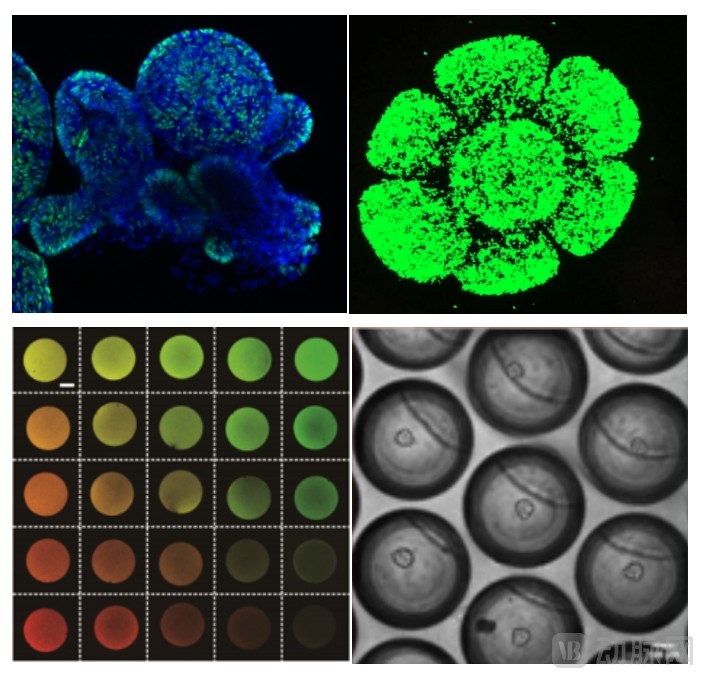
Heiyu Scientific Quantitative Microenvironment Factor-Arrayed Organoid-on-a-Chip Technology
Accelerated Commercialization: Transformation of Automated Intelligent Equipment and Chip Production
With the advent of the era of precision medicine, pharmacotherapy has evolved from a “one-size-fits-all” approach to personalized treatment. As patient-specific “drug-testing surrogates,” organoid-based personalized drug sensitivity assays not only deliver precise clinical benefits to patients but also generate robust data for comparison with clinical outcomes. These data are highly valuable; ultimately, we aim to leverage them in conjunction with biobanking to support pharmaceutical companies in drug development, preclinical testing, and patient screening for clinical trial enrollment.
Based on this, in addition to precision medicine, what Black Jade Science aims to achieve isBy strategically deploying products and services based on preliminary antimicrobial susceptibility screening and continuously expanding these efforts, we will accumulate an increasing volume of patient data and tissue samples. This will ultimately establish a high-quality, large-capacity database and biobank to support drug development and clinical needs.From the perspective of the Heiyu Scientific team, this represents a significant advantage for China in the field of organoids: China possesses distinct advantages in terms of policy, sample resources, and industrial capacity for the clinical application of organoids. In contrast, other countries lack the extensive clinical sample volumes and supportive policy frameworks necessary to establish comprehensive living biobanks of organoids.
China has a large cancer patient population, which continues to grow amid the country’s aging demographic trend. In this context, upgrading precision medicine is imperative. The significant value of organoids lies in their ability to fill the critical gap in vitro models and functional model testing during the transition from traditional evidence-based medicine to precision medicine.
Therefore, the clinical application of organoids in oncology has genuinely addressed the challenges faced by cancer patients—namely, the lack of available therapeutic options and the difficulty in selecting the most appropriate medications—offering them new hope. The team at Heiyu Science believes: “Organoids have gained widespread acceptance and recognition among clinicians in recent years; what is currently lacking is a clinical-grade organoid product and its associated pipeline.”
Based on this, Heiyu Science, as a pioneer in this field, will accelerate the iterative development of its integrated R&D and production automated intelligent platform and chip-consumable system, entering large hospitals and pharmaceutical R&D enterprises to conduct scientific research and commercial testing projects. From the perspective of national development strategy, this also aligns with the future needs of the Chinese population for the diagnosis and treatment of major diseases, promotes precise medication regimens for a broad patient base, provides quantitative evidence for medical insurance cost control, and helps alleviate the burden on the medical insurance system.
In terms of market and commercialization expansion, Black Jade Science has launched a series of in-depth collaborations with key hospitals and enterprises across China. In November 2023,Heiyu Science, together with several participating institutions including Union Hospital affiliated to Tongji Medical College of Huazhong University of Science and Technology, has successfully secured approval for the National Key R&D Program’s special project on “Integration of Biotechnology and Information Technology (BT-IT Integration)” from the Ministry of Science and Technology. The project leverages organoid intelligence devices and chip-based drug sensitivity data, combined with AI, to predict multi-drug combination therapies.; and has established extensive collaborations with institutions such as Peking University Cancer Hospital and Tongji Hospital Affiliated to Huazhong University of Science and Technology, aiming to conduct large-scale clinical trials focused on organoid technology and automated organoid equipment, thereby accelerating technological translation and benefiting more patients.
Regarding future development strategies, the team at Heiyu Science stated that the company is actively providing services and technical support for the formulation of relevant technical standards in clinical settings. In terms of production bases, the company has established standardized GMP laboratories in multiple locations across China. With respect to its R&D system, the company has engaged in deep cooperation with Huazhong University of Science and Technology to jointly establish a Joint Organoid Research and Development Center. Furthermore, the company plans to gradually expand overseas collaborations in the future, aligning its smart devices and supporting organoid-on-a-chip product pipelines with international markets and scientific research projects.
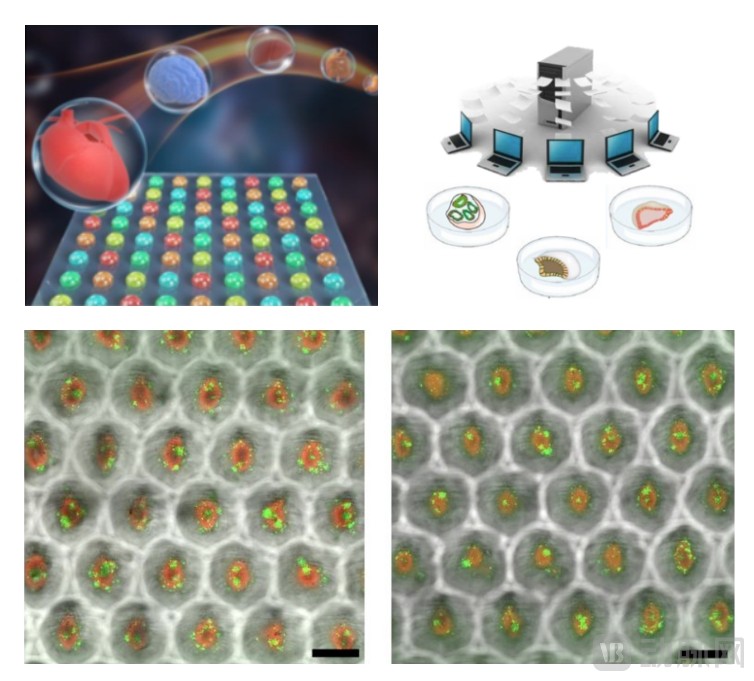
Heiyu Science’s Fully Automated Organoid-on-a-Chip Technology:
Maintaining Rapid, High-Viability, and Highly Uniform Organoid Modeling
Moreover, the Heiyu Scientific team has proactively positioned itself in the field of regenerative medicine. “Leveraging intelligent devices and platforms, we will also deepen our expansion into regenerative medicine in the future, including the construction of large-scale vascularized organoids, repair of normal tissues and organs, and anti-aging applications of organoids.”
Although China’s organoid industry is still in its nascent stages, it is poised for rapid growth driven by national policy formulation and the advancement of relevant standards. As noted in Science, replacing animal testing with non-animal technologies will take “many, many years,” yet this year remains a pivotal one within that extended timeline. Each step forward represents significant progress for both the industry and public health. Having navigated the Organoid 2.0 era characterized by standardization, automation, and scalability, we eagerly anticipate the early arrival of the next phase.

Black Jade ScienceIntegrated Intelligent Device for Automated Organoid Culture and Drug Sensitivity TestingSeries
(Coming Soon)
Regarding this round of financing, Yang Bo, Managing Director of Hypercycle Ventures, stated“Through its investment practices in the life sciences sector, Hypercycle Ventures has consistently focused on identifying and cultivating outstanding technologies and teams characterized by interdisciplinary integration and the convergence of medicine and engineering. As a next-generation in vitro model technology platform, organoids have garnered widespread attention and adoption in research settings in recent years, with broad application prospects in bioengineering, new drug development, and clinical treatment. However, due to the complexity of organoid culture processes, challenges in efficiency, standardization, and quality control have long hindered their broader adoption. Integrating engineered, automated, and intelligent technologies with organoid technology to replace manual operations will provide the research community with a more innovative experimental platform, enhance R&D efficiency and reduce costs for the industry, and, most importantly, offer practical, timely, and effective diagnostic tools for patients and clinicians in clinical settings. We are particularly impressed by Black Jade Science’s profound expertise and leading practices in this field, its active participation in establishing policy standards, and its keen, rigorous, and pragmatic approach to research, clinical applications, and commercialization. Through this investment, we look forward to supporting Black Jade Science’s growth, promoting its applications in research and industry, and ultimately benefiting more physicians and patients in clinical practice.”
Wo Feiyu, Managing Director of Founder H Fund, stated“Patient-derived organoids closely mimic primary tissues in both structure and function, while retaining histopathological features, genetic profiles, mutational landscapes, and therapeutic responses. They have gradually become excellent tools for studying tumorigenesis and cancer progression in vitro; however, challenges such as high randomness, significant heterogeneity, and poor reproducibility associated with manual operations remain to be addressed. Heiyu Science has efficiently achieved standardization and automation of organoid modeling and testing through an integrated approach combining fully automated intelligent equipment with microfluidic chip consumables for organoids. This solution addresses key technical pain points in the clinical, research, and new drug development applications of organoids, paving the way for intelligent iteration across the entire upstream and downstream value chain in the organoid field, ultimately enabling the transformation of organoid products into in vitro diagnostic (IVD) offerings.”
Xu Zhe, Head of Healthcare at Guoshun Investment, a subsidiary of Hangzhou Capital, stated“Organoids are not a new concept, but intelligent, standardized, and high-throughput organoid platforms represent an entirely new frontier. In the short term, establishing such standardized platforms as infrastructure can significantly lower the barrier to adopting organoid technology and accelerate its widespread use. In the long run, this platform will greatly enhance the efficiency of biological information digitization, transforming the way carbon-based and silicon-based systems exchange information. The team at Heiyu Science has already built a solid foundation and accumulated substantial expertise in this field. Hangzhou Capital Guoshun Investment will continue to support promising projects and teams like Heiyu, focusing on investment directions and opportunities geared toward the future.”
Dr. Ji Tianrong, Founder and General Manager of TigerYeah Capital, stated“Heiyu Scientific’s team has deeply cultivated foundational organoid technologies. By leveraging automated microarray technology, it has targeted and resolved core bottlenecks restricting clinical and research applications, thereby achieving unparalleled efficiency in clinical testing services and new drug development modeling. This lays a solid foundation for personalized precision medicine, drug screening in new drug R&D, pharmacological and toxicological studies, construction and analysis of disease microenvironment models, and regenerative medicine applications, establishing leading industry barriers through automation and standardization. We hope Heiyu Scientific will continue to build on its momentum, delivering superior solutions and customized services to pharmaceutical companies, clinicians, and patients.”